

The United States travel industry is in a period of contraction, and that's bad news for travelers—and all Americans.
Anger over President Donald Trump’s stated intentions to acquire Canada and Greenland, and worry about being detained by U.S. Customs and Border Protection agents when entering the United States, has led many would-be international visitors to launch an informal boycott of travel to the United States.
According to the World Travel & Tourism Council (WTTC), the U.S. will see 20% fewer visits from Canada in 2025 compared to last year.
That number may be conservative. Some estimates show that 30% to 40% fewer Canadians have been crossing the border this summer compared to last summer.
However bad the boycott is, it represents a significant loss of income. In 2024, Canadians accounted for 25% of the foreign visitors to the United States.
WTTC stats also show that visitation numbers from the United Kingdom and South Korea are down 15% each, Germany is dipping 28%, and the numbers from Spain, Colombia, Ireland, Ecuador, and the Dominican Republic have fallen between 24% and 33%.
All in all, the WTTC says the U.S. is the only major western nation whose visitor numbers will shrink in 2025, and the U.S. economy stands to lose $12.5 billion in revenue from international travel.
Why should American travelers care that fewer people are coming to the United States? Won't that mean lower hotel rates and airfares for domestic trips as well as better service thanks to diminished crowds?
Probably not, though the reasons why are complex.
Below, I explore what this sudden downward trend means for travelers and how other recent moves by the Trump administration are likely to hurt anyone who wants an affordable vacation.
The impact of Trump policies on airfares
Let's start with international airfares and a simple premise. Planes won't be full unless travelers are boarding them in both directions. With so many deciding not to visit the U.S., airlines are cutting routes, replacing large planes with smaller ones, and reducing the frequency of departures in some cases.
With this diminishment comes higher prices. Competition is what keeps airfares in check, and that competition is going away.
We’ve already seen significant route terminations from Air Canada, which has been replacing flights between the United States and Canada with new routes from Canada to Latin America and the Caribbean.
Other carriers that are scaling back include Air France, Turkish Airlines, and Azul Brazilian Airlines, British Airways, and Lufthansa.
So if a Parisian holiday is on your wish list, or if you were hoping to go to Carnival in Brazil, your airfare may be higher (likewise for visa fees for Brazil, but more on that later).
In other bad news for flyers, just last week, the Trump administration's Department of Transportation gave its blessing to a new form of collaboration between United Airlines and JetBlue. They’re calling it a “Blue Sky" partnership, but our aviation columnist William McGee wrote that it’s anything but blue skies for travelers. In fact, he says this partnership creates a new monopoly that will increase airfares in several states in the Northeast U.S. and at other hubs. I won’t regurgitate McGee's article, but do read it here.
How the new Trump policies increase visa fees
In July, Congress passed the so-called "Big Beautiful Bill," which contained hundreds of provisions including a massive increase in the visa fee for tourists hoping to visit the United States.
When the bill takes effect, a new $250 "visa integrity fee" will be charged to travelers from Mexico, Brazil, India, China, and other countries that aren't covered by the U.S. visa waiver program. That fee will be paid on top of the $185 cost of the visa itself. Because of the squirrelly wording of the bill, it's possible that the fee may be refundable, although it's not clear how that would work. We'll have to wait and see.
In a statement, U.S. Travel Association president and CEO Geoff Freeman called the new fee "foolish."
We'd go further than that. This doubling of costs for millions of would-be visitors will do great damage to the travel industry—and hurt American travelers.
In the past, countries that were hit with visa hikes from the United States have frequently responded in kind, imposing similarly high visa fees on U.S. citizens. To give one example: In 2017, Brazil imposed a high $160 visa fee in reciprocation of the high fee that the U.S. was charging Brazilians. I had to pay Brazil's reciprocal fee for a family of four, and that cut into our travel budget dramatically. Brazil later cut the fee to $40 in 2019, due in part to damage to the tourist economy. But the country then reinstated the visa requirement with a doubled fee of $80 this April.
This sort of tit for tat could end up costing all of us international journeyers a lot more. There are already rumblings that the countries hit by the USA's doubling of costs are planning to retaliate.
The Trump administration also decided this week to impose an additional $15,000 bond for all visitors from countries whose citizens have overstayed visas in the past. For Americans who like to go to far-flung destinations, that could present a huge problem.
We don't yet know what Zambia and Malawi, the first two countries to be hit with this bond requirement, will do to their own visas, but it's a good guess that they'll respond in some way and other countries slapped with the bond requirement could do the same. It's also likely that airfares from the United States to these nations will rise once the number of folks visiting from those places slows to a trickle. What's more, the bad press over the bond will deter many more potential visitors from bothering to apply for visas to come to the U.S.
The administration has said this bond program could be expanded to other countries. Let's hope that doesn't happen.
How Trump policies affect hotels and restaurants
The impact of visitor boycotts are being magnified by a loss of reliable staff. The Big Beautiful Bill allots $75 billion to U.S. Immigration and Customs Enforcement over the next 4 years, which is more than double the agency's current budget of $8 billion a year. In the last several months, we’ve seen a growing number of ICE raids on the top two sectors that employ undocumented immigrants: farms and construction sites.
With the expansion of ICE, we expect to see more raids on the third-largest employer of migrants—the hospitality industry.
There have been raids on restaurant kitchens (notably in Nashville), but so far hotels haven’t been a primary target. But that will almost certainly change, since roughly 1 million undocumented workers are employed by the hospitality industry.
What will this mean for travelers? That’s hard to know.
Without employees, some hotels and restaurants may have to close.
In the hotel industry, unpredictable staffing issues will lead to a decline in service. Visitors may need to carry their own luggage, concierge services may be unavailable, and daily housekeeping in guest rooms may become a thing of the past.
Or hotels may adopt the strategy followed in Maui after the 2023 fires on that Hawaiian island. When workers lost their homes, Maui's hotels decided to accept only the number of guests they could handle with newly reduced staff levels, renting only a fraction of existing rooms and raising prices to offset the lower customer numbers, according to Frommer's Hawaii author Jeanne Cooper. (Industry publications at the time noted that Maui had the highest nightly rates in the nation in the months after the fires).
In the restaurant world, ICE raids have introduced a lot of chaos, with workers unexpectedly staying home out of fear of being hunted down.
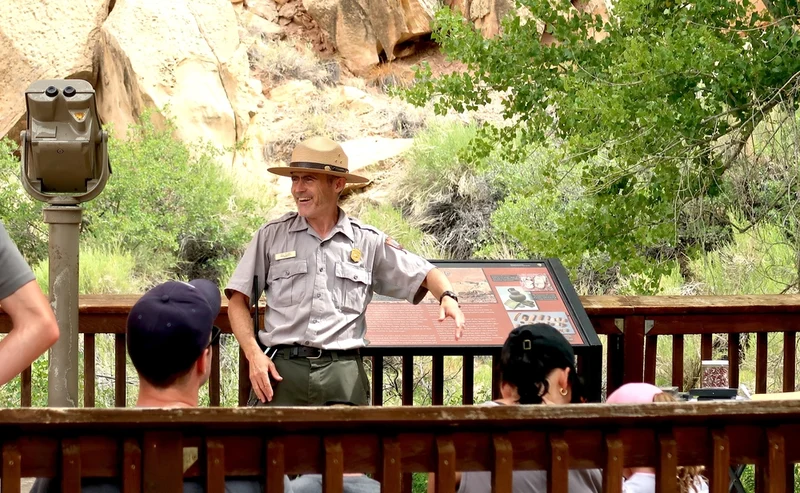
How new federal policies impact outdoor vacations
The federal government oversees a wide variety of public lands, from those in the National Park System to assets overseen by the Bureau of Land Management, the U.S. Forest Service, and the National Wildlife Refuge System.
The operations of these places are currently in jeopardy, thanks to hiring freezes, staff firings, and budget cuts.
Take the National Park Service as one example. It has lost 24% of its staff under the Trump administration, and the losses are only going to increase. The White House has said it intends to cut $1 billion from the park service's $3.3 billion annual budget in 2026.
This despite the fact that in 2024 the National Park Service warned it was facing a $22 billion backlog of crucial maintenance work.
Already, popular trails have had to close due to lack of rangers, and busy roads have been shut down because there's no staff to repair damage. The number of ranger programs has been slashed at many parks, and available campsites have been reduced at some parks as well. You can see a list of closures and cancellations here.
But the real problems may not be visible yet. With fewer staff, there aren’t enough rangers to protect fragile ecosystems and stop vandals from doing mischief. The conservation programs that keep the flora and fauna in the parks healthy have been gutted, which could lead to deep and widespread damage to many parks.
And although the plan to sell off publicly held lands was scuttled by the congressional parliamentarian—who ruled that this type of action didn’t belong in a budget bill—it’s a good bet that the effort to sell off public lands will continue. Some vacationlands could be permanently walled off from visitors and put into private hands for mineral and oil extraction or some other private use.
What to do about the damage being done to tourism
The short answer: Fight!
Let your representatives know that for you, the “pursuit of happiness” means the ability to travel freely and affordably.
If vacations seem like too shallow a reason to go into battle, then fight for the economy and American livelihoods. The travel industry was robust before these changes. According to the Bureau of Labor Statistics, last year roughly 9% of the jobs in the United States were in hospitality, which represents some 7% of all U.S. government income, according to the World Travel & Tourism Council. Last year, the travel and tourism industry brought $2.6 trillion to the economy and contributed more than $585 billion in tax revenue.
If tourism withers, so will our economy, because you just can’t push that many people out of work and away from spending and expect the country's finances to thrive.
The travel industry is just too big to fail.