

What are Wise and Revolut?
Wise (wise.com) and Revolut (revolut.com) are United Kingdom-based EMIs (Electronic Money Institutions) that travelers are using for their currency conversions and currency exchanges.
Would using them be for you? First, here's a simple explanation of what they do.
“Currency conversions and currency exchanges refer to the exact same simple mechanism,” says Dr. Fabio Dias, a senior lecturer on fintech at the UK’s University of Surrey. “It’s the process of taking the money you hold in one currency, such as US Dollars, and digitally swapping it for an equivalent value in a different currency, such as British Pounds or Euros.”
This process can happen in one of several ways. “You might choose to do it manually within the [Wise or Revolut] app to hold a savings balance in a new currency,” says Dr. Dias. Travelers then use Wise or Revolut-run payment services to make purchases.
“But it also happens automatically in the background when you use your [bank’s] debit card to buy a coffee in Paris while your account only holds dollars, or when you withdraw cash from an ATM in a foreign country,” says Dr Dias.
Whether you spend via your bank or through Wise or Revolut, your existing currency is effectively being sold in an instant to buy the foreign currency you need to complete the transaction.
Wise, Revolut, and similar fintech (financial tech) companies are designed for everyday banking and small-scale international transfers, and one of the most popular reasons to use them is their rates are generally lower than so-called Main Street banks such as Bank of America and Citigroup.
EMI rates tend to increase depending on the size and frequency of transactions, so they're not ideal for people who are spending large amounts of money in foreign countries for long periods of time.
Wise and Revolut are popular with vacationers who are keen to avoid the excessive fees and poor exchange rates offered by traditional banks. Most American banks charge a foreign transaction fee—for example, for purchases in shops, using a debit card—of around 3% for debit card transactions made abroad. That’s what Citibank charges.
Wise, on the other hand, has no transaction fee.
Revolut doesn’t apply transaction fees unless you spend more than $1,000 a month, after which there’s a 1% surcharge.
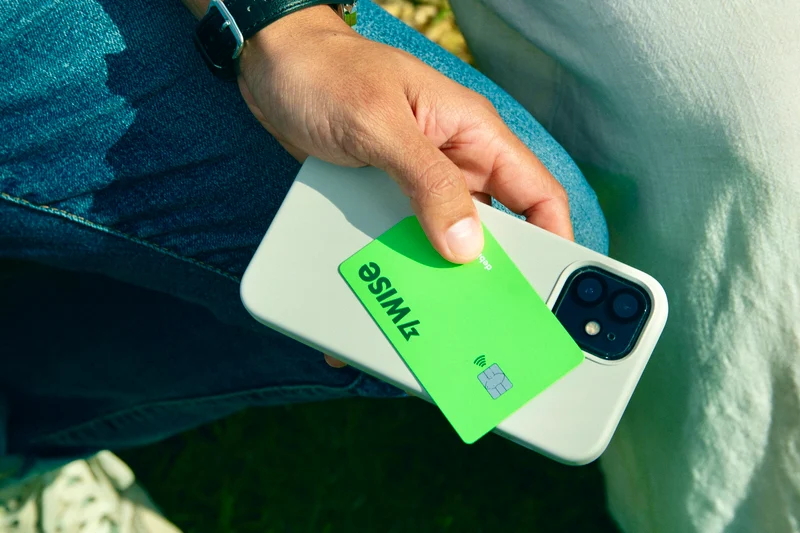
Wise and Revolut customers have the option of using a special, physical debit card they use to withdraw or spend cash. Travelers can also access their Wise or Revolut accounts in their smartphone wallet to make purchases using Google and Apple Pay. To do that, they can either pre-load their accounts with funds or they link their Wise or Revolut accounts with their day-to-day banking account.
Accounts with both Revolut and Wise are free to open (although Revolut has optional plans that cost extra). Wise’s debit card costs $9, while Revolut’s is free.

The pros and cons of Revolut and Wise
Both services place ceilings on how much their services can be used for free. For Revolut, it’s a maximum of £3,000 per day, or the equivalent in the relevant currency) or five ATM withdrawals (whichever comes first), and for Wise it’s a maximum of $1,000 per day (and $6,000 per month).
When it comes to loading your account, Wise places no limits on fee-free currency exchanges, while Revolut’s free limit is US $1,000.
Wise allows customers to make two currency exchange transactions a month, fee-free. For further transactions, there’s a fee of $1.50, rising to 2% for transactions over $100. Revolut charges a 1% fee for currency exchanges over $1,000.
Wondering where you can spend your cash through the debit cards issued by these services? Wise allows you to spend in 160 countries, while for Revolut, it’s around 150, although the number of currencies you may access may change depending on where you live.
Both services use what’s called a mid-market exchange rate, or the rate used by banks and money transfer services use to trade between themselves, but while Wise charges a 0.1–0.5% fee, Revolut’s fee is higher (up to 2%) at weekends, which—surprise, surprise—is when travelers are most likely to be spending money.
What's better: Wise or Revolut?
This depends largely on travelers’ individual needs, but Wise’s transparency relating to fees paired with its firm adherence to fair mid-market exchange rates is the reason it’s often the choice for travelers who value simplicity and don’t want to rack up extra charges.
Revolut’s customer service is restricted to in-app chat support, while Wise has a customer services number which customers (as well as non-customers, such as those considering opening an account) can use to talk to a real, living human being. This is one reason newbies to this type of banking often prefer to opt for Wise initially.
Revolut and its large range of plans and functions (learning to navigate its app is no mean feat) has made it a hit with people who travel more frequently than most, many of whom appreciate the extra perks (such as insurance for baggage and discounts on airport lounge access) which come with plans that have a monthly cost.
Our take? If you’re looking for an EMI that makes it cheap and easy to spend your dollars abroad when on short vacations or on business trips, Wise would be your best bet.
Revolut’s selection of subscription plans appeal more to regular travelers who’ll use it steadily. If you’re partial to a spot of trading, need to transfer cash regularly, or travel overseas at least once a month for work (or pleasure, if you’re lucky enough) and can navigate more complicated apps with ease, then Revolut, might well be your best bet.
Whichever option you choose, do your research thoroughly (Wise has a handy online fee calculator) and take the time to keep abreast of exchange rates and fees once you’ve signed up.
The risks of Revolut and Wise for travelers
Fintech expert Dr. Fabio Dias says that the main risk relates to these organizations’ love of algorithms.
“The first main risk is algorithmic lockout,” says Dr Dias. “If you do something that the algorithm doesn't like, your account gets instantly frozen, and getting it unfrozen may not be straightforward due to anti-money laundering (AML) regulations.”
That could spell trouble for travelers, and some travelers have reported account lockouts, but the good news is that withdrawals and transactions made in shops are less likely to trigger these freezes. “A typical example of what might cause this response is if you made several transactions sending money to what’s deemed a ‘high risk country’,” says Professor Dias. “Transactions in cryptocurrency are also a common source of problems. For example, you sell some bitcoin you bought in 2019. The money hits your account and it shows the source is a crypto exchange. You may get an instant freeze.”
And should the worst happen, the organizational model used by Wise and Revolut (minimal staff, maximum algorithm use) could present further complications.
“The organization could cancel your account without giving you a reason, and bank employees might not even understand the reason themselves,” warns Dr Dias. “These organizations don't have staff to check every single case. Traditional banks might have one compliance officer for every 1,000 customers. But for fintechs, it might be one for every 50,000, and they’ll rely almost entirely on algorithms.”
Basically, the reason a fintech could bar you from spending could be simply that the computer said no.
“Imagine if this happens while you are traveling abroad?,” said Dr. Dias. “You would be in deep trouble.”
The other risk relates to these businesses’ statuses as EMIs.
“In summary, your money is not protected directly by their banking license, because they’re not banks to begin with,” says Dr. Dias. “They simply safeguard your money, relying on the banking license of other banks they partner with. So, for example, if Wise goes bust, you will have to wait for the administrator to claw that money back from the other bank, because there is no direct protection, and that process can take months.”
Although many travelers report no difficulties, you also won't have to look hard to find some horror stories about unresolved freezes on accounts.

The future of EMIs in travel
The growing popularity of EMIs like Wise and Revolut has allowed newer EMIs to fine-tune their offerings, such as lowering ATM fees at certain times of the week.
Professor Karen Elliott, a world-renowned expert in finance and fintech at the University of Birmingham’s Business School, points out that the growing number of rivals to Revolut and Wise means it’s tricky to name an overall winner.
“At present, the general opinion seems to be that Wise edges Revolut, but it’s also a relatively new entrant to the marketplace, so it may be that Revolut—for competition's sake—starts to mirror the incumbents. “
Our bottom line
Spending with Revolut and Wise currently offers slightly better deals than many banks and credit cards offer, but with fee-free spending limits and usage risks that make it too dangerous to rely on them alone when you’re traveling abroad.
They may be a valuable tool in your kit, but they’re not yet ready to be your only spending method for international travel.