

In Paris, shopping secondhand is practically an Olympic sport—it’s competitive and strenuous, but can yield magnificent results.
The city’s vintage stores are certainly worth checking out, but hitting the flea markets can be especially rewarding. As a matter of fact, Parisians are thought to have invented the flea market. The term marché aux puces—literally, “market of fleas”—was supposedly first applied to the Marché aux Puces de Paris Saint-Ouen in reference to the infested upholstery historically on sale there. (Don’t worry—the furniture at flea markets nowadays is generally passenger-free.)
Paris is framed by three major flea markets: the aforementioned Marché aux Puces de Paris Saint-Ouen to the north, the Marché aux Puces de la Porte de Vanves to the south, and the Marché aux Puces de la Porte de Montreuil to the east. While many other markets pop up sporadically throughout the city, these three are open every weekend of the year—both Saturday and Sunday, rain or shine.
Whether you want to do some serious antique hunting or you just want to people-watch, here’s what you need to know for a successful foray into the Parisian flea market scene.
The terminology: brocante, braderie, and beyond
When looking up flea markets online, you’ll come across several descriptive terms you may not be familiar with. Learning their meanings will give you a better idea of what you’re getting yourself into.
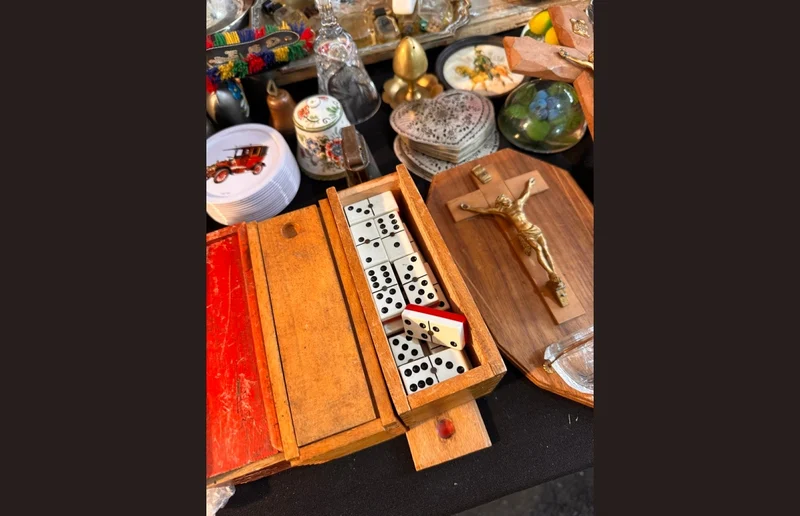
A vide-grenier (literally “empty attic”) is what most of us would think of as a yard sale. Anyone can hawk wares at a vide-grenier—and some of it may be junk—but, on the upside, prices are usually low.
A brocante, on the other hand, is a market of mostly professional, registered sellers. The selection is a bit more curated than at a vide-grenier and items tend to be from the last 100 years or so.
At a marché aux puces (flea market), you will find true antique dealers and high-value items alongside everyday objects and trinkets. There will likely be items over 100 years old for sale, and sometimes dealers have invested time and money into restoration.
A braderie is more like a street fair. These secondhand sales are larger than the others, and happen less frequently (usually in the summer) and are often organized by a town or locality.
A friperie is generally a used clothing store or thrift shop, but the term is sometimes used in the context of markets to denote the sale of used clothes specifically.
For more specialized secondhand markets, look for marchés d’antiquités (antique markets) and marchés du livre (book markets).
Where to start: Saint-Ouen
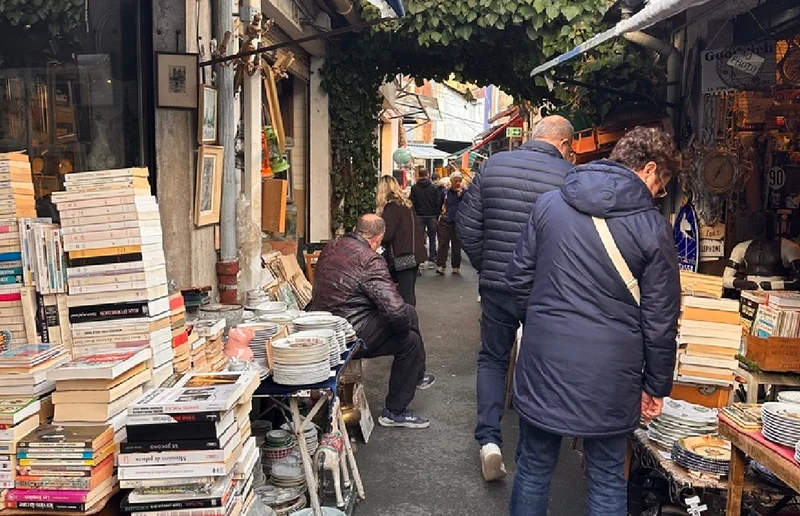
If you only have time to visit one Paris flea market during your stay in France, go with Saint-Ouen (from Paris, your best bet is to take the Métro Line 4 to Porte de Clignancourt or the Line 13 to Garibaldi). The Saint-Ouen market dates back to the 1870s and claims to be the largest antique market in the world, sprawling over 7 hectares (about 17 acres).
That expanse encompasses 12 covered markets, 5 shopping streets, and numerous merchants spilling out onto surrounding sidewalks. You could easily spend the entire day wandering from vendor to vendor without seeing the whole shebang.
What to shop for
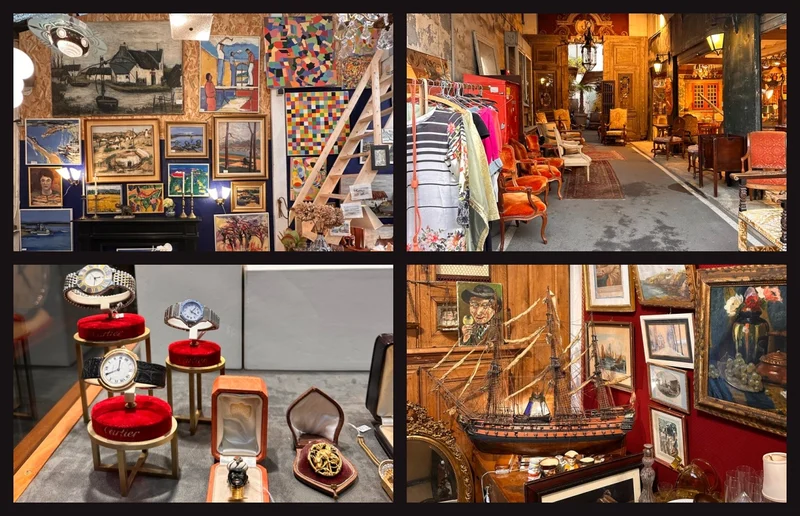
The merchandise is vast and varied. Looking to purchase a pinball machine? How about a rotary telephone, a fur coat, or a painting from the 17th century? Saint-Ouen has you covered.
More practically, travelers hunting for bargains or memorable souvenirs can browse books, records, furniture, art, clothes, hardware, dishes, tchotchkes, rugs, jewelry, and a lot more. Some vendors will ship your purchases to your home back in the U.S.—or you could restrict yourself to what will fit in your luggage to make your life easier.
Stuff for sale will be neatly arranged on tables or jumbled in overflowing boxes, depending on the vendor. Prices can range from a couple euros to several thousand for designer clothes and antique furniture. Well-to-do shoppers rub elbows with tourists, resellers, and those looking to save a few bucks on everyday items.
Maps are conveniently posted at the entrances to most of the mini markets that make up the larger Saint-Ouen complex, making the place fairly easy to navigate. Be sure not to miss the giant flying saucer located inside the Marché Dauphine.
How the other major flea markets in Paris measure up
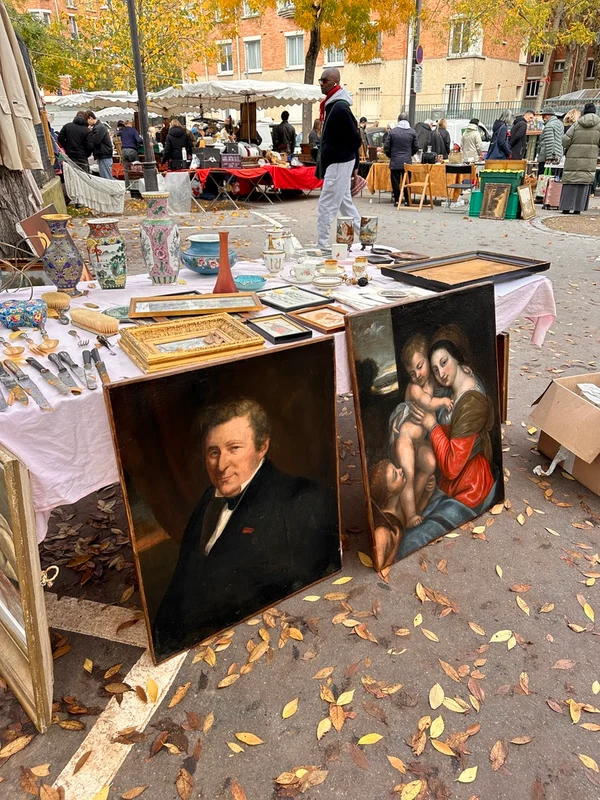
If you’re looking for a more low-key experience with fewer vendors and smaller crowds, consider Vanves, which is a more manageable size and entirely outdoors. (To reach that site via public transit, take Métro Line 13 to Porte de Vanves).
You can skip Montreuil (Métro Line 9, Porte de Montreuil), unless you’re on the lookout for cheap imported goods. Locals shop here for discounted everyday essentials such as clothing, cleaning products, dishware, and appliances. But there’s not much that’s special, and only a handful of true vintage vendors are left.
Get to Montreuil early enough and dig deep enough in the boxes of clothes piled on tables and categorized by price, and you may get lucky and discover some vintage designer apparel—but you could easily leave empty-handed.
When to go to Paris flea markets
The short answer is early. Most markets open around 8am or 9am and last until at least 2pm, sometimes as late as 6pm. But vendors often start packing up before the scheduled closing time.
Shoppers hoping to snag designer or specialty items typically arrive as soon as the markets open in order to have first pick.
What to bring
Cash and a bag to tote your haul. Most vendors won’t accept credit cards, and many sellers do not provide shopping bags.
Where to find info about smaller flea markets and yard sales
While the major flea markets described above have their own websites, many of the smaller markets are tracked by websites such as Sortir à Paris and Brocabrac.
Even a quick Google search of “Paris flea markets this weekend” usually turns up reliable results.
Some helpful French phrases for flea-marketing
To make the most of your Paris flea market experience, memorizing a handful of French words and phrases can make a huge difference. Many vendors speak English, but most will appreciate if you make an effort to abide by French politesse.
Basic words like bonjour (hello/good morning), s’il vous plaît (please), and merci (thank you) go a long way toward earning you goodwill (and better bargaining power).
To go one step further, here are a couple phrases that are especially useful at flea markets:
• Ça c’est a vous? (sah seht ah voo): “Is this yours?” Many market stalls are crowded together, and it can be difficult to tell who the seller is. If you’re interested in an item, you can point at it and ask, “Ça c’est a vous?" to determine if you are speaking with the owner of the item. The vendor will respond either oui or non and, if need be, probably point to the correct person.
• Ça coute combien? (sah koot kohm-byahn): “How much does this cost?” Prices aren’t always marked and sometimes there’s room for bargaining. Asking how much something is can be especially useful in les puces, where prices range widely.

Frommer's Paris
Frommer’s books aren’t written by by AI (like so many of the no-name brands you see in online bookstores) or by travel writers who simply pop in briefly to a destination and then consider the job done. We employ the best local experts to author our guides, like longtime Paris journalist Anna E. Broo...
Get the bookFrommer's Paris
Frommer’s books aren’t written by by AI (like so many of the no-name brands you see in online bookstores) or by travel writers who simply pop in briefly to a destination and then consider the job done. We employ the best local experts to author our guides, like longtime Paris journalist Anna E. Broo...