

Last week, the travel booking site Skyscanner released an in-depth report on the travel trends likely to shape our vacations in 2027. The search and booking data of some 28,000 users across 20 countries was analyzed, and 2,000 additional travelers were surveyed.
The following conversation, taken from the Frommer's Travel Show podcast, dives into a few of the most pertinent trends the company unearthed. Pauline Frommer interviewed Laura Lindsay, Skyscanner's trends and destinations expert.
What follows has been edited for clarity and length. Click here to listen to the entire episode. Or, if you'd prefer to watch the interview, click here.
Pauline Frommer: It's no secret that the cost of living has gone up pretty much everywhere for a number of reasons. A lot of people in the travel industry are worrying that this is going to dampen people's enthusiasm for travel, but from your study it doesn't look like that's happening.
Laura Lindsay: That's right. We talked to travelers about how they feel about travel and one of the resounding things that came through for 2027 is that travelers plan to travel as much as they did before.
But they will spend in a different way, both in terms of how they'll spend their time but also in terms of how they will spend their money.
So we're seeing behaviors like people swapping a destination out for [one] that offers a greater value for the money because of the exchange rate.
Frommer: And [they're also choosing destinations based on] airfare prices, right? Because those have gone up 25% in the United States. I'm not sure if it's been as big an increase in other countries.
Lindsay: Yes, of course. The Iran conflict and the impact on fuel prices has had a huge impact on airfares.
What we are seeing, though, is that airfares are not changing at the same rate on all routes. [Some] destinations have decreased in price. We found locations like Toulouse in France, Bologna in Italy are both 25% cheaper than they were last year.
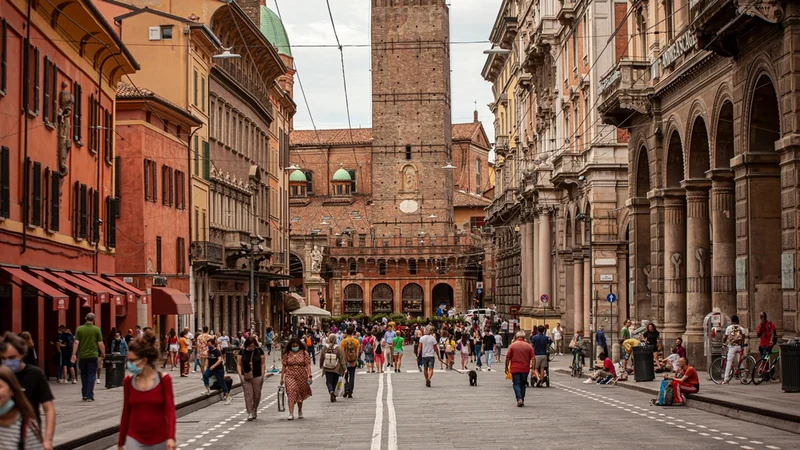
One of the things I always encourage people to be mindful of: When you see those big headlines [about airfares, they] are talking about an average. Yes, [you may be affected if] you have a particular route that you always take and you see a shift in that price from previous years. But if you are just looking to get away and you don't really mind where you go, you can still find great [options] which can be in a good price range.
Frommer: You said a moment ago that a lot of people are also following exchange rates in terms of making travel decisions. How is that playing out?
Lindsay: Different travelers are considering not just how much their flight costs, but also how much their whole trip will cost. And we're seeing that the exchange rates are having an influence on where people choose to travel. So, for example, Japan has had a real moment. Lots and lots of people are traveling to Japan, and one of the factors contributing to that was that the yen wasn't particularly strong, and so people are able to have a trip that they potentially dreamed of for decades.
Frommer: Vietnam is also having a moment because it's so affordable to go there. What other destinations are you seeing people switching to because of the currency rate?

Lindsay: Sri Lanka is currently more affordable for Americans, and is such a great 2-week itinerary location. There's so much variety, a country where you can get some great beach time, but there's also incredible culture to explore, lots and lots of inland spaces with lots of wildlife, and obviously incredible food.
Frommer: Incredibly spicy food.
Lindsay: I feel like food might be a theme of this discussion, but Argentina is also offering really, really good value for U.S. travelers. When I went to Argentina, the food was absolutely incredible. You're eating some of the best steak in the world, and it's a fraction of the price of a very average one back home, which feels even more satisfying.
So 72% of what what we are describing as "currency chasers"—those who are flexible [enough to travel by] foreign exchange rate—are Gen Z.
Part of the reason, we think, is [that Gen Z] is becoming more and more financially fluent. [They're more apt to use current] technology to support [research], seeing foreign exchange rates in their mobile apps. I certainly did when I traveled abroad. And when my phone tells me, You spent less than you did last week, that's quite satisfying.
Getting the most from currency exchanges
Frommer: There are some good tips that you had for making the most of your currency exchange. If a shopkeeper or restaurant says, Do you want to pay in the local currency or in your own home currency? once you've handed over a credit card, there's only one answer, right?
Lindsay: Absolutely! The local currency every time.
Frommer: Right. [The bank issuing your credit card] has the better exchange rates generally. You don't know what exchange rate the restaurant is going to give you.
We've found [that some companies sneakily use the exchange rate to their own advantage]. Uber has a switch that they toggle on [to force you to] pay in your home currency. And then [Uber] charges you a fee for making the exchange, and gives you a lousy exchange rate to boot. So you have to be careful with some apps.
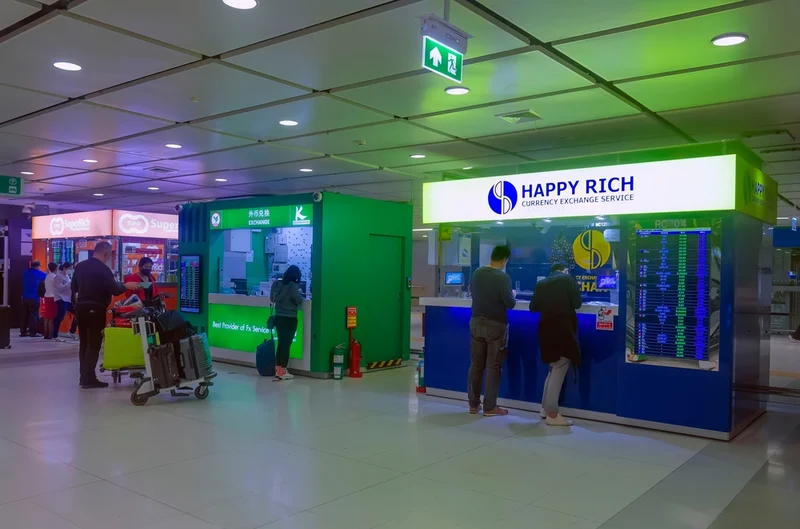
As well, you say never exchange money at the airport. Why is that?
Lindsay: You unfortunately pay a premium for convenience. Traditionally, people leave changing currency until the last minute. They do it at the airport and then are stung with the more expensive rate. You're just not getting the best value for your money [at the airport].
Frommer: And in recent years, some of the ATMs at the airport aren't bank ATMs; they belong to currency exchange companies, and they, too, give a lousy rate. You think, Oh, it's an ATM—that will be a better rate. But no. It's very sneaky.
Lindsay: Technology is providing us with a lot more information as well. We worked with TikTok as part of this report. TikTok is seeing a 155% increase in people using the hashtag—or searching for the hashtag—#exchangerate.
Fitness of all sorts
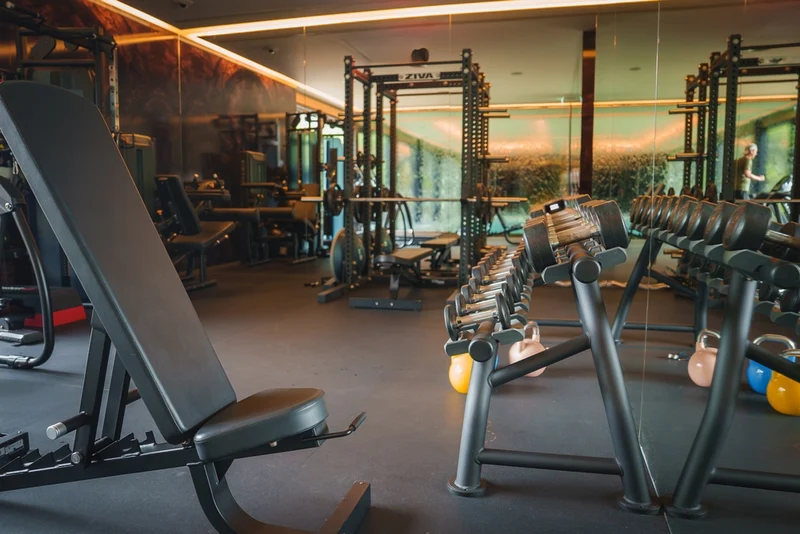
Frommer: I don't know if this is being also driven by the younger generation, but you found that people are actually interested in the hotel gym when they're looking at different properties. I always thought it was just lip service that people would say, Oh, yeah, I'm going to go to the gym [on vacation]. But you found a huge uptick in the amount of people who are actually looking at videos of hotel gyms.
Lindsay: Something that really came through this year was the fact that people are wanting to travel and really take a break. We saw in the data that lots of people are considering turning off their digital footprint—putting their phone in the hotel safe or turning off data and notifications so that they don't have that kind of stress.
But then, on the other hand, there are other things that people want to maintain from their daily life. It's become apparent that fitness routines have value not just [for] your physical health but also your mental health. It's no longer the idea that [travelers] want to just drop all of that for a week and sit on a sun lounger and eat unhealthily. We're actually seeing people prioritize accommodations with fitness facilities and healthy breakfasts.
2027 is about people spending their travel better. It's about them prioritizing those things that really matter to them and, for me, it feels quite powerful that people are wanting their break to be really about them.
A few years ago we saw a big rise in people traveling, and a lot of it was about what images and videos can I get to put on my social media. Now it's almost [that the] pendulum [has] swung the other way, and it's more about, How can I make sure that I make the most of the time for my benefit rather than my audience's benefit?
Frommer: Back to fitness, Skyscanner partnered with ClassPass, an organization that my daughter introduced me to. You put money onto [the system], and then you can use it [to book fitness classes at] different types of gyms all around the world.
It can be convenient, but often you're at the end of the line [to get in] if it's a very popular class, meaning sometimes you don't get in.
But your study found that people are using ClassPass when they travel, right? They're not just using the hotel gym. They're going out and trying local fitness programs.
Lindsay: Yeah, absolutely. I travel to New York for work a lot, and I would use ClassPass to find fitness classes that we didn't have in London. I did my first ever barre class when I was in Brooklyn and I was like, Wow! We don't have this in London. It felt like a really nice way to try different things [on the road].

If you're traveling alone, [a fitness class] can be an ideal way to get out because you don't get the same enjoyment out of going out for dinner. You do still manage to have a nice time, but you are reading a book rather than chatting to somebody. Whereas a fitness class—it doesn't matter if you're on your own. You tend to do that anyway on your own. And it's quite a nice way to feel part of the local place.
Music travel
Frommer: The other thing I loved [from your study] is the importance of music.
A lot of people are leaving the U.S. [to attend concerts] because in the U.S. Live Nation is a monopoly. It owns so many of the venues where bands play that [concert] prices here are much higher than they are in other parts of the world. So now a lot of people are traveling for music.
Lindsay: Over the last couple of years the live event industry has massively expanded. What we've seen is that people now will combine a concert with a trip. A great example: Taylor Swift. She draws crowds across the globe. And for a lot of people, they may not be able to get a ticket where they live, but they may have been able to get a ticket in another city. And potentially it may be cheaper [to attend the show] in the other city, even including a flight to get there.
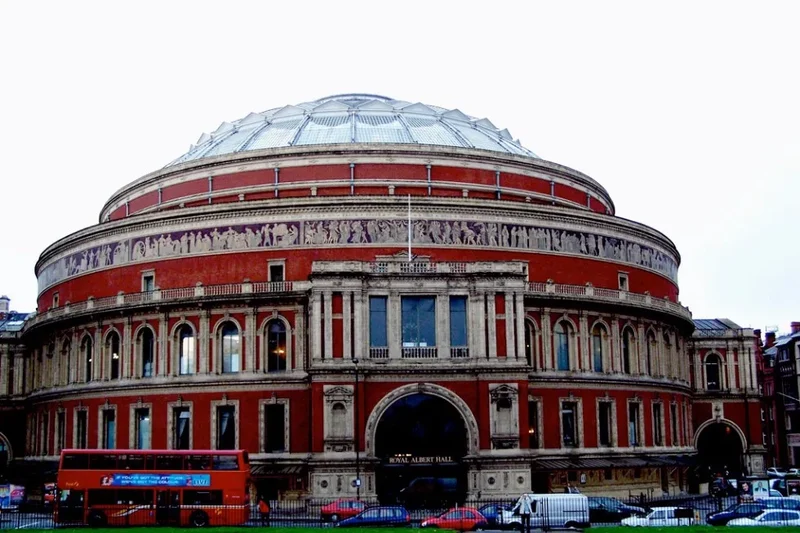
But the other thing that really came through in the survey was that people now really care about where they see the music as well. People are traveling specifically for iconic venues like the Grand Ole Opry or the Bluebird Cafe [in Nashville], or the Royal Albert Hall [in London].
Frommer: And genre counts. I love the fact that K-pop is driving the most concertgoers. Does that mean they're all going to Korea or are they just hearing K-pop groups all over the world?
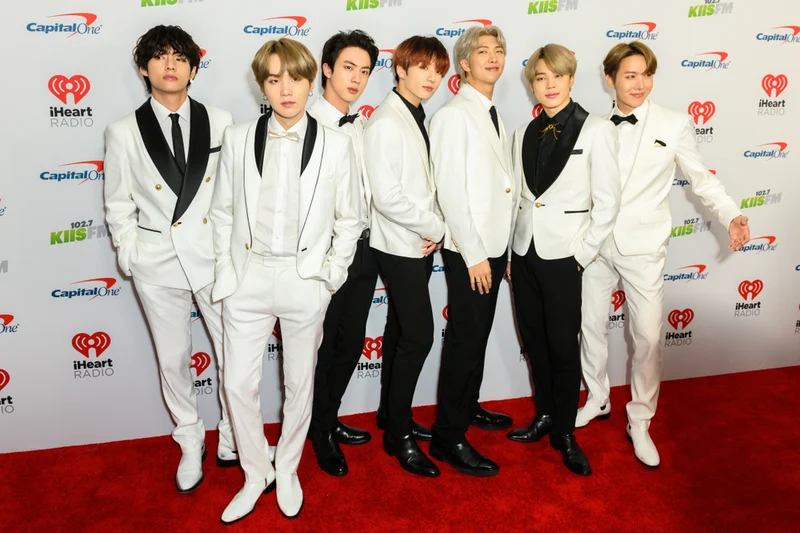
Lindsay: [With] technology you're able to discover lots and lots of different artists at the touch of a button. You're able to try different genres [and that] means that we're seeing more diversity in the types of music that people interact with. The K-Pop phenomenon is huge and global. Anytime BTS announces a tour you immediately see a spike in interest to those [tour] locations.
Frommer: Music is inspiring people to visit destinations [even when concerts aren't happening]. Can you talk about the Bad Bunny effect?
Lindsay: The interest in Puerto Rico has been huge.
Frommer: Ever since the Super Bowl, right?
Lindsay: Yeah. It's really lovely, the power of music—that it shines a spotlight on places.
Frommer: [Skyscanner found] searches for Puerto Rico went up 40% after the Super Bowl, which is kind of astonishing but wonderful because it's such a beautiful place to visit.