

A stronger recognition of underrepresented regions was a driving force during the annual World Heritage Committee session, which recently wrapped up in Busan, South Korea.
With 2026's newly inscribed World Heritage sites, the United Nations Educational, Scientific and Cultural Organization (UNESCO) World Heritage List now comprises 1,273 locations across 173 countries. The sites are marked for legal protection under international treaty.
Notably absent from this year’s session was the United States, which announced its third withdrawal from UNESCO as part of a series of antidiplomatic isolationist initiatives.
Also notable is the fact that three of the newly inscribed sites were submitted on an emergency basis, including the Boma-Badingilo Migratory Landscape in South Sudan, the Mount Amel Castles in Lebanon, and Sebastia in what UNESCO recognizes as occupied Palestine.
Highlights among UNESCO's new World Heritage Sites
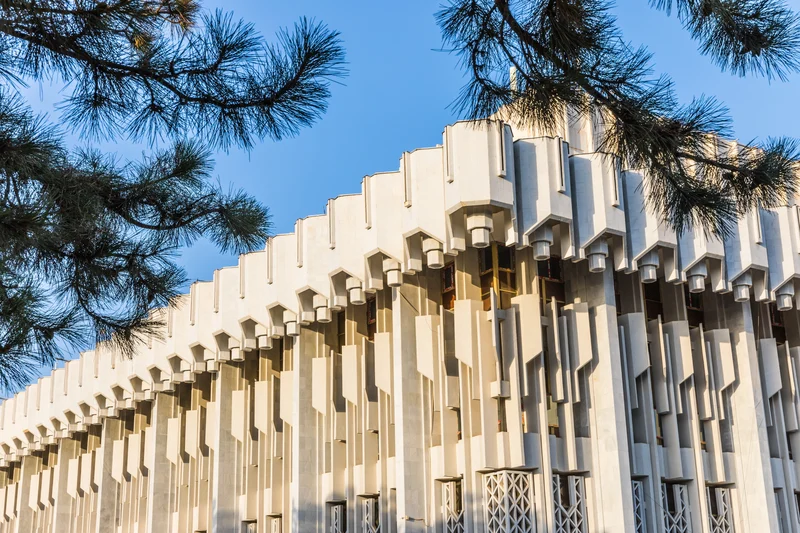
• A big win for Brutalist architecture nerds, 10 modernist buildings in Tashkent, Uzbekistan, are now World Heritage properties. The series of stunning structures includes museums, exhibition halls, hotels, residential properties, cultural sites, and scientific facilities built in the nation’s capital between the late 1960s and early 1990s. The selected buildings represent a culturally significant period of late‑Soviet architectural reconstruction following the 1966 earthquake that reshaped Tashkent into a modern socialist metropolis.
• The beaches of the D-Day landings in the Normandy region of France: Encompassing Utah, Omaha, Gold, Juno, and Sword beaches, as well as Pointe du Hoc, this is where Allied forces kicked off Operation Overlord on June 6, 1944, which marked the beginning of the liberation of Western Europe from Nazi occupation during World War II. The designation preserves the American Cemetery at Colleville‑sur‑Mer as well as significant remains of the German Atlantic Wall. Honestly, it’s a little surprising this one wasn't already on the list.
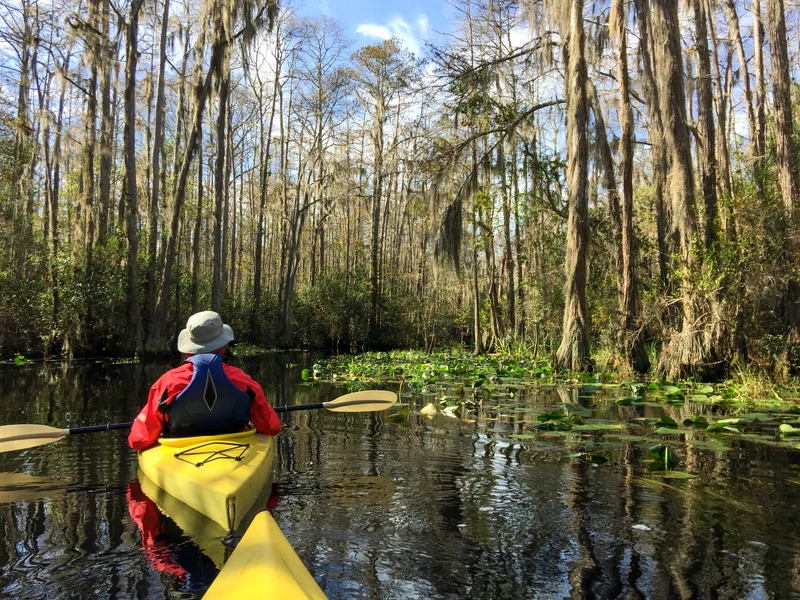
• The addition of the Okefenokee National Wildlife Refuge in southeast Georgia and northeast Florida marks the only U.S. entry on this year’s list. The largest lowland freshwater peatland in the worldwide subtropical zone, the Okefenokee Swamp is home to one of the largest and most intact ecosystems within the North American Coastal Plain. The wetlands, savannas, and forests are an important habitat for American alligators, migratory birds, and threatened species.
• The gods of Greek mythology are having one heck of a summer. Two myth-centered films—Christopher Nolan’s The Odyssey and the Broadway/West End Hadestown pro-shot theatrical run—are going gangbusters at the box office. Now, the wider area of Mount Olympus, the gods' mythological home base in northern Greece, is being honored as a protected site. UNESCO notes the 2,919m (9,574 ft.)-high mountain range features “striking landforms, including glacial cirques, limestone cliffs, karstic sinkholes, and olistolith fields,” and “has served as a glacial refugium for forest species.” Not to mention all the deities living up there.
• One of the most important archaeological sites in the West Bank, Sebastia dates back more than 3,000 years. Israeli officials have denounced the city’s UNESCO designation as “politically motivated,” while Palestinian officials have welcomed the inclusion with hopes it might protect the city from further Israeli land seizures and settlement expansion.
• The designation of the roças of Sao Tome and Principe marks the first UNESCO World Heritage inscription for that small African nation. Six Portuguese colonial agricultural plantation sites across Monte Café, Agua Izé, Diogo Vaz, Sao Joao, Sundy, and Belo Monte are now preserved relics of the forced migration and labor in coffee and cocoa production from the late-19th century through the mid-20th century.
Full list of UNESCO World Heritage Sites added in 2026
- Aalto Works, Finland
- Alamūt Castle and Related Fortifications, Iran
- Amazonia Theaters, Brazil
- Ancient Buddhist Site of Sarnath, India
- Ancient Capitals of Asuka and Fujiwara, Japan
- Beaches of the D-Day Landings, Normandy, 1944, France
- Gdynia Modernist City Centre, Poland
- Jingdezhen Handicraft Porcelain Industry Sites, China
- Mount Amel Castles, Lebanon
- Rock Mosques and Associated Sacred Sites of Mangystau, Kazakhstan
- Royal Capetian Fortresses of Languedoc, France
- Sebastia, State of Palestine
- Tashkent Modernist Architecture, Uzbekistan
- The Cemetery Complexes of the Xiongnu Nobility, Mongolia
- The Medinas of the Historic Sultanates of the Comoros, Comoros
- The Roças of Sao Tome and Principe, Sao Tome and Principe
- The system of Italian-style condominio theatres of the 18th and 19th centuries in Central Italy, Italy
- Village of Sidi Bou Saïd, Tunisia
- Wat Phra Mahathat Woramahawihan, Nakhon Si Thammarat, Thailand
- Aqaba Marine Reserve, Jordan
- Boma–Badingilo Migratory Landscape, South Sudan
- Okefenokee National Wildlife Refuge, United States
- The Bony Fish Fossils of the Western Limfjord, Denmark
- Wadi Wurayah, United Arab Emirates
- The wider area of Mount Olympus, Greece