

This is part one of a two-part interview from a recent edition of the Frommer's podcast. Pauline Frommer spoke with David McElhinney, author of the newly released Frommer's Japan guidebook.
The transcript has been edited for clarity and length. The second part will cover ways to save money on a Japanese vacation.
Pauline Frommer: Is there a region you think has the best food in Japan or the most interesting [food]?
David McElhinney: That’s a good question. I mean, the boring answer is probably Tokyo, just because it's got the most innovation in food.
Japan is quite steadfastly against change when it comes to cultural traditions. [But] if you look at the ramen space in Tokyo, there's lots of really innovative things going on.
Lots of the best modern fine dining restaurants are not these super-serious, have-no-fun, eat-the-food-but-say-thank-you-and-then-get-the-hell-out-of-here type places, which used to be like the entire upper end of the dining market in Japan. In Tokyo there are very homely places that are still serving food that's 1 or 2 Michelin-star quality.
So that's the kind of boring answer.
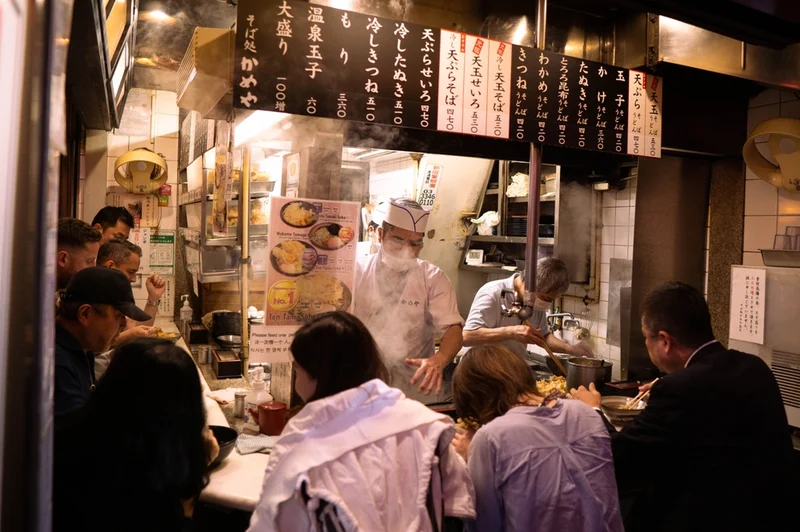
Kyotango is a cool area [for food]. It's part of Kyoto Prefecture, but the coastal area, so it’s called "Kyoto by the Sea." And they produce a lot of foods there with koji, which is the fungal mold that's used in sake production and stuff. It has more than 100 enzymes that facilitate digestion. So there's lots of really good miso, soy sauce, rice wine vinegar [made with koji]. And they serve [koji] in different rice noodle dishes, fish that they [catch] in the region.
That fungal koji is supposedly really beneficial to longevity.
Okinawa is usually the most famous place for centenarians, or people that live beyond 100, in Japan. But there was a study, albeit with a smaller sample size, that found that in Kyotango they have almost three times as many centenarians as the national average. And the oldest guy that ever lived actually lived there as well. He was 116 when he died. He lived through three centuries—born in 1897, died in 2013.
A lot of the locals, the local food producers—they always credit koji as kind of the elixir of long life.
And just as an aside, if anyone wants to visit that region, there's a woman called Junko Hamilton who's Japanese, grew up in the Kyoto area, but she lived in Ireland for 10 years and she runs cooking classes and can kind of explain all this stuff to you in fluent English. You'll get to cook foods with koji and try different koji-made products.
Frommer: [Let’s talk about the] pop culture side of Japan. You have a beautiful phrase in the book. You say it's their "soft power"—that the whole world has been taken over by anime and manga and other incredibly creative Japanese ways of seeing the world.

Frommer's Japan
Frommer’s books aren’t written by committee, by A.I., or by travel writers who simply pop in briefly to a destination and then consider the job done. We use seasoned, locally-based journalists like David McElhinney, who lives in Japan, and has been published widely, covering the country’s extraordin...
Get the bookFrommer's Japan
Frommer’s books aren’t written by committee, by A.I., or by travel writers who simply pop in briefly to a destination and then consider the job done. We use seasoned, locally-based journalists like David McElhinney, who lives in Japan, and has been published widely, covering the country’s extraordin...
It used to be that people went to Japan strictly to visit temples and have kaiseki meals and indulge in traditional Japanese culture. But now a lot of people go there to see what's happening on the cutting edge, what's happening in youth culture, what's happening in these new artistic expressions. So if people are interested in that side of Japan, where do they go? What do they do?
McElhinney: I'm 31, so I'm that generation that grew up playing Pokémon, and getting Pokémon cards. So I was certainly influenced by that stuff myself.
Like a lot of things, Tokyo is sort of the beating heart of [those cultural movements], particularly an area called Akihabara. It's the mecca, and it's just a cool area in general—a big thoroughfare, neon lights either side, and filled with arcades and retro game stores, all that kind of stuff.
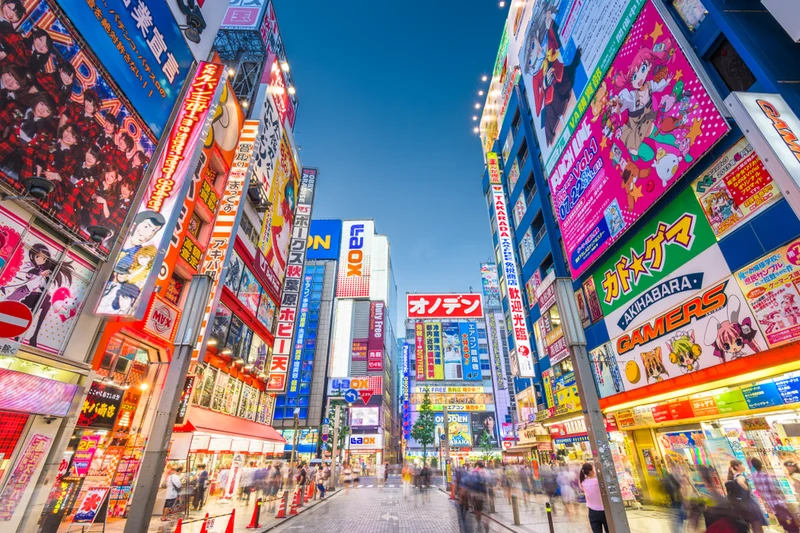
Another area of Tokyo that's quite famous, particularly for women, is called Otome Road, which literally means Maiden Road. It’s in Ikebukuro, which is northwestish of the city. And it's particularly famous for doujinshi, which are fanzines.
If this was in America or the U.K., these [fanzines] would fall afoul of every copyright law. They're completely illegal. But loads of [the] artists [who make them] are really talented, so the industry just kind of lets it pass.
Frommer: So these are magazines made by fans in the style of more famous artists? Is that the way to put it?
McElhinney: Yeah, I guess that's how I would put it. And often you get a character from one famous series and a character from another famous series, and the fanzine will be those two characters in some kind of romantic relationship or whatever.
Frommer: So this is the area where they're produced. But why would a visitor go there? Would they experience any of this culture there?
McElhinney: So this is the area where the shops that sell these magazines are. So it's famous for that and also for cosplay. Lots of women go and buy costumes of their favorite anime and manga heroines. And then in that same area in Ikebukuro, there's a Halloween cosplay festival. So if you're there that time of year and you're into cosplay, that's the place to go to get your gear on to flaunt it on the street.
Frommer: Wow. So thousands of people in crazy costumes all over the place.
McElhinney: Even the word cosplay ... We think of it as an English word, but it was actually a Japanese portmanteau of two English words. They've taken the English words costume and play and just squeezed them together into their own word.

Frommer: I have a dear friend, Mike Foster, who is a professor of Japanese mythology, and he's written a whole bunch of books on the fact that we are seeing mythology being created in real time in Japan. You know, we think of mythology as being something that maybe was part of religion eons ago and is something in the past. But in Japan, he feels that what's going on with this very intense culture, around what we'd call cartoons, is actually a rejiggering of the mythological hierarchies of the Japanese mind.
McElhinney: Yeah, that's interesting. I mean, a lot of these places do feel like temples to Japanese pop culture, to different series.
To throw in another example: Just outside Kyoto they recently opened the Nintendo Museum. It's the first sort of museum of its kind. And it really does feel almost like a religious ode to this very storied Japanese video game-maker/console/developer.
It’s a really cool experience, but getting a ticket for it is a nightmare. You've got to go through this convoluted lottery system a few days before, and then call a Japanese number and then you get your ticket sent by QR code.
It's a pain. But the one advantage of that is that they have very controlled numbers that can be in the museum at any one time, which benefits the user experience.
On the main top floor is archives of all the old games and peripherals and box art and destruction manuals, all that kind of stuff.
You can't take any photos in there, which I think is great because otherwise it would just be selfie sticks everywhere and influencers blocking all of the displays.
Frommer: Is the process doable for someone who only speaks English?
McElhinney: Yeah, it's in English.
Frommer: We’ve talked about the fact that Japan is getting overtouristed, that there are certain areas that are just too damn crowded to be as enjoyable as they used to be.
And I know you took [that problem] very seriously, wanting, as a guidebook writer, to show parts of the country that people don't think of going to are as intriguing, as rewarding [as the iconic sights]. So let's talk about some of the places that people don't think of going to but really should.
McElhinney: Lots of people, especially if they're going to Japan for the first time, they're going to want to go to Tokyo, Kyoto, probably Osaka, maybe Hiroshima, maybe Hakone, something like that. So you've absolutely got to cater to that.
But I think also there's some responsibility to kind of show people that Japan is actually a much bigger country than that "Golden Route," as it's known.
Furthermore, lots of the places, especially smaller places in Japan, are suffering from depopulation and economic malaise. So if you go and visit some of the smaller towns around the country, every yen you spend there actually has an impact. So from an ethical standpoint I think it's good to try and vary things a little bit when you travel.
Frommer: Would it also be fair to say, from a welcoming standpoint, [people in less visited areas are] excited to see tourists in a way that maybe folks in Kyoto and Tokyo won't be?
McElhinney: Yeah, for sure. To take an example from Niyodo in the center of Kochi Prefecture on Shikoku island: It's this sort of thundering gorge. And on this little precipice in the gorge, there's a guy called Ken Mukai. He's got a Japanese name, but he's actually from California. He taught as a science teacher in the public school system there, and then decided to move to one of the most rural places you could find in Japan to brew beer. So he's got this little tiny microbrewery and taproom literally perched right over this gorge.
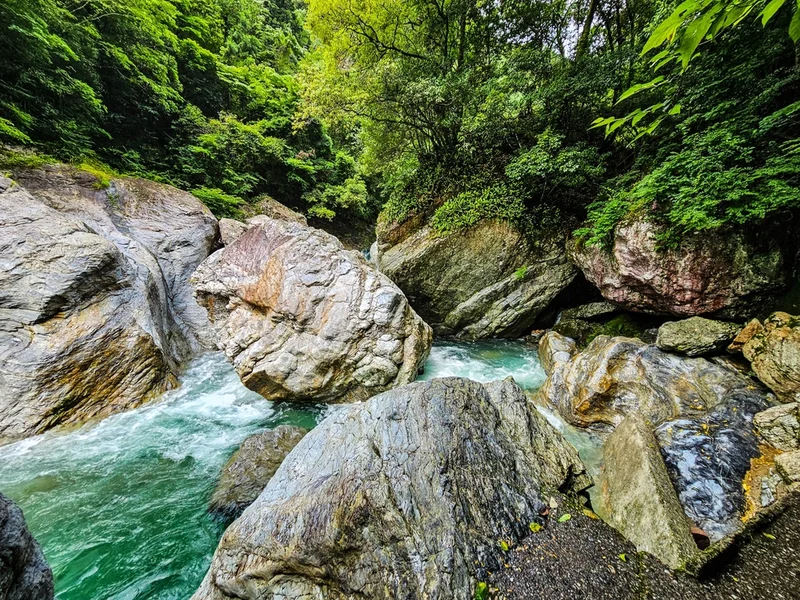
And the water in the gorge itself is called Niyodo blue, which is very clear, very clean water. Like artesian springs. So basically it gives him a canvas to create any beer he wants from it. And since he moved there in 2020, the number of residents per kilometer squared has dropped by like four, I think, from like 17 to 13. And he's named one of his beers 18—the number 18—because he's trying to get the population per square kilometer back up to that number.
So, yeah, going somewhere like that you kind of get a sense that, oh, yeah, me being a tourist here is actually having a positive impact rather than a negative one.
It's also a stunning area to drive through. There's lots of canyoning activities, rafting, lots of outdoor stuff. You can hike around there. There are onsen hot springs, so you can go and relax in an outdoor hot spring. It’s an outdoor person’s type of place.
Frommer: The Camino de Santiago in Spain has become very, very popular. It's a walking pilgrimage. I've heard there's a temple-to-temple pilgrimage in Japan that a lot of people are doing. Do you know about that?
McElhinney: Well, it's interesting you mentioned the Camino because it actually has a sister trail in Japan, in Wakayama, which is not the one you're referring to, but I'll come to that in a second.
So the one in Wakayama tells the tale of Japan's first emperor, who got lost in these mountains. Then a three-legged crow landed on a branch. [The emperor] followed the crow through these mountains and attacked his enemy with the rising sun at his back. He won and founded Japan.
Frommer: You mentioned the rising sun. Was this the inspiration for the flag?
McElhinney: Yeah, basically. So the rising sun is a sun goddess called Amaterasu, who's one of the main deities in Shinto mythology, Shinto being the predominant national religion.
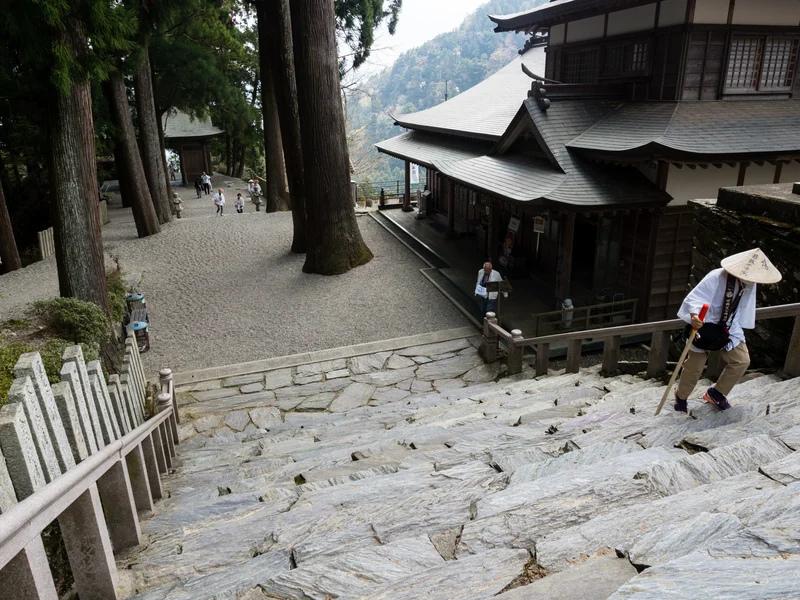
But the original trail you referred to is the Shikoku Pilgrimage. It's kind of a loose idea, but the idea is that Shikoku island is a mandala—so like a Buddhist diagram of eternal spiritual truths. And there's 88 temples that go around the island, sort of in a circle, a little bit into the middle and then back, back out around to where they started. They're in honor of a monk known as Kukai or Kobo Daishi. He didn't actually establish or build all of those temples, just some of them. This route sort of formed as an honor to him.
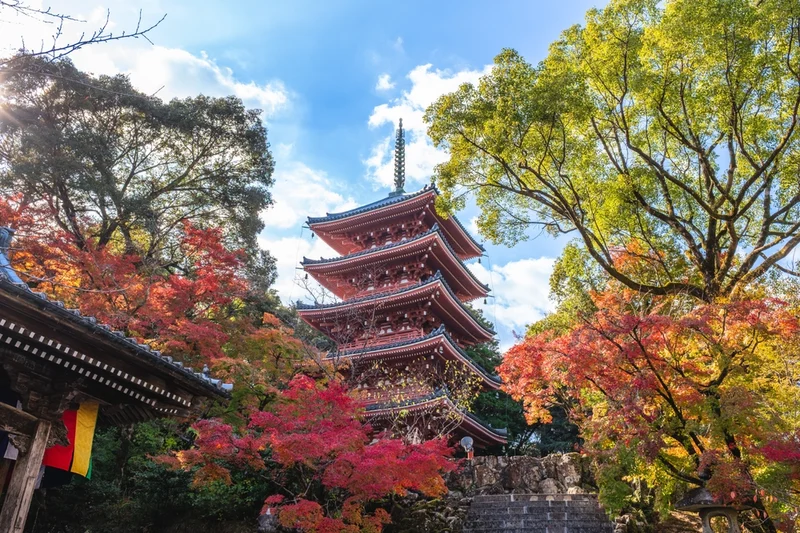
So lots of people do [the pilgrimage], not necessarily because they have any affiliation to Shinto Buddhism—which is quite an esoteric sect of the religion—but just because it's kind of a cool thing to do. It's a good way to disconnect. Takes about 6 to 8 weeks, which, granted, is longer than the average traveler is going to have in Japan.
But like the Camino you can come and do a week here, 2 weeks there. Split it up whatever way you want. There is a prescribed route you can follow, but of course you can do it whichever way you please. There are lots of different access points in terms of airports and ferry ports and train stations.
Frommer: Like the Camino, do you have people from all over the world doing this? So it's a very social activity?
McElhinney: Yeah, very much so. The last time I was in Shikoku, I made a point of driving to as much of it as I could. I would stop off at various temples and sort of accost people and ask them questions about why they were doing it.
You get people from all over the place. I met an American guy who’d worked in tech for quite a few years and just decided that he wanted to disconnect from the world for a little while. So he was doing the full thing—budgeted about 8 weeks for it. He said it's amazing.
You walk along the road and because pilgrims often wear the same clothes—they wear conical straw hats and these white kind of garments and have a stick—people will just stop and maybe give you some money, a couple hundred yen to get a drink at the next vending machine or something. Or maybe they'll give you some fresh produce from their farm. He said that the generosity you see from strangers when you're a pilgrim on that trail is kind of amazing. So that's a cool aspect of it.
Japanese people are known for being generous and friendly, and I think they really respect the tradition of the Shikoku Pilgrimage. So they'll always help people out.
And there are inns and campsites and things [on the trail]. There are some rest stops I think you can stay in for free. There are temples that will also give free accommodation.
Frommer: So it's a whole ecosystem created for the pilgrimage.
McElhinney: It's still not superpopular, but I think it's becoming popular enough that it's becoming more approachable for non-Japanese tourists to do.
Frommer's Japan is now available in bookstores and from online booksellers.