

Tate Modern changed London forever in 2000. That's when a dilapidated old power station on a dreary, semi-industrial stretch of the River Thames' southern shore was refitted to display of the country's contemporary art treasures. Crowds flooded to see the spectacular conversion, and seemingly overnight, London's riverfront was rediscovered by tourists and locals alike. By 2015, the Tate was attracting nearly 5 million visits a year.
But even its cavernous halls were not enough. In 2016, over budget and over schedule, Tate Modern opened a second building—Switch House (later named the Blavatnik Building), a 10-level tower with galleries, offices, and a restaurant, was attached to the existing former power station, which was renamed Boiler House (and is now called the Natalie Bell Building).
Yes, Tate Modern is still packed from cellar to rafters with the cream of contemporary art, from classic but esoteric pieces in the original building to experimental and performative works in the former fuel tanks under the newer Blavatnik Building.
But September 2023 saw the long-delayed return of one another attraction visitors might like: a free, open-air observation deck. It once operated as the Viewing Level, but is now simply called Level 10.
Although the deck opened in 2016, it soon ran into trouble. First, it was unpleasantly overcrowded.
Then, in 2019, a troubled teenager threw a 6-year-old from the platform. It was a miracle that the boy survived.
Then the platform shut down for Covid-19 precautions, a closure that lasted for more than three years, until this summer.
Finally, after years of unavailability, this free view has returned to the tourist menu in London.
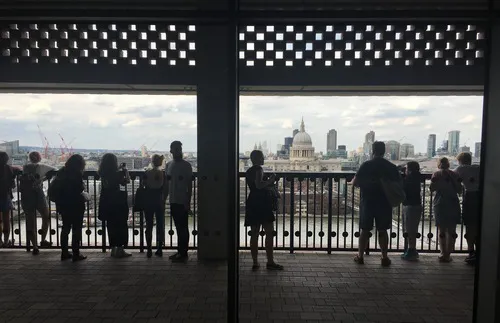
This is the first thing visitors see after leaving the elevators. That's the legendary dome of St. Paul's Cathedral in the middle.
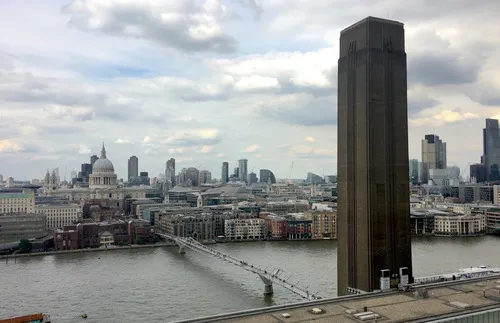
Once you leave the enclosed elevator lobby, you're on an open-air balcony that encircles the building, facing the back of the stylized chimney that served the old power station. You could get a similar view from the Golden Gallery at the top of the dome of St. Paul's, but that costs more than £20 and requires a 550-step slog up.
The views from the back, or southern, side of the Tate's Level 10 are largely blocked by modern condos. Those flats, which were marketed as architectural trophies to some of London's most moneyed buyers, are encased in glass that exposes everything within to view. And even though those residents knew the kind of apartments they were buying, they still got together and sued to halt what they called an invasion of their privacy by the Tate's observation deck.
It was that lawsuit, and not the pandemic and not even the attack on the child, that prevented Level 10 from opening for so long.
So even though Level 10 has reopened, it is now without access to the southern side of the viewing deck. The Tate also had to slap up a bevy of warning signs that beg visitors not to take photos of the wealthy locals inside their showy enclaves.
The front and side views are the ones most tourists care about, anyway. They're more about history and London's world-famous riverside grandeur than surveillance.
But you'd better keep your camera lens trained solely on the northern, river side. Immediately after Level 10 reopened, there were reports that visitors are being chastised for pointing their cameras anywhere near those apartments, even if they're just taking westerly photos of the river like the one below, taken in 2016.
Just think of Tate Modern's Level 10 as being a place to take excellent Thames-facing photos of St. Paul's Cathedral.
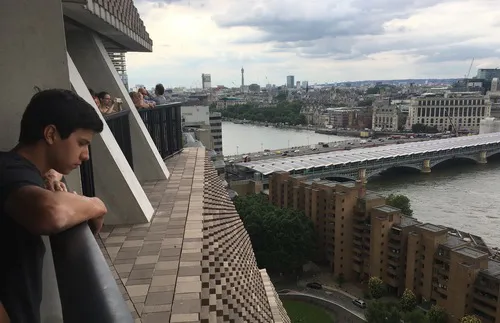
The deck is sheltered from above, but it's open-air.
Looking west, you can see Blackfriars Bridge, the BT Tower, and the West End. A tiny snippet of the tower containing Big Ben is visible over the roof of a nearby building, but if the Houses of Parliament are what you really want to see, the view from the London Eye can't be bettered. Of course, the London Eye can coast £35 for adults, and you have to wait in line. And when it comes down to it, the Tate Modern is closer to the rest of central London and gives you a better idea of the city's ongoing growth spurt.
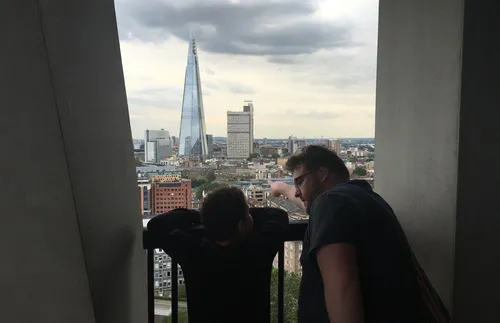
Looking east, there's the Shard, Europe's tallest skyscraper. Its own observation deck, View from the Shard, is so high in the clouds you can barely make out the people down below, and visiting that can set you back more than £30 per adult. But the Tate's Level 10 costs nothing.
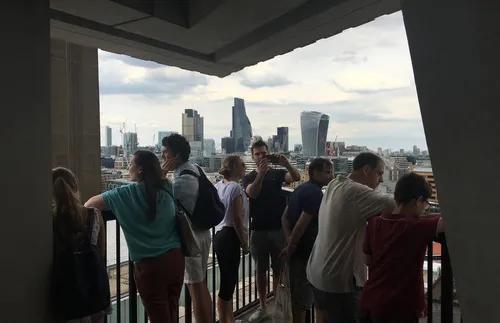
This is the view toward The City in 2016. London's skyline has proliferated considerably since then.
Observation decks are all the rage in London these days as a new crop of skyscrapers is erected throughout The City district, but those new viewing areas are often hemmed in by other giant buildings.
The Tate Modern, though, is the tallest building in its area, and its northern view sweeps without obstruction across the river—so you'll actually recognize the places in your pictures. Snap a few—London's skyline is in constant flux.
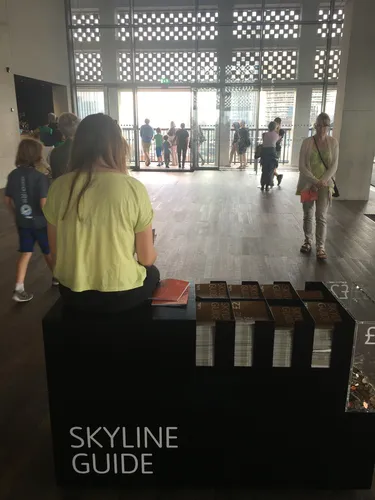
A visit isn't completely free—if you want a foldout guide to what you're seeing on the skyline, that's a requested donation of a few pounds.
A small cafe for coffee and refreshments was also added for the 2023 reopening.