

Works by the world’s most famous artists, publishers, wineries, and artisans regularly land on the loading dock of Sotheby’s, and have since 1744 when the famous auction house was founded in London.
That’s no secret. What’s less well known is that 2 weeks before an auction, all the goods go on display at one of Sotheby’s 13 auction houses worldwide, and anyone is welcome to come in and gawk. There’s no one checking to see if you have an extra million—or 20—squirreled away in your mattress for a buying spree. In fact, Sotheby’s lets all comers in for free.
In New York City that used to mean trekking out to York Avenue on the far east side of Manhattan, a trip that usually only those who were part of the auction world made.
But now that Sotheby’s international headquarters have moved to Manhattan’s iconic Breuer Building—built for the Whitney Museum and right on Museum Mile—we expect these fascinating and free shows to become a regular part of the city’s tourist trail.
That was part of Sotheby’s goal in making this move. At the press preview I attended, Sotheby’s CEO Charles Stewart (see below) said, “We want more people to access, to experience, to learn, to discover, and ultimately to own fine art and luxury objects.”

What went unsaid was the fact that Sotheby’s desperately needs to expand its audience and bring in sales. In 2024, sales at Sotheby’s dropped by 23%, mirroring fine art sale trends worldwide. Moving farther west to ritzy shopping mecca Madison Avenue will put the baubles inside Sotheby’s in easier reach of the city’s one percent.
So is a visit worth the time for regular vacationers in New York City?
Let me give the question above an unqualified yes as an answer. You will see true wonders of all sorts at Sotheby’s.
That said, I did find it bittersweet that many of the museum-worthy pieces I saw will likely end up in some billionaire’s bathroom.
Sure, most museums keep 95% of their holdings in warehouses. But at least when a great work of art is owned by a museum there’s a likelihood that at some point the piece will be seen by the general public. Not so when an artwork goes into a private collection. So seeing the works here has a last-chance feel, which adds a certain frisson to the viewing.
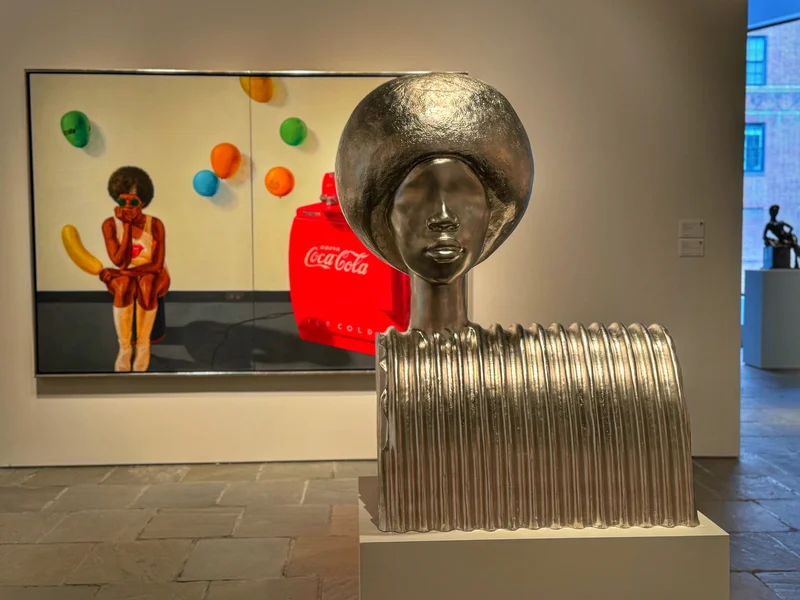
You’ll also get to experience a building that is a masterpiece of brutalist architecture (more on that below).
The quality of what you’ll see at Sotheby’s
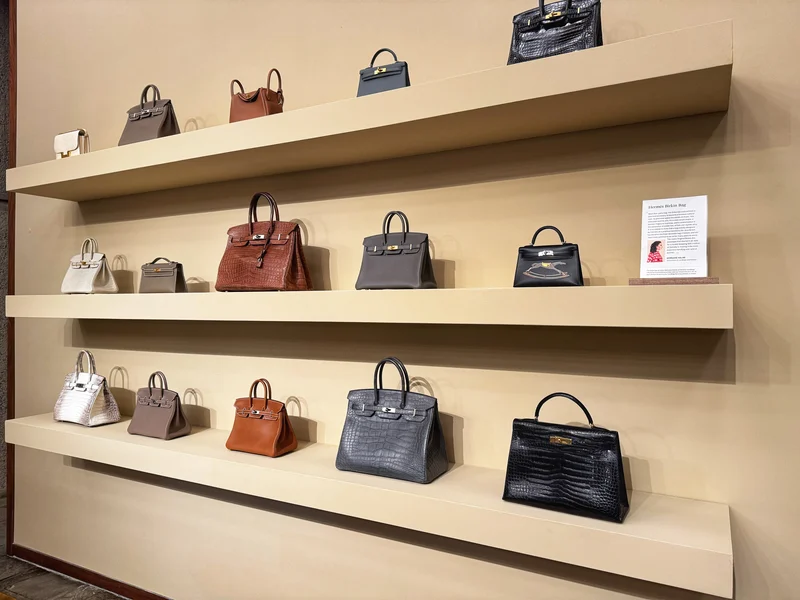
The Sotheby’s experience starts in the lobby, where you’ll see vitrines holding goods that speak to both timeless value and the weird obsessions of today’s superwealthy.
When I was there, that lobby display included a wall of Hermès Birkin bags (see below); jewelry from David Webb, Van Cleef & Arpels, and Cartier; first editions of The Hobbit and Alice's Adventures in Wonderland; and a megaladon tooth.
Upstairs and in a gallery just off the lobby, paintings and sculptures by Claude Monet, Marc Chagall, Roy Lichtenstein, Kerry James Marshall, Rashid Johnson, Frank Stella, Keith Haring, Antonio Obá, Andrew Wyeth, Mark Rothko, Andy Warhol, René Magritte, David Hockney, Salvador Dalí, and others were on display.
Here are a few of the pieces that stand out in the current show, just to give you an idea of the quality of works displayed here.
Gustave Klimt’s portrait of Bildnis Elisabeth Lederer (1914–16)
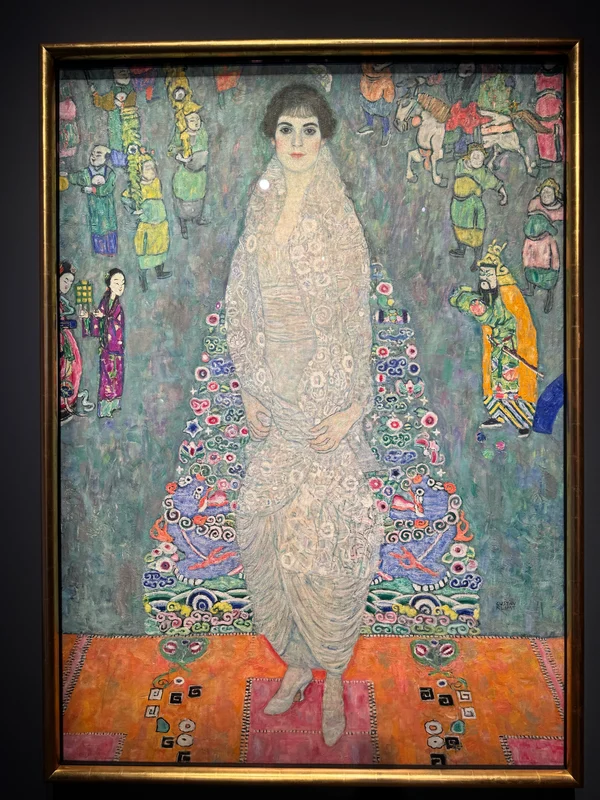
A consignment from the collection of Leonard Lauder, the older brother of Ronald Lauder (founder of New York City’s Neue Galerie), this painting is a gorgeous unicorn—there are only two full-length Klimt portraits in private hands. (The rest are blessedly owned by museums).
The luminosity and intricacy of the work is dazzling, but so is its backstory. Lederer was a Jew, and in the run-up to World War II she escaped arrest by the Nazis by pretending to be Klimt’s daughter.
On the wall text, the estimated price for the painting is listed. At the November 18, 2025, auction this one is predicted to go for $150 million. My unlikely hope for this piece: It gets purchased by Ronald Lauder so it can go into the Neue Galerie.
Frida Kahlo’s El sueño (La cama)
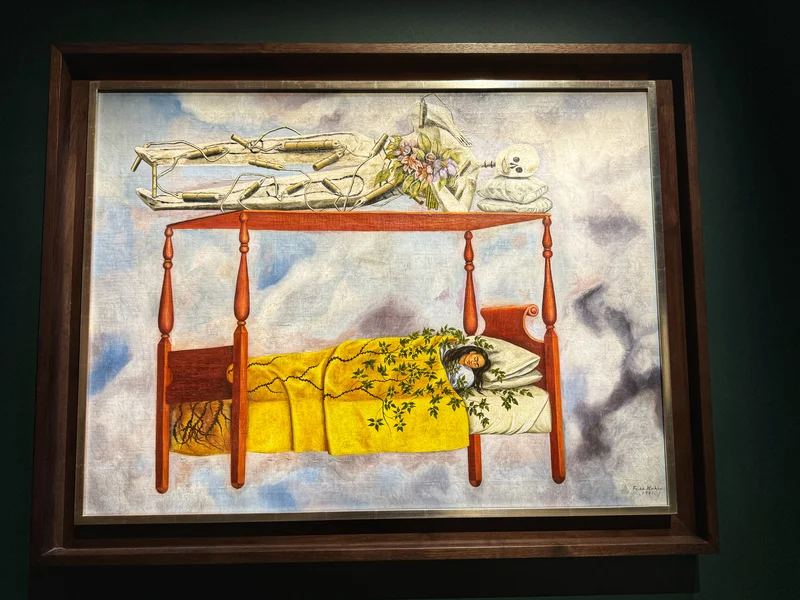
Though this painting is part of a collection of surrealist works and looks like a fantasy, Frida Kahlo actually did have a papier-mâché skeleton above her bed. Painted at the time of Kahlo's divorce from fellow artist Diego Rivera, the work speaks to the great pain Kahlo was experiencing—both emotional and physical, due to polio and her other health struggles. Notice the dynamite sticks entwined in the skeleton’s limbs.
Because Kahlo’s works are considered part of the national patrimony of Mexico, it’s very rare for them to come to auction outside of that country. If the painting sells at the top end of its estimate of between $40 and $60 million, it will set a new record for an artwork created by a female artist.
Vincent van Gogh’s Piles de romans parisiens et roses dans une verre
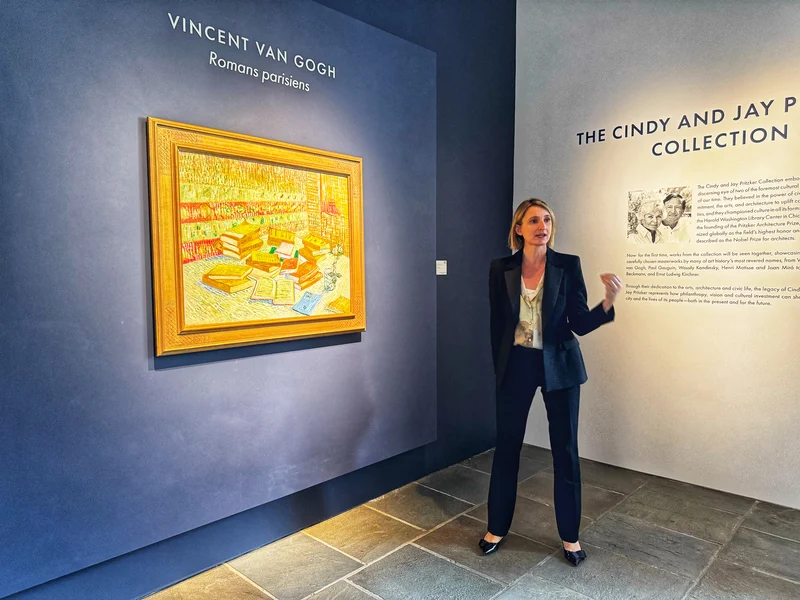
This is one of the few pieces to be exhibited by van Gogh during his lifetime. The artist was so proud of the painting he had his brother, Theo, enter the work in the Salons des Indépendents. You can see the study for this painting at the Van Gogh Museum in Amsterdam.
Estimated auction price: $8–$12 million.
Henri Matisse’s Leda and the Swan
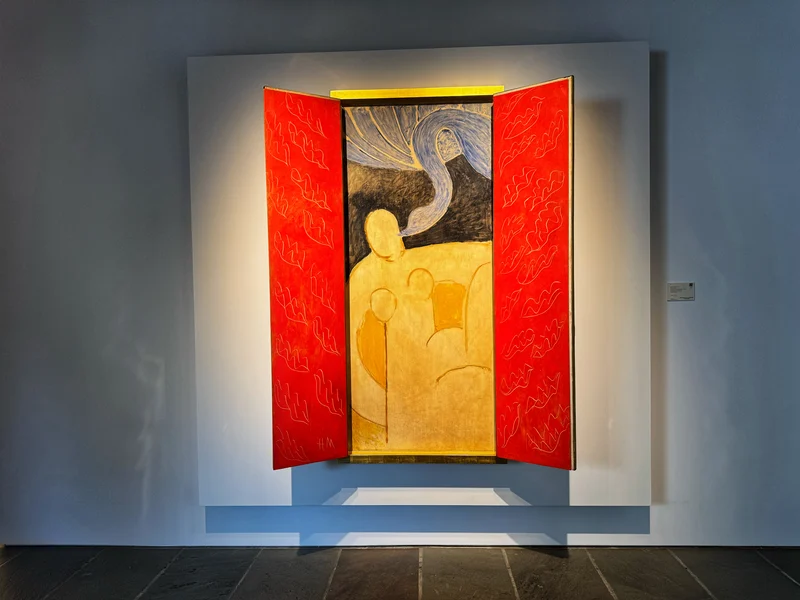
This work was commissioned by a Parisian family wealthy enough not to mind that Matisse covered a part of the work rarely seen—the back of the panels that can be closed over the painting—in gold leaf. Matisse worked on the piece for 3 years, reworking it several times before finally turning it over to the family.
Estimated price: $7–$10 million
Maurizio Cattelan’s America

Why yes, this is a fully functional, 18-karat solid gold toilet (someone apparently used it when it was on display at the Guggenheim). Since the artwork was created in 2016, it’s not a long shot to assume it was a commentary on the first Trump administration.
For the first time in Sotheby’s history, the starting bid for this installation piece will be determined by the price of gold at the time the gavel drops.
Exploring the Breuer Building
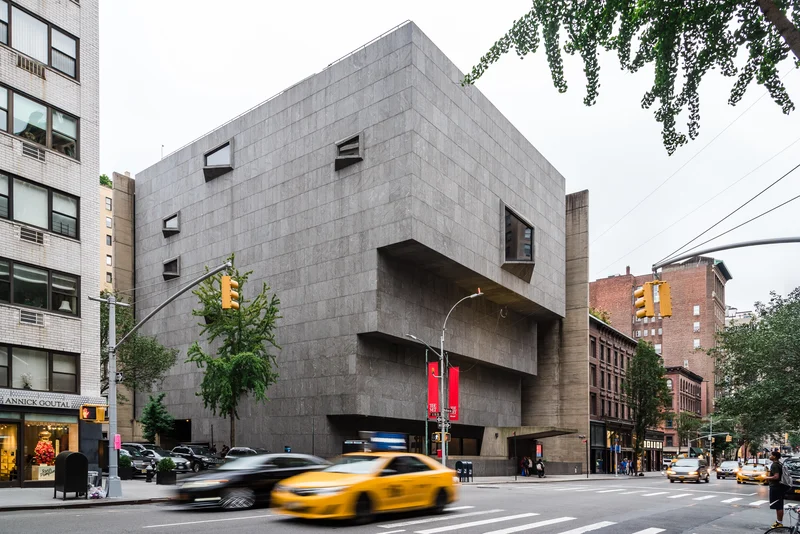
Bauhaus-trained architect Marcel Breuer (1902–1981) was hired by the Whitney to create this famous building, and though it was panned by many when it was completed in 1966 (one critic sneered that it was “an inverted Babylonian ziggurat”), today it is recognized as one of the city’s most important works of architecture.
It’s done in the brutalist style, which means it was largely created from reinforced concrete (Béton brut), giving it a heavier profile that some find a tad threatening-looking (another meaning for the term brutalism). Actually the architects who employed this style were quite idealistic, wanting to quickly build massive, new structures after World War II that could be used by the people who needed them. (A number of brutalist buildings were housing complexes).
The Whitney moved out of the building in 2014, leasing it first to the Metropolitan Museum and then to the Frick Collection before selling it to Sotheby’s in 2024 for $100 million.
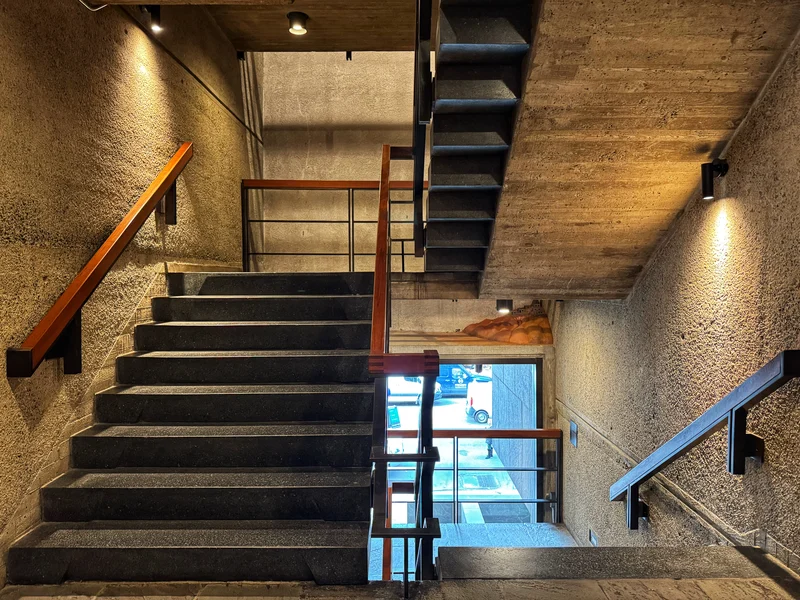
Since the façade and the stairwells are landmarked, those haven’t been touched, and we do recommend that, if you’re physically able, you take the stairs. Their rough stone walls and polished brass and teak rails give the space the feel of an ancient fortress or palace and speak to Breuer’s artistic vision. On the second floor, a tiny installation by artist Charles Simonds was passed along by the Whitney to Sotheby’s. It’s called "Dwellings" and shows a hilly landscape with a few adobe houses.
The building’s highest ceilings are on the fourth floor (see below), and this will be where auctions take place. All of the interior walls here are designed to be removed so that Sotheby’s can create a hall large enough to hold 200 bidders at auctions. The Sheetrock will come off the walls, and the interior structures are foldable for storage.
If you walk toward the floor's largest window, away from the elevators, look up and you’ll see a set of interior windows above the exhibit floor. In 2026, the area behind these windows will be converted to sky boxes so that the wealthiest Sotheby’s clients have a private space away from the hoi polloi during sales.
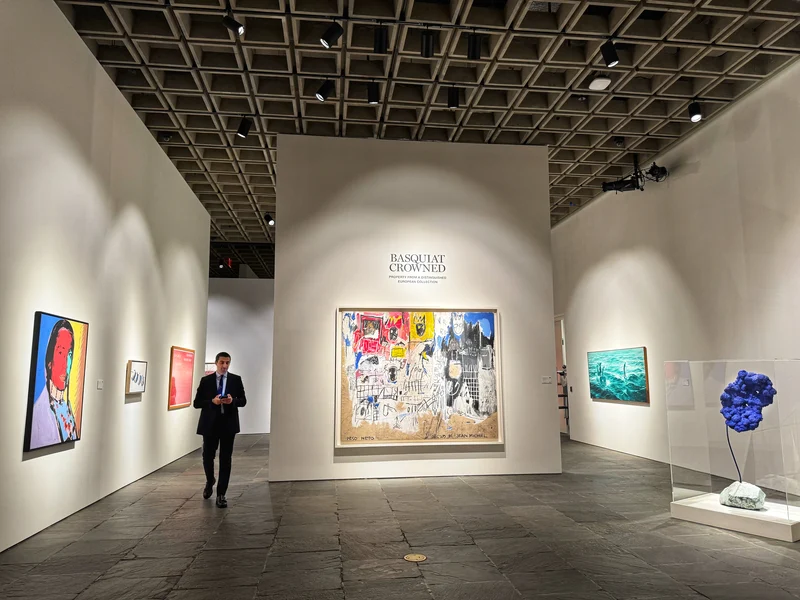
By the way, the central artwork in the photo above is Jean-Michel Basquiat's Crowns (Peso Neto). Its estimated sales price is between $35 million and $45 million.
Beyond New York City
Sotheby’s currently has 13 auction houses worldwide, all of which are open to visitors. They can be found in Hong Kong, London, Paris, Geneva, Cologne, Milan, Beaune, Abu Dhabi, Edinburgh, Riyadh, Zurich, and Singapore. Viewing hours vary; see the Sotheby’s website for details.