

The Studio Museum in Harlem finally has a space as big as its ambitions.
Founded in 1968 to support and display Black artists at a time when U.S. museums and galleries rarely, if ever, showed the work of people of color, the Studio Museum has always been a beacon of light in the art world—and beyond. That was true when the museum first came to life in a small loft above a liquor store in 1968, and when the institution moved in 1982 to its current location at 144 W. 125th St. in New York City.
But at the turn of the last century, it became clear that the museum had outgrown its building. So board members made the difficult decision to restart from the ground up, closing the museum in 2018, tearing down the old building, and raising and spending more than $300 million to create the seven-story, 82,000-square-foot edifice that becomes the institution's permanent home on November 15.
It's a handsome building, designed by Adjaye Associates with Cooper Robertson. They created the artfully geometric facade of stacked black stone rectangles that you see above.
But what's most impressive is the interior, which has almost double the previous amount of exhibition space, with walls that can move, different-sized spaces, and all kinds of technical bells and whistles to allow curators to configure the exhibitions in ways that are most appropriate to each. There are also dedicated artist-in-residence studios that are nicer than what most CEOs of Fortune 500 companies get for offices (more on that below).
Visiting in the coming months should be especially rewarding, as the museum's opening exhibitions are a who's who of the bold-name talents nurtured by the Studio Museum over the decades. Most exhibits will be in place for the next 6 to 12 months.
How to get the most out of a visit to the Studio Museum in Harlem
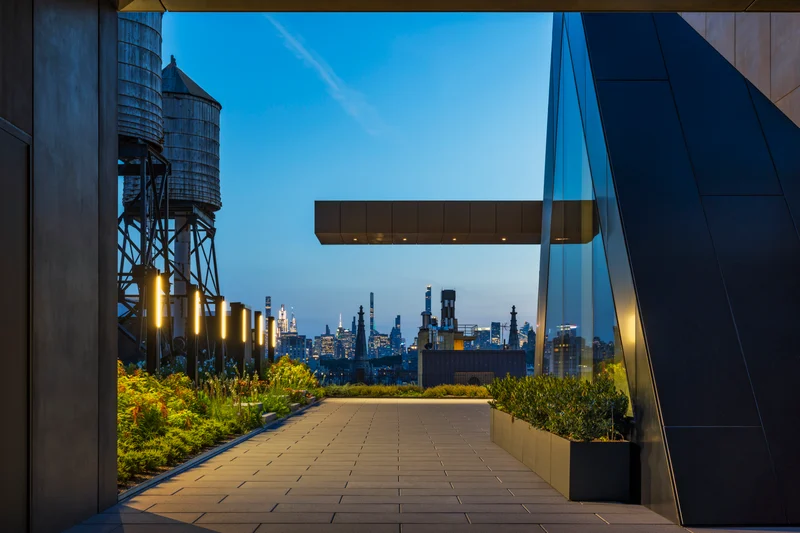
I recommend starting on the top floor, with a stroll out to the roof garden (pictured above), so you can get a bird's-eye view of Harlem before looking at the art inside, much of which was inspired by the neighborhood. As chief curator Thelma Gold said at the press preview I attended, the Studio Museum was "shaped and inspired by all those who envisioned a museum devoted to the work of Black artists, rooted right here in Harlem—the spiritual, geographic, intellectual, and creative heart of Black America."
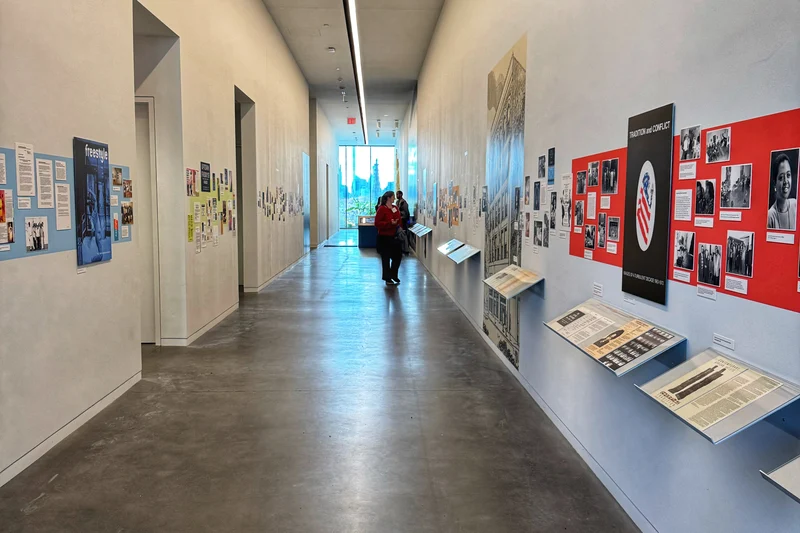
The long interior corridor opposite the roof garden should be your next stop. It contains a photo-rich exhibit about the history of the museum, with illuminating wall text about the major players in the formation and growth of the institution, and how what was going on here mirrored what was going on in the United States. Reading the history first helps contextualize the art on the floors below.
On the sixth floor, there's an exhibit of Black art created in 1968, the year the museum opened.
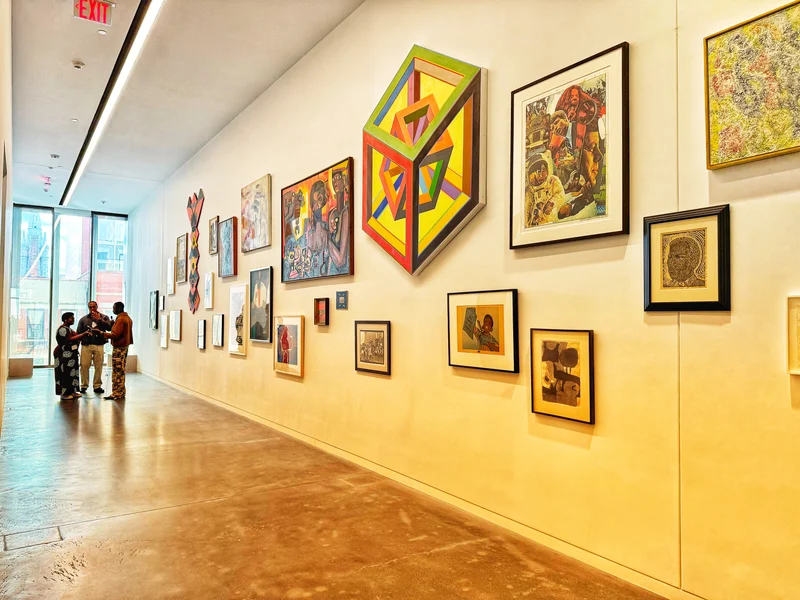
Also on six are the institution's studios for working artists (see below). Every year, the museum sponsors three artists-in-residence, a program that will be restarting in March. Until then, the space is being used for "From the Studio: 58 Years of Artists in Residence," which features works from former participants in the program.
Once the artists are back, this area will only be open to the public on rare "open studio" dates. So visitors have an unusual chance right now to see what may well be the epitome of the artist's studio, drenched in natural light from floor-to-ceiling windows (though parts of the space are shaded, as art can fade in direct sunlight) and outfitted with a lovely galley kitchen and lounge area. The artists who will get to create in this space are very lucky.
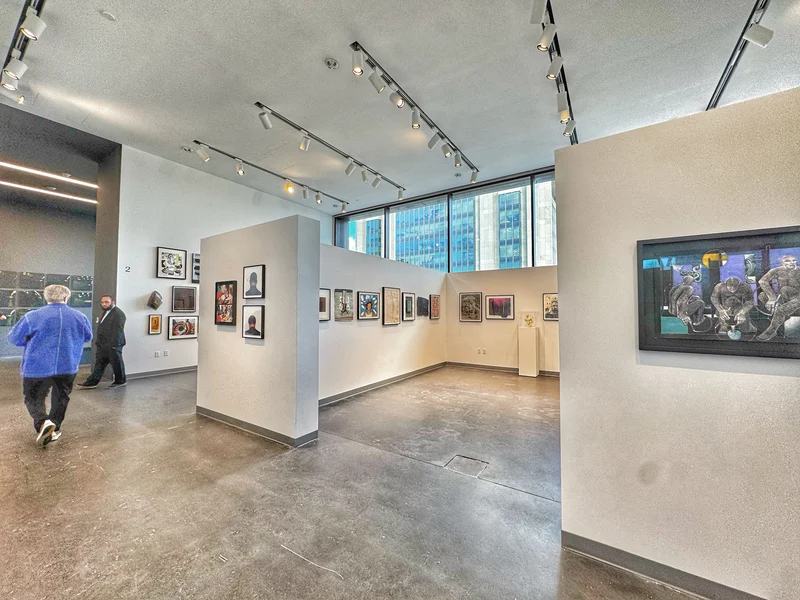
Floor five is where the hit parade begins, with pieces from the main multifloor exhibit titled "From Now: A Collection in Context." The curators chose these works from a collection of 9,000 pieces, representing the work of 700 artists over the last 200 years.
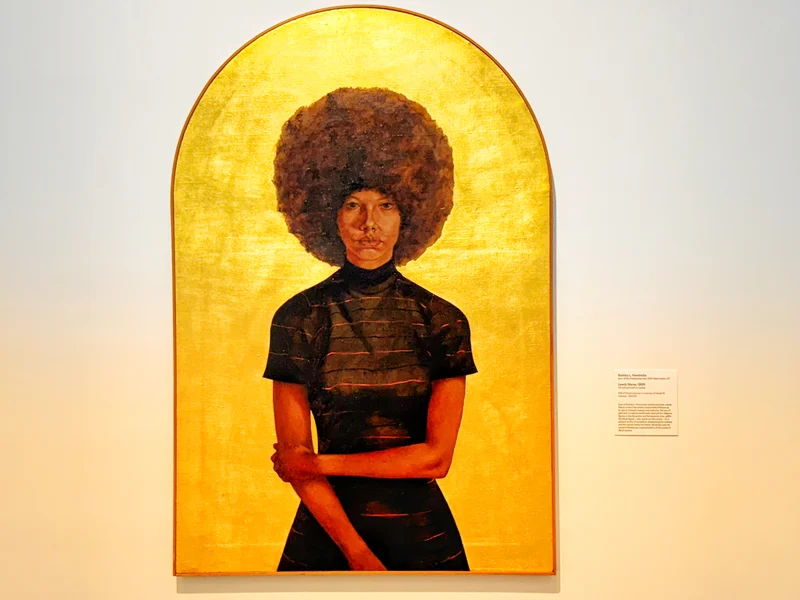
Among the most compelling pieces on this floor is Lawdy Mama (1969, see below) by Barkley L. Hendricks. The portrait, done in the style of a Byzantine Madonna, shows the artist's cousin Kathy Williams staring boldly at the viewer, against a dazzling background of gold leaf.
On the fourth floor, in a gallery with cathedral ceilings, is a show of light art by Tom Lloyd, whose works were presented in the very first Studio Museum show.
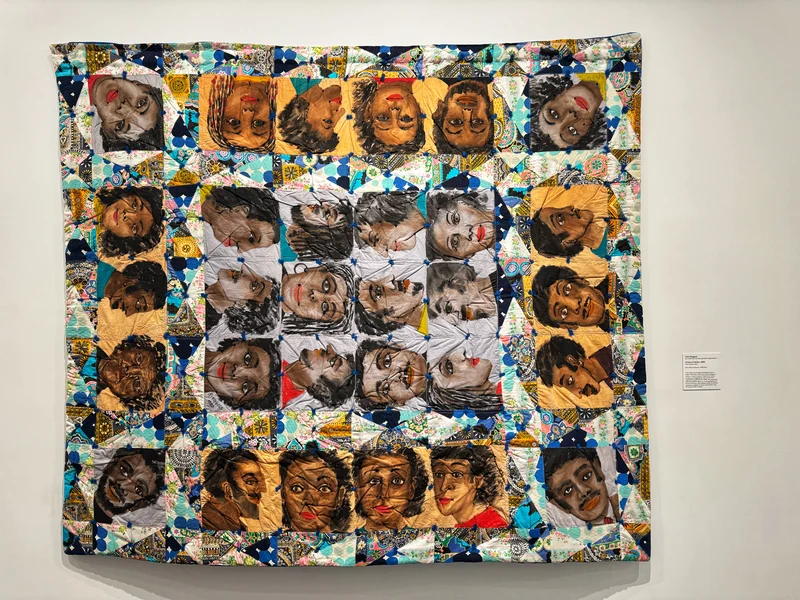
On the floor below are such big names as Jean-Michel Basquiat, Romare Bearden, and Louise Nevelson. A favorite on this floor is Echoes of Harlem, a fabric artwork that Faith Ringgold made with her mother, Willi Posey Jones, who was a well-respected tailor in Harlem. Ringgold started working with her mother in the 1970s; this 1980 piece was their last project together. It shows 30 faces, representing different life stories in Harlem.
What to know before you go
Tickets to the Studio Museum are far more reasonable than other New York City museums at $16 for adults and $9 for seniors, students, and visitors with disabilities. Children under 16 have free entry.
The museum is located at 144 W. 125th Street, and is open Wednesdays through Sundays from 11am to 6pm. Visit the website for details on the many special programs offered onsite.