

When travelers swim with whale sharks, which can be as big as school buses, the party in danger isn't the human. Whale sharks are like the cows of the underwater world and have never been known to attack people.
No, it’s the whale shark, an animal that holds the records for being both the biggest fish and the biggest shark in the world, that has more to worry about. Not long ago, unregulated tourism and the fishing industry almost wiped the creatures out.
But nowadays, groundbreaking research sites around the world are not only demystifying whale sharks but also providing adventurers opportunities to swim alongside the animals throughout the year.
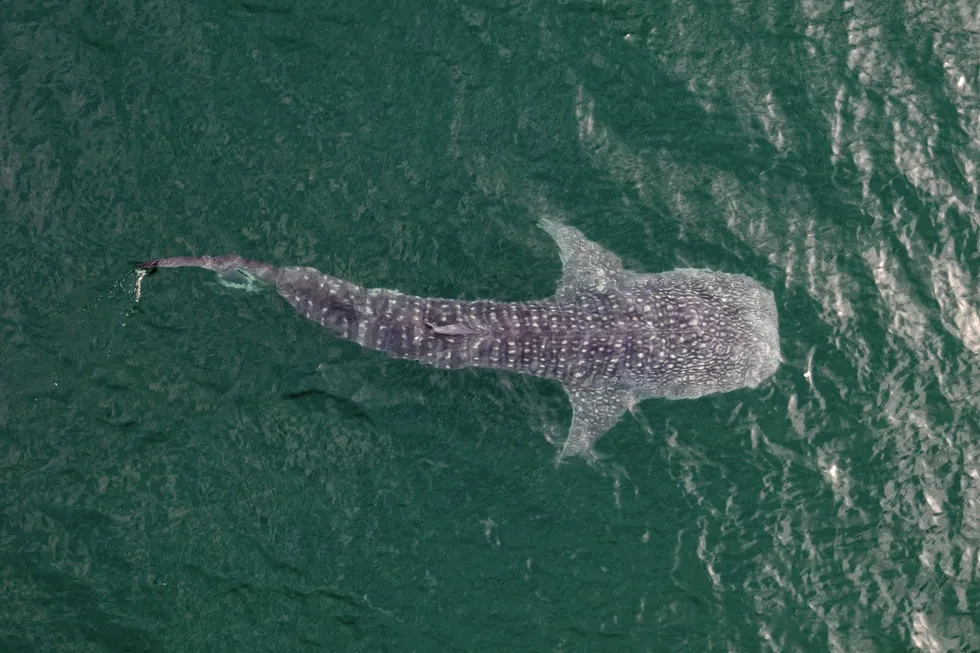 (Credit: Shutterstock / Cavan-Images)
La Paz, Mexico
The Bay of La Paz, off Baja California Sur, is one of more than a dozen swimmable sites around the world known for having groups of whale sharks. French oceanographer Jacques Cousteau once referred to the Technicolor marine life of this protected pocket of the Sea of Cortez as "the aquarium of the world."
But the fishing industry depleted the ecosystem drastically until 2016, when the International Union for Conservation of Nature (IUCN) officially classified whale sharks, scientifically known as Rhincodon typus, as endangered.
In La Paz, visiting whale sharks used to be a free-for-all. "You could literally walk on the malecon [pier] and get a whale shark experience for $10," said Dr. James Ketchum, director of marine conservation and cofounder of the conservationist organization Pelagios Kakunjá.
Tour operators packed their boats with crowds. There was no talk about respecting the majestic animals, no effort to move boats slowly to avoid damage by propellers, and no attempt to restrict the number of tourists.
But in 2017, scientists and locals banded together to stop the recklessness, creating a Whale Shark Refuge. Today, boat operators must fly a flag to indicate they’ve earned the proper permits through training, and if they break any of the regulations, the flag will be revoked and operations halted.
While visitors sit patiently on a panga boat waiting for juvenile whale sharks to arrive, naturalist tour guides drill the rules: Keep 6 feet between you and the gliding marine creatures, and 10 feet from the tail. Be careful, as the animals could change direction at any time.
Once in the water, swimmers kick flippered feet this way and that, trying to anticipate the movements of the giant whale shark. The flat-headed fish, lips extending 3 feet in a food-coma grin, continuously suck in plankton-filled water, seemingly oblivious to the commotion.
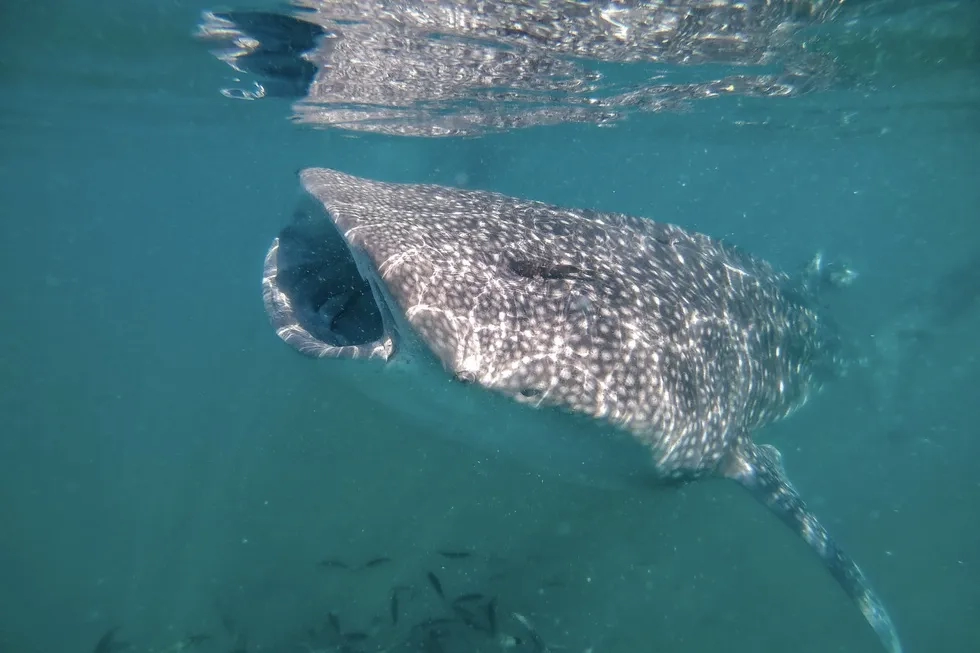 (Credit: Jafet Badillo)
Although whale sharks are enormous, their docile behavior has earned them a reputation as gentle giants. Though they’re not actually whales, they eat by filtering nutrients like their namesake. It’s mostly juvenile males who come to the Bay of La Paz looking for plankton, krill, and other small sea life.
Scientists update the regulations and management of the bay based on research and the feedback of responsible tour operators. Jafet Badillo, a certified La Paz guide and tour operator, says that although rules differ depending on each whale shark’s location, they boil down to one important law: Do not touch the sharks.
Only certified guides are allowed to conduct whale shark tours in La Paz, and that requires a diploma, English-language skills, and yearly recertification. Badillo says sometimes his guests will weep from the experience, and he feels honored to have been a part of that. He especially loves taking little kids into the water because "they can feel all this energy around the whale sharks."
Responsible tour operators around La Paz include Tuna Tours and Baja Adventure Co. (BACo).
When to go: November to April
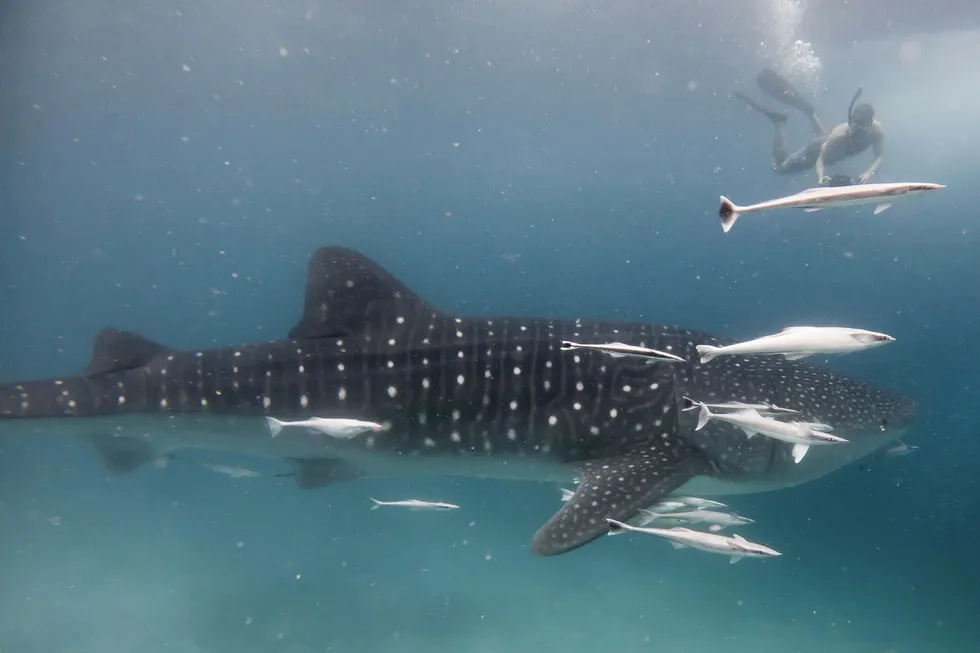 (Credit: Chloe Winn)
South Ari Atoll, Maldives
Not far from resorts’ overwater bungalows here, hundreds of whale sharks inhabit the South Ari Atoll. They live in the Maldives year-round, "which is very rare," according to Chloe Winn, in-field coordinator for Maldives Whale Shark Research.
Most whale sharks are nomadic, sometimes migrating thousands of miles to "follow the food," says Winn. But the conditions in the South Ari Atoll, which is near the Chagos-Laccadive underwater plateau, provide deep and nutrient-rich water.
Whale sharks are typically solitary but come together when tides churn seabeds and reefs, stirring up their favorite meal. Whale sharks need to eat about 45 pounds of plankton daily, so finding groups of the sharks is a good indication of a healthy ecosystem. Winn says adult whale sharks spend most of their time in open water, while juveniles often travel to the coast, congregating in plankton-rich hot spots.
In 2024, the government of the Maldives introduced tighter regulations for operators of whale shark encounters. Tours must maintain a distance of at least 3 meters (about 10 feet) from the animals' bodies and at least 4 meters (13 feet) from tails.
Touching whale sharks is strictly prohibited, and swimmers must avoid chasing the creatures or obstructing their way.
Visitors can find responsible tour companies through Lux* Resorts, TME Retreats, and Boutique Beach. Additionally, Maldives Whale Shark Research partners with a campaign called Be Gentle To Giants that helps ecotourists match with responsible tour companies around the world.
When to go: year-round
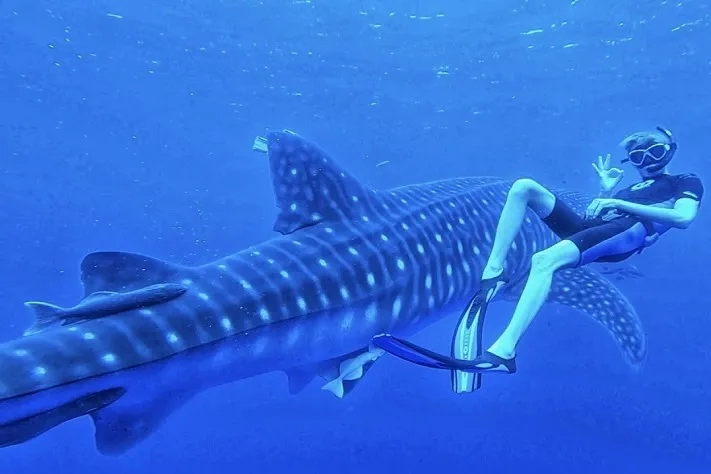 (Credit: St. Helena Tourism)
St. Helena Island
There’s still a lot we don’t know about whale sharks. For instance, scientists have never documented them mating.
"We don’t know where they mate," says Winn, "but we theorize it could take place in St. Helena. There’s an aggregation there."
History buffs might remember the remote Atlantic island of St. Helena, 1,200 miles from South Africa and 1,800 from South America, as the location of Napoleon’s exile and subsequent death. The island is also the only place in the world that annually attracts a fairly balanced number of adult male and female whale sharks. With a life span ranging from 80 to 130 years, whale sharks don’t reach maturity until they are 25 to 30 years old, according to Winn.
Water temperatures in the mid-60s and 70s Fahrenheit (15–21 Celsius) provide a comfortable swimming experience around St. Helena. The government creates guidelines for locals and tour operators. For example, scuba diving with whale sharks is forbidden here, but snorkeling is allowed.
Responsible tour operators include Enchanted Isle Limited and Dive St. Helena.
When to go: January to May
 (Credit: Shutterstock / Lindsey Lu)
Galápagos Islands
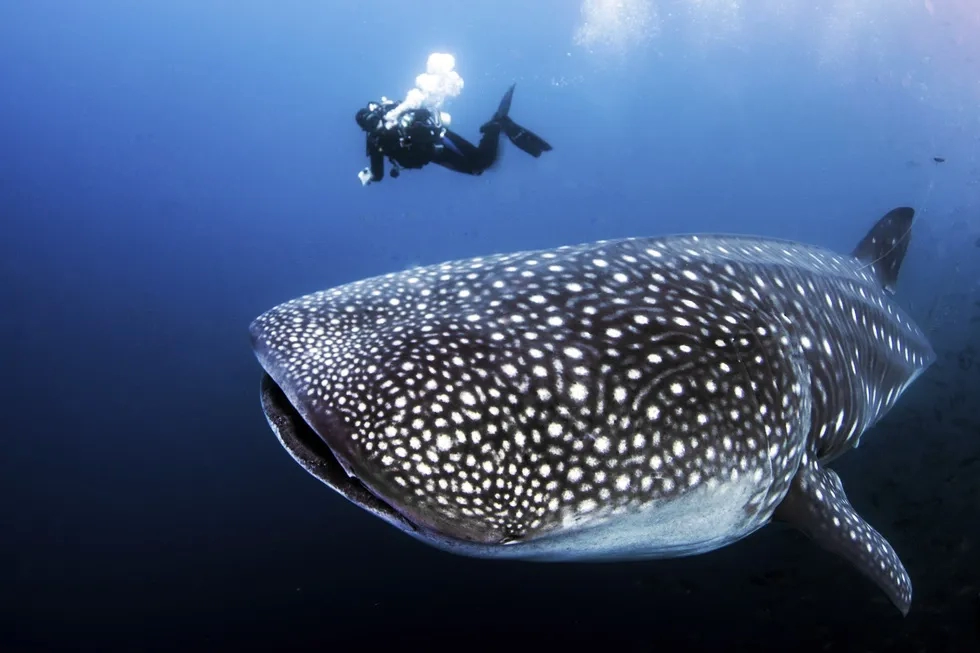
Scientists estimate that 98% of the whale sharks that pass through the Galápagos Islands are female. That suggests this could be the area where whale sharks give birth, though the only information scientists currently have about their reproductive process was derived from a dead, pregnant whale shark found in 1995 by a Taiwanese fisherman.
That specimen carried more than 300 whale shark fetuses at varying degrees of gestation, yet genetic tests determined they all shared the same father. Researchers believe this means whale sharks are able to store sperm and use it selectively—which seems like a convenient talent.
“Whale sharks are ovoviviparous,” Winn explains, “which means the egg is fertilized and hatches inside the female, and then the whale shark is born alive and free-swimming.”
The Galápagos Governing Council carefully controls the movement of visitors on land and sea. The best place to swim or dive with whale sharks is by Darwin and Wolf Islands, which are best reached through live-aboard boat operators like Yugen Earthside. Scuba divers can take the adventure with scientists and help support conservation efforts.
When to go: July to November
 (Credit: Wayne Osborn)
Ningaloo Reef, Western Australia
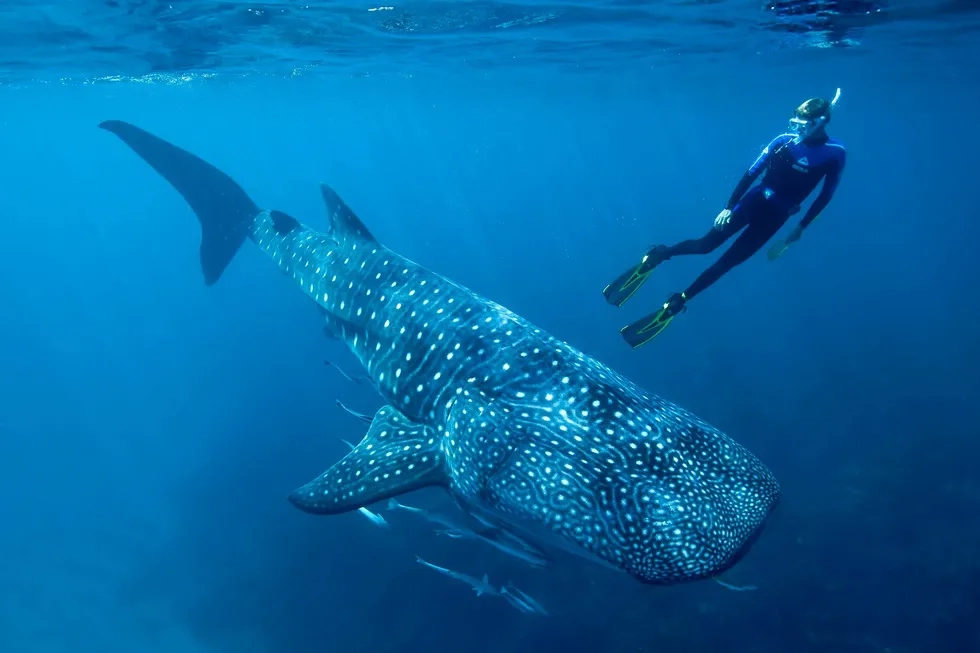
With 300 to 500 whale sharks migrating through its waters annually, Ningaloo Reef, which spans 162 miles on the northwestern Australia coast, is considered to have the largest aggregation on the planet. Consequently, the Ningaloo Coast became a UNESCO World Heritage Site in 2011.
"[Australians] realized very quickly that they didn’t want to kill the goose that laid the golden egg," says Dr. Mark Meekan, principal research scientist for the Australian Institute of Marine Science. So local scientists helped develop the first set of visitor guidelines for whale sharks, and now many other places around the world have adopted similar rules.
Tour operators in Ningaloo have an efficient system for tracking whale sharks: Pilots in planes spot them and radio boat captains. Snorkelers jump into the water near oncoming fish, always respecting numbers and distance, and then get back in the boat to track more.
Meekan says all tour operators around Ningaloo Marine Park can be trusted to be responsible because the limited number of licenses enforces good practices. Any overnight accommodation in the region can also book you on a tour.
When to go: March to July
 (Credit: Chris Rohner)
Mafia Island, Tanzania
Although Meekan has studied whale sharks since 1996, they still surprise him. For years, researchers believed these filter feeders only consumed microscopic sea life and small fish, but a study led by Meekan revealed they eat seaweed, too. These record-breaking fish are now also considered the world’s largest omnivores.
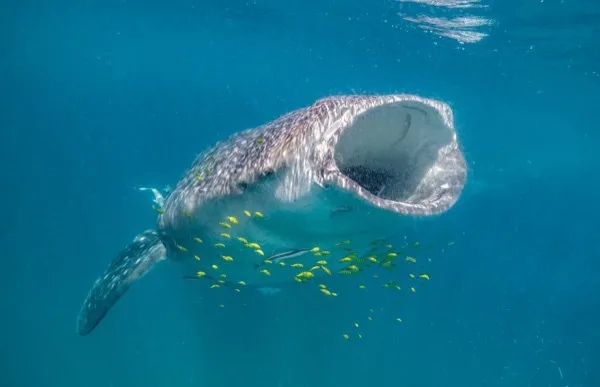
Some other mysteries of whale sharks may soon be uncovered around Mafia Island, Zanzibar’s lesser-known neighbor. Scientists who have tagged whale sharks and tracked their mobility over the years say the ones around Mafia Island don’t wander too far from the area.
Because the whale sharks observed here are rarely seen elsewhere, researchers can keep better tabs on individuals to identify more precisely the elements that cause them harm. Injuries occur through fishing (due to fishermen trying to catch other targets) and collisions with boats. Some fishermen have also hunted whale sharks for their meat, fins, or oil.
Visitors to Tanzania can book trips with leading scientists in whale shark research through the Marine Megafauna Foundation or with a responsible tour operator such as Kitu Kiblu.
When to go: October to February
 (Credit: shutterstock / Shane Myers Photography)
Cancún, Mexico
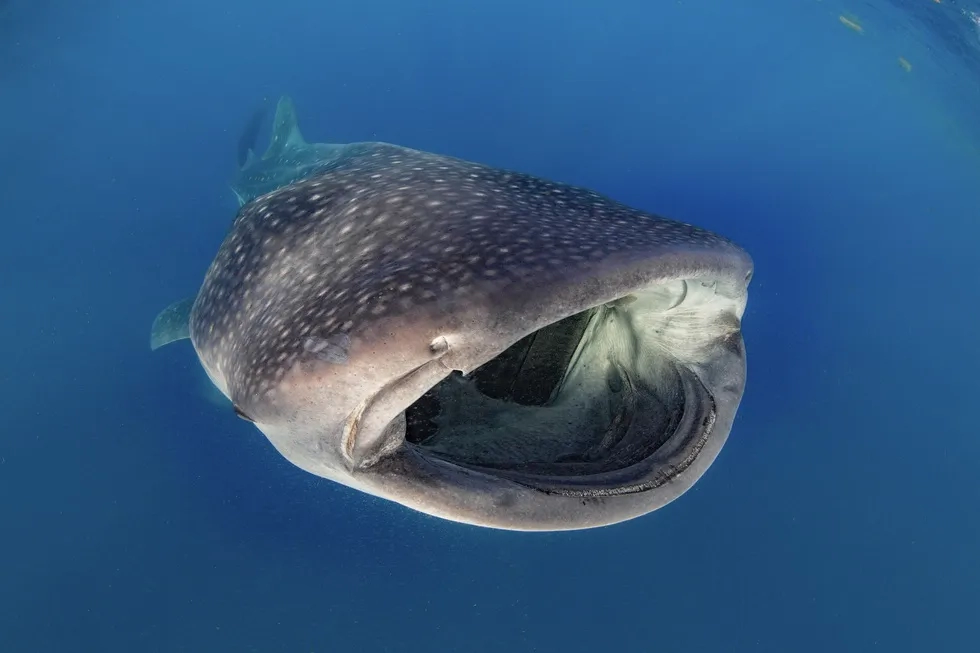
Regulations for whale shark tours are strict in the Cancún area. So swimming with whale sharks there or around neighboring islands Holbox and Isla Mujeres (where the whale shark pictured above was found), should be a stress-free experience for those concerned about their environmental impact. Many boat tours also encounter manta rays, dolphins, and sea turtles.
Rafael de la Parra, a marine biologist and the executive director of Ch’ooj Ajauil (Blue Realm), runs responsible whale shark tours through his company Cancun Xtreme Trip. He sees his life work as arming the next generation with enough information to protect these mighty beasts.
“The main thing is we need to take care of the ecosystems sustainably around the world," he says. "We need to preserve them so the next generation can enjoy them.”
Choosing a sustainable operator with a scientific mission is the best way to do that.
When to go: May to September
An earlier version of this story, published in 2023, has been updated for 2026.