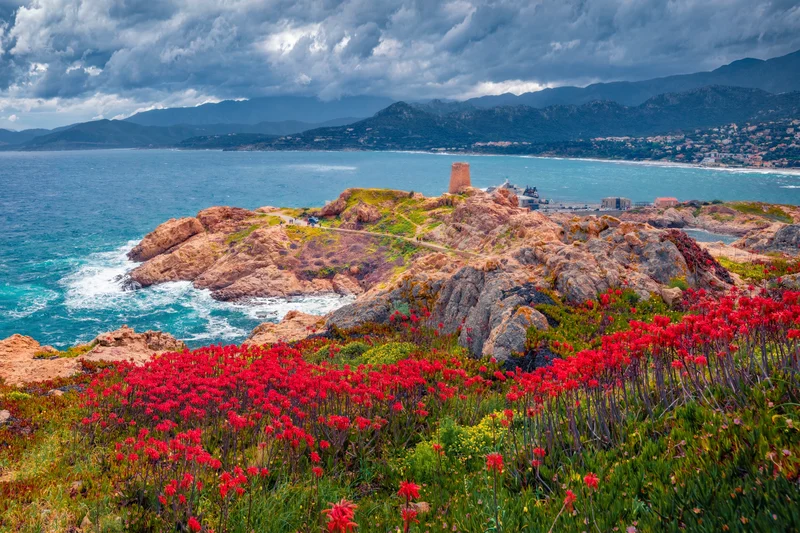
The fourth-largest and most mountainous island in the Mediterranean, Corsica is a place of striking coastlines, verdant valleys, and pretty pastel-toned towns.
Yet despite its beguiling appearance, its tempting gastronomy, and sites linked to its world-famous offspring, Napoléon Bonaparte, the island remains little-visited by foreign travelers.
Let’s change that.
How to get to and around Corsica
The island of Corsica (known as La Corse in French) is located about 100 miles south of mainland France and 50 miles west of Italy, so you’ll have to get there by plane or ferry.
That’s not hard to do. From Paris, the flight takes 95 minutes, and from Nice, 50 minutes. The most affordable flights are generally through Easyjet, but Air France and Air Corsica also have several flights per day, albeit at higher base prices. The Ajaccio Airport is connected to the city center by a 20-minute shuttle bus (€8.50) that departs once an hour. You can also find taxis waiting outside the terminal (€20-€25).
Ferries also connect Corsica to Marseille, Nice, Toulon, and several Italian cities; most trips take around 4 to 6 hours during the day on fast ferries and 10–12 hours on overnight routes. Corsica Ferries and La Méridonale operate year-round, but with more frequent departures from June through September. Corsica's ferry terminals tend to be in the city centers.

Self-driving visitors might be deterred by the island’s narrow roads, which can cling precariously to the side of cliffs and terrify even the bravest navigators. But it’s entirely possible to get around the island without a car. Corsica’s railway system, which is limited compared to the rest of France, may not go everywhere you’d like it to, but it can be used to hit the major points of interest.
Day 1: Arrive in Ajaccio
The island’s capital, Ajaccio (Aiacciu in Corsican dialect), is the most convenient place to arrive in Corsica and offers the best first taste of the island. Like most of Corsica’s coastal towns, it sits on a wide bay flanked by the green foothills of the island’s interior mountains.
When you first see the architecture of the colorful historic core, you might think you’re in Italy, and with good reason. Corsica was controlled by the powerful seafaring Republic of Genoa (now part of Italy) from the late 11th to mid-17th centuries, before being handed over to France in 1769 to settle debts to the French crown.
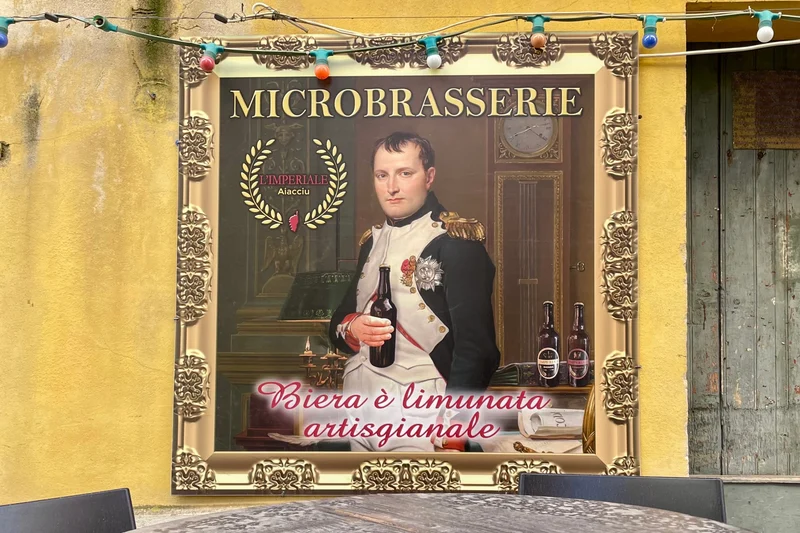
In a wicked twist of fate, 1769 was also the same year the future replacement to the French monarchy, Napoléon Bonaparte, was born right here in Ajaccio. The former emperor is ever-present throughout his hometown, appearing everywhere from statues and street art to craft beer labels and restaurant names.
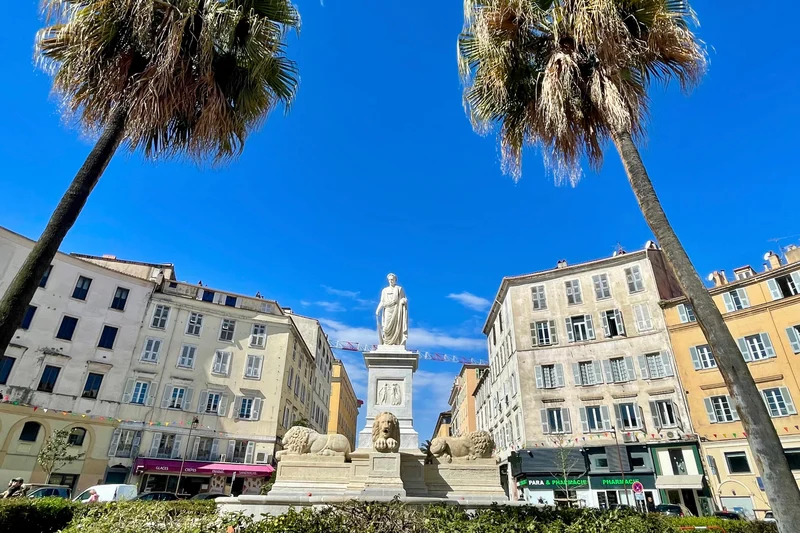
If you’d like to learn more about “The Little Corporal,” start at the Maison Bonaparte, his family’s former home, then tour the Palais Fesch, a museum displaying the art collection of his uncle, an influential and extremely wealthy cardinal. It has a whole section dedicated to the Bonaparte family line.
But Ajaccio has more to offer than Napoléonic mania. The city has ornate churches, the remains of a 15th-century fortress built by the Genovese, and a plenty of shops and restaurants touting Corsica’s culinary specialties, such as brocciu (a soft goat or sheep’s cheese similar to ricotta), figatellu and lonzu (pork sausages), and an array of chestnut products.
Get a little more context into Ajaccio’s history and the island’s cuisine on Ajaccienne Nicole's walking and tasting tour. Her friendliness (which is somewhat uncharacteristic for Corsicans, who can be as prickly as the burrs of their famous chestnut) and relationships with local food purveyors is unrivaled.
If you’re not too full after tasting your way through the old town, you can feast on traditional Ajaccian dishes at A Cantina di Ghjulia or on modern Corsican cuisine at Le Petit Restaurant. You’ll be well sated, but your pocketbook will be lighter—dining in Corsica restaurants can cost more than in Paris or Saint-Tropez. So if you’re on a budget, swap out the regional cuisine the occasional pizza or a picnic.
Where to stay in Ajaccio: Sleep under the roof of one of Ajaccio’s most prestigious historic buildings, the Hotel Pozzo di Borgo, located in the former aristocratic mansion of Napoléon’s local arch nemesis, Charles-André Pozzo di Borgo. For more modern comforts, stay at the Hotel San Carlu Citadelle, which has a stylish contemporary decor and a panoramic rooftop restaurant and bar with views over the fortress and the Bay of Ajaccio.
Day 2: Cruise the coastline from Ajaccio
Staying a second night in Ajaccio will help you get acclimatized, and it will also give you the chance to explore the exceptional western coastline of Corsica. It won’t be hard to find an excursion—there’s a row of kiosks selling them at the port, but look out for Nave Va and Neptune Croisière, which both offer great quality for small groups.
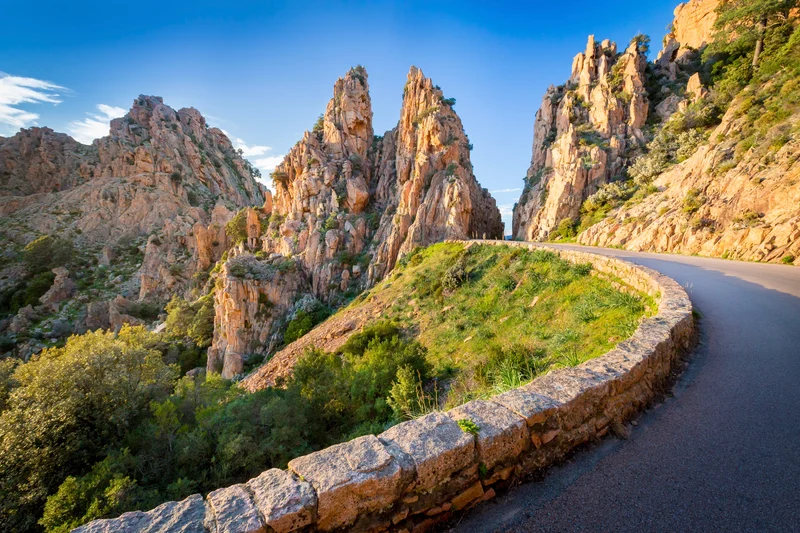
Popular tour options from Ajaccio include half or full-day trips to the Scandola Nature Reserve or the Calanques de Piana, both UNESCO World Heritage sites and home to rugged cliffs, and sunset tours to the Sanguinaires Islands, a rocky archipelago in front of town.
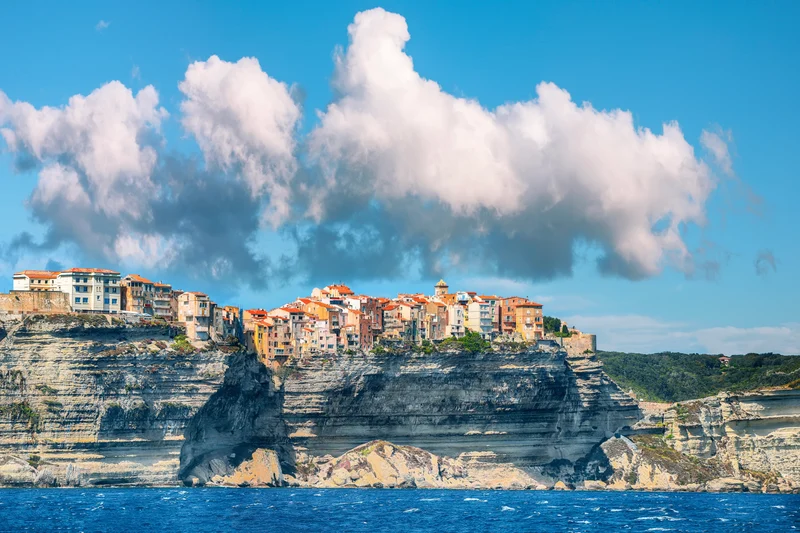
A little further afield, day-long trips through Nave Va can take you to Bonifacio, one of Corsica'’s most eye-catching towns. Bonifacio sits dramatically atop 300-feet-high cliffs along the south coast. It's isn’t on the train line, so taking a guided day tour is the easiest way to see it without a car.
Where to stay: Stay put in your hotel from the previous night.
Day 3: Venture inland to Corte
How to get to Corte: It’s a 2-hour train ride operated by Les Chemins de Fer de la Corse (CFC) from Ajaccio to Corte. There are usually two morning trains, and tickets (€9) can be purchased at the Ajaccio train station.
The breathtaking scenic rail ride to Corte (Corti in Corsican), which crowns a rocky spur in the center of the island, is reason enough to go—but once you get there, the town’s tumultuous history can make just as much of an impression.
Corte was the capital of Corsica during its short-lived stint as a republic (1755–1769) right before it passed from Genovese to French rule. Don’t expect a grand capital city. The town could benefit from some sprucing up, but its allure increases as you climb higher through its winding maze of streets.
Here, Napoléon is overshadowed by Pasquale Paoli, the leader of that mid-18th century independence movement. You’ll learn about that wild period and Corsica’s unique traditions at the Museu di a Corsica, a comprehensive museum located in parts of the old citadel. From there, you can take in the exquisite panorama of the surrounding mountains.
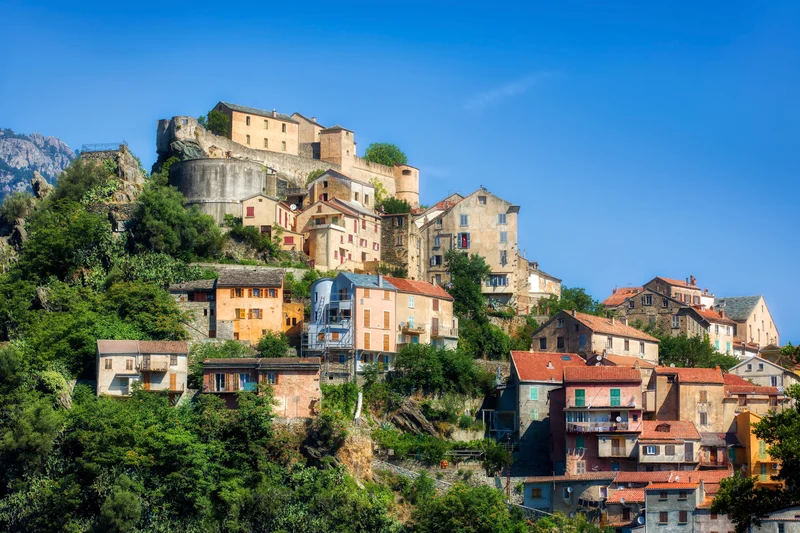
Corte is also known for outdoor pursuits, including canyoning or rock climbing and paragliding with stunning Mediterranean views. You can also hike or bike along the numerous trails that traverse the area’s valleys and forests.
Where to stay in Corte: Accommodation options are limited, but you'll find a comfortable overnight in the old town at the modest Hotel Duc de Padoue or a more natural environment at the Hotel Dominique Colonna, a plusher venue with a spa and pool set on the river at the base of town.
If you’d rather stay by the seaside and you've packed lightly, tour Corte during the day and then hop on the late afternoon train onward to Calvi on the north coast.
Day 4: Head north to Calvi
How to get there: Take the morning train from Corte (€14; buy tickets at the station) and change at U Ponte à a Leccia to continue onto Calvi (end of the line), a total journey of 2 and a half hours.
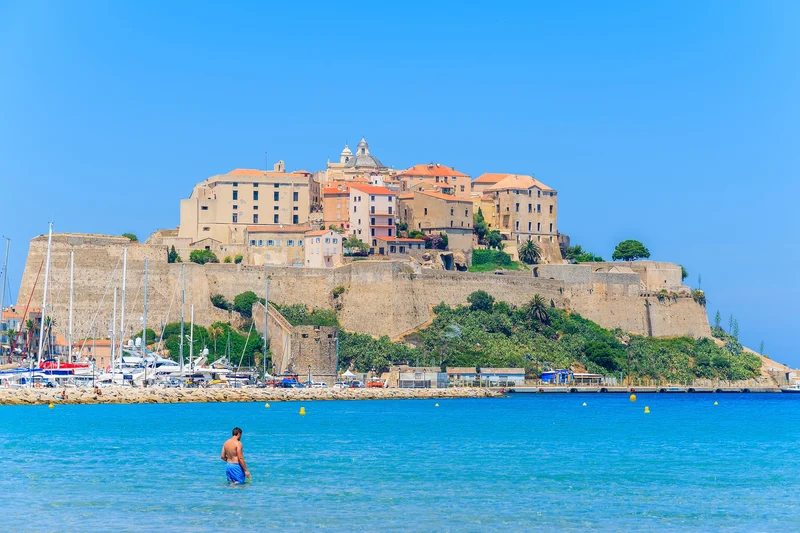
Corsica’s northwestern region of Balagne has some of the island’s loveliest seaside towns. Each has its own charms, but Calvi, dominated by a colossal citadel and home to elegant shops and restaurants, is a good base for exploring the area. It’s a lot more laid-back than the exclusive Jet Set destinations of the French Riviera, but it’s still one of the poshest towns on the island.
Grab an ice cream on the port and admire the bobbing yachts before climbing through the cobbled lanes of the 13th-century citadel, many of which are now residential lanes. Afterwards, browse Calvi’s stylish boutiques, relax on its fine sandy beach, or windsurf or paddleboard through the gentle waves of its sheltered bay.
Where to stay in Calvi: Set on a rocky promontory facing Calvi’s citadel, Kasano Hotel is a quiet oasis only a few minutes’ walk from the historic center.
Day 5: Explore the north coast
Staying a second night in Calvi allows you to explore other highlights of the Balagne region. A special train travels along the coast and offers you a chance to get to the beautiful coves and beaches around Lumiu L’Arinella and Sant’Ambroggio, or visit L’Ile-Rousse, a relaxed town where you can climb La Pietra, a rocky islet with stellar views of the curvaceous coastline. In summer, the train departs from Calvi approximately every two hours from 7 am to 7 pm, and tickets are about €6.
You can also rent a bike to tour the area around Calvi and reach the nearby hilltop villages, such as Pigna, Speloncato, and Sant’Antonino. If you didn’t go to the Scandola Nature Reserve back in Ajaccio, there are full-day boat trips from Calvi.
You can also take shorter boat tours along the Balagne coastline or to the Désert des Agriates, a 14-mile-long stretch of wild beaches within a protected nature reserve.
Where to stay: Stay put in your Calvi hotel or have a night in L’Ile Rousse at Hôtel Liberata & Spa, an Art Nouveau mansion overlooking the beach.
Day 6: Meander through beautiful Bastia
How to get there: The 3-hour train (€8) between Calvi and L’Ile Rousse to Bastia only runs twice daily, (in 2025: at 6:50 am or 4:15 pm), and you’ll change trains again at U Ponte à a Leccia. So you might prefer to take the 2-hour bus (€20) that departs twice a day at 7 am and 1:30 pm.
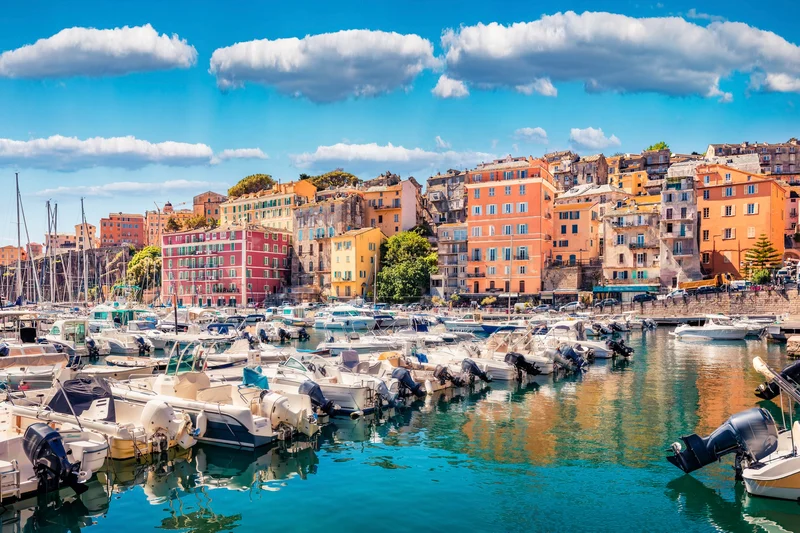
Situated on the northeast coast, Bastia, which is Corsica’s second-largest city, shouldn’t be overlooked—and it’s also a base for some terrific scenic hikes. At first glace, Bastia might seem like a smaller version of Ajaccio, but as you get lost in its vast, mostly pedestrian historic center you’ll be drawn in by its authenticity, bustling energy, and poetic allure.
Duck into some of the speciality food shops along rue Napoléon for some canistrelli (sweet biscuits) or anchovies à la Bastiaise (anchovies marinated in garlic, parsley, and olive oil). Pick up some additional snacks like beignets aux brocciu (small sweet or savory cheese donuts) at the fantastic farmer’s market held on Saturday and Sunday mornings in Place de l'Hôtel de Ville. Wander the narrow streets of Terra Nova, a hilly historic district where you can pop into the Museu di Bastia, located within a 16th-century palace, and catch romantic views of the city and seaside.
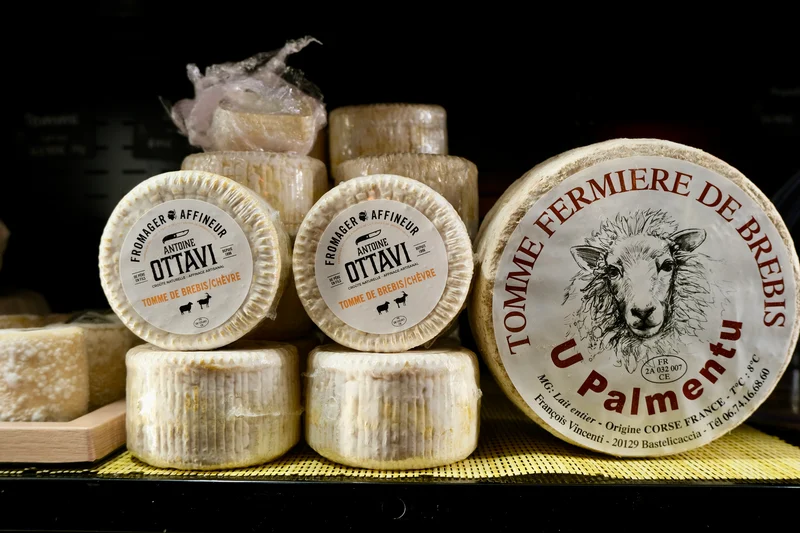
End your wanderings over a glass of Cap Corse, the island’s iconic apértif drink, on a terrace in the main square, Place Saint Nicolas, before indulging in a seafood feast at Mare e Gustu or Côté Marine, located on the buzzing Old Port.
Where to stay in Bastia: Treat yourself to a regal last night at the Hôtel Des Gouverneurs, a 4-star boutique hotel in the heights of Terra Nova. For a more central and affordable option, try Monsieur Miot, a boutique 3-star hotel next to Place Saint Nicolas.
Day 7: Cap Corse
If you’ve got an extra day or two, stay in Bastia and do some further exploring or hiking in the area. Around Bastia, there are wonderful hiking trails that are suitable for all levels.
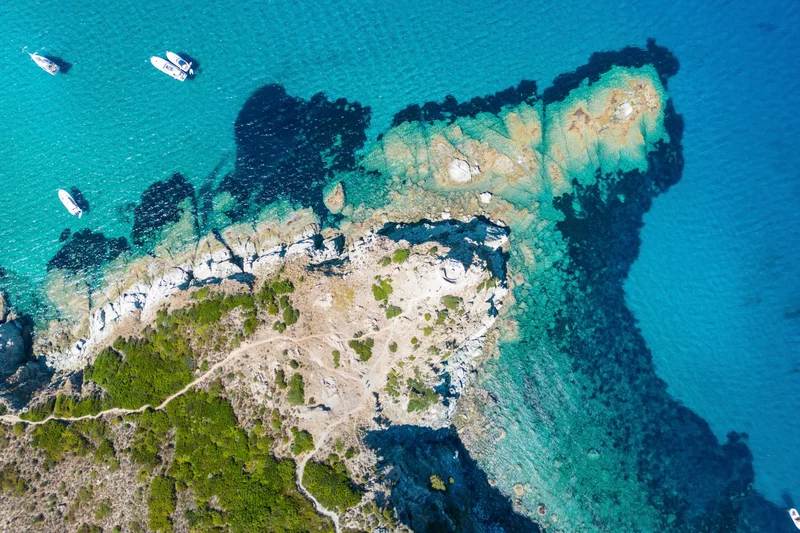
Serious hikers might prefer to do part of the Sentiers des Douaniers (Customs Officers’ Path), a 12-mile route that crosses the Cap Corse peninsula north of Bastia, and which is part of the GR20 hiking trail that crosses the island. If you’d rather not go on foot, take a boat trip from Bastia along the Cap Corse coastline.
How to get there: You can reach the Sentiers des Douaniers by taking the bus to and from Macinaghju.
Where to stay: Stay put in your Bastia hotel.
Once you’ve completed your trip in Bastia, there’s no need to return to Ajaccio. You can take the ferry to the south coast of France or Italy or catch a flight from the Bastia airport to Paris or Nice.