
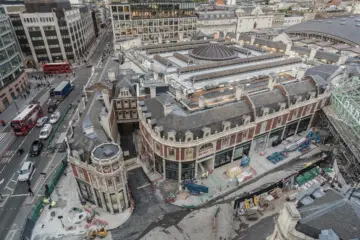
In late 2022, one of the world's best history museums, the Museum of London, moved out of its longtime home within the Barbican Centre, a bewildering and Brutalist concrete bunker from the '60s near St Paul's Cathedral. For 4 years, London's tourist scene has been much poorer for the museum's absence.
This week, the beloved institution, now renamed London Museum, returns to its role in the cultural lifeblood of its city. Whereas the front doors were tricky to locate before, now the collection has taken over a city block of conjoined Victorian-era structures, a formerly "rat-infested, water-logged hellhole" (according to the Evening Standard) that will be impossible to miss.
The museum's new location in Smithfield, just a 10-minute walk from its former home, feels like a world away.
The refreshed London Museum has become an essential destination. This week it officially opens in the sprawling former market where generations of Londoners used to buy their meats, following nearly £437 million (about $584 million) spent in preparation.
What makes London Museum so important
In crucial ways, the history of London mirrors the history of the Western world. For centuries, London's power brokers and merchants have extended their influence, for better or worse, into nearly every corner of the world, and so the London's Museum's holdings reflect both London's depth of history and its breadth of cultural diversity.
Few cities have an institution that's as central to local history as London Museum is—consider it like a Smithsonian of the history of English life.
Not only has the museum been amassing its wild collection of ephemera under one name or another for 200 years, but it's also the first place Londoners call whenever they put a spade in the ground or in the Thames riverbank and turn up an interesting artifact.
Considering that London's history goes back to the Romans and beyond, the museum has received a lot of excited phone calls over the years. The institution's warehouse space is stuffed full of sensational finds and donations, from Roman-era plaster, mosaics, and writing tablets to precious items from our own time, like a smashed Fender Precision Bass guitar from the seminal British punk band The Clash.
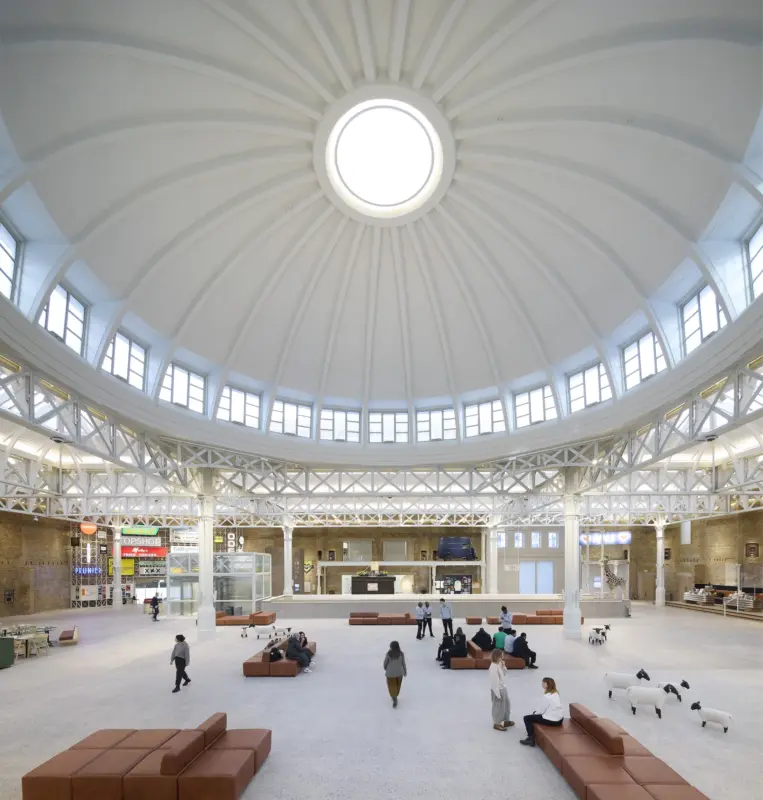
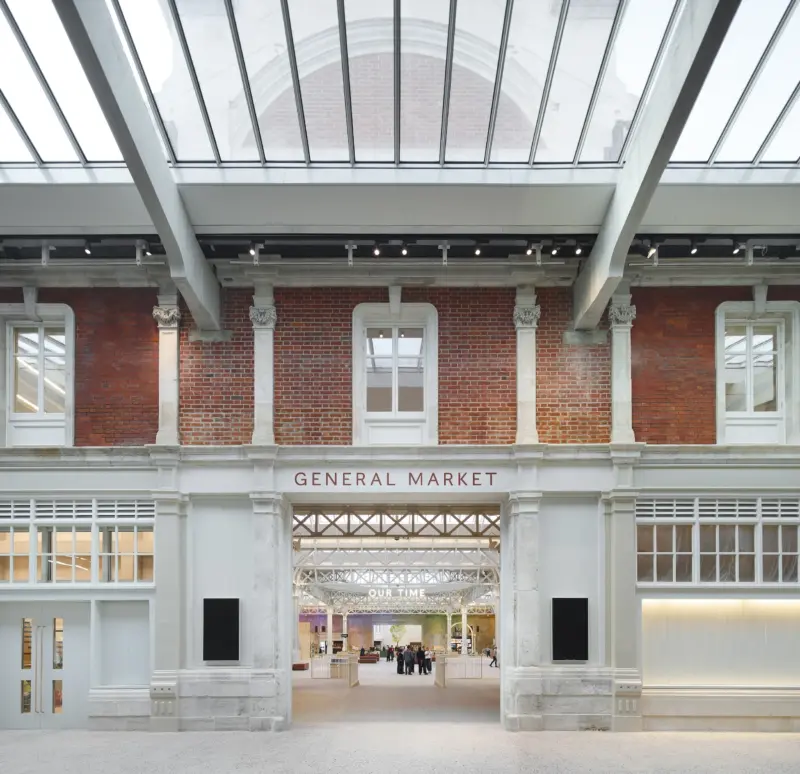
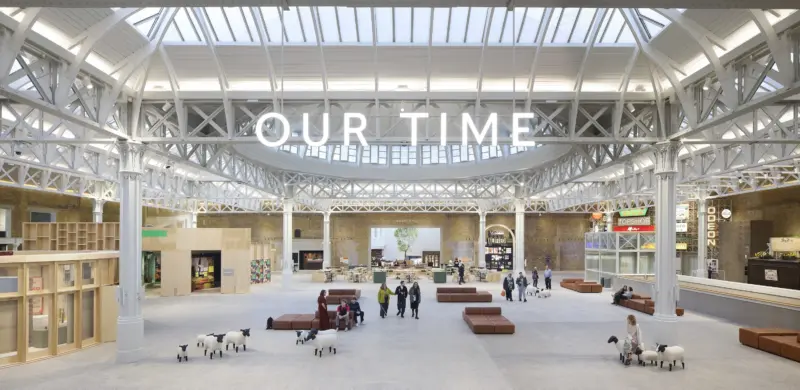
"The world’s largest city museum will unfold across three main spaces—Real Time, Our Time, and Past Time—telling the story of this major global capital, bringing together thousands of objects from its collection alongside a new social space for the city," curators said in an announcement.
This repository’s miraculous cache of rarities from everyday life would do credit to the greatest national museums of any land... So many forehead-smackingly rare or fascinating items, you’ll start to lose track.
—Frommer's London guidebook recommendation from 2022
The London Museum's new home may be grand and cavernous, but the personal stories told by its artifacts are delicately human.
The museum has more than 7 million objects to choose from. You'll find a 1st-century oak ladder that was discovered preserved in a well, some Norman chain mail, a leather bucket used in vain to fight the Great Fire of 1666, plus a chunk of glazed wall tile that was singed by the flames . . .
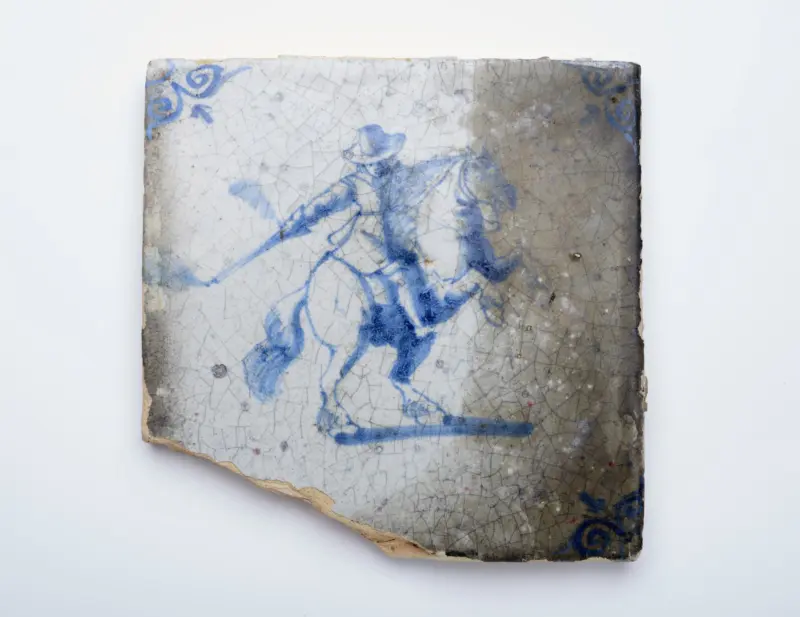
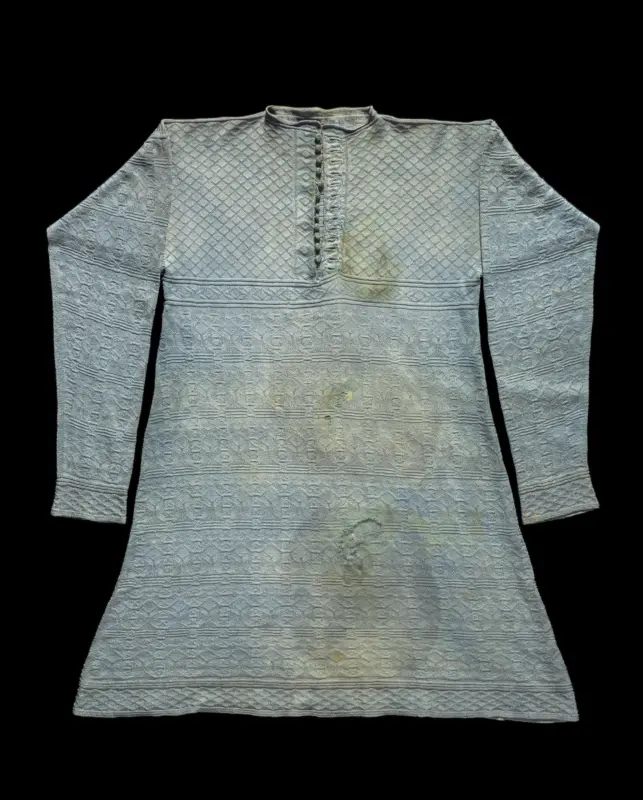
some 500 pieces of ancient Stuart and Elizabethan jewelry buried until discovered in 1912 and dubbed the Cheapside Hoard, the vest King Charles I was wearing in January 1649 when he lost his head . . .
Buckingham Palace's old switchboard, 17th-century death notices from the plague, Queen Victoria's mourning dress worn after the death of her husband, Prince Albert . . .

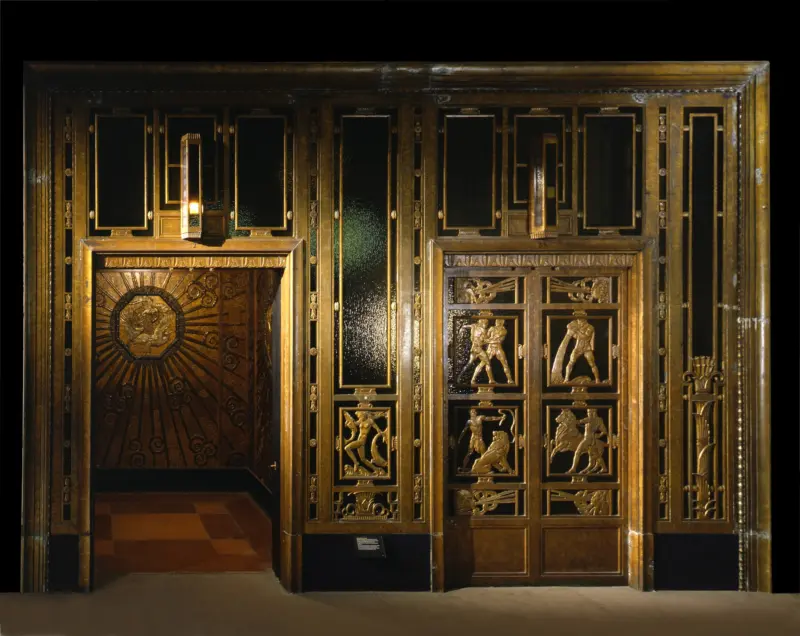
loaded gambling dice made of bone in the 1400s, Charles Dickens' writing chair, costumes from dancer Anna Pavlova, Selfridges' original bronze Art Deco elevators.
Few aspects of London life have escaped the attention of curators. There are not only pocket histories of famous Oxford Street shops but also holdings from tea shops, chicken shops, coffee shops, pie shops, and Topshops.
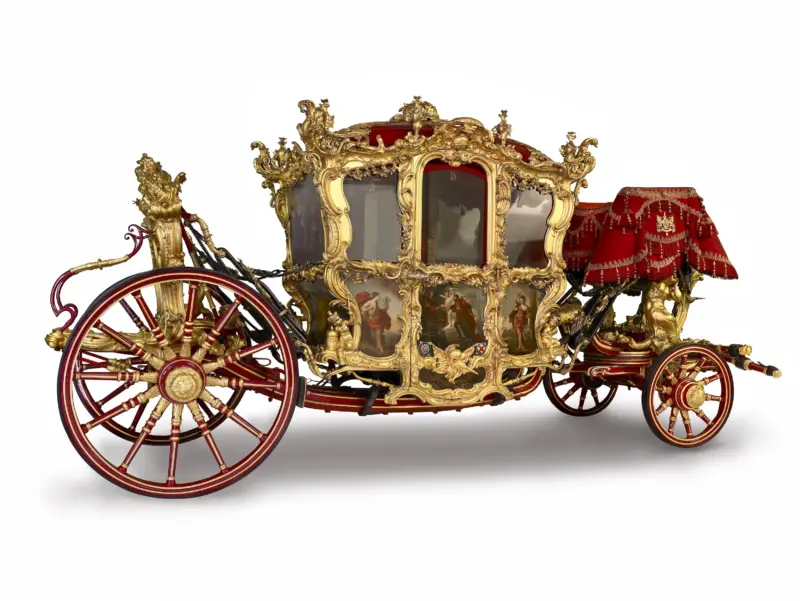
The Lord Mayor of London's State Coach, crafted in 1757 and said to be the oldest ceremonial coach in the world, is always on display at the museum, except for when the carriage is rolled out once a year for the venerable Lord Mayor's Show in mid-November.
The biggest drawback of London Museum is that if you care even a tiny bit about history, you'll need to budget a few hours to visit. Otherwise you’ll end up in a mad rush trying to see everything—and it’d be a shame to miss Tom Daley’s teeny Stella McCartney diving trunks from the 2012 Summer Olympics.

"One of the biggest cultural projects in Europe"
And those are just items from the permanent collection. The museum also justifies its high relocation costs with lots of temporary themed exhibitions (some will be mounted in the museum's Poultry Market, which opens next year), weekly family performances by Punchdrunk (the immersive theatre company behind Sleep No More), special menus at food kiosks, ticketed dinner events, and "monthly House Parties ... thrown with the sound of young London," according to opening press materials.
In spring 2027, some 800 square meters (8,600 sq. ft.) of brick cellar vaults will open, using "dynamic projection and spatial soundscapes to transport visitors back to the turbulent first 50 years of Roman London."
"I’m really proud to have helped realize this incredible vision along with a major investment from City Hall, alongside our partners," said London Mayor Sadiq Khan in a statement. "It has been one of the biggest cultural projects in Europe, and represents a huge moment for London, bringing history, culture and creativity together in a spectacular space."
The museum has always been admired, and not just by Frommer's, for having one of the best-stocked gift shops of any historical institution in town, offering everything from fun touristy gifts to hard-to-find historical books about the city. This updated iteration brings in a lot more wares by local London artists and designers.
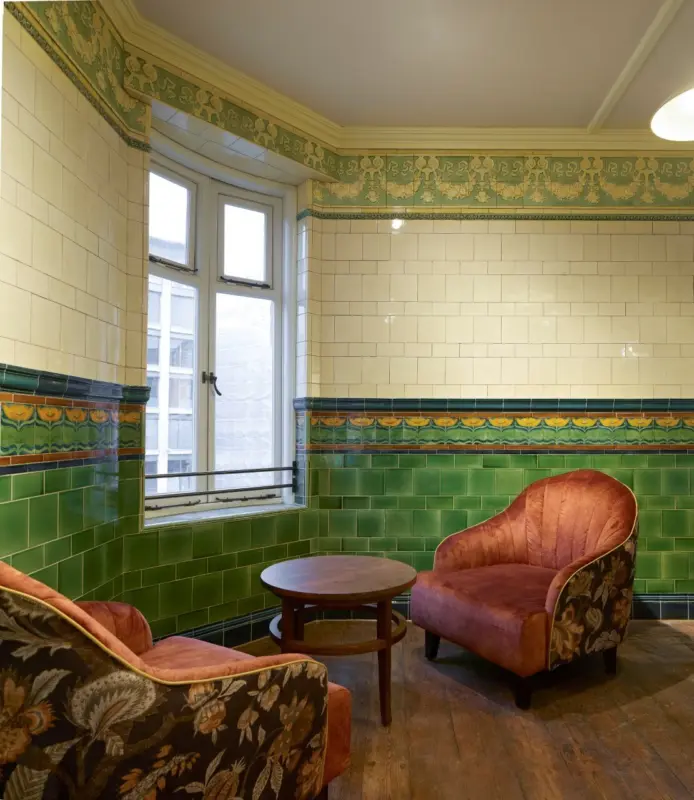
The new London Museum is also on top of its branding. One signature souvenir is custom-fired "Art Nouveau tiles featuring yellow buttercups, based on those discovered in the building's historic Temperance Cocoa Rooms" (pictured below), a nook that originally opened in 1875 to give thirsty meat market laborers an alternative to gin and ale.
To rejuvenate partiers at London's iconic Fabric nightclub, which is across the street, the Cocoa Rooms will remain open 24 hours a day Thursdays through Saturdays—surely a first for a history museum café.
The London Museum (londonmuseum.org.uk) is already welcoming invited guests. On Saturday, Nov. 28, it will be declared officially open. Hours are Sunday–Thursday 10am–6pm, but on Fridays and Saturdays, it stays open until 11pm. Those are the latest evening hours of any museum in the city.
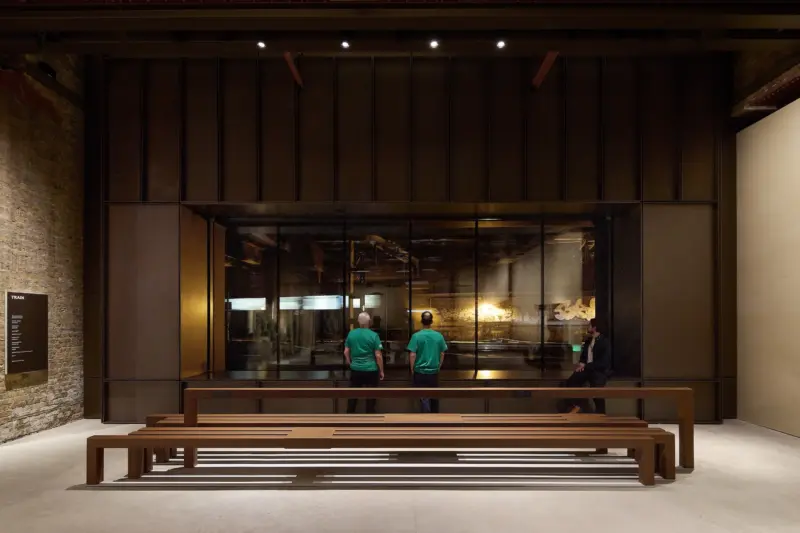
Farringdon, a stop served by the Tube, the Elizabeth Line, and Thameslink commuter trains (which visitors can watch roll past through 20-foot windows in the museum's lower level, pictured below), is a block away.
In addition to a few cafés and places to eat among the galleries, London Museum's street-facing facades will host a range of dining and shopping options, although some of those are still in the process of opening.
Museum admission is free, but because of the facility's popularity, visitors are asked to make a reservation via this link, at least until early 2027 while people come to check out the new digs for the first time.
Frommer's London
This is London advice the way a friend would give it to you: fiercely opinionated, funny, and brimming not only with suggestions about what to see and do, but also what’s not worth your time. Whether you want to see Big Ben or the Harry Potter studios, Trafalgar Square or the V&A, London is a ci...
Get the bookFrommer's London
This is London advice the way a friend would give it to you: fiercely opinionated, funny, and brimming not only with suggestions about what to see and do, but also what’s not worth your time. Whether you want to see Big Ben or the Harry Potter studios, Trafalgar Square or the V&A, London is a ci...
Jason Cochran is the author of the award-winning Frommer's London guidebook. The latest edition was released this fall, making it the newest London guidebook on the market.