

In Rome, changing a classic dish can feel like heresy. Few cuisines are guarded as fiercely; recipes are protected, debated, and passed down like family heirlooms.
When Italian cuisine was formally recognized by UNESCO as Intangible Cultural Heritage—not just for what’s on the plate, but for the culture and community behind it—that distinction captured a paradox. Tradition must be preserved, but it must also evolve.
At these four restaurants across the Italian capital and nearby Frascati, Rome’s top chefs are reshaping familiar classics without losing their soul.
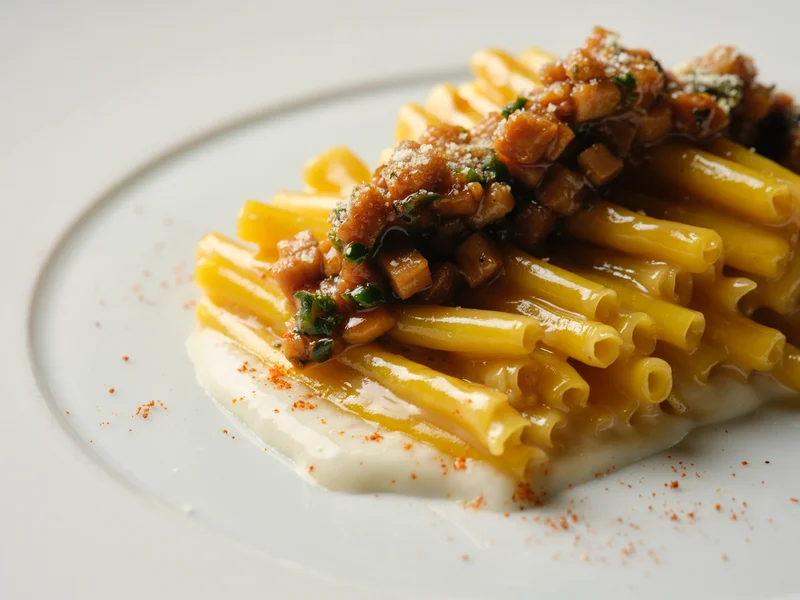
INEO: Roman Cooking That Crosses Borders
Set inside the grand Anantara Palazzo Naiadi Rome Hotel, just off Piazza della Repubblica, INEO has quickly become one of the city’s most compelling restaurants, earning a Michelin star just 2 years after opening. But the real story unfolds on the plate, shaped by a chef raised by an Italian father and an Eritrean mother.
INEO’s Heros De Agostinis grew up navigating two culinary worlds: gnocchi on one table, richly spiced stews on the other. The result is a kind of borderless Roman cooking, reflective of the multicultural Esquilino neighborhood that De Agostinis calls home and where he shops at food markets abounding with ingredients from across Africa, Asia, and beyond.
His signature handmade maccheroni comes cloaked in a slow-cooked Eritrean-style beef ragu and finished with 24-month aged Parmigiano foam. Spaghetti arrives slicked in olive oil and fiery with berbere, the north African spice blend, topped with sweet gobbetto shrimp and a flash of osetra caviar.
Elsewhere, carrot chutney brightens risotto, green curry lifts freshly caught snapper, and baharat and harissa add warmth to dishes without overwhelming. Comforting and complex, it’s a menu that collapses continents into a single forkful.
The setting carries layered history, too. Built atop the ancient Baths of Diocletian, the hotel reveals fragments of Rome’s past beneath glass floors, while upstairs, indulgence takes a more cinematic turn.
If you really want to splurge, book yourself a night in the Sophia Loren Suite, named after the movie icon who’s a regular when she’s in town. Stays incorporate all of her faves—fragrances, playlists, even cherished coffee rituals.
Pizza della Repubblica 46. Four courses €155 ($182), seven courses €175 ($205), à la carte €63-€68 ($74–$80).
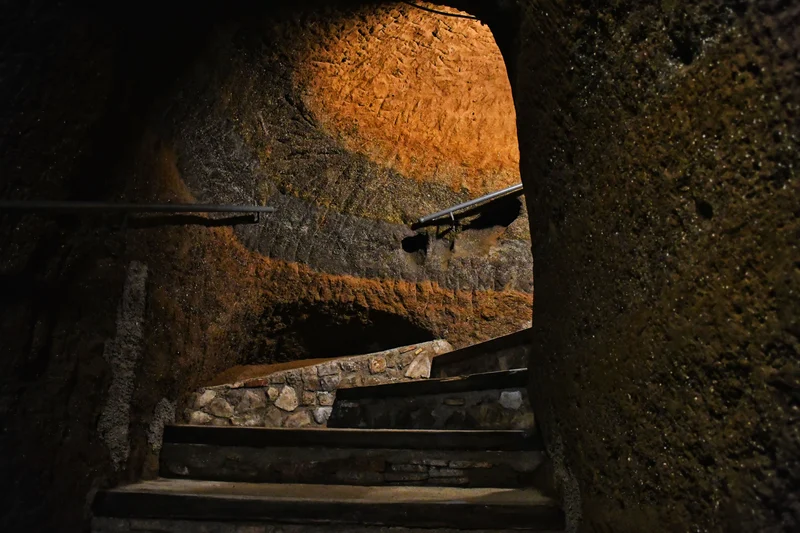
ConTatto: The Taste of Subterranean Transformation
Just 30 minutes by train from Rome, Frascati feels like a shift in altitude and tempo—an easy, wine-soaked day trip that trades the capital’s intensity for breezy views and a slower rhythm. It’s here, beneath the historic hilltop town, that ConTatto takes the idea of hyperlocal “zero-kilometer” cooking somewhere entirely unexpected: underground.
The tasting experience begins in the 550-foot-long cave beneath the restaurant, a cool, dim labyrinth where chef Luca Ludovici has turned nature into both pantry and laboratory. Descend to the first level of this former military bunker, and you’re introduced to the concept of time as an ingredient. Cheeses rest in the mineral-rich air, slowly developing blue-veined complexity, perfumed with notes of tobacco, fruit, and fermentation.
Farther down, the cave shifts to a subterranean garden. Mushrooms—shiitake, cardoncello, even chanterelles—thrive in the humidity, absorbing the cave’s minerality, while radicchio and wild greens emerge with an unexpected intensity. Then comes preservation: shelves lined with jewel-toned vinegars, pickled vegetables, fruit compotes and jams, each one capturing a season at its peak and holding it in suspension until ready to be consumed.
It’s part of a broader, ongoing research project. Ludovici studies how darkness, humidity, and native microflora reshape flavor, documenting how ingredients evolve when removed from conventional kitchens and returned to a more elemental environment.
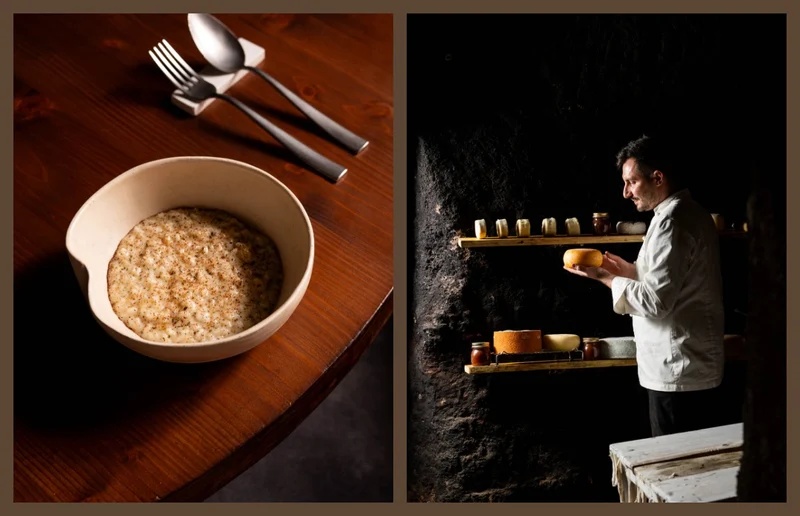
Back upstairs, those subterranean transformations arrive as surprises on the plate. A signature risotto, made with cave-aged Carnaroli rice, reveals grains that cook faster and taste deeper. It’s enriched with a delicate broth built from Parmigiano rinds and water from Fiuggi, long prized for its exceptional purity, low mineral content, and detoxifying benefits.
Bread, leavened slowly belowground, is tangy and light. Chocolate, aged in the cave, lingers with unexpected depth, its flavor echoing long after the meal, similar to how the experience stays with you.
Via Gioberti 11, Frascati. Five courses €65 ($76), seven courses €80 ($94), à la carte €20–€26 ($23–$30).
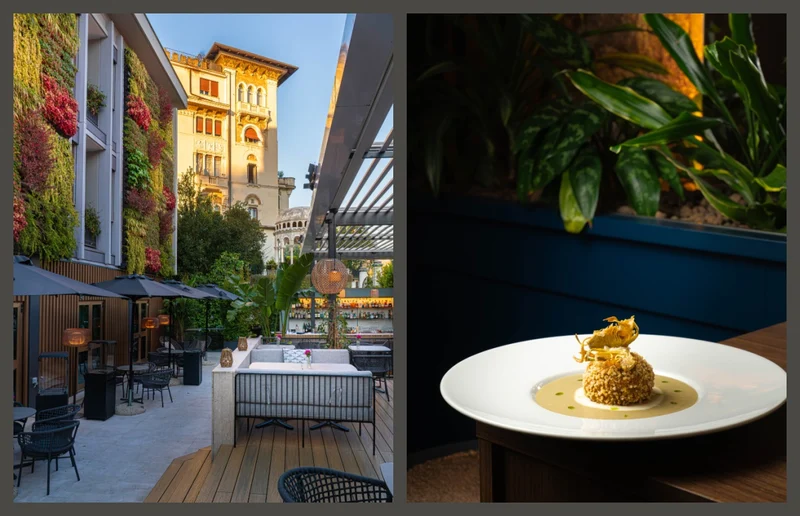
Antéla: Sicilian Classics, Subtly Reworked
At Antéla Restaurant, nestled within an urban oasis at NH Collection Roma Centro hotel in the Prati district, the mood is quietly transportive. The space flows from a leafy private garden into a sleek dining room and cocktail bar, but the real sense of place comes from the plate. This is where Rome meets the sea, while Sicily does most of the talking.
At the helm is Natale Giunta, a Sicilian chef whose cooking is rooted in his childhood memories. Growing up with Greek, Turkish, and Italian family influences, he sees Sicilian cuisine as inherently multicultural and he carries that point of view through every dish.
Giunta’s philosophy is deceptively simple: Don’t tamper with tradition, just reveal the quality of the ingredients. The result is food that feels both familiar and subtly reworked.
Over the years, Giunta has built a culinary empire across Italy, with multiple restaurants, more openings on the horizon, and hundreds of employees. He is as well known for standing up to the Mafia in Sicily as he is for his cooking.
At Antéla, the signature amuse-bouche sets the tone: scrambled egg with Parmesan fondue and black truffle, served inside an empty eggshell. From there, the menu leans heavily into the sea. Red prawns arrive raw, paired with burrata cream, cuttlefish ink, and jewel-like drops of bisque. Spaghettone cooked with salted butter, lemon, and caviar distills the essence of Sicily into clean, briny bites.
Even as the menu shifts with the seasons, there’s a permanent space for the classics to ground your experience in Rome—cacio e pepe, carbonara, or artichokes cooked crisp on the outside, soft and tender on the inside.
For Giunta, the guest, not the chef, is at the center. The goal isn’t to impress, but to connect, letting exceptional ingredients speak for themselves as they bring tradition to life.
Via dei Gracchi 330/332. Tasting menu €80–€100 ($94–$117), à la carte €20–€26 ($23–$30).
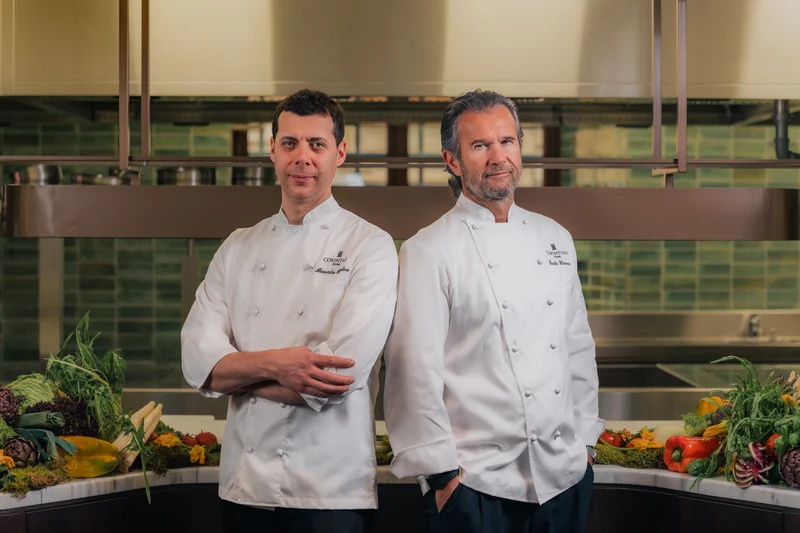
Piazzetta and Viride at the Corinthia Rome Hotel: A Star Chef and Exceptional Sourcing
At Piazzetta and Viride, your dining experience unfolds as a study in how far you can push a classic dish before it stops being itself. Under the direction of acclaimed chef Carlo Cracco—a celebrity in Italy, thanks to his TV roles on MasterChef Italia and Dinner Club—and executed day-to-day by executive chef Alessandro Buffolino, the answer lies in small, deliberate shifts: a spice here, a tweak there, but always anchored in exceptional sourcing.
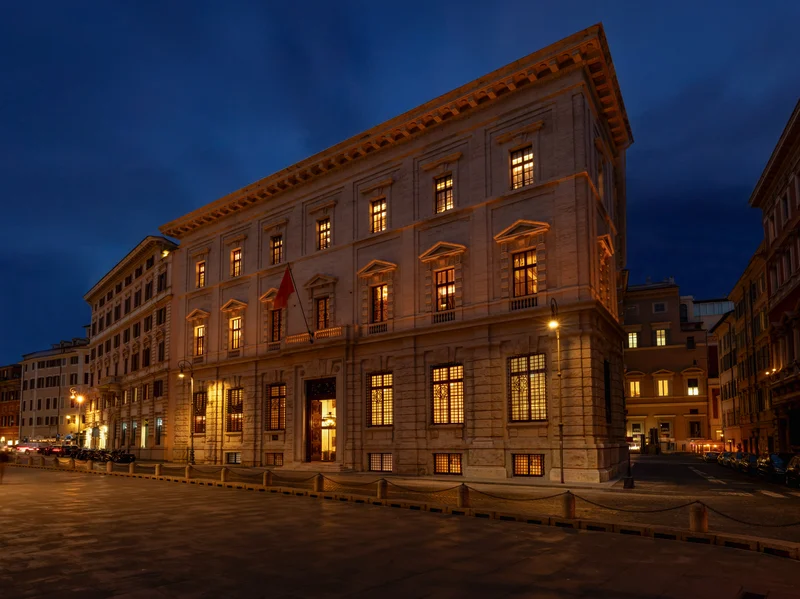
Both restaurants sit inside the recently opened Corinthia Rome hotel, located in the stately former Bank of Italy headquarters. In the courtyard at Piazzetta, Roman staples arrive looking comfortingly familiar but tasting just different enough to make you pause.
Black pepper from Madagascar adds a brighter, more aromatic heat to cacio e pepe. Artichokes are gently cooked in mint-infused oil, while the lamb carries a whisper of nutmeg—unexpected but not intrusive, designed to deepen flavor without disrupting memory.
“If you change things too much, there will be riots,” Buffolino says, only half-joking. After all, even Cracco has felt the force of Italian culinary orthodoxy. Officials in Amatrice once publicly criticized the chef after he admitted to adding an unsanctioned secret ingredient—sautéed unpeeled garlic—to his amatriciana pasta.
Sourcing is an important part of the story at the Corinthia restaurants. Anchovies arrive from the Cilento Coast, caught using traditional nets said to have been designed by ancient Greeks. This sustainable fishing method captures only mature fish above reproductive age and is available through only three producers in Italy.
That same attention extends to the kitchen’s prized Umbrian pork, sourced from wild boar raised like sheep and left to graze freely in the mountains. At Viride, it appears on the dinner menu as a glazed suckling pig, paired with green tomatoes and langoustines—rich but precisely balanced.
Across both restaurants, nearly every ingredient is traced back to small producers tied to the Slow Food movement, a behind-the-scenes research effort aimed at sourcing ingredients that elevate even the simplest dish.
Piazza del Parlamento 18. Viride : tasting menu €220 ($258), mains €32–€55 ($38–$64). Piazzetta : mains €30–€50 ($35–$59)

Frommer's Rome, Florence & Venice 2026
There is no better introduction to Italy than the classic itinerary of Rome, Florence and Venice. But it is not dummy-proof, which is why we enlisted three of Italy’s most knowledgeable experts—Elizabeth Heath, Donald Strachan and Stephen Keeling—to pen this guide. Their helpful advice, and honest, ...
Get the bookFrommer's Rome, Florence & Venice 2026
There is no better introduction to Italy than the classic itinerary of Rome, Florence and Venice. But it is not dummy-proof, which is why we enlisted three of Italy’s most knowledgeable experts—Elizabeth Heath, Donald Strachan and Stephen Keeling—to pen this guide. Their helpful advice, and honest, ...