

John, a 30-something Peter Gallagher look-alike and cellar master of Dove Cote Winery, was trying to paint a word picture of how vintners separate wine from its sediment during the fermentation process.
Halfway through the discussion, he did something I’ve never seen a guide or sommelier do. He pushed up his shirt sleeve.
There, tattooed on his inner forearm, were the apparatuses he was discussing: a racking wand and a punch down tool crossed in an elegant X.
When I remarked that I’d never had anything explained to me by tattoo before, John slid into a toothy grin and said, “Yeah, I’m in this for the long haul.”
That moment crystallized the day.
When you sign up for a tour with Sustainable Wine Tours of the Santa Ynez Valley, as I did, you’ll learn about turning grapes into high-class booze, of course. But the real lesson of the day is what it means to be working—and living—with passion.
Or perhaps obsession.
Sustainable Wine Tours, which operates a few hours' drive northwest of Los Angeles, only goes to the Santa Ynez Valley's smaller wineries, the ones that keep their interventions on their winemaking to a minimum (translation: fewer additives).
These tours visit operations that don’t have the staffing or space to accommodate busloads of people—or even unexpected visitors. Which means that on these tours, you won't be chatting with people who have been hired only to greet guests. Most of the wine educators you’ll meet on the tour take direct part in the winemaking process.
You’ll learn about their personal missteps and successes with different vintages, their plans for the future, their hopes for their community, and more. Everyone we chatted with was all-in when it came to winemaking, which made for a dynamic, and very personal vacation experience.
And the fact that I was a bit tipsy through most of it didn't hurt either.
Let me say at this point that this review will come as a surprise to the folks who run Sustainable Wine Tours. I paid full price for myself and my husband, and I did not tell them at any point that I might be writing about it.
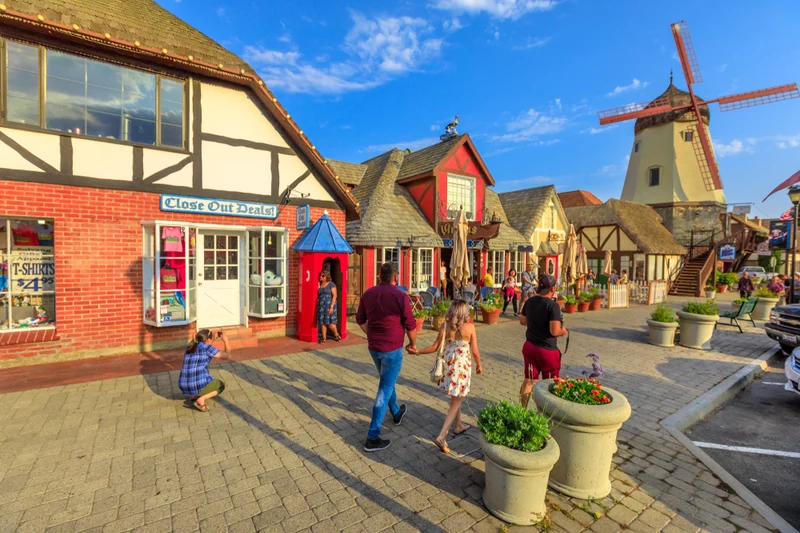
The wines of the Santa Ynez Valley
If you saw the 2004 film Sideways, you know a little about the wine scene here. Filmed in and around Solvang (see above) and Los Olivos, the Valley’s two major towns, the movie digs deep into the viniculture of the region.
But what’s never discussed in Sideways is the fact that its title doesn’t just refer to the characters’ unhinged mental states or to the tanking of their friendship. No, it's about the Santa Ynez Valley wine region's unusual East-West orientation to the coast.
Instead of the vineyards being parallel to the coast and backed by mountains, as with many famous wine regions, the ones around Santa Ynez are “sideways," or aligned perpendicular to the ocean. This creates numerous microclimates, since the temperature rises 1 degree Fahrenheit (1.8 degrees Celsius) for each mile leading away from the Pacific.
So although the region is best known for its Pinot Noir, it can also support a United Nations' breadth of grape types from across the planet. In one field may be Syrah, the next Mourvèdre, the following one Grenache, with Chardonnay not far away, and more varietals nearby.
This awesome range is both the region’s strength and its Achilles heel, our guide explained, because it makes the area's output more difficult to categorize.
But for tasting forays, that diversity is a blessing. You’ll be getting very different wines at each stop.
What Sustainable Wine Tours are like
Sustainable Wine Tours are not dirt cheap (see below) because they’re surprisingly personalized—even if you take the group trip, as we did.
Well before the outing, the company sent us a questionnaire asking for our favorite wines, and what, if any, wine regions we’d visited in the past.
Then our tour was tailored to our tastes (no Pinot Noir!), and the needs of the only other person on our excursion, a Texas retiree who was on his third tour with the company. For him, they carefully made sure we didn't visit any wineries he’d seen with them in the past—a doable assignment since there are some 200 vineyards and 700 labels in the Santa Ynez Valley.
(I should say that we had an inkling our tour group might be small. Sustainable Wine Tours limits its tours to 7 participants, and folks online talk about booking the group tour and often ending up with a private one.)
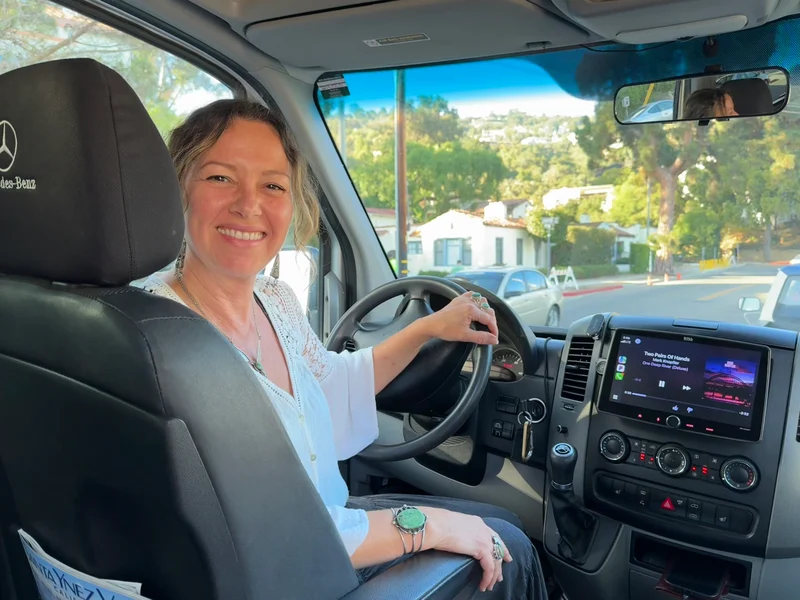
The tour began with a pickup at our Santa Barbara hotel by our guide for the day, Karina Line, a woman with Audrey Hepburn-level charm, and serious storytelling chops.
The hour-long drive to the Valley zoomed by as Karina connected the historical dots from tectonic plates to the Indigenous habitation of the area; the arrival of Spanish missionaries, stagecoaches, and railroads; the Danish mafia; and today’s ne'er-do-wells, javelinas. (Vineyard owners try to keep these piglike marauders at bay by placing giant stacks of grape skins at the edges of fields). Karina gracefully wove all these strands together with the story of the valley’s wine industry. It was a darn good yarn.
Our first stop was Larner Vineyard and Winery, where our wine educator was the owner himself, Michael Larner. We walked with him down a road toward the vines, sipping the most complex rosé I’ve ever tried (we ended up buying a case) and learning about the various strata of dirt below his vines, some of which contain fossilized seashells from the time this region was on the ocean floor.

Larner is a professor of viticulture and enology, and formerly a geologist, so his lens on winemaking is a deeply scientific one. But the way he talked wasn’t at all wonky. Instead, he couched the discussion in personal terms, telling us about his struggles (with his neighbors in particular), experiments (like the new egg-shaped concrete fermentation tank he was testing), and successes (in how he blended his latest reds).
After a superb tasting (more purchases!), we ate a delicious lunch among the vines, included in the cost of the tour, and then went to our other two wineries of the day: Brave & Maiden and then, Dovecote Estate Winery.
Each had a different vibe (Brave & Maiden was a bit too corporate-feeling for my taste), but the key commonality was staff who had a palpable excitement about the winemaking process and could discuss what their wineries were doing in ways that got me excited about viniculture, too.
The other thing the other wineries had in common: Everyone wanted to dish about the neighbor problem Larner had brought up. It was clear that we were in a small community, and for one day, I felt like I was part of it, too.
About Sustainable Wine Tours
Outings with Sustainable Wine Tours include lunch, all tastings, and transportation to and from Santa Barbara, Solvang, or Los Olivos.
Tours start at 10am and often stretch until 6pm, though the official timing is 10am to 5pm. The cost is $197 per person.