

This interview was taken from a March episode of the Frommer's podcast. Pauline Frommer spoke with the Honorable Edmund Bartlett, Jamaica's minister of tourism.
The following transcript has been edited for length and clarity.
Pauline Frommer: Let’s address the elephant in the room first. I think some may be surprised that we're speaking today because they know that Jamaica had a terrible hurricane just this past fall. I think it was the third-most intense hurricane ever to hit the Caribbean. So they may be thinking, Why are we talking about Jamaica now? Can you visit Jamaica? Shouldn't this conversation be happening, say, a year from now?
So how is Jamaica doing?
Hon. Edmund Bartlett: Very well, actually. We have made a remarkable recovery following Hurricane Melissa. And that is a testament, of course, to the resilience of our tourism sector and the dedication of our Jamaican people.
Through strong collaboration between the public and the private sectors, we restored tourism operation by Dec. 15. And perhaps I should correct you a little bit: [This wasn’t the] third-worst hurricane. It was actually the worst [to hit the Caribbean]. So much so that our meteorologists now have retired the name Melissa.
Six weeks after, we were able to invite international visitors back to Jamaica, and we opened with 70% of our room stock.
And since then, we are now at 80% of our visitor arrivals for last year in the month of March. And we are looking to complete the renovation of all the rooms that were affected by December of this year.
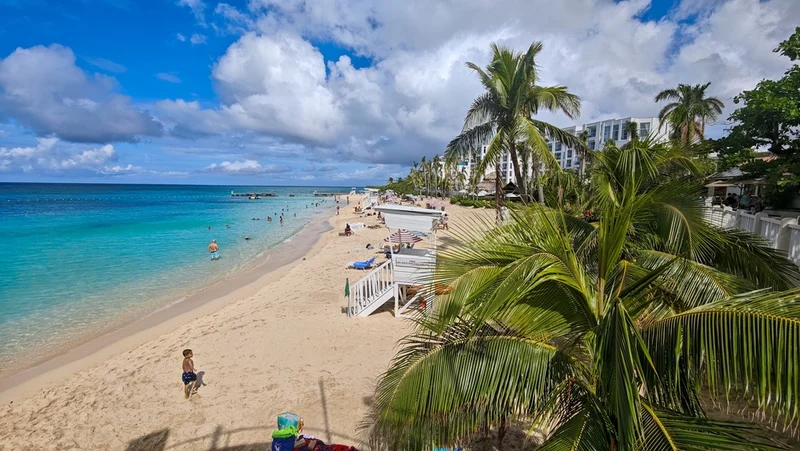
Frommer: This is obviously a testament to the hard work of the people of Jamaica, but it also speaks to the fact that Jamaica is the third-largest island in the Caribbean—Jamaica is huge. So even with a storm of this magnitude hitting the island, not all areas were affected in the same way.
Bartlett: A third of the country was impacted, on the western side. But the rest of the country, [including] the main city, Kingston, was fully intact. Port Antonio, Ocho Rios, and areas in the middle of the island were all not affected.
The impact was on the western side: the Montego Bay, Negril, and Treasure Beach areas.
The good news is that all our infrastructure is back. Airports are in good shape. Electricity fully [restored], water fully [restored]. The road networks [are] back, fully in shape.
But because we lost a significant portion of the built environment in the interior of those communities—settlements and so on—we are now working on building back roofs and getting houses back in full shape.
But insofar as our tourism is concerned, we have a very strong year ahead of us. As I said, we've restored up to 80%.
We have also more flights coming out of the U.S. Southwest is [set] to launch new nonstop flights from Nashville to Montego Bay. Breeze Airways began an international route to Montego Bay with services from Tampa and then also from Raleigh.
Frommer: I think that Jamaica has the most piquant, exciting culture of any of the Caribbean islands. I mean, you're the home of reggae. Plus, you have this extraordinary cuisine. I would go to Jamaica just to eat ackee. Ackee is a fruit that looks like a brain but when you cook it up, it tastes like the creamiest eggs you've ever tasted.
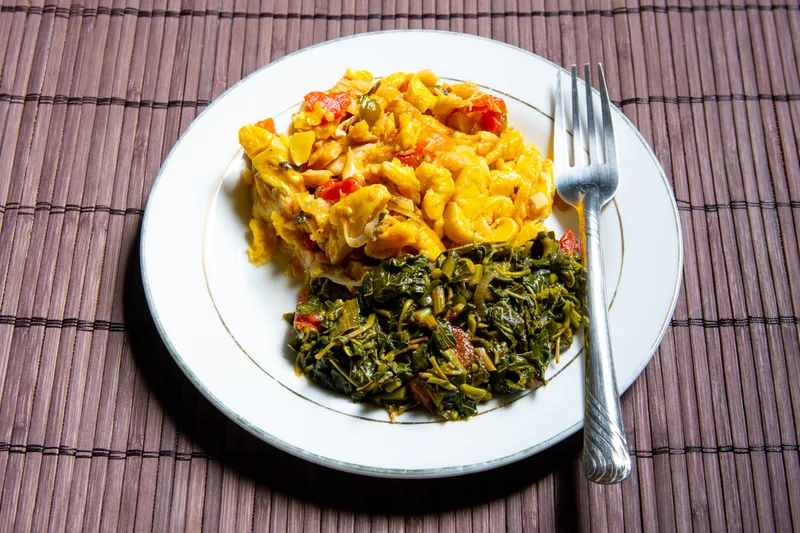
Bartlett: It's really extraordinary and in fact is unique to Jamaica. Jamaica is the only country where that fruit is prepared the way it is.
But you ask the question [about why to go] and there's so many exciting things that are happening in Jamaica, major events to excite the interest of visitors. We have Carnival, which is street parades and music and entertainment. We have Dream Weekend which will be in Montego Bay. Dream Weekend is an exciting series of parties and entertainment primarily for the younger folks. It’s a period of absolute indulgence in reggae music. Music of all types, really. And then Reggae Sumfest, which is July 18, and that will be in the St. Ann area near Ocho Rios.
Beyond that, we have the Food and Drink Festival. We also have the Coffee Festival, we have a Rum Festival. There's a Calabash Literary Festival on the South Coast. So there's a lot of things to anticipate in coming to Jamaica.
Frommer: I don't think people know that Jamaica has such an important coffee culture. Tell me a little bit more about Jamaican coffee and what makes it so interesting.
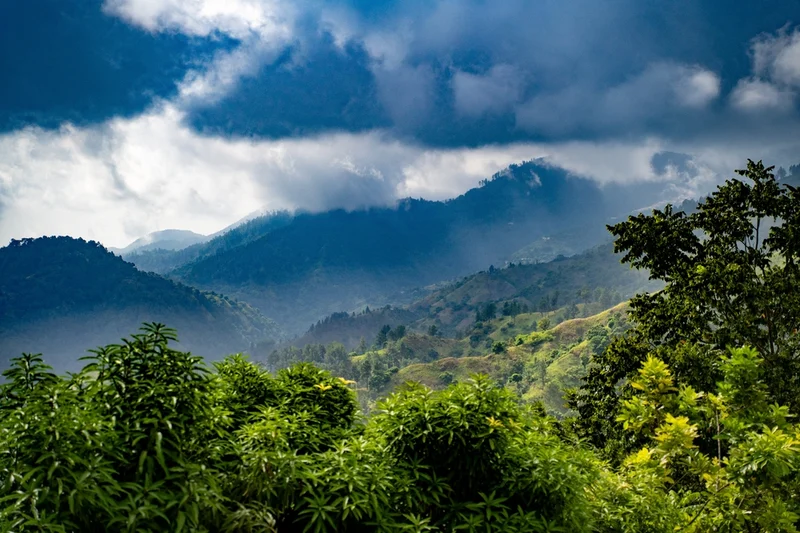
Bartlett: First of all, Jamaican Blue Mountain Coffee is premium coffee. It is among the top-rated coffee of the world. And it is occasioned by a very special geophysical feature. It grows primarily on Blue Mountain, which is 7,000-odd feet in the air. So we have cloud cover at that height, which enables the moisture from that to be imbued in the plants and it enables a very rich and powerful flavor. Very few places in the world have that.
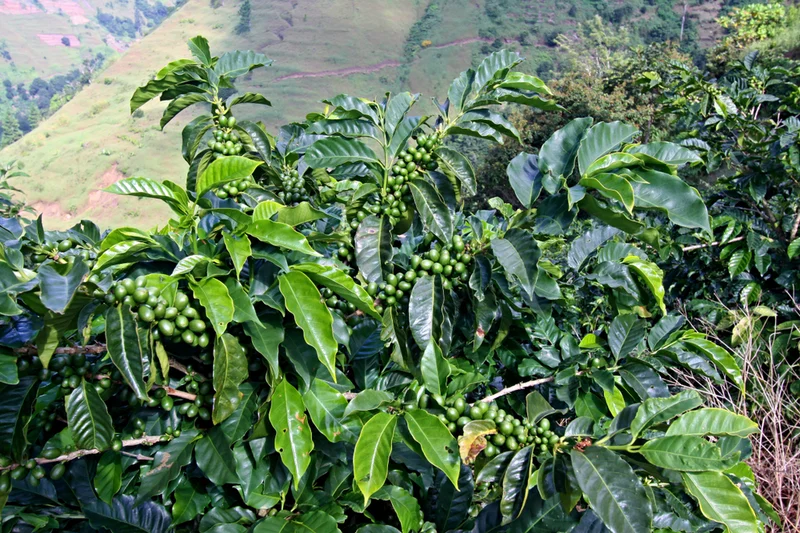
And we benefit from the microclimates there. So the beans are matured in a special way, and they maintain a certain level of texture and quality and moisture level. So we see our Blue Mountain Coffee as being a special asset to the country.
Frommer: Are there visits to plantations so one can see the whole process?
Bartlett: Yes, absolutely. There are tours that are arranged and we also established the Blue Mountain Culinary Trail. While you are driving from Kingston up into the mountains you can benefit from very powerful eateries that are established along the way as you go up, and then you have a number of plantations there that you can tour.
You can see how the beans are processed. You can see how the farmers plant, care, and culture the crop. And then the reaping process and then of course the manufacturing elements. It's very scenic.
You also see the wonderful geophysical features that are part of the Blue and John Crow Mountains, a World Heritage Site that has been designated by UNESCO.
Frommer: Was it for the geological features or for the coffee?
Bartlett: It's a full combination of the geophysical features, the flora, and fauna of that area. It's unique in many forms.
Jamaica is said to be a mountain out of the sea. We have karst topography [that] represents features of the floor of the sea. The karst scenery [is] reminiscent of coral formations.
Frommer: Let’s talk about Dunn's River Falls. That's something I've never done. What does that experience consist of?
Bartlett: It ends on the northern coast of the country, but it really begins in the interior of the country. And it's part of that same geophysical feature that I mentioned earlier, because the water is collected in mountain caverns and then it flows down through the rocks and over flat rocks and then into the sea. So it becomes an exciting adventure. To just climb up those rocks with the water flowing across it and then you can swim in parts and then you can trek all the way down to the sea.
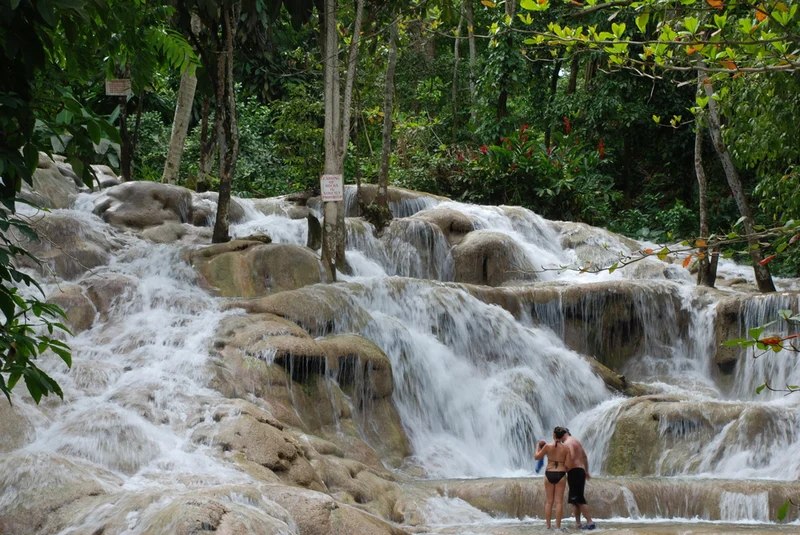
Dunn's River Falls is the number one attraction in the English-speaking Caribbean.
Frommer: What's number two in Jamaica, would you say?
Bartlett: We have developed some human attractions now, [like] our zip lines. The Chukka experience is a zip line that takes you straight into the sea, which is exciting. And then you have zip lines that take you into just the mountain areas. That's over and above Ocho Rios at Mystic Mountain.
Frommer: Looking towards the future, obviously you've got 20% you have [left] to rebuild. Is there anything new beyond that? Do you have new resorts opening, new attractions?
Bartlett: Jamaica is ever evolving into a more exciting and alluring destination. We're going to be making some new cities, new townships, relocating some towns more into the interior to allow the coastline to be more focused on lighter touristic activities—entertainment and so on. We're going to also be looking at building nearly 7,000 new hotel rooms over the next 5 years. Construction for about 4,000 of that is currently on.
The St. Thomas area, which is in the eastern side of the country, is being focused on now for development. In this way, post–Hurricane Melissa, we are going to be reimagining our tourism offerings.
So we should see new attractions, new hotels, and also we are training and certifying our workers to achieve a level of competence in service that will be unmatched in the region. Sixty percent of the value of the visitor experience is service. We're going to ensure that all our workers are fully equipped to provide the best-quality service possible.
Frommer: You talked a little earlier about some of the wonderful festivals you have in Jamaica. But if somebody goes outside of festival time and they want to have a reggae experience, do they go to Bob Marley's hometown? Or where?
Bartlett: Really, reggae is all over. You can enjoy good reggae music almost in every part of Jamaica that you go. But Negril has special entertainment areas for weekly and sometimes nightly reggae experiences in Ocho Rios and Montego Bay.
Kingston is really buzzing. It's a very powerful entertainment city with strong cultural attributes and good cuisine. The gastronomy is at a very high level now. Kingston has become the new culinary center in the Caribbean. We want to encourage visits to Kingston as well.
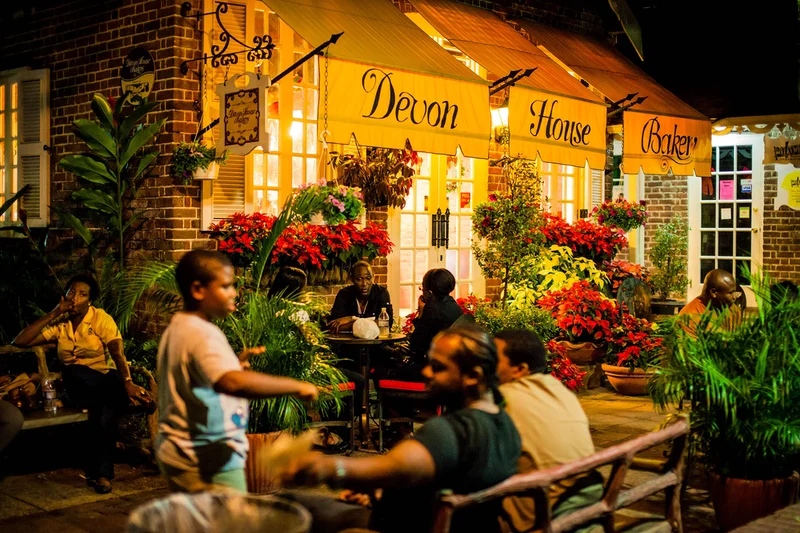
Frommer: I think that represents a change. It used to be that when you went to Jamaica, you kind of just stayed on the resort. But you're telling people that you want them to see the whole island.
Bartlett: See the whole island because we're a country—we're not just a beach. We want you to come and explore all that we have to offer. And you will find that one visit is never enough. So you'll have to come again and again and again. Forty-two percent of our visitors [are return visitors].
Frommer: One of the things I really respect about Jamaica is, unlike some island groupings where it's only high-end, and others where you're only going to get the budget experience, Jamaica has something for all price ranges. I've found you have nice all-inclusive resorts for people who really want to know in advance what they're going to pay.
But you also have historic resorts like GoldenEye, which was the home of Ian Fleming. We have a new coffee-table book [Frommer's Comfort in the Wild] about some of the most beautiful places you can stay on Earth, and GoldenEye in Jamaica is in there.
Bartlett: It's one of them, definitely. Ian Fleming, he wrote the James Bond series. Noël Coward had [a home called] Firefly in the same area. So many authors and playwrights and poets have come and written books from locations in Jamaica. [They’ve] been inspired creatively from their experiences in Jamaica.
I think what really sets us apart is the breadth of experiences that are rooted in our heritage and the warm hospitality of our people. We say that Jamaicans have hospitality in their DNA. You are going to feel that warmth, that friendliness, that sense of really belonging to something, someone.
I urge visitors to come on down. Come and experience the beauty, warmth, and the diversity of the Jamaican culture. And let us share with you why our motto is "Out of Many, One People."