

The following is an edited version of a conversation from the May 18, 2025, edition of the Frommer’s Travel Show podcast.
Pauline Frommer: Scott Brady is the CEO of Overland International, the parent company of Overland Journal magazine, the Overland Journal Podcast, and the website Expedition Portal. As an overlander, he's circumnavigated the planet three times and was the first overlander to cross all seven continents.
He has a wonderful new book out. It's called Overlanding 101: A Field Guide to Vehicle-Based Adventure Travel.
I think we have to start with the basics because I have a feeling a lot of our [audience] probably has never heard the term overlanding. So what is overlanding?
Brady: Well, I'll start with the basic definition, which is: vehicle-based adventure travel. We're typically going to be using an adventure motorcycle or maybe a Land Cruiser or even an old Mercedes sedan—something like that, some mechanized form of travel, and then we're going to be looking for adventure. We're going to be experiencing a new culture or a new place to us or maybe a very remote destination.
[To put it another way], if you and I were going to go out on a walk, like around the neighborhood, we would call it a walk. If we were going to go out into the woods for an afternoon and go for a walk, we would probably call it a hike.
If we were to climb to the top of a mountain, we wouldn't be hiking—we would be mountaineering. Car camping would maybe be something like a walk. Whereas going on a road trip may be something like a hike. And overlanding is the mountaineering version of that, where you're incorporating so many more skills.
You're much more remote. You need to navigate. You need to have a way to be self-sufficient, deal with medical emergencies, communicate with assistance if you get into trouble, and you're much more self-reliant in either a more remote, more difficult, or more foreign location than you're familiar with.
Frommer: You give the top 10 overlanding routes at the back of the book. Some of these names—they just light up the adventurer in you—like the Silk Road in Central Asia. [You say it’s] 4,000 miles/6,400 kilometers, takes 8 to 12 weeks, but interestingly, [you give it] only a difficulty rating of 5 out of 10. Why is that an easier overlanding route?
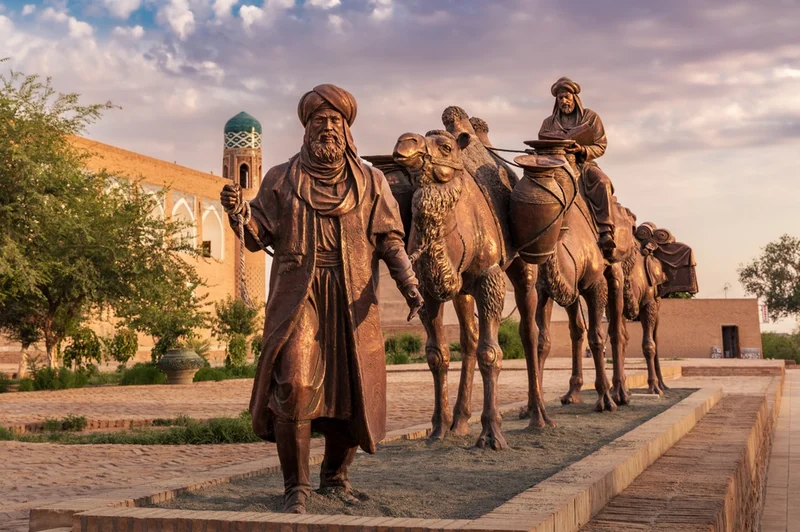
Brady: The road conditions are better. The majority of the Silk Road, as we know it today, can be traveled in a stock vehicle.
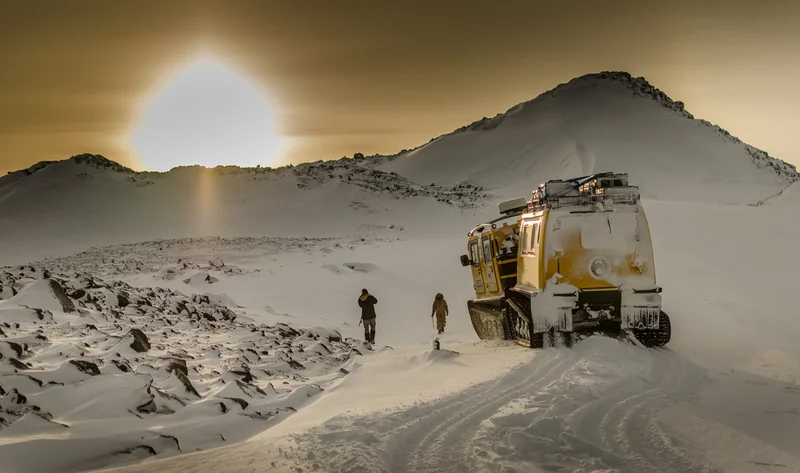
Where [overlanding] becomes more difficult, for example, was when I did a double crossing of the Antarctic continent, which required a highly specialized vehicle, and the travel conditions were much more severe. We averaged minus 40 degrees every day.
So it was a very challenging climate and conditions for the vehicle. Whereas the Silk Road is a little bit more of a cultural challenge. You're going from very different place to very different place. You're dealing with a lot of border crossings. So you want to make sure your documents are in good order and that you have a lot of patience when you get there.
Frommer: There are many types of challenges. Early on in the book you go into different types of driving, with different levels of danger and skills needed to do them. It starts with a paved road—anybody can do that. And it ends with a photo of a guy fording a river in a jeep.
You also had a section about how to drive in deep mud and in snow. And since I thought this could be helpful for any type of driving where you don't have to be overlanding, can you give some tips for deep mud and then for snow?
Brady: Well, one of the things that helps the most is having the right tires. So if you know you're going to be encountering snowy conditions, [you need] winter tires, which are going to be designed to perform better in snow and ice on slippery conditions.
Starting off with the right tires is really the best thing that you can do. And then after that, Land Rover has a great phrase that I like to use, which is, as slow as possible but as fast as necessary.
So there are times in the mud that you need a little bit of momentum to get through a deeper section. Be mindful of not going so slow that your wheels start to spin and then your chassis gets grounded and then you've lost your momentum. So a little bit of momentum is very helpful in the snow and in the mud.
Of course, on the ice you want to be as mindful as possible of throttle inputs so that you don't slide.
Frommer: Right. And it also has to do with how much air should be in your tires.
Brady: When I crossed the long axis of Greenland, the ice sheet, we were driving at 2 or 3 PSI in the tires. So that way we could float on top of the snow.
So the tire pressure is critical.
Frommer: You also give a kind of a chart for determining your travel pace. Like on a developed world primary road, you can pretty much estimate that you're going to be going 60 miles an hour. But if you're, say, on a dirt two-track trail, it's only going to be 15 miles an hour. And if it's a maintained dirt road, it's 25 miles per hour.
I think thanks to Google Earth and [other mobile apps] you can see the type of road and you can then figure out how long it's going to take. And that's a huge part of the planning, right?
Brady: I agree. And it removes a lot of anxiety for the traveler, once they know what the road conditions are like, or they've talked to locals. Never underestimate the power of local knowledge.
If you can get some insights on the road conditions, then you can make sure that you've not been too ambitious in your schedule for the day. That way you don't get driving at night. One of the most dangerous things about travel in general—it doesn't just apply to overlanding—you want to be very mindful of traveling at night.
And that's not necessarily because there's banditos out there. It's just that there could be animals on the road. There could be someone that's drunk that's driving on the road.
It's also much more difficult to navigate effectively. So we don't want to be driving at night if we can help it. Planning our day properly and getting our pacing right helps us make sure we get into the hotel or into camp before it's dark.
Frommer: Now, the book isn't all advice. Every once in a while, you tell us about one of your adventures, which brings it all to life.
Like the time you saved a prince. Can you tell that story?
Brady: It was completely by chance.
It was when I was crossing Antarctica with a group called Expeditions 7. A good friend of mine, Greg Miller, and I had decided to take the same vehicle to all seven continents. And one of the ones that we needed to take it to was Antarctica.
We were on our way to the South Pole and the satellite phone rang. It hadn't rung the whole time we were driving across. So it was a bit of a shock.
It was a gentleman by the name of Emil from Iceland who said, “Hey, I'm here with Prince Harry and we're in a bit of trouble. We aren't going to make it to the South Pole in time to catch the plane, the last flight that was leaving the South Pole.”
They were actually 100 kilometers behind schedule. Now, to these gentlemen's credit, they were actually helping wounded veterans have this incredible experience of skiing to the South Pole [in December 2013].
Some of them were amputees, some of them were blinded, and the pace was slower than they expected, and they weren't going to make it. So Prince Harry said, “Hey, can you come give us a hand?”
It’s not every day that you get to save a prince.
So we drove about 14 kilometers out of our way, loaded all their gear in the truck, loaded all the people up, and we drove them 100 kilometers closer to the pole so that they could finish their objective.
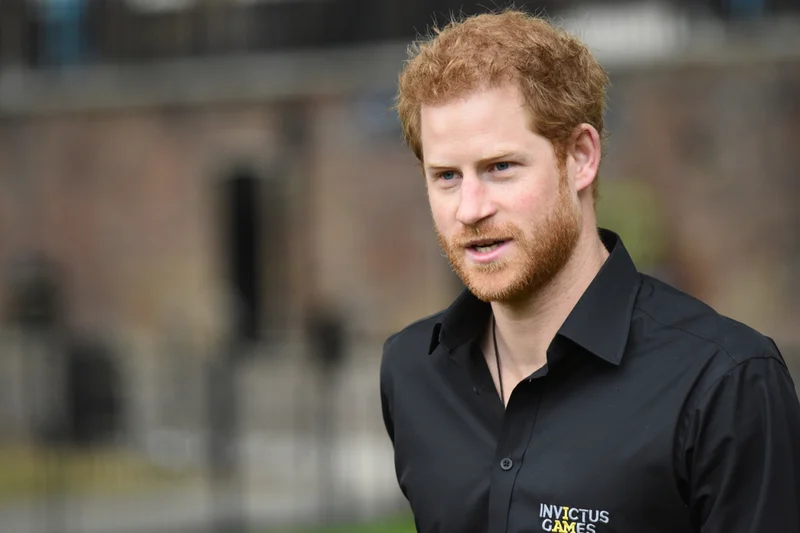
Frommer: Pretty amazing. Was Prince Harry a nice guy?
Brady: He really was. He deserves a lot of credit. When we got there, of course, he was very charming—as a prince would be—and very personable and very grateful for our assistance.
But then he jumped right up on top of the truck and people started throwing him gear and he was working along with everyone else, like everyone else. And I really had the impression that he liked being remote like that with other people that respected him as a traveler, as an adventurer, and didn't treat him like a prince. I think he liked being in the rough and tumble that day.
Frommer: And this brings up another topic in the book. These are adventures, obviously, but you can also do good while you're doing these adventures.
A lot of overlanders work with organizations to help deliver needed goods or to volunteer in some other ways. Can you talk a little bit about the ways you can make these overlanding journeys more meaningful?
Brady: Thank you so much for asking that question.
As travelers, all of us [can find] a way to give back to these communities and cultures that we get to experience. There's ways to help preserve those cultures so we minimize our influence or our impact on those cultures when we're visiting.
A great example of that is when you're driving through a country, if you come into a small village and you wanted to give the children of the village something, never give it to them from the vehicle because that encourages them to run out to the road.
Instead, talk to the local headmaster at the school. Find out what they need. They may not need pencils. What they may need is food for breakfast. So reach out to those schools ahead of time, ask them what they really need, and then drive up to the facility. Work with the headmaster so that way you're not encouraging those children to run out to the road, and make sure that we're also giving the school something that they really need.
That's a way that any traveler can help.
[Another way] that you can change an overland journey into an expedition is through philanthropic work.
We can help a scientist access a remote region to do some sampling of the soil. We can work with doctors to bring medical supplies to remote villages so [locals] can have procedures done that they would never otherwise have access to. We can help transport these scientists, physicians, even aid workers into these remote regions so that we can do good while we're traveling.
Frommer: How do you find that scientist who needs to be going somewhere? Or the aid organization? What are the resources you use to turn your trip into, as you said, an expedition?
Brady: I do it a couple of different ways. I have a lot of folks in my life that are into this kind of thing. And I always reach out before I'm going on a trip to find a way to give back.
But there's also organizations that support that. One of the ones that I like to use is the Royal Geographical Society out of London. You can reach out to them and find out what expeditions they have coming up or what needs they have that overlanders can participate in.
There's also the Explorers Club out of New York. I can reach out to the various members of the Explorers Club and find out where I can give back as an overland traveler.
Frommer: Okay, so getting back to the adventure itself: There’s a section [in the book] called "The Company We Keep," [about] choosing the right people to travel with, and I'm going to read a little bit of it.
You're talking about your travel companions on a certain trip—Brian McVickers, Dave Harrington, and Chris Wood—and you say they're all “level-headed, respectful, and game for nearly any challenge. Some are better at planning, some are better at execution, but all are as dependable as the day is long. Frustrations will invariably arise on any trip, so the company we keep will make all the difference when things go sideways.
“I remember the night when the sand blew so hard that our stake tents buckled, and our sleeping bags filled with silica. There was not a single grumble from the group, and the hardship was addressed with self-deprecating humor and optimism. Egos had been checked at the border, and we all worked to make the trip a success for everyone.”
So how the hell do you find people like that? How do you make sure that your traveling companions are going to enhance rather than destroy the trip?
Brady: There's a couple of ways that we can do that. The best way is to take a small trip with them or even go out to dinner. See how they interact with the server, see how they show deference to the other people at the table, asking them questions, participating in the storytelling as an equal partner in the conversation. There's ways to study human behavior that give us some insights on how they're going to behave during a longer trip.
But most often we travel with people that we already know. You may travel with a best friend or you may travel with a husband or a wife.
Usually there's the one person who really wants to travel and the other one's kind of along for the journey. So the best thing that we can do is to sit down and have a conversation with our partner about what they want to experience on the trip. Because otherwise they're just being tagged along.
Maybe you'll find out that they really have a love for history. Maybe you'll find out that they really don't want to sit in the car for more than 4 or 5 hours a day. Or maybe they have some dietary needs that help them feel less anxious about visiting a place if they know that they can find the food that they need.
Sitting down and having a conversation with our travel companions is the most effective way to eliminate those misunderstandings further down the road or those tensions that may arise. If someone gets to have their self heard and their anxieties or their needs seen, and we make sure that we incorporate it into the plan, we're much [more likely to have a] good outcome.
Frommer: Yeah, absolutely. And at one point in the book, you say it's not an adventure if something doesn't go wrong.
Brady: I don't know that that's the best definition. It is my definition for sure. That's where the stories come from!
Frommer: I agree. Those are the travels you remember, when things really go sideways. Like when I was traveling with my daughter who was on crutches, so we rented a wheelchair for her. We were self-driving a boat and the locks were going to close unexpectedly.
And so we had to drive [the boat at a time] when we didn't think we were going to. And the wheelchair rolled off the boat and into the canal, and it was gone.
That's a story that I'll always remember, even though at the time it was horrible.
BRADY: That’s such a great story. And it's a reminder. It's a reminder when we're traveling, we're technically out of control because we're not in our home. We're not in a familiar place.
So we can't control everything. So just like you did, laugh it off a little bit and realize you can find another wheelchair.
Frommer: We couldn't—but that makes the story even more interesting.
But you're right about laughing it off. And so you want to have travel companions who can laugh these things off. And luckily for that trip, I was traveling with my daughter's boyfriend, who I hadn't known that well in advance. Now I'm a huge fan of his because he just rolls with the punches. He's always looking for where the fixes are. I really adore him.
Brady: That's wonderful.
Frommer: One of the things that really surprised me in the book was—because you discuss a lot of crazy adventures where your foot almost slips into a crevasse on the ice sheet of Greenland and other hair-raising things that seem to be putting your life in danger every other moment—and yet you say that people who take these types of adventures tend to live longer than the folks who are homebodies, the people who never leave their backyard.
I was wondering, where did you get that from? I love that idea.
Brady: There's actually a few interesting sources around that. But if we just think about it from the perspective of the more that we travel, the more we become self-aware. The more we're aware of our surroundings, the more different scenarios we've had to drive in, maybe even on the other side of the road.
So the more that we expose ourselves to these things that make us a better driver, make us a more aware traveler, even make us a little more fit (because we've walked a lot) and we've interacted with other people, we're a little less stressed because we can handle the punches of life.
Whereas the person that takes the same drive every day, they aren't exposing themselves to the things that make us stronger. When we go to the gym and we lift weights, we're a little sore the next day, but we become stronger.
And it's the same thing as travelers. The more that we're effective at research, the more that we're a better driver, the more fit we are, the more we're able to handle awkward situations or identify danger, the less likely we are to be a victim of that in our day-to-day life.
Frommer: I love that. And I love the book. I think you're going to create a whole new generation of overlanders with this book and with your other work.
Brady: Thank you, Pauline. And a big thanks to you and your family for creating these Frommer's guides. They are books that I have used in my own travels. I love the tenor of these books and how they inspire people to get out and see the world.