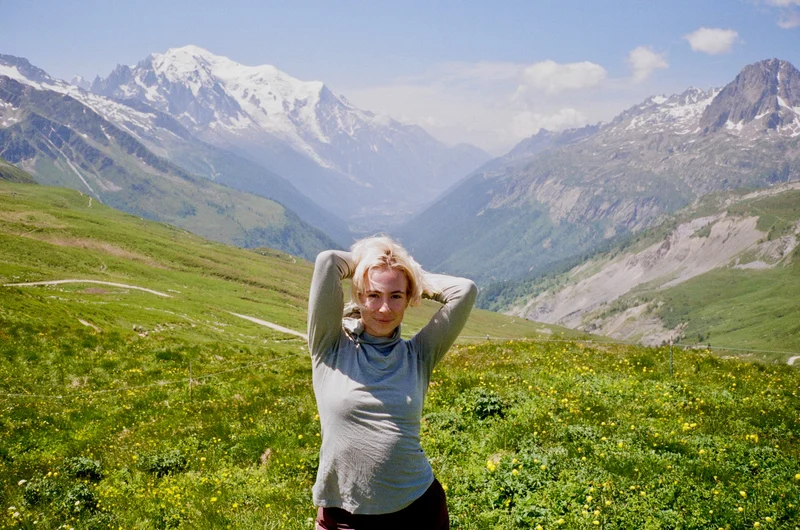
This interview was taken from a recent edition of the Frommer's podcast. Pauline Frommer interviewed her adult child, Veronica Stewart-Frommer.
The transcript has been edited for clarity and length.
Pauline Frommer: Tell our listeners: What is the Tour de Mont Blanc?
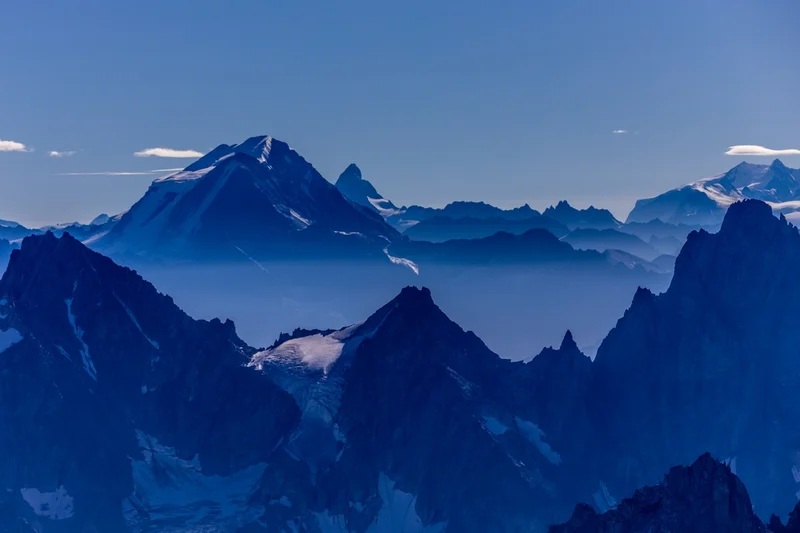
Veronica Stewart-Frommer: So the Tour du Mont Blanc is a backpacking circuit that goes for just over 100 miles. You circumnavigate the Tour du Mont Blanc range, which is the highest mountain in Western Europe (the Mont Blanc mountain), and the range of glacial peaks around it. So it's this really, really beautiful hike in the foothills and the passes around these really, really tall glacial mountains.
Frommer: And it goes to three different countries, right?
Stewart-Frommer: Yes, it goes through Switzerland, France and Italy. One of the amazing things about it is you can stay in these huts pretty much littered the whole way through. If you've ever hiked in the White Mountains in New Hampshire, the huts there were actually modeled after the huts around the Tour de Mont Blanc. So you can get a bed for the night, get some dinner. They pack you a lunch the next day if you want it, so you can travel pretty light. It was a really wonderful experience.
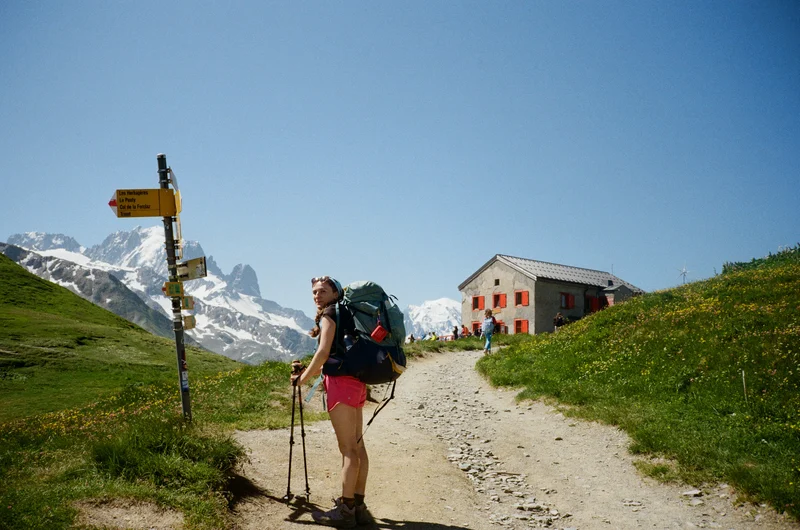
Frommer: But you didn't necessarily travel light. I mean, I saw photos of you and you had a massive backpack on your back because you were camping out on some nights. You weren't only in the huts, right?
Stewart-Frommer: I will say one of the great things about this trip is that it's a modular experience. You can kind of take and leave certain parts of it.
I come from a guiding background, so I was a canoe tripping guide for many years. I have a lot of backpacking and some mountaineering experience. So I was excited to spend a couple nights in a tent and I convinced my hiking partner Fran to do that with me. We did it in a kind of silly way where we both carried the tent and were staying in huts for half the time.
Frommer: So you decided to do half of the time camping out. Could you have stayed in huts the whole time through or does that require reserving well in advance?
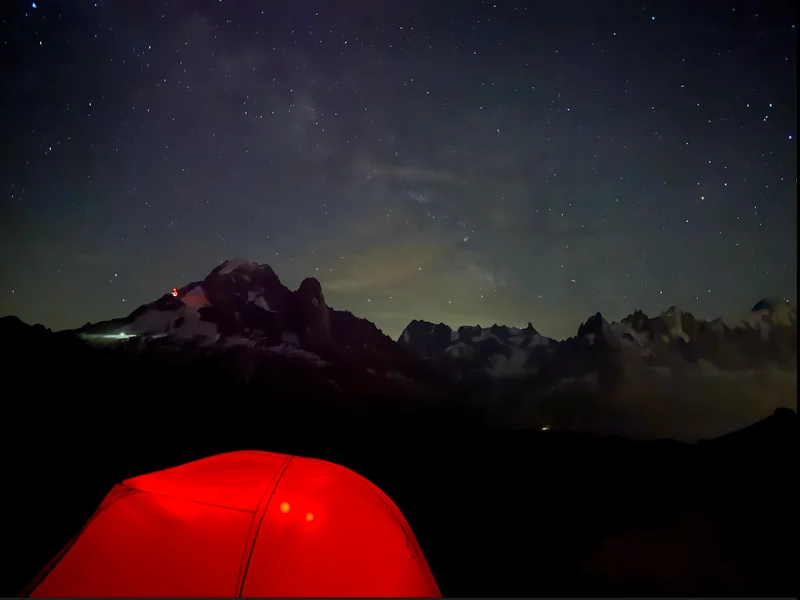
Stewart-Frommer: So you absolutely can stay in huts the whole time through. A lot of them do book out months in advance, so I'd suggest booking ahead, especially if you're more of a type a traveler and planner.
Something that I feel from my guide background is that you never quite know how tired you're going to be on a certain day or where you'll end up. So I liked the flexibility of [having] the tent [with me].
And I will say I read a lot of blogs of people who would just get in early. I think they reserve a certain amount of slots every night for travelers who didn't book. So things are flexible when it comes down to it.
Frommer: Okay, so. So we're going pretty deep into the logistics. Let's also go into the reason you do this. Was it a cultural experience? I mean, you got to go to three different countries. Did you feel the difference in each one, or was it more about the nature? I mean, the photos were just spectacular—they could have been used as backgrounds for the Sound of Music. It was that kind of majestic peaks that you were just marching through.
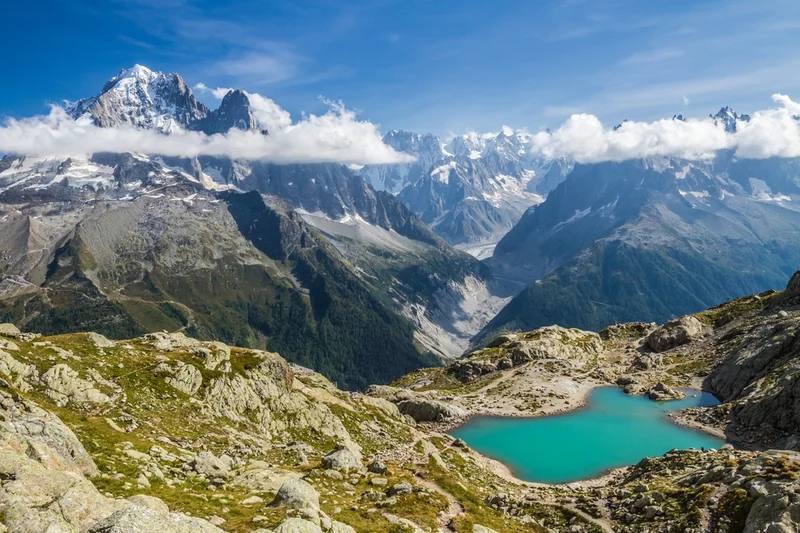
Stewart-Frommer: It was pretty breathtaking. It was up there with the most beautiful scenery I've ever encountered. Honestly, it was, like, so amazing to just behold the mightiness of these mountains. I'm also a musician, and we live..
Frommer:…in New York City, and the song you hear at the end of the podcast is Veronica singing.
Stewart-Frommer: Thank you Mom [laughs].
Frommer: Veronica is the lead singer for a band called Melt. They're constantly on tour. So besides being a camp guide and also an avid hiker, you’re also always on the road, right?
Stewart-Frommer: True. And there's a lot of adventure that comes along with that. But ultimately, I'm sitting in a van for six hours a day. My lower back hurts. I'm asleep. I really crave experiences that bring me outside and allow me to move my body.
And I think living in New York City, too, which is a city I love, it's nice to kind of calm down the brain and get some fresh air. So a big part of [this experience was about] disconnecting from screens.
For me, there is a lot of clarity, creative clarity, and release that comes with moving my body in the outdoors. I feel that it's like a way to kind of reconnect with my primal nature as a beast. It leads me to good places creatively. So I seek those experiences out. But I will say it was both a cultural experience and an outdoor experience.
Not so much changed across country lines, except for, you know, ciao instead of bonjour. But the cappuccinos were better in Italy. At the huts, that was a highlight. You could do this harrowing climb, and then you reach the top there's a hut with a cappuccino and a panini for you.
Frommer: Why was it harrowing?
Stewart-Frommer: The elevation. I mean, we were climbing 4,000 to 6,000 feet of elevation a day. We also shortened the timeline of the trip, so it doesn't need to be that intense.
Frommer: For those who listen to this podcast, you may remember I had the wonderful gentleman on, Burt Yasso, who wrote a book about [running] races that you can create vacations around. This was one he discussed. People do the Ultra Marathon du Mont Blanc in 48 hours.
Stewart-Frommer: The record I think is 20 hours, which blows my mind.
Fran and I started out this trip saying, you know, we don't really want to do much more than 12 to 15 miles a day. Which is a lot of mileage, especially up and down, up and down. The downs we were feeling in our elderly knees.
Frommer: Elderly knees at the ripe age of 26?
Stewart-Frommer: Yeah, elderly knees: I have two torn meniscuses, so they've lived longer lives than they should have. It’s wild that people do [this trail] as an ultra marathon.
Frommer: Millions of people in Europe watch it [on TV]. It's on for 24 hours so that people can watch these competitors. [Competitors] have to climb ladders and scramble over rocks.
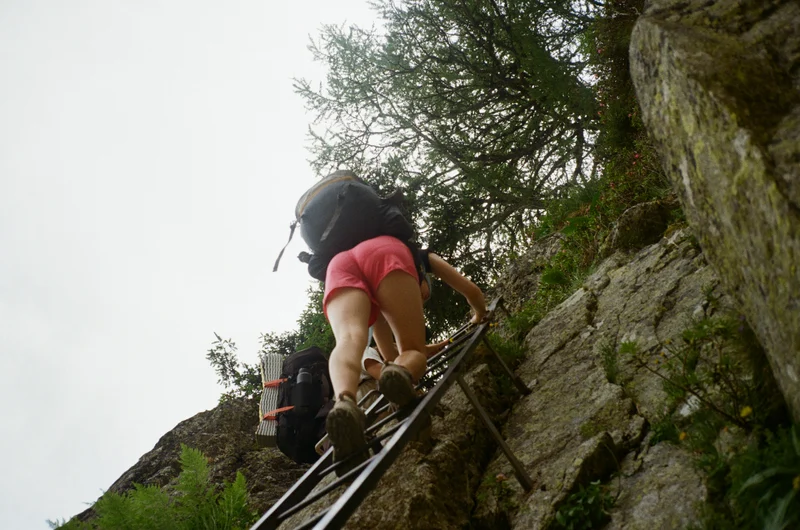
Stewart-Frommer: It's constant up and down. The flat moments were glorious…but few and far between.
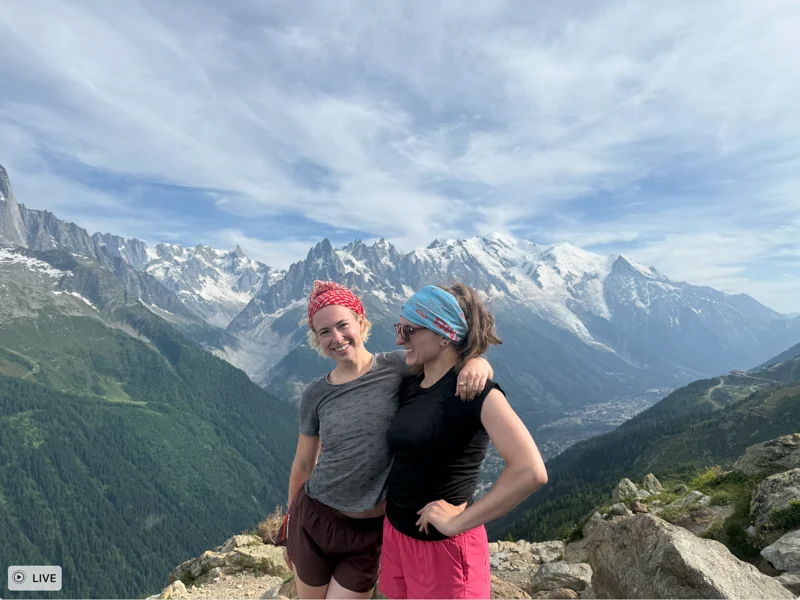
Fran and I are in really good shape so we pushed it. Most people do this in nine to eleven days. We were hiking for seven and a half days. But it's pretty remarkable that people run that. Sounds like you get into a pretty kooky head space.
Frommer: Well, it sounded like, from some of your posts, that you were in..
Stewart-Frommer:…A pretty kooky state. That's true. At times we actually felt deathly ill.
Our first day was supposed to be an 11 mile day, but we kept hearing that you could take this variant that would make it a 15 mile day with much more elevation, but that it was just one of the best parts of the trip. So we decided to do it, and it ended up, I think being a 17 mile day. It was gorgeous, but we were unprepared.
So we did this 17 mile day, then we did an 11 mile, then a 14 [mile day] and then we had a rest day and then we had our big 21 mile day. We woke up the next morning with full body chills and a fever. So we, we paid the price. I think [we got sick because] one of us caught a bug on the flight.
Frommer: Hiking wouldn’t give you a fever.
Stewart-Frommer: I think the exhaustion probably didn't help our immune systems. We finally had a comeback, but we were trudging along during the sickness.
Frommer: So you're trudging along. What are you seeing? You're seeing, obviously, these alpine peaks. How often were you in towns? And what were those like?
Stewart-Frommer: The Tour Mont Blanc is split up into stages, which comes from the ultramarathon stages of the marathon. And each stage begins and ends in a town. So you're always going to have access to a pharmacy, a grocery store, throughout the day.
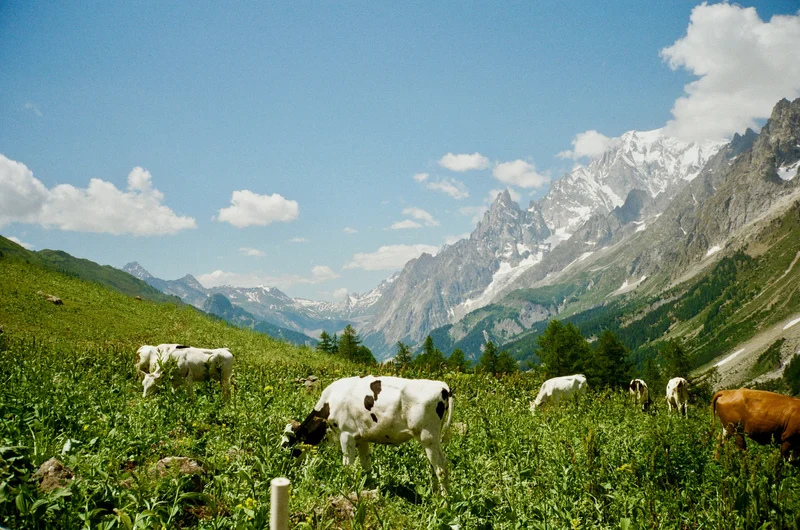
But you're [also] seeing cows living their happy life among the glaciers. You're seeing ragged peaks—totally pointy. It's unreal. It’s a newer mountain range, so they're not rounded out, they're very dramatic triangular peaks. They were contrasted by these fields of gorgeous wildflowers. We saw some ibex, which are kind of like shaggy deer with very curvy horns. We also saw little creatures that run around like groundhogs.
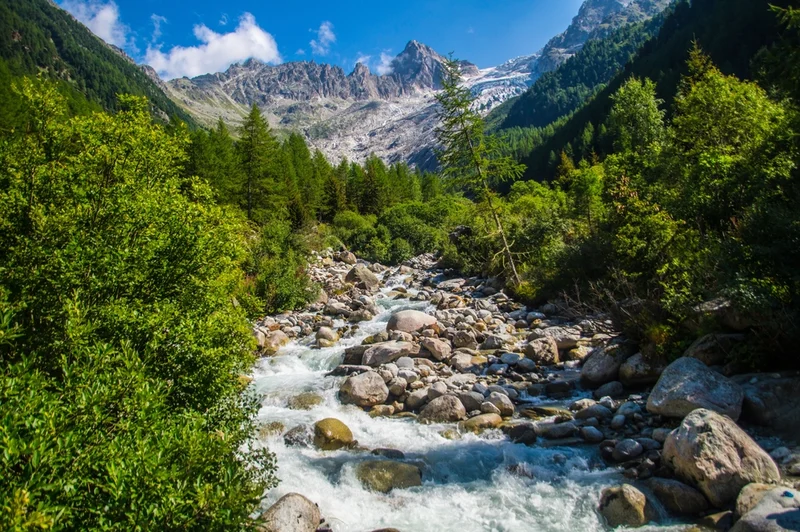
And you're walking along these thundering glacial streams. One of my biggest points of agony on this trip was that it was so hot out and all I wanted to do was jump in the water, but they're coming straight from the mountains, so it's massive water that you couldn't possibly swim in. So that was a bit of a tease. But very beautiful.
Frommer: I'm assuming there must have felt like there was a difference between the French and Swiss and Italian towns. I mean, chocolate! Did you do chocolate every day?
Stewart-Frommer: There was chocolate everywhere, for sure.
I would say the differences were not as dramatic as I thought [before the hike]. It’s it's like the difference between living in a mountain town in New Hampshire or a mountain town in North Carolina or Quebec versus living in, like, Montreal or New York, where you might actually share more in common with a city goer. All of these people are living in a very mountainous, rural setting.
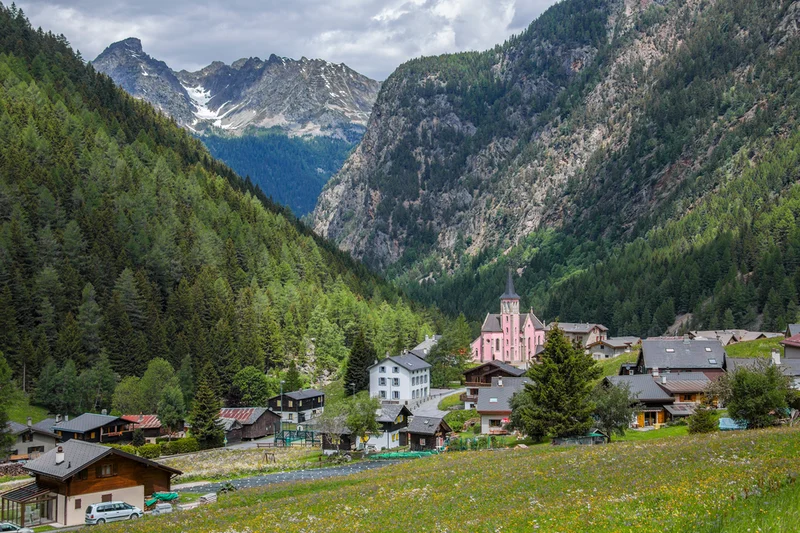
The cuisines differed a bit. We treated ourselves one night in the town of Trient [in Switzerland] to an Airbnb and our Airbnb host cooked us cheese pie for dinner. It was a pie made entirely of cheese.
Frommer: Holy moly. That sounds dense.
Stewart-Frommer: We couldn't finish it and we were so beside ourselves because we didn't want to offend. We threw it away and buried some, hoping she wouldn’t find it.
Frommer: Was it tasty?
Stewart-Frommer: Um, the first couple bites were pretty good. We got a little sick of the cheese and cured meats, I would say. But even that was consistent between Italy, France and Switzerland. Yeah, there was a bit of a different air about each country.
Frommer: So you stayed in huts, you stayed in Airbnbs. You went through these little towns. Did you meet other tourists? And did you feel comfortable as an American traveler?
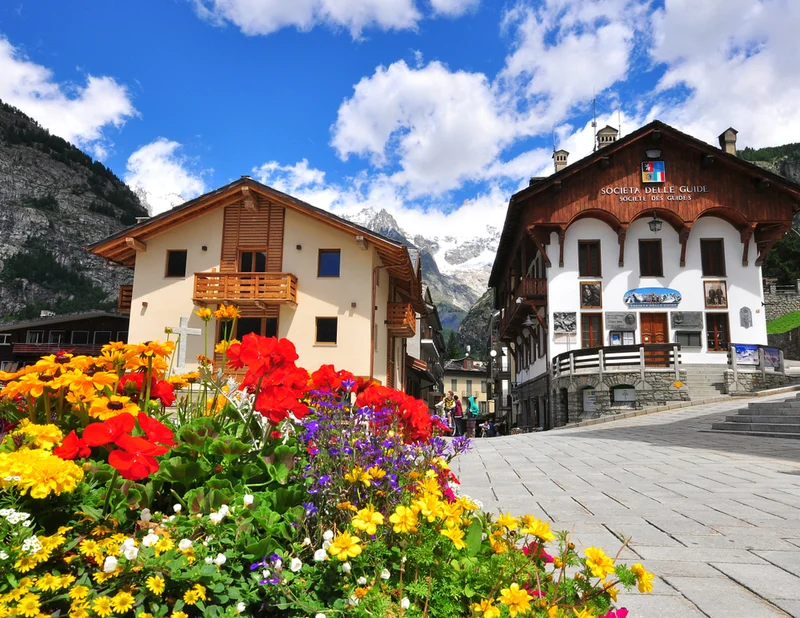
Stewart-Frommer: Absolutely. I would say, first of all, this route is so popular that the towns are built around it. We stayed in one B&B and one Airbnb, and both of our hosts in those places said all of their guests are doing the Tour Mont Blanc. So it's mostly a tourism hub.
Frommer: Barcelona and Venice are tourism hubs, but they feel like [huge visitor numbers are] destroying their lives.
Stewart-Frommer: Well, you also, I think, share this sense of appreciation for the place you're all in, you know, doing a kind of hard thing to witness something beautiful.
We were there the day that the US bombed Iran, so there was a lot of heaviness for us around our role globally. What I would say is people were sympathetic and interested. They wanted to know how we felt about things.
Frommer: You studied French. Did Fran speak another language?
Stewart-Frommer: Fran speaks Spanish, so it comes in handy with the Italian.
Frommer: Did you mostly speak French? How did you get along in this area?
Stewart-Frommer: I spoke a lot of French and it was great. Tres bien, merci. But a lot of our fellow travelers didn't, so we met Australians, fellow Americans, and a lot of French people are hiking the TMB. I think it's a great treat to try make an effort.
Frommer: I know people who have walked the Camino de Santiago in Spain, and what I get from them is the real reason you do that is to have this fellowship with other people walking it, that it's an incredibly social experience. Did you find that on the Tour Mont Blanc?
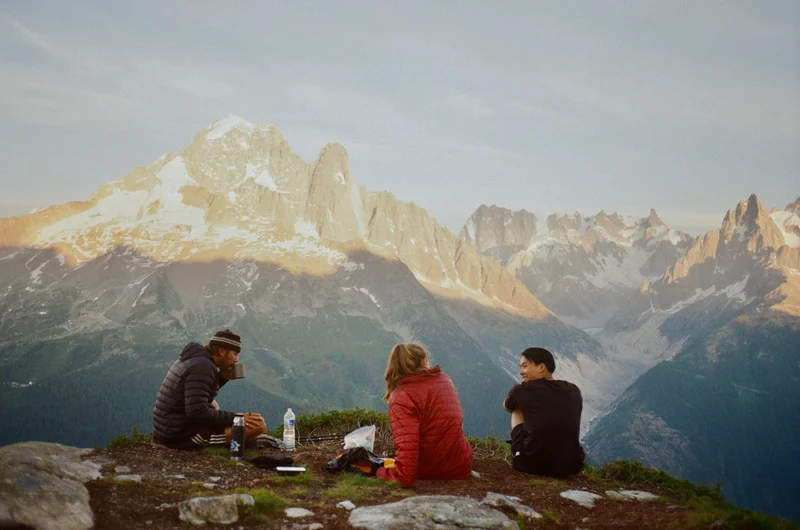
Stewart-Frommer: Yeah, I did. And it's part of the reason we chose to stay in huts, although if I were to go back and do it again, I’d camp more often because the campsites were just as full of camaraderie and other interesting people to talk with. And they were so beautiful and free. This can be a really cheap vacation. Even staying in huts, I spent about $300 total on the whole week.
Frommer: Wow! That’s very good.
Stewart-Frommer: We met a lot of people and we had set a goal. We wanted to make some friends and we wanted to hike with friends, and we ended up accomplishing our goal a couple times.
Frommer: Were they all in their 20s or were people of different ages?
Stewart-Frommer: The people we gravitated towards were also in their 20s. But I was so struck by the age diversity on the trail. There were people in their 60s, 50s, even older. There were young parents with kids in backpacks.
Frommer: Interesting. Okay, so who did you meet? Tell us about some of the friendships you made.
Stewart-Frommer: We met a lot of Australians. They get a lot of time off. They're always traveling. And also the hut owners, you know—there was a lovely older French woman lives in this hut deep in the mountains.
Frommer: Does she have a private room?
Stewart-Frommer: Yeah, she has a private room. Her partner is the chef.
Frommer: And when you stay in the huts, is it like a hostel? Are you in a room with lots of beds?
Stewart-Frommer: Most of the time we were. At a lot of huts you can get your own room. We stayed in mixed dorms with all genders. But we were also traveling with a group of hijabi hikers and I heard them talking at one hut about wanting to have single sex bedrooms. And they were very accommodating.
Frommer: So would you do this type of trip again and where do you think you would go? Would you do a long walk or would you rather bike somewhere or do something or climb or do something else next?
Stewart-Frommer: I would totally do something like this again. I am a bit of a purist when it comes to my time outside. I was spoiled with very remote, very long canoe trips for a lot of my life. So I kind of looked down on the idea of passing through a town every night and having my cell phone. That wasn't the type of outdoor experience I was seeking. But one of the highlights was just the friendship time with Fran.
Walking from place to place, biking from place to place—people take care of you in a really beautiful way.
Frommer: When you graduated from high school, you decided to take a gap year. And part of that year, you went to Japan. And I didn't know this till afterwards [but you] hitchhiked everywhere. And people really took care of you there. I mean, you met folks who then offered you places to stay, and toured you all around because.
Stewart-Frommer: You know, I'm a small white girl, so I think there's a cultural advantage, honestly. [I had the] privilege of, like, being able to be taken care of like that by a lot of different types of people.
Frommer: Well, and you were on crutches for part of it.
Stewart-Frommer: I wasn't on crutches, but I had a big knee brace. Yeah, I had injured my knee. But that said, I've also met a lot of men who are traveling solo and have also experienced a lot of kindness.
I think when you open yourself up to having an experience like that and you're able to give something back, whether it's a good conversation or a token of your appreciation, doors open.