

The following is a transcript of a recent interview featured on the Frommer’s Travel Show Podcast (click here to see the video version). Our guest was Jeff Vasser, CEO of Discover Lancaster. The interview has been edited for length and clarity.
Pauline Frommer: When I was in my early 20s, I was an actor and I toured the country with Les Misérables. I got to play at some of the country's best theaters. And I gotta say, one of the most fun gigs I ever had was I got to do the musical Company at the Fulton Theatre in Lancaster, Pennsylvania. It was this incredible, historical playhouse.
But not only that—and I don't know if they still do this—but they would put up the cast members in the homes of people from Lancaster. So I got to know this whole community of great people, who drove me all around Lancaster, showed me the town, showed me what an amazing place it is.
Which is why I'm excited to share with you today what a fabulous place Lancaster can be for a vacation. To help me do that, I have the real expert, Jeff Vasser. He is from Discover Lancaster.
Jeff Vasser: Thank you for having me. I had no idea you had that history with Lancaster.
Frommer: I had a wonderful time in Lancaster. And I gotta ask you about the Fulton Theatre. Is it still going strong?
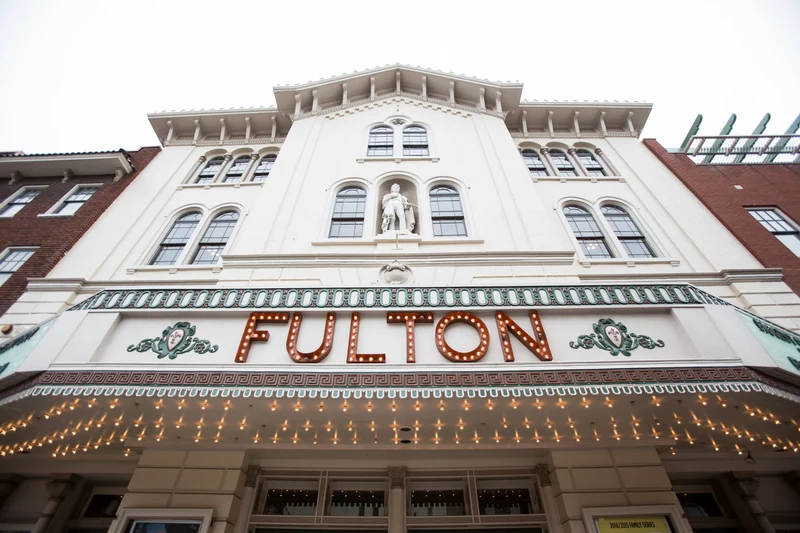
Vasser: It has never been better. They had a major renovation and expansion a couple of years ago. It's absolutely beautiful. And they added some housing in town, so [while] some touring cast members choose to stay with families, for the most part they have housing for their performers.
A wonderful, wonderful venue. And I'm sure you're aware that is the oldest continually operated theater in the country. They do a lot of Broadway-level shows, and they also added another theater on the third floor for smaller plays.
Frommer: Lancaster is a place where a lot of things were the first in the United States. Like your farmers market.
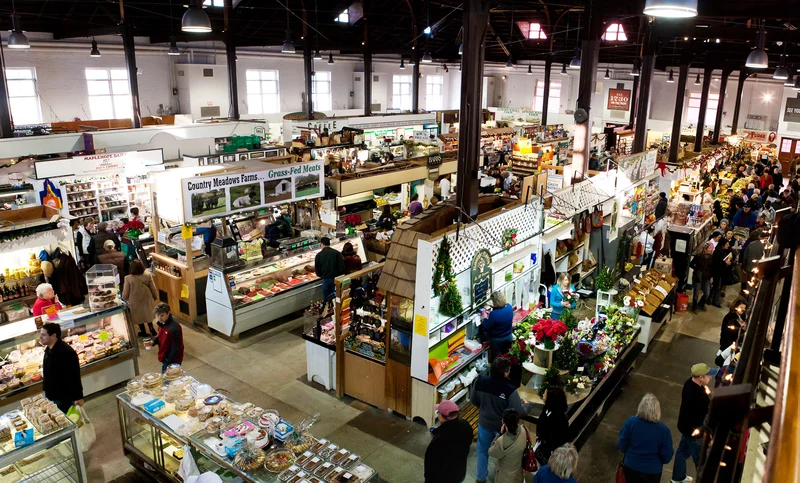
Vasser: Yeah, Central Market is the oldest continually operated farmers market in the country. It's open 3 days a week—Tuesday, Friday, and Saturday. It has a variety of booths, including Amish goods, coffee, butcher shops, and cheese shops. My favorite stand is a pickle store. And it's not just for visitors; residents do their shopping there because you can't get any fresher than when the farmers are coming from their farms.
Frommer: You also have the oldest short line railroad. What is a short line railroad?
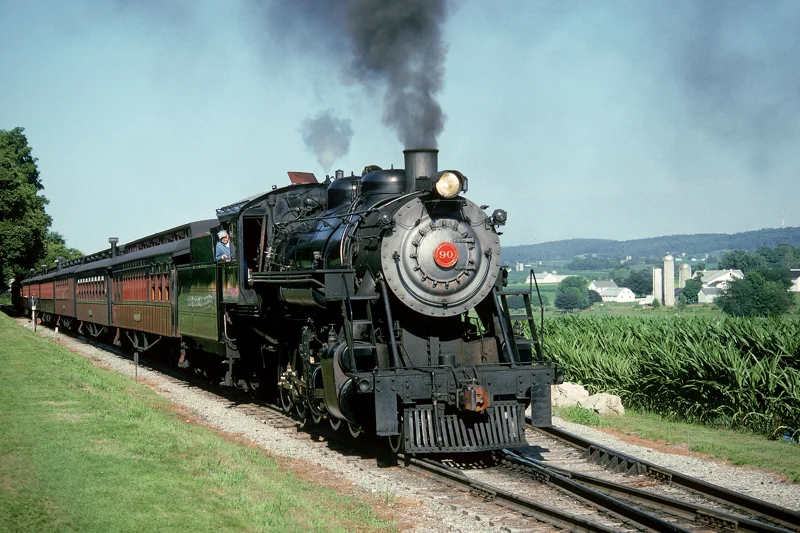
Vasser: It's a 45-minute tour—the Strasburg Rail Road. It takes you on a ride through farmland and Amish Country in a restored 19th-century car. It's a wonderful experience and quite authentic.
The railroad also has engineers and mechanics who do nothing but repair antique cars.
Frommer: You mean other antique cars from other parts of the country?
Vasser: Yes, from other parts of the country. They come because of the expertise that the people from the Strasburg Rail Road have.
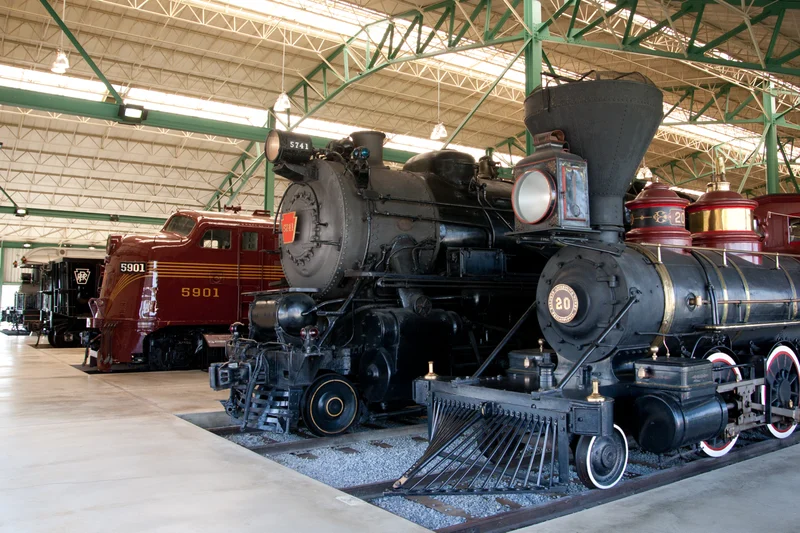
And it's right across the street from the Railroad Museum of Pennsylvania, which [explains] the growth of railroad travel through our country. Railroads are a big part of our culture here.
Frommer: People don't realize [that] at one point Lancaster was the western edge of the United States. And so you have a lot of history that speaks to things that people usually [discuss] in the West of the United States.
Vasser: You're right. And we were also the nation's capital for one day.
On September 27, 1777, the Second Continental Congress met in Lancaster. It’s an honor that we celebrate every year. We like to say that we are more about quality than quantity because we never had a government shutdown in our one day as a capital.
Frommer: Why was it just one day? That's so odd. Were they running away from British troops?
Vasser: Exactly right. I think they set up in York after the one day. They stopped here, did their business, and moved on.
Frommer: Do you know what their business was? Was there anything important that happened that day, or was it just the fact that they were there?
Vasser: Just the fact that they were there.
For people that are pretzel fans, the first pretzel bakery was established in Lancaster County. Julius Sturgis Pretzel Bakery was founded in the 19th century and still exists today.
Frommer: Now, this wasn't the first in the world. I would think that's in Germany. So this was the first in the United States. Can you witness the production? Is it still a factory?
Vasser: The main factory is elsewhere now, but the original Julius Sturgis Pretzel Bakery is still there. They have tours for visitors and you can roll the pretzel yourself. They teach you how to do it—the whole process.
They wouldn’t want to sell the pretzel that I rolled. It was pretty oddly shaped.
Frommer: Oh, really? Is it hard to do? I would think it's pretty simple, but what do I know?
Vasser: That's not my skill set.
Frommer: There's a lot of history in Lancaster, so it's not surprising that you are going to have some boffo Fourth of July celebrations this year in honor of the 250th anniversary of the founding of the United States. Tell me what's on the agenda.
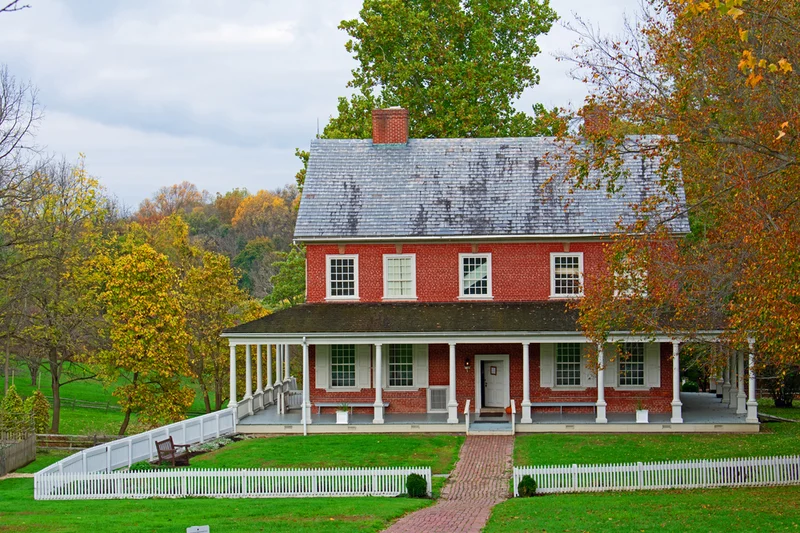
Vasser: We are very proud of what's called Historic Rock Ford. That is the meticulously restored mansion of Gen. Edward Hand, who was the adjutant general to George Washington. The adjutant general is basically the first assistant to Gen. Washington. Hand was a big player in the Revolutionary War. They [Historic Rock Ford] have over 70 events that they're doing throughout their 35-acre facility.
We’ve also put together a commemorative passport for the 20 historic and heritage sites that are a part of Lancaster’s passport program. We created a unique stamp for each of them. Visitors can pick up the passport either at our visitor center or at any one of the participating attractions. It’s a nice keepsake.
Frommer: And you also have a major new museum: the Thaddeus Stevens and Lydia Hamilton Smith Center for History and Democracy that just opened in May.
Vasser: Yes. It’s a celebration of two Civil War–era people that were very instrumental in bringing along the amendment that gave equal rights to everybody. Thaddeus Stevens was a congressman from here. And Lydia Hamilton Smith was his housekeeper, confidante, aide. She was a mixed-race person and was a force—a very successful businessperson. The two of them collaborated on fighting for abolition, civil liberties, and equal opportunity for everybody. This was during the Lincoln years.
Frommer: I'm thrilled that you included her in the headline of this, because she's probably been forgotten.
Vasser: Not here. She has been celebrated here.
Frommer: You also have a premiere at the Sight & Sound theater. It's their 50th anniversary. I guess it was a rival theater to the Fulton, but I didn't know anything about it when I was there. What is the Sight & Sound theater?
Vasser: It is hard to describe other than with the word awesome. They put on one show a year that runs from March through the end of the year. They are the most elaborate productions you will ever see beyond what Broadway does.
I saw Noah last year, and they put the ark together [on a] 180-degree stage, with live animals walking down the aisles. They keep [the animals] on a farm and use them in their productions. Their productions are, for the most part, religiously based. They just debuted Joshua in honor of their 50th year.
Frommer: Will people who are not religious feel comfortable? Are you being preached at or just told the story?
Vasser: You’re just being told the story. I'm Jewish and I did not feel uncomfortable at all. But if nothing else, it's just an amazing production. Music, choreography, immersive effects.
Frommer: It’s surprising how many theaters and other cultural centers you have in what is essentially a fairly small city and a very rural community.
Vasser: Yes. Ephrata Cloister has been newly renamed and renovated. They host concerts and theater performances. We also have Prima Theatre and the Ware Center for the Arts, which does original productions. They’re both celebrating their 15th anniversary. And I don't want to not mention American Music Theatre, which welcomes national touring acts.
And I don't know if you've ever heard of Rock Lititz. It's a one-of-a-kind production campus that includes rehearsal spaces, production vendors, and live event innovations. Lititz is one of our beautiful small cities in Lancaster County. But it's also where most, if not all, of the major touring acts start. It’s where sound is developed, where the staging is developed, where the lighting is developed for Madonna, Taylor Swift, Cher. All the major acts start here.
Frommer: So when you're wandering around Lancaster, you might go into a coffee shop and there will be Cher, there will be Taylor Swift grabbing a latte.
Do they [Rock Lititz] open to the public at all? Do people get to see rehearsals or early versions of these shows?
Vasser: No, it's very private. There's no tours. But it's really cool that in little Lancaster County, all of the touring acts start here. And everybody in Lititz is sworn to secrecy. When Madonna or Taylor Swift are in town everybody tries to respect their privacy.
Rock Lititz [has been] so successful that they just opened a second facility in Nashville to accommodate the country music tours. They also did the opening ceremony of the Olympics and staging for big events like the Super Bowl.
Frommer: Let's get back to Lancaster. I feel like you cannot discuss Lancaster without talking about the Amish. And it seems weird to say this, but what's new with the Amish? Is that a question that can be answered?
Vasser: You will not see modern innovations coming into the Amish community. And that is part of our charm and what makes Lancaster County unique.
The Amish community in Lancaster County is the largest in the country. They've been here since the mid-18th century. They came here and developed here at the same time that Lancaster County did.
Amish culture is ingrained in Lancaster County. They're a part of our community. We interact with them and they welcome tourism. Tourism is a big part of what they do. Our visitors buy their quilts, their foods. There are wonderful smorgasbords that have both modern as well as Amish fare.
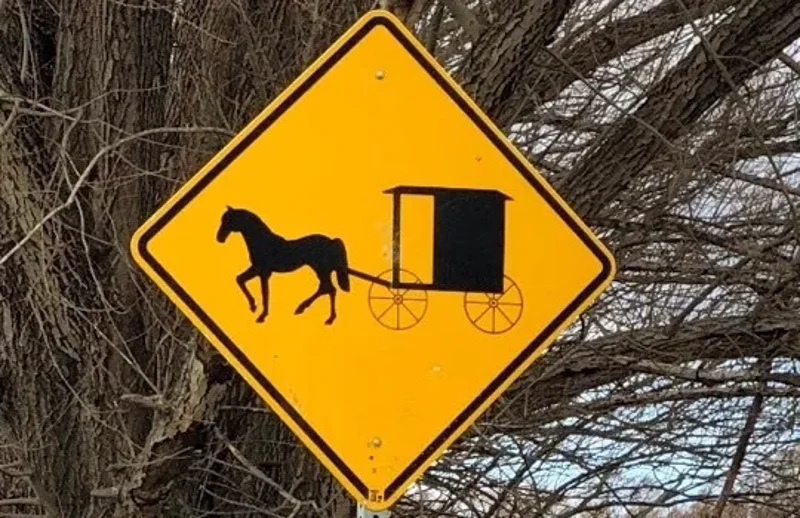
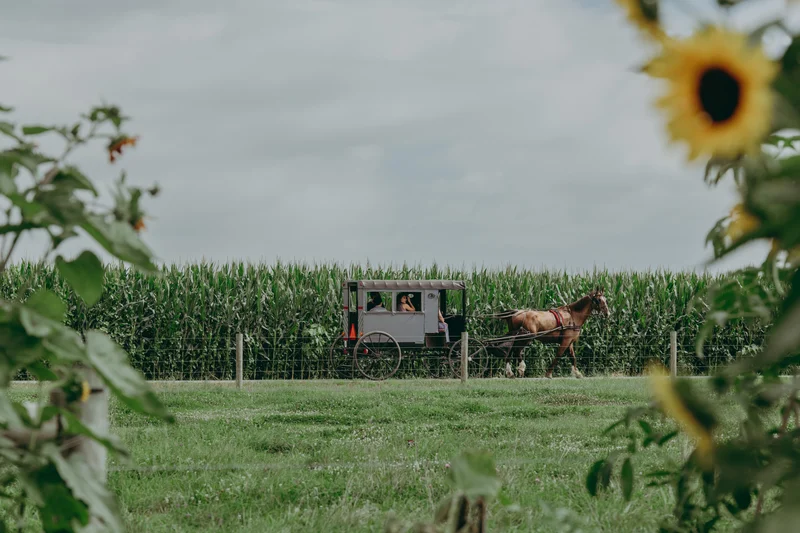
When you’re driving down the roads of Lancaster County, you’re going to be passing buggies and you'll be seeing the farmers tilling the fields with horses. You won't see modern equipment at all. It's a wonderful experience and throwback to how things were in a simpler time.
I tell people, you come for the Amish, but then you'll be just amazed at all of the other things that Lancaster County has to offer.
Frommer: I remember going [to Amish Country] and having baked beans and different types of Amish food. It was the first time (I think) I liked okra. But I felt like the Amish were very much a contained community. You interact with them, but from a distance. That's still the case, right?
Vasser: That is still the case for sure. But you have opportunities to interact with them today through some—I don't want to call them tour operators because that implies big. But there are Amish families that will invite what they call the English community—that's basically anybody that's not Amish—into their homes to experience spending an afternoon having lunch or dinner with an Amish family and really understanding [their way of life].
I've taken tours of their farms. They have businesses for buggy rides. You can find out about these experiences on our website.
We have many experience trails, visiting, for example, the area’s craft breweries. In the town of Mount Joy, there is a brewery called Bube's Brewery that dates back to the 1870s. It is the only 19th-century lager brewery complex in the United States that still exists and operates.
We have experience trails for pretzels. We have one for ice cream, which is also very big here.
Frommer: You must have one for covered bridges.
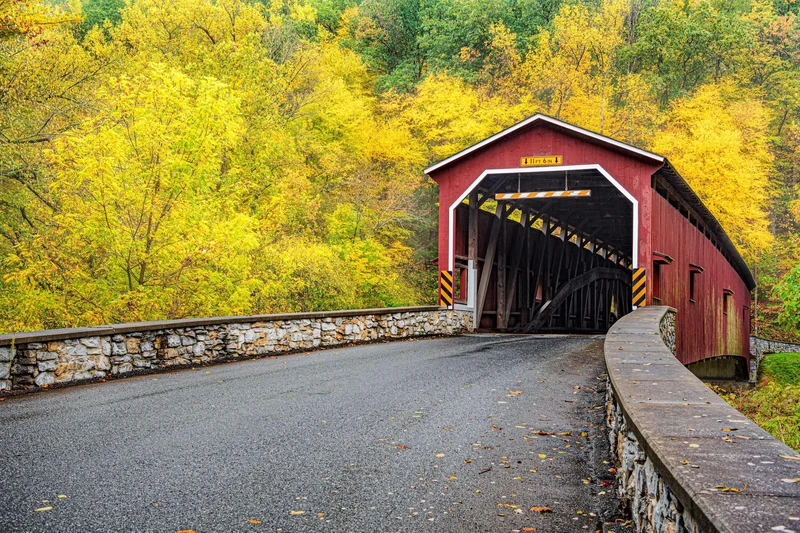
Vasser: Yes. We have 27 covered bridges in Lancaster County, which is the most in Pennsylvania and the second most in the country.
And on the western side of the county is the Susquehanna River, where you have hiking and biking and river opportunities—kayaking and canoeing.
[Lancaster County is a] really exciting place to be. I've only been here a year and I'm still discovering.