

The following is a transcript of an interview featured on the Frommer's Travel Show podcast. Pauline Frommer spoke with Andrew Motiwalla, founder of the immersive travel company The Good Life Abroad.
The Q&A has been edited for length and clarity. Click here to listen to the entire interview.
Pauline Frommer: Usually on this show we talk about vacations—places you can go for maybe a week, maybe two if you're lucky.
But many people over the age of 55 have longer times available to them to travel.
My next guest has a solution for those folks who want to do more immersive, slower travel, who want to go to a place and fully unpack for 2 weeks to a month, to 2 months. His name is Andrew Motiwalla. He is the founder of a new company called The Good Life Abroad.
Andrew, how did you originally get the idea to start the business?
Andrew Motiwalla: Honestly, it was a little selfish. I was thinking about my own retirement coming up and I thought, My dream is to live maybe half the year in the United States. I love living in California, but I'd like to spend part of the year living in Europe.
But I would like to have an apartment, a proper apartment, that I could go to every year. And I don't want to have a timeshare and I don't want to own something in another country because that becomes complicated. I just want to show up and have a really nice apartment waiting for me.
And then I started thinking about, well, it would be nice to have a built-in community. So I created The Good Life Abroad to solve my own problem for retirement. I realize many other people have the same idea where they'd like to live abroad for extended periods of time as well.
Frommer: So you've created a way for people to go and live in one of the great cities of Europe, marquee cities [from] Paris to Lisbon to Vienna, places where life is good. And you're [not just] putting them up in an apartment; you're taking over the entire building in a lot of cases, so that this person can [have privacy] but also have a community.
Motiwalla: One of the things that's really important is, if you're going abroad for a month at a time you want to be really sure that it's going to be good. We can put up with anything for a few days here and there. And I know you're well-traveled, so you’ve probably [stayed] in European hotel rooms where the bathroom is so small you can't turn around in the shower.
We realized that we needed to have vetted apartments that are appropriate for the needs of people 55 and older, with walk-in showers, kitchens that you could properly cook in, elevators in almost every case—things like that.
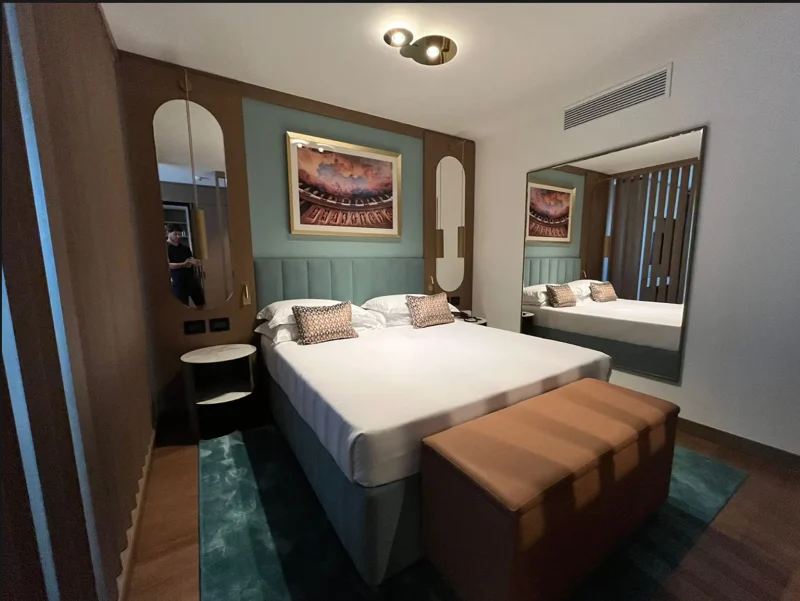
We have now identified these apartments and we have taken over either the entire building, as you mentioned, or large blocks of apartments [in one neighborhood] so that everyone can have their own apartment. So it’s still an independent experience, but you have people [from our program] living around you.
We put on activities and events that then allow you to connect with these other folks. The whole thing, I should mention, is cohort-based. So everyone moves in together on the same day and ends their program on the same day. There's an orientation and a welcome party.
Frommer: If I remember correctly, you also have a common room where you can go and hang out outside your apartment and meet others from the group.
Now, you're not doing activities every day of the week, are you? I would think that would get old if it was a full month stay. How does that work?
Motiwalla: We just do activities 3 days of the week. And they're just a few hours.
On Tuesdays we have our Tuesday lunch club. It's a time to come together as a community with our local staff. They pick places that you might not know to go to on your own, maybe in a part of the city that tourists don't really venture to. They preorder local delicacies so you can learn [about] new foods and about the culture through its food.
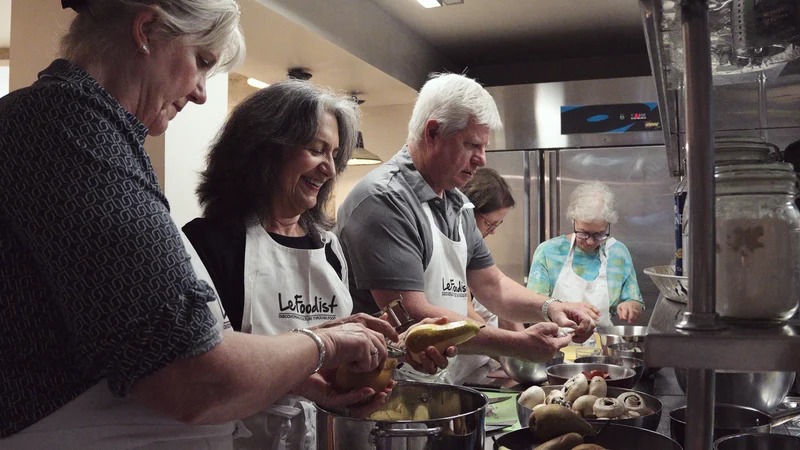
On Wednesday, we do a cultural activity. That might be a cooking class or an arts workshop or maybe an architectural walking tour.
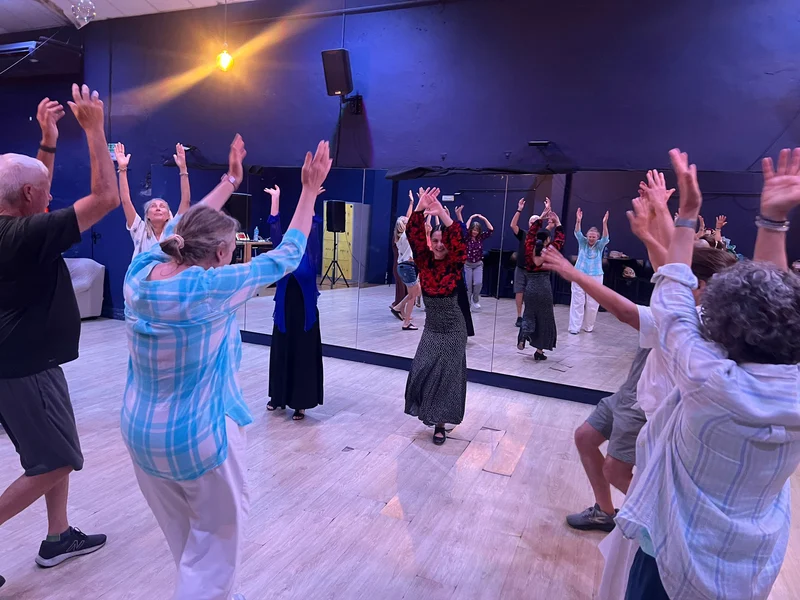
On Thursday we have a happy hour with a twist. It's a way to learn about the local drink. So a French wine tasting or a vermouth-making workshop in Barcelona. It’s something to acquaint you with the local spirits.
The rest of the week is free and clear. Also, all the activities are optional, so you can show up for some and not for others.
We never schedule anything Friday, Saturday, Sunday, or Monday, when people are out doing their own thing. But they love coming back on Tuesday and swapping tales: What did you do this weekend? Oh, I found the best gelato place. Or I went to some other town in the region.
Frommer: But what if people want more support than that? Maybe they're nervous about going to a place where they don't know what to do. You have [staff members] in the [community]. Is it just one concierge-type person? What's the scope of responsibilities for the support people you hire in the destinations?
Motiwalla: We call them our community managers. Think of them as your local friend who lives in that town. They're there at all of the activities and events. But they're also available by text message Monday through Friday, 9 to 5.
In the beginning of the program, they sit down with each participant, one-on-one, and say, “What do you want to get out of your month here?” They really try to get to know you, so they can recommend things throughout the program that are tailored to what you want.
So, for example, you might show up in Bordeaux and say, "I actually would like to brush up on my high school French. I'd like to get a French tutor." And they can help arrange that.
Or: “I'm a World War II history buff. I would like to go see these sites."
It might even be something as simple as: “I want to join a yoga studio while I'm there. Can you make that happen?”
Now, they don't lead you around. It's definitely not a tour. But they're guiding you with recommendations and helping you access local resources.
In my case, for example, I was just in Lisbon, and I love jazz. Jennifer, the community manager, knows this, and so she said, “Andrew, there’s a student jazz recital at the local university.”
Which was so cool! I mean, I could go to Google and [type in ] “jazz club in Lisbon." But I wanted something more local. And [Jennifer] has her finger on the pulse of what's happening in town.
It was exciting to walk into a university campus in another country and find the recital hall. It was the students’ graduation requirement, so it was pretty good, and it was fun. And then some other people on the [Good Life Abroad] WhatsApp thread said, "We'd like to go too."
So it turned into dinner first, then the concert, then we went out for cocktails afterwards.
That’s the beauty of what happens on the Good Life Abroad. Because you have this community, all these spontaneous things happen where people are like, Oh, let's go do this together.
In WhatsApp, you can create subgroups within the community feature. For example, a man and his wife created two groups. One was called "Cathedrals" and another was called "Sports Bars."
I said, "Doug, you're joking, right?" He said, "No, no, no, my wife loves to go to cathedrals. I don't want to."
So while Doug's wife went off with other people and saw cathedrals, he found a bunch of guys to hang out with in sports bars.
You're not going to be best friends with everyone probably, but you're going to find some people you really click with and that's really fun.
Frommer: How big is the community?
Motiwalla: No more than 20 people. It’s usually around 16. And about a third of them are solo [travelers].
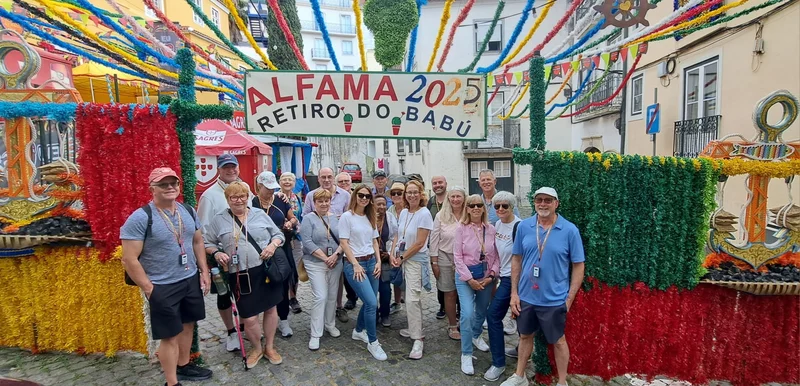
Frommer: That’s a good number. Do the solos tend to form a subgroup within the group? And do you think that this is a particularly good type of activity for solo travelers? Is it a way for them to have a safety net but also to have their own independence? And do they have to pay more for their apartments?
Motiwalla: What's beautiful is because [the program is] so intentional about being a community, the solos and the couples are all together. There’s no isolation. That said, many solos do create a little subgroup in WhatsApp and just say, "Hey, who wants to go to dinner tonight?”
[But] there's no cliques per se.
The other question was about costs. We offer different apartment sizes. So we find solo travelers take the studio apartment option, [which is] more economical and is perfect for one person. So they can actually pay less.
Most of the time couples want at least a one-bedroom apartment. Some want a two-bedroom apartment because as we get older some of us snore and some of us have different sleep schedules.
Frommer: Now tell me about the community managers. How do you find them? What are their backgrounds?
Motiwalla: We have a formula now. We look for people who come from high-end tourism.
In any tour company, there's a role called a tour leader or a tour director, and that person travels with the group, maybe weeks at a time, to many cities. So they are used to being a guide and being a friend and being a therapist and being a nurse. It's a multifaceted role.
But these folks, especially at the highest levels, eventually say, "I'd like to sleep in my own bed. This living on the road thing has kind of come to an end for me. Maybe I have kids now and I'd like to see them."
So it's a perfect transition for someone to take that experience working with a North American clientele [and move] to a role for a community of people. They can sleep in their own bed at night and be with their family.
Frommer: I would assume some of that experience [community managers have] is with people suddenly having to go to the hospital or being pickpocketed or [having] something else go wrong. Tell me how your staff handle the crises that always happen when we travel.
Motiwalla: We have risk management plans in place. We're actually doing the work upfront before the emergency happens.
So, for example, we have identified English-speaking medical care in the vicinity of where [our guests are] living. So when something happens, we already have the number [for care] and we can jump into action.
We had a fellow who fell off a bike, and we were able to facilitate everything at the hospital.
We also provide travel medical insurance. It’s built into the program fee.
This fellow who had the bike accident was able to get bandaged up. He was fine. I think we got him a cane and he was able to continue the program.
We also know where the U.S. Consulate is or the U.S. Embassy. A lost passport could be a real bummer in a trip. We have all those things thought through in advance.
Frommer: Let's talk about some of the places you go. Tell me about Cagliari, Italy.

Motiwalla: It's on the island of Sardinia. One of the reasons we chose it is because Sardinia is one of the Blue Zones, where people live exceptionally long lives.
What our people are looking for is literally the good life abroad. And these Blue Zones typify that because of the food, the climate, but also the sense of community and relationships.
And that's a big part of what we're trying to promote. [Our trips are not about just] going and checking off things from your checklist, but actually building community and slowing down to appreciate little things like going to the market and buying your food for the day, cooking a meal—maybe a local dish that you just learned at the cooking class yesterday—and then sharing it with some friends in your community.
I mean both the community of travelers and the local people that you connect with, because, after all, you're there for a month, so you start to make connections with local people as well.
Frommer: What is your most popular destination?
Motiwalla: Florence, Italy. I mean, it is an amazing city. You can see things every day and never see all of it.
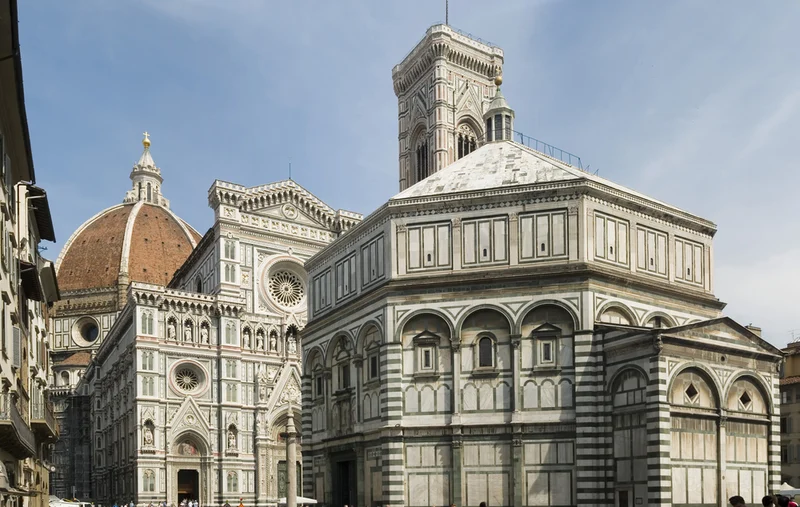
But also Paris and Lisbon. Valencia, Spain, is becoming really popular, and a lot of it has to do with motivations.
Eighty-five percent of the people [who book our program] are looking at this as a slow travel experience. They just want to immerse themselves in one place and go really deep.
But 15% to 20% of our people are actually thinking about moving abroad permanently, or for a good part of the time on a regular basis. So they're using us as the first step to test the waters and say, “I've been thinking about Valencia, Spain, but I would like to get to know the neighborhoods. I really want to get a feel for the vibe before I commit to something bigger."
So they’ll do a month with us to check it out.
If they're interested, we can help connect them with realtors or relocation experts to help them look at the details of making a move.
Frommer: We do know that record numbers of Americans are leaving the U.S. right now and going to live abroad. So I think it's a model that makes a lot of sense.
[You go to so many appealing places]: Amsterdam, Barcelona, Bilbao, Cagliari in Sardinia, Dublin, Florence, Lisbon, London, Madrid, Málaga, Palermo.
And that leads me to [another question]. In your public-facing media, you talk a lot about "joy span." What is joy span and how does that underlay what you're trying to do with these vacations?
Motiwalla: We see this type of travel as a way of completely reframing retirement because it's getting away from this checklist version of tourism.
The term was coined by Dr. Kerry Burnight, [who] wrote a book last year called Joyspan.
We're all familiar with the idea of lifespan—how long you live—or health span, how long you're healthy. But how about how many years you have a life full of joy?
What happens to so many people in retirement is there's some loss of identity: I'm no longer the accountant. I'm no longer the PTA dad. The kids are grown up, so who am I?
Often loneliness starts to set in. A lot of our friends move away when they downsize or they die.
[Burnight] talks about four pillars, things you can do to increase joy in your life.
Joy is not accidental. We can actually cultivate joy in our life. And one of those [pillars] is connection with others—community.
Another is adaptation, learning to adapt to new things. What better way to learn adaptation than dropping yourself into a European city that's completely foreign? You're really pushing yourself out of your comfort zone.
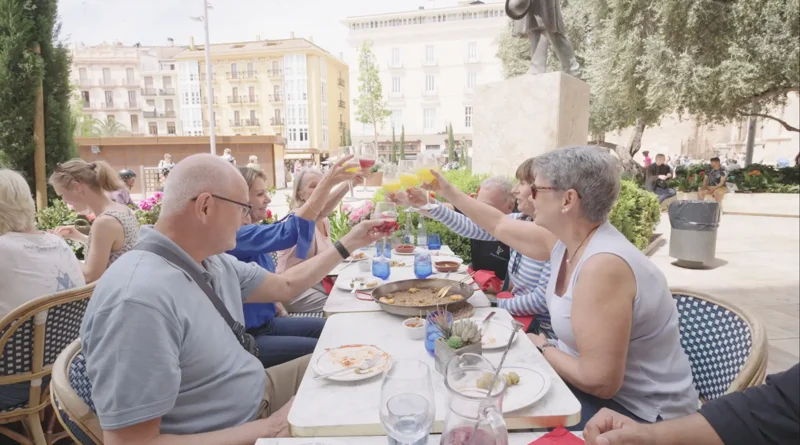
That adaptation process is really powerful because at the end of a month, you [realize], Wow, I just lived for a month in this other city with a language I didn't speak. So the world isn't getting smaller—the world's getting bigger. You gain confidence.
Another pillar of Joyspan is around reframing challenging situations.
We can become kind of grumpy or angry when something is difficult. Or we can see it in a different way and say, You know what, this is an opportunity for growth.
The last pillar is about giving back, and that doesn't necessarily mean volunteering, though volunteering is wonderful. But giving back to your community [also counts]. It may just be, I'm going to host a dinner party at my apartment. Fellow community members, come on over!
It’s a whole scientific book, but it boils down to some very practical things you can do to increase joy in your life. And it maps perfectly to the Good Life Abroad experience.
I have also discovered [that Good Life Abroad participants] feel like they’ve found their tribe. The kind of people who go to one place for a whole month—that's a unique breed of person. These are people who have a deep appreciation for culture, for different cultures.
We find many times a person will do our program, they'll become friends [with other participants], and then they'll book their next month with us somewhere else.
I hear from so many of our clients that this has reshaped their retirement.
For more information, go to TheGoodLifeAbroad.com.
This article is based on a sponsored podcast interview.