

Walt Disney World's EPCOT was made to be, as Danny Kaye told a network television audience during a TV special promoting the park's 1982 opening, "a permanent showcase of technology and world culture."
That included specialized gifts in pavilion after pavilion of EPCOT's World Showcase: Hummels and handcrafted Nativity sets in Germany, woven baskets in Mexico, leather goods in Italy, fine porcelain dolls in the United Kingdom, hand-painted fans in China, prints and books in Germany and France, and so on. Visitors would return home with bags full of destination-representative gifts and souvenirs that you could only find at Disney's second park, not at your local mall.
But EPCOT wasn't so much about what you could buy. It was about who you could meet.
And this week, EPCOT lost one of the last of its resident artisans.
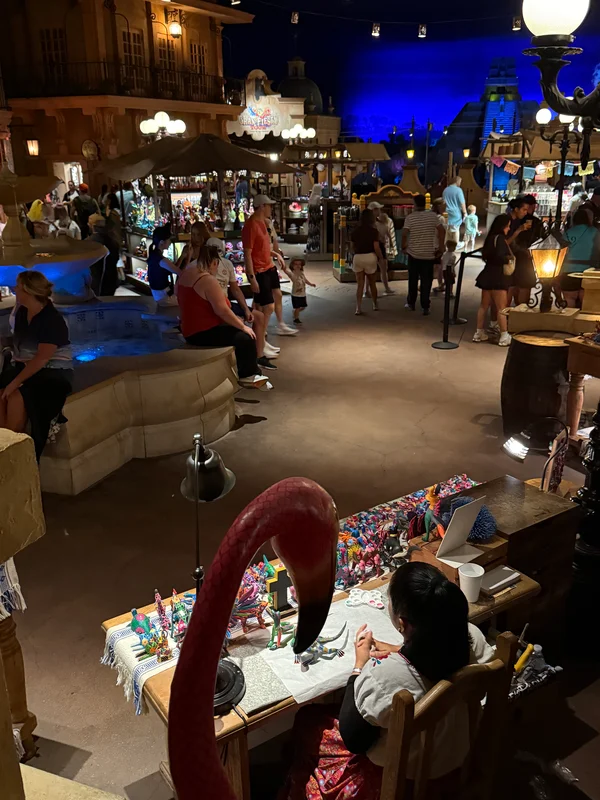
Monday, Aug. 31, was the final day at EPCOT for Alba Hernandez Santiago, who painted Oaxacan animal wood carvings known as alebrijes in the heart of the Mexico pavilion of World Showcase.
Santiago was trained to decorate the carvings in Arrazola, the most important Mexican town for the craft. For 24 years, she, her brother Marco, and her daughter Veronica created and sold little alebrije souvenirs under the false sky of the crowded zócalo of the Mexico pavilion. She was the last of her kind at EPCOT.
Disney gave fans just a few days' notice that the artisan would be leaving. The company did not announce a reason for the removal, either, but it's assumed the park will use Santiago's former workspace as an overflow area for the line to a lucrative tequila bar.

For Disney fans, the deletion of hand-painted alebrijes is a major loss for the continuity of EPCOT, but it's only the latest erosion of cultural exchange at the theme park.
In 2012, the Germany pavilion lost its resident artisan, Jutta Levasseur, whose workbench occupied an alcove facing the lagoon. Levasseur had painted intricate designs on eggs in the east German Sorbian style since 1982 as one of EPCOT's opening-day cast members. Her abilities turned many guests into collectors, and examples of her work still sell for large sums.

A year later, Miyuki Sugimori, a master at sculpting amezaiku, or Japanese candy art, retired from her station at the Japan pavilion. Since 1996, she had taken requests from children to craft whimsical, animal-shaped creations out of warm putty-like candy at set performance times, just as previous amezaiku artists had done since the park's first days.
Shortly before Sugimori's departure, she was forbidden from handing her finished creations to children (to conform to health and safety standards, it was rumored) and she reportedly quit soon after. No one replaced her.
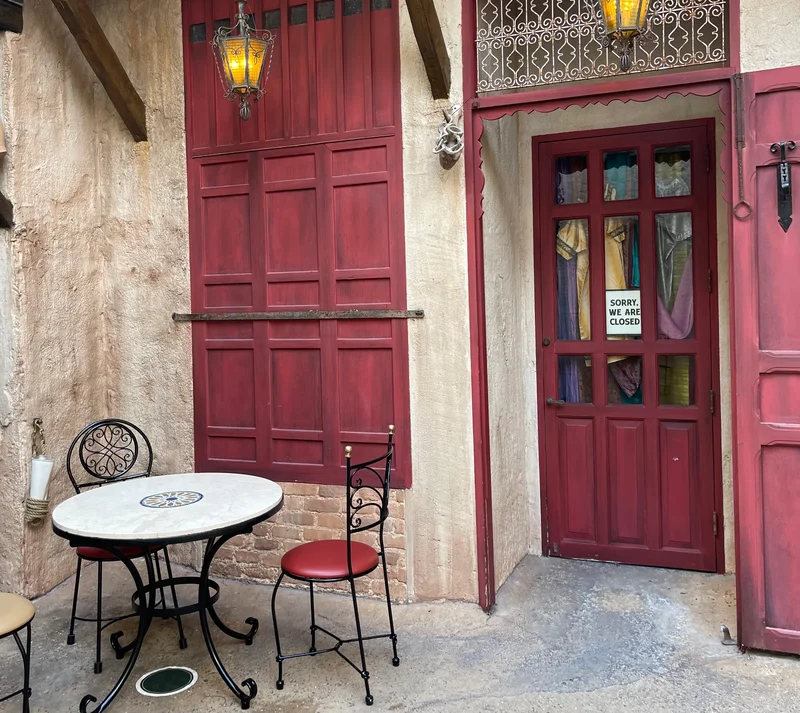
The Morocco pavilion was erected in 1984 in collaboration with the Moroccan royal family, which sent 21 of the country's most accomplished craftsmen to build as authentic a pavilion as possible. The pavilion contained a restaurant with live Moroccan music and a professional belly dancer, plus a hidden souk containing six shops selling authentic North African wares like rugs, footstools, leather goods, and boxes of African burl. Shopkeepers would teach you how to write your name in Arabic.
Morocco's sponsorship ended in 2020, and Disney responded not by replacing those with similar cultural touches to honor EPCOT's mandate, but by simply closing the shops and the restaurant and using the pavilion for an occasional meet-and-greet for characters from Aladdin, a film not set in Morocco but some 3,000 miles away on another continent.
Loss of human connection at EPCOT
EPCOT was intentionally designed to be a place where American visitors could connect with the cultures of other countries, and it did that primarily through people. It was where Americans could learn a little something about the rest of humanity, especially if they couldn't afford to travel widely. Human connection was one of the park's central tenets, and a whole system was set up to facilitate that.
Before Covid-19, it was common for World Showcase to be mostly staffed by young people who hailed from the country represented by each pavilion.
Now EPCOT's so-called Cultural Representatives are thin on the ground. You're more likely to buy your beer from an American worker who lives nearby than a young person from Norway, France, or China.
In many pavilions, the shopping choices have been boiled down to a few predictable or uncomfortably hackneyed souvenirs such as Mickey Mouse wearing tartan for Canada, Olaf plushies and princess dresses for Norway, Guinness (which is Irish) shirts in the United Kingdom, or margarita goblets and tiny sombreros for Mexico. Desks for drinking flights of alcohol have been added to nearly every shop. The boutiques of Japan and China can still hold their own, but they, too, are faded copies of their original presentations, selling more mass-produced junk than artisanal wares.
EPCOT, built at great expense to serve as a window into the outlook and culture of different societies, has become a hollow pastiche that trades in the old stereotypes and hawks Disney movie souvenirs, which is exactly what EPCOT's creators didn't want to happen.
Disney did not go through the difficulty and outlay of building EPCOT, which in 1982 was the most expensive construction project in the country, just to remove the culture and fill it with typical Mickey Mouse junk.
Last week, the entire world paused to praise Dolly Parton, and her dedication to her Smoky Mountains theme park, Dollywood, was often mentioned.
One of the biggest reasons Dollywood is so beloved is because of the craftspeople, such as candlemakers and blacksmiths, hired to enliven the atmosphere and educate visitors about living in Appalachia. Parton announced her park in 1983, on the heels of EPCOT's original success. She knew that the details of local authenticity would make her park work, just as they were making EPCOT succeed—and they did.
Dollywood hasn't degraded its operational values since then. But Disney has.
During the same week Parton died, Disney announced the removal of Santiago, EPCOT's last anchor artisan in a World Showcase pavilion, from a park that was supposedly created to be a cultural festival.
Of course things change. People retire or pass away, and contracts expire. But when that happens at EPCOT, Disney doesn't replace them with similar experiences aimed at maintaining human connection and strengthening EPCOT's purpose. Instead of preserving the park's intentions, Disney takes the cheapest route and replaces the outgoing experiences with nothing.
In the space previously occupied by a cultural ambassador making handmade souvenirs, Disney simply installs racks of Mickey sweatshirts. Over time, nearly all of EPCOT's noble intentions have been erased, leaving us with an expensive alcoholic buffet.
When Disney fans go to EPCOT today, they are merely picnicking on the bones of ambassadorship.
Remember what made EPCOT great. That was the formula that earned it a spot in our vacations. That EPCOT, though, is no longer the one we're getting.
Goodbye and good luck, Alba Santiago. You will always represent the real EPCOT to us.
Jason Cochran is the author of the award-winning Frommer's Disney World, Universal & Orlando guidebook. The latest edition was released last month, making it the newest Orlando guidebook on the market.

Frommer's Disney World, Universal & Orlando
Preparing for an Orlando vacation can be a full-time job, and it costs a small fortune. Most other books on the market make the problem worse, burying vacationers in endless pages of pointless details unquestioningly cheering for the high-priced theme parks and resorts. But this lightweight, fact-pa...
Get the bookFrommer's Disney World, Universal & Orlando
Preparing for an Orlando vacation can be a full-time job, and it costs a small fortune. Most other books on the market make the problem worse, burying vacationers in endless pages of pointless details unquestioningly cheering for the high-priced theme parks and resorts. But this lightweight, fact-pa...