Pavelló Mies van der Rohe

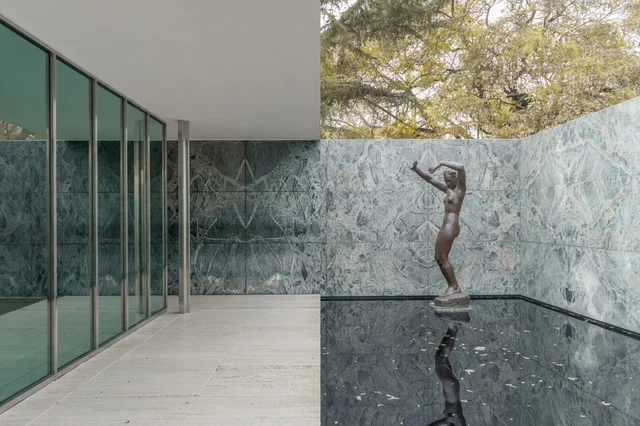
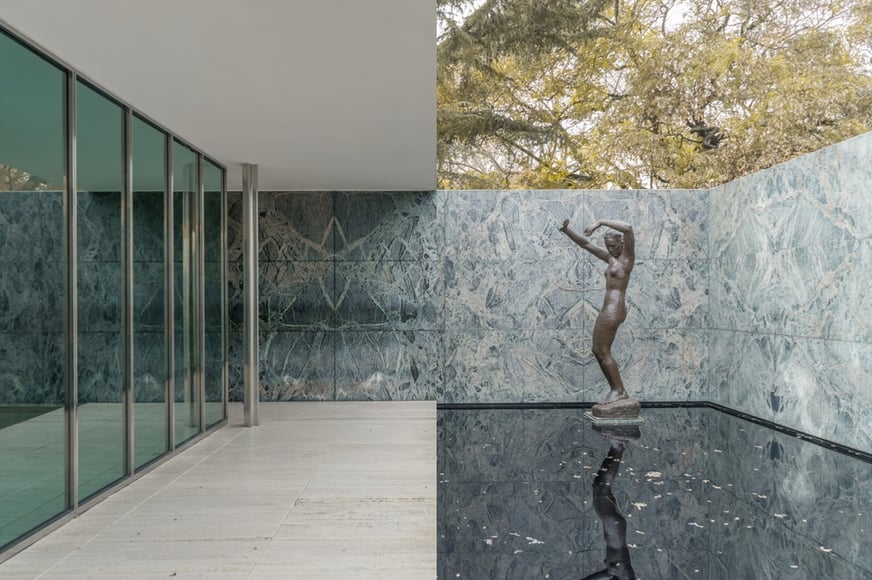
Gaudí had been dead only three years when the German architects Ludwig Mies van der Rohe and Lilly Reich created this sleek steel, glass, and marble pavilion for the 1929 World’s Fair. What could be further removed from Gaudí’s passionate ornamentation than this minimalist design from the architect whose motto was “Less Is More”? The Barcelona chair, that icon of modern furniture design, was designed for this space; the original served as a Bauhaus throne for the visiting king of Spain during the inauguration of the German pavilion. Disassembled after the exposition, the building was reconstructed in the 1980s by Catalan architects who insisted on its significance as a monument of modern architecture. There’s not a great deal to see, but then less is more.
Gaudí had been dead only three years when the German architects Ludwig Mies van der Rohe and Lilly Reich created this sleek steel, glass, and marble pavilion for the 1929 World’s Fair. What could be further removed from Gaudí’s passionate ornamentation than this minimalist design from the architect whose motto was “Less Is More”? The Barcelona chair, that icon of modern furniture design, was designed for this space; the original served as a Bauhaus throne for the visiting king of Spain during the inauguration of the German pavilion. Disassembled after the exposition, the building was reconstructed in the 1980s by Catalan architects who insisted on its significance as a monument of modern architecture. There’s not a great deal to see, but then less is more.
Details
Bookstore

Available as paperback
and as e-book.