|
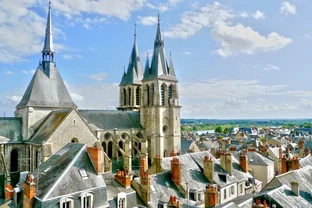
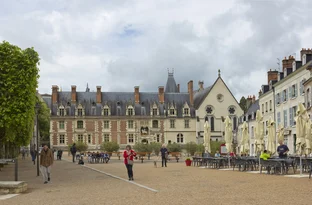
Review of Château de BloisA wound in battle earned him the name Balafré (Scarface), but he was quite a ladies' man. In fact, on the misty morning of December 23, 1588, the duc de Guise had just left a warm bed and the arms of one of Catherine de Médicis's ladies-in-waiting. His archrival, King Henri III, had summoned him, but when the duke arrived, only the king's minions were about. The guards approached with daggers. Wounded, the duke made for the door, where more guards awaited him. Staggering, he fell to the floor in a pool of his own blood. Only then did Henri emerge from behind the curtains. "Mon Dieu," he reputedly exclaimed, "he's taller dead than alive!" The body couldn't be shown: The duke was too popular. Quartered, it was burned in a fireplace. The murder of the duc de Guise is only one of the events associated with the Château de Blois, begun in the 13th century by the comte de Blois. Blois reached the apex of its power in 1515, when François I moved to the château. For that reason, Blois is often called the "Versailles of the Renaissance," the second capital of France, and the "city of kings." Blois soon became a palace of exile. Louis XIII banished his mother, Marie de Médicis, to the château, but she escaped by sliding into the moat down a mound of dirt left by the builders. If you stand in the courtyard, you'll find the château is like an illustrated storybook of French architecture. The Hall of the Estates-General is a beautiful 13th-century work; Louis XII built the Charles d'Orléans gallery and the Louis XII wing from 1498 to 1501. Mansart constructed the Gaston d'Orléans wing between 1635 and 1637. Most remarkable is the François I wing, a French Renaissance masterpiece, containing a spiral staircase with ornamented balustrades and the king's symbol, the salamander. The château presents a son-et-lumière show in French from May to September, usually beginning at 10:30pm (but sometimes earlier, depending on the school calendar). As a taped lecture plays, colored lights and readings evoke the age in which the château was built. The show costs 7€ for adults, 3€ for children 7 to 15, and is free for children 6 and under. Note: This information was accurate when it was published, but can change without notice. Please be sure to confirm all rates and details directly with the companies in question before planning your trip.
Related Features Partner Deals:
|
|
|||||||||||||||||||||||||||||||||||||||||||||||||||||||||||||||||||||||||||||||||||||||||||||||||||||||||||||||||||||||||||||||||||||||||||||||||||||||||||||||||||||||||||||||||||||||||||||||||||||||||||||||||||||||||||||||||||||||||||||||||||
| 0 stars | Frommer's Recommended | |
| 1 stars | Frommer's Highly Recommended | |
| 2 stars | Frommer's Very Highly Recommended | |
| 3 stars | Frommer's Exceptional |
Frommer's ranks every hotel, restaurant, attraction, shop, and nightlife establishment it reviews for quality, value, service, amenities, and special features using a star-rating scale, an expression of the strong compare-and-contrast opinions that are a brand hallmark.
Other ratings provide stars based primarily on price and amenities; the Frommer's star rating is meant to quantify the kind of intangible, experiential elements that help travelers make informed decisions.
The "baseline" recommendation is zero stars--every hotel, restaurant, attraction, shop, and nightlife establishment that Frommer's chooses to review is recommended; otherwise, we simply wouldn't include it.