|
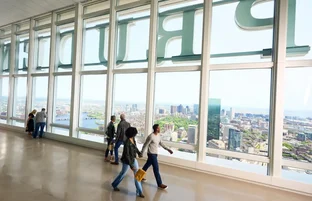
Review of Museum of Fine ArtsOne of the world's great art museums, the MFA works nonstop to become even more accessible and interesting. It earned international headlines in 2010 with the opening of the Art of the Americas Wing, the heart of a quarter-million-square-foot expansion project that transformed the experience of visiting. The design, by Sir Norman Foster of Foster + Partners, incorporates the dramatic 62-foot-high glass-enclosed Shapiro Courtyard and four floors holding 53 galleries. If that sounds overwhelming, even a little planning before you set out will be time well spent. Take advantage of the excellent website to preview the collections, noting pieces and periods that especially interest you. The Art of the Americas Wing is home to some of the museum's highest-profile works, including Childe Hassam's Boston Common at Twilight; Gilbert Stuart's 1796 portrait of George Washington; John Singleton Copley's 1768 portrait of Paul Revere (which looks suspiciously like the Samuel Adams beer logo); several Luminist masterpieces by Fitz Henry Lane; and The Passage of the Delaware, an enormous, dramatic painting by Thomas Sully, in a 17-foot-wide frame that had been in storage for over a century before being installed here. The wing holds works from the pre-Columbian period through the mid-1970s, from both North and South America. To focus exclusively on American art would be to miss out on come of the museum's most magnificent holdings. The MFA is known for its Impressionist paintings (including one of the largest collections of Monets outside of Paris), Asian and Old Kingdom Egyptian collections, classical art, Buddhist temple, and fashion arts. Favorites include Renoir's Dance at Bougival, a bronze casting of Edgar Degas's sculpture Little Dancer, and Gauguin's Where Do We Come From? What Are We? Where Are We Going? There are also outstanding holdings of prints, photographs, furnishings, and decorative arts. The museum is particularly welcoming to children, who can launch a scavenger hunt, admire the mummies, or participate in family-friendly programs scheduled year-round (and extra offerings during school vacations). None of this comes cheap: The MFA's adult admission fee (which covers two visits within 10 days) is among the highest in the country. A Boston CityPass or Go Boston Card is a bargain if you plan to visit enough of the other included attractions. The grand entrances from Huntington Avenue and the Fenway are the main points of public access; after disembarking from the Green Line, walk back about half a block to begin your visit. Pick up a floor plan (available in eight languages) at the Sharf Information Center or take a free guided tour (daily except Mon holidays 10:30am and 1:30pm, Wed 6:15pm). For more in-depth information about selected topics, download a multimedia guide ($6) to your smartphone. The sprawling complex encompasses four dining options -- cafeteria, two cafes, and fine-dining restaurant -- two excellent gift shops, two auditoriums. Special exhibitions scheduled to coincide with the lifespan of this book include Jewels, Gems and Treasures: Ancient to Modern (through Nov 12, 2012), Degas and the Nude (through Jan 29, 2012), and Ellsworth Kelly: Wood Sculpture (Sept 18, 2011-Mar 4, 2012). Spotlight on Sargent -- One of the signature installations in the Museum of Fine Arts' new Art of the Americas Wing is a beloved portrait by John Singer Sargent, The Daughters of Edward Darley Boit. The four little girls -- their mother was Mary Louisa Cushing Boit, the subject of her own Sargent portrait, hanging nearby -- are depicted in the family apartment in Paris, alongside two huge Japanese vases. The painting hangs on Level 2 of the new wing, next to those very same vases. Sargent (1856-1925) is a significant presence at the MFA. He created the murals in the Ruth and Carl J. Shapiro Rotunda, at the top of the grand staircase inside the Huntington Avenue entrance. Installed in 1921, the mythology-themed work proved so popular that the museum commissioned Sargent to create the adjacent Colonnade Murals. In 1925, the night before he was to sail from London to Boston to supervise the installation of the final section, Sargent died in his sleep. Note: This information was accurate when it was published, but can change without notice. Please be sure to confirm all rates and details directly with the companies in question before planning your trip.
Related Features Deals & News
|
|
|||||||||||||||||||||||||||||||||||||||||||||||||||||||||||||||||||||||||||||||||||||||||||||||||||||||||||||||||||||||||||||||||||||||||||||||||||||||||||||||||||||||||||
| 0 stars | Frommer's Recommended | |
| 1 stars | Frommer's Highly Recommended | |
| 2 stars | Frommer's Very Highly Recommended | |
| 3 stars | Frommer's Exceptional |
Frommer's ranks every hotel, restaurant, attraction, shop, and nightlife establishment it reviews for quality, value, service, amenities, and special features using a star-rating scale, an expression of the strong compare-and-contrast opinions that are a brand hallmark.
Other ratings provide stars based primarily on price and amenities; the Frommer's star rating is meant to quantify the kind of intangible, experiential elements that help travelers make informed decisions.
The "baseline" recommendation is zero stars--every hotel, restaurant, attraction, shop, and nightlife establishment that Frommer's chooses to review is recommended; otherwise, we simply wouldn't include it.