|
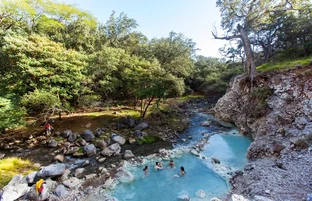
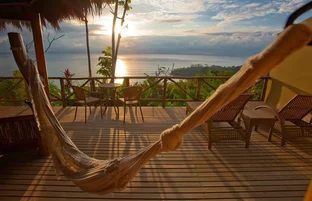
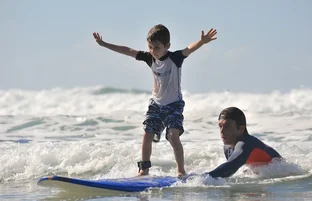
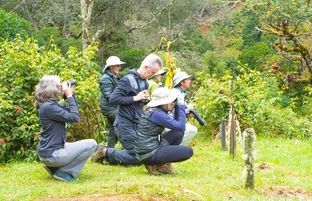
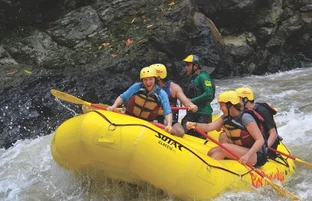
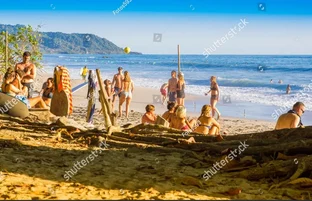
Active PursuitsActive and adventure travelers will have their hands full in Costa Rica. While it's possible to stay clean and dry, most visitors want to spend at least some time getting their hair wet, their feet muddy, and their adrenaline pumping. Opportunities for such action range from bird-watching to scuba diving to kiteboarding, and beyond. There are myriad approaches to planning an active vacation in Costa Rica. This section lays out your options, from tour operators who run multiactivity package tours that often include stays at ecolodges, to the best places in Costa Rica to pursue active endeavors (with listings of tour operators, guides, and outfitters that specialize in each), to an overview of the country's national parks and bioreserves. I also list some educational and volunteer travel options for those of you with a little more time on your hands and a desire to actively contribute to the country's social welfare, or assist Costa Rica in the maintenance and preservation of its natural wonders. Activities A to Z Each listing in this section describes the best places to practice a particular sport or activity and lists tour operators and outfitters. If you want to focus on only one active sport during your Costa Rican stay, these companies are your best bets for quality equipment and knowledgeable service. Adventure activities and tourism, by their very nature, carry certain risks and dangers. Over the years, there have been several deaths and dozens of minor injuries in activities ranging from mountain biking to white-water rafting to canopy tours. I've tried to list only the most reputable and safest of companies. However, if you ever have any doubt as to the safety of the guide, equipment, or activity, it's better to be safe than sorry. Moreover, know your limits and abilities, and don't try to exceed them. Bungee Jumping Tropical Bungee (tel. 2248-2212; www.bungee.co.cr) will let you jump off an 80m (262-ft.) bridge over the Río Colorado for $65 (£33), including transportation from San José and a video of your jump. A second jump will cost you another $30 (£15). The jump site is located on a small bridge over the Río Colorado about 37km (23 miles) northwest of San José, just off the Pan-American Highway. There are obvious and well-placed signs on the highway. Someone should be there from 9am to 3pm every day. They prefer for you to have a reservation, but if you show up on your own, they'll probably let you jump, unless huge groups are booked ahead of you. Camping Heavy rains, difficult access, and limited facilities make camping a challenge in Costa Rica. Nevertheless, a backpack and tent will get you far from the crowds and into some of the most pristine and undeveloped nooks and crannies of the country. Those who relish sleeping out on a beach but wouldn't mind a bit more luxury (beds, someone to prepare meals for you, and running water) might want to consider staying at the Corcovado Lodge Tent Camp on the Osa Peninsula. Camping is forbidden in some national parks, so read the descriptions for each park carefully before you pack a tent. If you'd like to participate in an organized camping trip, contact Coast to Coast Adventures (tel. 2280-8054; www.ctocadventures.com) or Serendipity Adventures (tel. 877/507-1358 in the U.S. and Canada, or 2558-1030; www.serendipityadventures.com). In my opinion, the best place to pop up a tent on the beach is in Santa Rosa National Park or at the Puerto Vargas campsite in Cahuita National Park. The best camping trek is, without a doubt, a hike through Corcovado National Park or a climb up Mount Chirripó. Canopy & Canyoning Tours Canopy tours are all the rage in Costa Rica, largely because they are such an exciting and unique way to experience tropical rainforests. It's estimated that some two-thirds of a typical rainforest's species live in the canopy (the uppermost, branching layer of the forest). From the relative luxury of Rain Forest Aerial Tram's high-tech funicular to the rope-and-climbing-gear rigs of more basic operations, a trip into the canopy will give you a bird's-eye view of a Neotropical forest. There are now canopy-tour operations in or close to nearly every major tourist destination in the country, including Monteverde, Manuel Antonio, La Fortuna, Tabacón, Montezuma, Punta Islita, Villablanca, and Rincón de la Vieja, as well as on Tortuga Island and around Guanacaste and the Osa Peninsula. There's even a small canopy tour in the La Sabana Park in downtown San José. Most canopy tours involve strapping yourself into a climbing harness and being winched up to a platform some 30m (100 ft.) above the forest floor, or doing the work yourself. Many of these operations have a series of treetop platforms connected by taut cables. Once up on the first platform, you click your harness into a pulley and glide across the cable to the next (slightly lower) platform, using your hand (protected by a thick leather glove) as a brake. When you reach the last platform, you usually rappel down to the ground. (Don't worry -- they'll teach even the most nervous neophyte.) Although this can be a lot of fun, do be careful because these tours are popping up all over the place and there is precious little regulation of the activity. Some of the tours are set up by fly-by-night operators (obviously, I haven't listed any of those). Be especially sure that you feel comfortable and confident with the safety standards, guides, and equipment before embarking. Before you sign on to any tour, ask whether you have to hoist yourself to the top under your own steam, and then make your decision accordingly. One of the country's more reputable operators is the Original Canopy Tours (tel. 2291-4465; www.canopytour.com), which has sites in Monteverde and Mahogany Park, about an hour outside of San José. The operation in Monteverde features an ascent up the hollow interior of a giant strangler fig tree. Another option is to try one of the tram or gondola tours through the canopy. The folks at Rain Forest Aerial Tram currently have two such operations, and there's a ski-lift-style gondola ride at Turu BaRi Tropical Park (tel. 2428-6070; www.turubari.com) outside of San José. Canyoning tours are even more adventurous. Hardly standardized, most involve hiking down along a mountain stream, river, and/or canyon, with periodic breaks to rappel down the face of a waterfall, or swim in a jungle pool. The best canyoning operations in Costa Rica are offered by Pure Trek Canyoning (tel. 866/569-5723 in the U.S. and Canada, or 2479-1313; www.puretrekcostarica.com) and Desafío Expeditions (tel. 2479-9464; www.desafiocostarica.com), both in La Fortuna; and Psycho Tours (tel. 8353-8619; www.psychotours.com), which operates outside of Puerto Jimenez. Rain Forest Aerial Tram Caribbean (tel. 2257-5961; www.rainforesttram.com) is located some 50 minutes from San José. For $55 (£28; transportation extra), this modern tram takes you on a 90-minute trip through the rainforest canopy in the comfort and safety of an enclosed cab. The entrance fee includes an additional guided hike and access to its trail system, butterfly garden, and other attractions. The best thing here isn't necessarily the tram ride, which I find somewhat disappointing, but the fact that this makes a good spot for a full-day excursion relatively close to San José. The outfit has a sister project on the central Pacific coast just outside of Jacó. Cruising Cruising options in Costa Rica range from transient cruisers setting up a quick charter business to converted fishing boats taking a few guests out to see the sunset. The most popular cruise option is a day trip from San José (the boats actually leave from Puntarenas) to Tortuga Island in the Nicoya Gulf. Alternatively, you can book a cruise to Tortuga from Playa Montezuma at the tip of the Nicoya Peninsula. It's much cheaper from here (around $40-$50/£20-£25 per person), but the excursion doesn't include the gourmet lunch that's usually featured on cruises leaving from San José. If diesel fumes and engine noise bother you, the best places to charter a sailboat are in Playa del Coco, Playa Hermosa, and Playa Flamingo in Guanacaste province; Playa Herradura and Quepos along the central Pacific coast; and Golfito along the southern Pacific coast. You can get information about sailboat rides and charters at any one of the larger lodgings in these areas. My favorite place to charter a sailboat is Golfito. From here, it's a pleasant, peaceful day's sail around the Golfo Dulce. Beach Blanket Bingo -- If you plan to spend time at the beach, it's often a good idea to pack your own beach towel or mat. Many of the midrange and budget hotels in Costa Rica do not provide them. Golf Costa Rica is not one of the world's great golfing destinations -- at least not yet, anyway. There are currently seven regulation 18-hole courses open to the public and visitors, but several others are either under construction or in the planning stages, with a potential boom shaping up in Guanacaste. Currently, the best option for golfers staying in and around San José is Parque Valle del Sol (tel. 2282-9222; www.vallesol.com), an 18-hole course in the western suburb of Santa Ana. Greens fees are $90 (£45), including a cart. The Cariari Country Club (tel. 2293-3211), just outside of San José, is a private course and not open to the public. However, guests at the Marriott Costa Rica and some neighboring hotels can play. If you can wrangle an invitation, or are staying at a hotel with an agreement with the club, greens fees are $80 (£40), including a mandatory caddy. You should expect to tip your caddy around $10 (£5), and pay an extra $25 (£13) for a cart. The Meliá chain also runs the Garra de León course at the Paradisus Playa Conchal resort (tel. 2654-4123; www.solmelia.com) up in Guanacaste. Greens fees here are $180 (£90), including a cart. With advance notice and depending on available tee times, this course is currently open to guests at other hotels in the region. Another major resort course is at the Los Sueños Marriott Ocean & Golf Resort in Playa Herradura (tel. 800/228-9290 in the U.S., or 2630-9028; www.marriott.com). Greens fees, including a cart, run around $155 (£78) for the general public, and guests pay slightly less. Hacienda Pinilla (tel. 2680-7000; www.haciendapinilla.com) is an 18-hole links-style course located south of Tamarindo. This might just be the most challenging course in the country, and the facilities, though limited, are top-notch. Currently, the course is open to golfers staying at hotels around the area, with advance reservations. Greens fees run around $165 (£83) for 18 holes, including a cart. The new Papagayo Golf & Country Club (tel. 2697-1313; www.papagayo-golf.com), on the outskirts of Playa del Coco, offers up a full 18-hole course, with a pro shop, driving range, and rental equipment. It costs $80 (£40) in greens fees, including a cart. The most spectacular course in Costa Rica is at Four Seasons Resort (tel. 212/688-2440 in the U.S., or 2696-0871; www.fourseasons.com), but it is open only to hotel guests. Greens fees run around $215 (£108). Golfers who want the most up-to-date information, or those who are interested in a package deal that includes play on a variety of courses, should contact Costa Rica Golf Adventures (tel. 877/258-2688; www.golfcr.com). Hang Gliding, paragliding & Ballooning Paragliding with a pilot in a tandem rig is taking off (pardon the pun) in the cliff areas around Caldera, just south of Puntarenas, as well as other spots around Costa Rica. If you're looking to paraglide, check in with the folks at the Costa Rican Association of Free Flying (call Miguel Dib at tel. 8842-9644; www.parapente-costa-rica.org). Serendipity Adventures (tel. 877/507-1358 in the U.S. and Canada, or 2558-1000; www.serendipityadventures.com) will take you up, up, and away in a hot-air balloon on a variety of single- or multiday tours, either in Turrialba, in Naranjo, or near Arenal Volcano. A basic flight costs around $345 (£173) per passenger, with a two-person minimum, and a five-person or 800-pound maximum. Hang Glide Costa Rica (tel. 8353-5514; www.hangglidecr.com) offers about a half-hour of gentle hang gliding in a tandem rig, which begins with a tow by an ultralight, for $99 to $150 (£50-£75) per person. Horseback Riding Costa Rica's rural roots are evident in the continued use of horses for real work and transportation throughout the country. Visitors will find that horses are easily available for riding, whether you want to take a sunset trot along the beach, ride through the cloud forest, or take a multiday trek through the northern zone. Most travelers simply saddle up for a couple of hours, but those looking for a more specifically equestrian-based visit should check in with the following folks. Coast to Coast Adventures (tel. 2280-8054; www.ctocadventures.com) specializes in 2-week trips spanning the country via horseback, raft, or mountain bike, as well as on foot, with no motor vehicles involved. Other trips are also available. Nature Lodge Finca Los Caballos (tel./fax 642-0124; www.naturelodge.net) specializes in horse tours, and has the healthiest horses in the Montezuma area. Serendipity Adventures (tel. 877/507-1358 in the U.S. and Canada, or 2558-1030; www.serendipityadventures.com) offers horseback treks and tours. Motorcycles Visiting bikers can either cruise the highways or try some off-road biking around Costa Rica. All the caveats about driving conditions and driving customs in Costa Rica apply equally for bikers. If you want to rent a Harley-Davidson for cruising around the country, María Alexandra Tours (tel. 2289-5552; www.mariaalexandra.com) conducts guided bike tours, and rents well-equipped late-model Harleys by the day or the week. If your tastes run to off-road riding, MotoAdventures (tel. 440/256-8508 in the U.S., or 2228-8494 in Costa Rica; www.motoadventuring.com) runs guided multiday tours on Honda dirt bikes. Bike rental rates run between $70 and $150 (£35-£75) per day. Rock Climbing Although this is a nascent sport in Costa Rica, the possibilities are promising. There are several challenging rock formations close to San José and along the Cerro de la Muerte, as well as great climbing opportunities on Mount Chirripó. The folks at Tropical Bungee (tel. 2248-2212; www.bungee.co.cr) are the most dependable operators in this field, and they regularly organize climbing outings. Alternatively, you could visit Mundo Aventura (tel. 2221-6934; www.maventura.com), an adventure- and climbing-gear store with an indoor climbing wall and in-house tour company. Spas & Yoga Retreats In addition to the places listed, the bar just may be getting raised, as Miraval Resorts (tel. 800/232-3969 in the U.S. and Canada; www.miravalresort.com) is slated to open a destination spa in Guanacaste by early 2010. Hotel Borinquen Mountain Resort, Cañas Dulces (tel. 2690-1900; www.borinquenresort.com), on the flanks of the Rincón de la Vieja volcano, has the setting, natural hot springs, volcanic mud pots, and luxurious accommodations to be a world-class destination spa. But, despite being in operation for several years, they've so far been unable to get the spa operation up to snuff. The Four Seasons Resort (tel. 800/819-5053 in the U.S., or 2696-0000; www.fourseasons.com/costarica) on the Papagayo Peninsula has ample and luxurious facilities and treatment options, as well as scheduled classes in yoga, aerobics, and other disciplines. Samasati, Puerto Viejo de Talamanca (tel. 800/563-9643 in the U.S., or 2750-0315; www.samasati.com), is a lovely yoga retreat in some dense forest on a hillside above the Caribbean. Accommodations here range from budget to rustically luxurious. Serenity Spa (tel. 2643-4094; www.serenityspacr.com) started out with a little storefront spa in Jacó but now contracts out the spa services at several large resorts up and down the Pacific coast. At last count, it was running the spas at Villas Caletas, Hotel Sí Como No, Villablanca, in San José. Sueño Azul Resort, Las Horquetas de Sarapiquí (tel. 2764-1048; www.suenoazulresort.com), is a nature lodge and retreat center with regular programs and retreats in a wonderful setting at the juncture of two rivers. Tabacón Grand Spa Thermal Resort, Tabacón (tel. 877/277-8291 in the U.S. and Canada, or 2519-1900; www.tabacon.com), is a top-notch spa with spectacular hot springs, lush gardens, and a volcano view. A complete range of spa services and treatments is available at reasonable prices. Xandari Resort & Spa, Alajuela (tel. 866/363-3212 in the U.S., or 2443-2020; www.xandari.com), is a unique and distinctive little luxury hotel that has some top-notch spa facilities and services. This is a good choice if you're looking for a day or two of pampering, or for day treatments while staying in San José. Xandari has also opened a sister resort on the Central Pacific coast, for those looking for a beach spa retreat. Tai Chi in Paradise -- For the past 19 years, tai chi master and two-time U.S. national champion Chris Luth has been leading weeklong retreats to Costa Rica, combining intensive classes in this ancient Chinese martial art with rainforest hikes, river rafting, and just enough beach time. For more information, contact T'ai Chi in Paradise (tel. 858/259-1396; www.taichiinparadise.com). Surfing When Endless Summer II, the sequel to the all-time surf classic, was filmed, the production crew brought its boards and cameras to Costa Rica. Point and beach breaks that work year-round are located all along Costa Rica's immense coastline. Playas Hermosa, Jacó, and Dominical, on the central Pacific coast, and Tamarindo and Playa Guiones, in Guanacaste, are becoming mini surf meccas. Salsa Brava in Puerto Viejo is a steep and fast wave that peels off both right and left over shallow coral. It has a habit of breaking boards, but the daredevils keep coming back for more. Beginners and folks looking to learn should stick to the mellower sections of Jacó and Tamarindo -- surf lessons are offered at both beaches. Crowds are starting to gather at the more popular breaks, but you can still stumble onto secret spots on the Osa and Nicoya peninsulas and along the northern Guanacaste coast. Costa Rica's signature wave is still found at Playa Pavones, which is reputed to have one of the longest lefts in the world. The cognoscenti, however, also swear by places such as Playa Grande, Playa Negra, Matapalo, Malpaís, and Witch's Rock. An avid surfer's best bet is to rent a dependable four-wheel-drive vehicle with a rack and take a surfin' safari around the breaks of Guanacaste. If you're looking for an organized surf vacation, contact Tico Travel (tel. 800/493-8426 in the U.S.; www.ticotravel.com), or check out www.crsurf.com. For swell reports, general surf information, live wave-cams, and great links pages, point your browser to www.surfline.com. Although killer sets are possible at any particular spot at any time of the year, depending upon swell direction, local winds, and distant storms, in broad terms, the northern coast of Guanacaste works best from December to April; the central and southern Pacific coasts work best from April to November; and the Caribbean coast's short big-wave season is December through March. White-Water Rafting, Kayaking & Canoeing Whether you're a first-time rafter or a world-class kayaker, Costa Rica's got some white water suited to your abilities. Rivers rise and fall with the rainfall, but you can get wet and wild here even in the dry season. The best white-water rafting ride is still the scenic Pacuare River; although there has been talk about damming it to build a hydroelectric plant, the project has thankfully failed to materialize. If you're just experimenting with river rafting, stick to Class II and III rivers, such as Reventazón, Sarapiquí, Peñas Blancas, and Savegre. If you already know which end of the paddle goes in the water, there are plenty of Class IV and V sections to run. Die-hard river rats should get Chasing Jaguars: The Complete Guide to Costa Rican Whitewater, by Lee Eudy (Earthbound Sports Inc., 2003), a book loaded with photos, technical data, and route tips on almost every rideable river in the country. Aventuras Naturales (tel. 800/321-8410 in the U.S., or 2225-3939; www.toenjoynature.com) is a major rafting operator that runs daily trips on the most popular rivers in Costa Rica. Its Pacuare Jungle Lodge is pretty plush, and a great place to spend the night on one of its 2-day rafting trips. Canoe Costa Rica (tel./fax 732/736-6586 in the U.S., or 2282-3579; www.canoecostarica.com) is the only outfit I know of that specializes in canoe trips; it works primarily with custom-designed tours and itineraries, although it does have several set departure trips each year. Exploradores Outdoors (tel. 2222-6262; www.exploradoresoutdoors.com) is another good company run by a longtime and well-respected river guide. They run the Pacuare, Reventazón, and Sarapiquí rivers, and even combine a 1-day river trip with onward transportation to or from the Caribbean coast, or the Arenal volcano area, for no extra cost. If you're out on the Osa Peninsula, hook up with Escondido Trex (tel./fax 2735-5210; www.escondidotrex.com). Ríos Tropicales (tel. 866/722-8273 in the U.S. and Canada, or 2233-6455 in Costa Rica; www.riostropicales.com) is one of the major operators in Costa Rica, operating on most of the popular rivers. Lodgings include a very comfortable lodge on the banks of the Río Pacuare for the 2-day trips. Windsurfing & Kiteboarding Windsurfing is not very popular on the high seas here, where winds are fickle and rental options are limited, even at beach hotels. However, Lake Arenal is considered one of the top spots in the world for high-wind boardsailing. During the winter months, many of the regulars from Washington's Columbia River Gorge take up residence around the nearby town of Tilarán. Small boards, water starts, and fancy gibes are the norm. The best time for windsurfing on Lake Arenal is between December and March. The same winds that buffet Lake Arenal make their way down to Bahía Salinas (also known as Bolaños Bay), near La Cruz, Guanacaste, where you can get in some good windsurfing. Both spots have also recently seen the opening of operations offering lessons and equipment rentals in the new high-action sport of kiteboarding.
Note: This information was accurate when it was published, but can change without notice. Please be sure to confirm all rates and details directly with the companies in question before planning your trip.
|
|
|||||||||||||||||||||||||||||||||||||||||||||||||||||||||||||||||||||||||||||||||||||||||||||||||||||||||||||||||||||||||||||||||||||||||||||||||||||||||||||||||||||||||||||||||||||||||||||||||||||||||||