Home > Destinations > Europe > Spain > Madrid > In Depth
Bookstore Travel Talk - Our Message Boards Tips and Tools Book a Trip Deals and News Trip Ideas, Activities, Lifestyles Hotels Destinations Frommers.com Home
Frommer's - The best trips start here. Frommer's - The best trips start here.
Sign up for our FREE Newsletters! Win a FREE Trip
  Email This Article Email Print This Article Print Get Frommer's RSS Feed RSS

In Depth

Madrid was conceived, planned, and built when Spain was at the peak of its confidence and power in the 16th century during the reign of Phillip II, and the city became the solid and dignified seat of a great empire stretching around the world. Madrid glitters almost as much as Paris, Rome, or London and parties more than any other city. Although it lacks the spectacular Romanesque and Gothic monuments of older Spanish cities, Madrid never fails to convey its own sense of grandeur.

Madrid has the highest altitude (600m/1,969 ft.) of any European capital, and although it gets quite cold in winter, the city can be blisteringly hot in summer. Traffic roars down wide boulevards that stretch for miles -- from the narrow streets of the city's historic 17th-century core to the ugly concrete suburbs that have built up in recent years.

Don't come to Madrid expecting a city that looks classically Iberian. True, many of the older buildings in the historic core look as Spanish as those you might have encountered in rural towns across the plains of La Mancha. But a great number of the monuments and palaces mirror the architecture of France -- an oddity that reflects the genetic link between the royal families of Spain and France.

Most striking is how the city has blossomed since the demise of the 20th-century Spanish dictator Franco. Madrid was the epicenter of la movida (the movement), a renaissance of the arts after years of dictatorial creative repression. Today, despite stiff competition from such smaller cities as Barcelona and Seville, Madrid still reigns as the country's artistic and creative centerpiece.

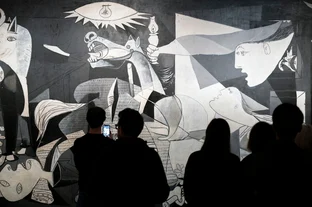
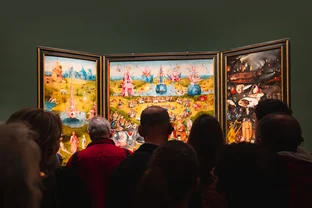
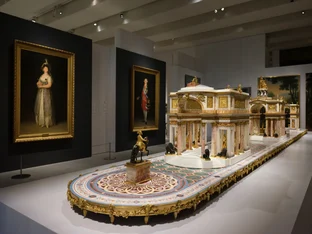
More world-class art is on view in the central neighborhood around the stellar Prado museum than in virtually any other concentrated area in the world: the Caravaggios and Rembrandts at the Thyssen-Bornemisza; the El Grecos and Velázquezes at the Prado itself; and the Dalís and Mirós -- not to mention Picasso's wrenching Guernica -- at the Reina Sofía. Ironically, much of the city's art was collected by 18th-century Spanish monarchs whose artistic sensibility was frequently more astute than their political savvy.

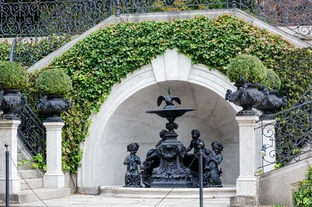
Regrettably, within the city limits you'll also find sprawling expanses of concrete towers, sometimes paralyzing traffic, a growing incidence in street crime, and entire districts that, as in every other metropolis, bear no historic or cultural interest for the tourist. Many long-time visitors find that the city's quintessential Spanish feel has subsided somewhat in the face of a Brussels-like "Europeanization" that has occurred since Spain's 1986 induction into the European Union. The city's gems remain the opulence of the Palacio Real, the bustle of El Rastro's flea market, and the sultry fever of late-night flamenco. When urban commotion starts to overwhelm, seek respite in the Parque del Retiro, a vast, verdant oasis in the heart of the city a stone's throw from the Prado.

Do You Know . . .

Why the bear and the madroño tree are the symbols of Madrid? -- You see them everywhere -- from the small bronze statue in the Puerta del Sol to the insignia on the side of city taxis: A squat bear on its hind legs attempting to eat the berries on a equally squat madroño, or so-called strawberry tree. They are the official symbol of Madrid. But why? Opinions vary. The practical theory is that the bear standing on its hind legs with its front paws on the tree trunk represent possession and ownership of wood necessary for constructing buildings. The sentimental theory is based on the fact that bears love sweet things and constantly try to extract honey from beehives. According to legend, because they suffer from sore eyes, they get stung and bleed from their wounds to such an extent that it relieves them of some of the pain. Next, they grope around desperately for a madroño tree and start gobbling the fruit, whose bitterness belies its rich red exterior (it only looks like a strawberry) and shocks the palate into further reducing the pain by virtue of sheer distraction. So, masochistically, they rid themselves of their discomfort. The first theory makes sense as a metaphor for how Madrid has grown. The second is rather cute but doesn't seem to have any particular relevance. Take your pick.

Why Madrileños are known as "gatos" (cats)? -- Most people believe this stems from the fact that Madrileños like to stay up late, especially on the weekend, when many of them barely sleep at all. Out on the tiles with a vengeance! (Note: This expression literally means to stay up all night like cats, which are often out all night and on rooftops.) However, the official explanation is historical. During a siege at the time of the Arabic invaders, when the city went by the name of Magerit, a particularly adept soldier managed to climb the outer walls with the agility of a cat by inserting his dagger between gaps in the outer walls to gain footholds. The story passed into legend, and the soldier and his family assumed the name of Gato. They eventually had a street -- the Callejón del Gato -- named after one of their descendants, a court poet at the time of Juan II named Juan Alvarez Gato.

Why the Manzanares River has had such bad press? -- The insults and quips came thick and fast in the old days when it was a malodorous trickle that dried up in summer. "An apprentice river," the Golden Age poet Quevedo called it, "in which the water barely comes up to the sole of my foot." Another writer claimed that "the elms that decorate its banks die of thirst and the river itself begs for an umbrella if it rains," adding that "the Manzanares barely dampens the ground as if a finger moistened with saliva was stroking the soil." King Fernando VII, passing one day in summer, is said to have requested his consorts to water it so that the dust wouldn't rise so much. Visiting French writer Alexander Dumas once pleaded with a friend not to throw away the glass of water he'd half finished but to throw it into the parched and needy Manzanares. And so on.

Today, if not quite comparable with the Seine, Thames, or Potomac, the Manzanares looks more like a real river thanks to tidied-up banks and diverted water channels that have helped replenish it, although that coyly secluded location in the dip between the Royal Palace and the Casa de Campo still prevents many visitors from realizing it's even there. As part of Mayor Gallardón's visionary plans for a "greener" Madrid, the current proliferation of cranes and excavations along the river herald an ambitious move to turn the whole area into a traffic-free parkland (with the road running underneath), which will link up with the adjoining Casa de Campo to form one big zona verde.

Why they bury sardines at Lent? -- In the weeks before Lent, food, fun, fireworks, and general frolicking take place during a period known as Carnaval. The highlight of Carnaval is Shrove Tuesday (or Martes de Carnaval). The mood becomes more somber on the following day, Ash Wednesday. If you're anywhere down near Paseo de la Florida by the river, you can see men in top hats and black suits carrying a cardboard effigy of a sardine in a mock coffin to a riverside spot, where the sardine is ceremonially buried.

The origin of this eccentric event, known as the Entierro de la Sardina, can be traced back to the 18th century, when a cargo of sardines destined for the Lent festivities arrived in such a putrid state that the reigning monarch Charles III ordered them all to be buried. Sardines symbolize the end of Carnaval and its hedonism, and the advent of Lent fasting (fish being the recommended diet for this period). So in memory of their tragic premature demise 2 centuries ago -- which caused the Madrid populace to be deprived of its abstinence diet for the next 40 days -- the city decided that sardines should be mourned in style. Hence, the Entierro ceremony.

Side note: The ceremony was banned under General Franco's dictatorship, partly because of its irreverent nature and partly because it allowed folks to wander freely about in disguise -- something that absolutely could not be tolerated during those rigid times.


Back to Top


Note: This information was accurate when it was published, but can change without notice. Please be sure to confirm all rates and details directly with the companies in question before planning your trip.


  Email This Article Email Print This Article Print Get Frommer's RSS Feed RSS
Frommer's Madrid, 2nd Edition Frommer's Madrid, 2nd Edition

Author: Peter Stone
Pub Date: January 23, 2007
Price: $17.99

Buy Now!
Related Titles:
Frommer's Barcelona Day by Day, 1st Edition
Frommer's Barcelona, 2nd Edition
Frommer's Mediterranean Spain with Your Family, 1st Edition
Sponsored Links: What's This?
You Never Know What's Out There. That's Why There's AIG Travel Guard.
Add Frommers.com RSS Feed  Add Frommers.com RSS Feed (What's This?)
Add Frommers.com Deals & News to Your Web Site
Add to My Yahoo!     Add to My MSN     More RSS Readers
Add Frommers.com Podcast Add Frommers.com Podcast (What's This?)
Home > Destinations > Europe > Spain > Madrid > In Depth