Home > Destinations > Europe > Spain > Madrid > Getting to Know > City Layout
Bookstore Travel Talk - Our Message Boards Tips and Tools Book a Trip Deals and News Trip Ideas, Activities, Lifestyles Hotels Destinations Frommers.com Home
Frommer's - The best trips start here. Frommer's - The best trips start here.
Sign up for our FREE Newsletters! Win a FREE Trip
  Email This Article Email Print This Article Print Get Frommer's RSS Feed RSS

City Layout

All roads lead to Madrid, which has outgrown its previous boundaries and is branching out in all directions.

Main Arteries & Squares -- Every new arrival must find the Gran Vía, which cuts a bow-shaped east-west swath across the city between the neoclassical Metrópolis building near the Banco de España and the Plaza de España, where you'll find one of Europe's tallest skyscrapers, the Edificio España. As you walk along it noting the changing styles of buildings on either side, you're actually time-traveling through the 4 decades it took to construct the avenue between the early and mid-1900s. Home to the largest concentration of department stores, hotels, restaurants, and movie houses in the city, it's superseded only by Calle Serrano for chic quality shopping.

South of the Gran Vía lies the Puerta del Sol, the starting point for all road distances within Spain. Dominated by the 18th-century Casa de Correos (seat of the regional government), whose New Year clock chimes are traditionally witnessed by exhilarated crowds, all eating their 12 grapes in time with the chimes, the crescent-shaped square is perennially lively. Its symbolic statue, Oso y el Madroño (Bear and the Strawberry Tree), is a favorite rendezvous spot. It's also a prime hunting ground for pickpockets and purse-snatchers, so take care. Calle de Alcalá begins here at Sol and runs for 4km (2 1/2 miles).

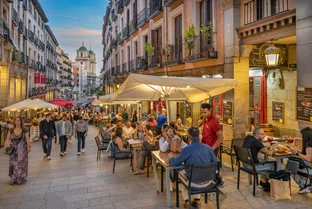
The Plaza Mayor lies at the heart of Old Madrid and is an attraction in itself, with its mix of Habsburg, French, and Georgian architecture. Pedestrians pass under the arches of the huge square onto the narrow streets of the old town, where you can find some of the capital's most intriguing restaurants and tascas, serving tasty tapas and drinks. The colonnaded ground level of the plaza is filled with shops, many selling souvenir hats of turn-of-the-20th-century Spanish sailors or army officers. On the weekend, stamps and rare coins are sold at stalls. Concerts, shows, and exhibitions are often held here, and at Navidad it's a child's delight with a proliferation of Christmas trees and stalls selling gifts. The lavish Reyes (or Three Kings) processions start from here on January 6 amid much excitement.

Warning: Be on the lookout for thieves here, especially late at night.

The area south of the Plaza Mayor -- known as barrios bajos and including the zones of Lavapiés and Embajadores -- is made up of narrow cobblestone streets lined with 16th- and 17th-century architecture. To the west is the elegant historic barrio of the Austrias, most of whose buildings sprang up during the Habsburg rule. From the northwest corner of Plaza, follow the Arco de Cuchilleros, a street packed with markets, restaurants, flamenco clubs, and taverns, to explore this zone. In a narrow atmospheric street called the Cava Baja, just before you reach the Plaza de la Cebada, you'll find the largest concentration of trendy wine bars, homely tabernas, and posada (inn) style restaurants in all Madrid. The nearby Plaza de la Paja, close to the city's two oldest churches, was actually the heart of the city and its main marketplace during the medieval period.

On the western edge of this area is the diminutive Muslim Madrid zone, which is centered on Las Vistillas, just below the Almudena cathedral and Royal Palace -- the zone enjoys views towards the distant Guadarramas. Below it to the west is the Campo del Moro park, the Manzanares River with its bordering walkways, and the great green expanse of the Casa del Campo.

Close to the beginnings of the Gran Vía and just below its junction with Calle Alcalá, you'll find the grand Plaza de la Cibeles, with its fountain to Cybele, "the mother of the gods," main post office (known as "the cathedral of post offices"), and 19th-century French- and Viennese-styled Banco de España. From Cibeles, the wide Paseo de Recoletos begins a short run north to Plaza de Colón. From this latter square rolls the serpentine central artery of Madrid: Paseo de la Castellana, flanked by expensive shops, apartment buildings, luxury hotels, and foreign embassies.

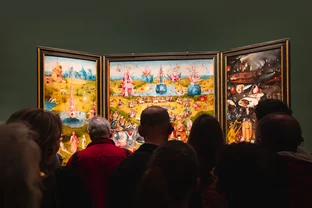
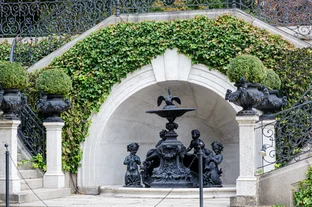
Heading south from Cibeles is Paseo del Prado, where you'll find one of Madrid's major attractions, the Museo del Prado, as well as the Jardín Botánico (Botanical Garden). The paseo leads to the Atocha Railway Station. To the east of the garden lies Parque del Retiro, a magnificent park once reserved for royalty, with rose gardens, wide walkways, terrace cafes, fountains, statues (including the only one in the world dedicated to the devil), musicians and entertainers, a rowing lake (the Estanque), and Madrid's finest homage to the Industrial Revolution era: the iron-, tile-, and glass-built Casa de Cristal (Crystal Palace) inspired by its 19th-century London namesake.

4-5° izda.: A Miniguide to Deciphering the Mystery of Madrid Addresses--The numbers and abbreviations in Spanish addresses can seem complicated when the hotel, pension, gallery, or private residence is located above the ground floor. (Remember: In Europe, the ground floor is the ground floor, and is the equivalent to the first floor in the U.S. The first floor in Europe is the one above the ground floor, which is equivalent to the second floor in the U.S.) Once you understand what all the symbols and abbreviations mean, however, you'll find that addresses in Spain are actually quite detailed and specific, explaining where the establishment is located with the utmost precision. Also note that in Spain, as in many other European countries, the building number comes after the street name. Here is a brief explanation of how addresses work:

The first number represents the number of the address on a particular street (for example, Hotel Adler is at Calle Velázquez 33). Sometimes the address may cover two street numbers, separated by a dash or the word y, which means "and" (for example, Hotel Occidental is at Miguel Angel 29-31 while Hotel Tryp Ambassador is at Cuesta Santo Domingo 5 y 7).

The second number, or the number after the street number(s), is followed by a ° (degree symbol). This represents the piso (floor) that the establishment is on. For instance, Hotel Riesco is at Calle Correo 2-3°, which means the hotel is on the third floor at number 2 on Calle Correo; Hotel Astoria is at Carrera de San Jerónimo 30-32-5°, which means the hotel is on the fifth floor at nos. 30-32 on Carrera de San Jerónimo.

After a number with a degree symbol, you may see a third item. This will really only apply to a private residence or a small gallery. If there are only two units on a particular floor, you might see izda. or dcha. These abbreviations for the izquierda (left) or derecha (right), respectively, signal the location of the establishment within the building. For example, the Guillermo de Osma Art Gallery is at Claudio Coello 4-1° izda., which means the gallery is on the left side of the first floor of no. 4 on Claudio Coello. Alternatively, if the establishment is on a floor containing more than two apartments or galleries (generally, there may be up to six), you might see something with a superscript a or o, representing the unit number, such as 1o or 1a (primero/a) for the first unit, 3o or 3a (tercero/a) for the third unit, and so on. For example, Calle de Ferraz 32-34-2°-5o designates the fifth unit on the second floor at nos. 32-34 on Calle de Ferraz, and Calle del Amparo 21-3°-6a is the sixth unit on the third floor of no. 21 on Calle del Amparo.

And just to complicate matters even more, finding an address within Madrid's grand boulevards and cramped meandering streets can sometimes be a problem, primarily because of the way buildings are numbered. On most streets, the numbering begins on one side and runs consecutively until the end, resuming on the other side and going in the opposite direction. Thus, no. 50 could be opposite no. 250. But there are many exceptions to this system. That's why it's important to know the cross street as well as the number of the address you're looking for. In fact, some addresses don't have a number at all. What they have is the designation s/n, which means sin número (without number). For example, the address of the Panteón de Goya (Goya's Tomb) is Glorieta de San Antonio de la Florida s/n.

Street Maps -- Arm yourself with a good map before setting out. Falk publishes the best, and it's available at most newsstands and kiosks in Madrid. The free maps given away by tourist offices and hotels aren't really adequate for more than general orientation, as they don't list the maze of little streets that is Old Madrid.


Back to Top


Note: This information was accurate when it was published, but can change without notice. Please be sure to confirm all rates and details directly with the companies in question before planning your trip.


  Email This Article Email Print This Article Print Get Frommer's RSS Feed RSS
Frommer's Madrid, 2nd Edition Frommer's Madrid, 2nd Edition

Author: Peter Stone
Pub Date: January 23, 2007
Price: $17.99

Buy Now!
Related Titles:
Frommer's Barcelona Day by Day, 1st Edition
Frommer's Barcelona, 2nd Edition
Frommer's Mediterranean Spain with Your Family: From Tranquil Villages to the Bustling Costas, 1st Edition
Add Frommers.com RSS Feed  Add Frommers.com RSS Feed (What's This?)
Add Frommers.com Deals & News to Your Web Site
Add to My Yahoo!     Add to My MSN     More RSS Readers
Add Frommers.com Podcast Add Frommers.com Podcast (What's This?)
Home > Destinations > Europe > Spain > Madrid > Getting to Know > City Layout