Home > Destinations > North America > USA > Tennessee > Memphis > For International Travelers > Fast Facts
Bookstore Travel Talk - Our Message Boards Tips and Tools Book a Trip Deals and News Trip Ideas, Activities, Lifestyles Hotels Destinations Frommers.com Home
Frommer's - The best trips start here. Frommer's - The best trips start here.
Sign up for our FREE Newsletters! Win a FREE Trip
  Email This Article Email Print This Article Print Get Frommer's RSS Feed RSS

Fast Facts

Automobile Organizations Auto clubs will supply maps, suggested routes, guidebooks, accident and bail-bond insurance, and emergency road service. The American Automobile Association (AAA) is the major auto club in the United States. If you belong to an auto club in your home country, inquire about AAA reciprocity before you leave. You may be able to join AAA even if you're not a member of a reciprocal club; to inquire, call AAA (tel. 800/222-4357). AAA is actually an organization of regional auto clubs; so look under "AAA Automobile Club" in the White Pages of the telephone directory. AAA has a nationwide emergency road service telephone number (tel. 800/AAA-HELP).

Business Hours Offices are usually open weekdays 9am to 5pm. Banks are open weekdays 9am to 5pm or later and sometimes Saturday mornings. Stores, especially those in shopping complexes, tend to stay open late: until about 9pm on weekdays and 6pm on weekends.

Drinking Laws The legal age for purchase and consumption of alcoholic beverages is 21; proof of age is required and often requested at bars, nightclubs, and restaurants, so it's always a good idea to bring ID when you go out. Only beer can often be purchased in supermarkets in Tennessee.

Do not carry open containers of alcohol in your car or any public area that isn't zoned for alcohol consumption. The police can, and probably will, fine you on the spot. And nothing will ruin your trip faster than getting a citation for DUI ("driving under the influence"), so don't even think about driving while intoxicated.

Electricity Like Canada, the United States uses 110 to 120 volts AC (60 cycles), compared to 220 to 240 volts AC (50 cycles) in most of Europe, Australia, and New Zealand. If your small appliances use 220 to 240 volts, you'll need a 110-volt transformer and a plug adapter with two flat parallel pins to operate them here. Downward converters that change 220-240 volts to 110-120 volts are difficult to find in the United States, so bring one with you.

Embassies & Consulates All embassies are located in Washington, D.C. Some consulates are located in major U.S. cities, and most nations have a mission to the United Nations in New York City. If your country isn't listed below, call directory information in Washington, D.C. (tel. 202/555-1212) for the number of your national embassy.

The embassy of Australia is at 1601 Massachusetts Ave. NW, Washington, DC 20036 (tel. 202/797-3000; www.austemb.org). There are consulates in New York, Honolulu, Houston, Los Angeles, and San Francisco.

The embassy of Canada is at 501 Pennsylvania Ave. NW, Washington, DC 20001 (tel. 202/682-1740; www.cdnemb-washdc.org). Other Canadian consulates are in Buffalo (NY), Detroit, Los Angeles, New York, and Seattle.

The embassy of Ireland is at 2234 Massachusetts Ave. NW, Washington, DC 20008 (tel. 202/462-3939). Irish consulates are in Boston, Chicago, New York, and San Francisco.

The embassy of Japan is at 2520 Massachusetts Ave. NW, Washington, DC 20008 (tel. 202/238-6700; www.embjapan.org). Japanese consulates are located in Atlanta, Kansas City, San Francisco, and Washington, D.C.

The embassy of New Zealand is at 37 Observatory Circle NW, Washington, DC 20008 (tel. 202/328-4800; http://www.emb.com/nz.shtml). New Zealand consulates are in Los Angeles, Salt Lake City, San Francisco, and Seattle.

The embassy of the United Kingdom is at 3100 Massachusetts Ave. NW, Washington, DC 20008 (tel. 202/462-1340). Other British consulates are in Atlanta, Boston, Chicago, Cleveland, Houston, Los Angeles, New York, San Francisco, and Seattle.

Emergencies Call tel. 911 to report a fire, call the police, or get an ambulance anywhere in the United States. This is a toll-free call (no coins are required at public telephones).

If you encounter serious problems, contact the Traveler's Aid International (tel. 202/546-1127; www.travelersaid.org) to help direct you to a local branch. This nationwide, nonprofit, social-service organization geared to helping travelers in difficult straits offers services that might include reuniting families separated while traveling, providing food and/or shelter to people stranded without cash, or even emotional counseling. If you're in trouble, seek them out.

Gasoline (Petrol) Petrol is known as gasoline (or simply "gas") in the United States, and petrol stations are known as both gas stations and service stations. Gasoline costs about half as much here as it does in Europe (about $1.65 per gallon at press time), and taxes are already included in the printed price. One U.S. gallon equals 3.8 liters or .85 Imperial gallons.

Holidays Banks, government offices, post offices, and many stores, restaurants, and museums are closed on the following legal national holidays: January 1 (New Year's Day), the third Monday in January (Martin Luther King, Jr. Day), the third Monday in February (Presidents' Day, Washington's Birthday), the last Monday in May (Memorial Day), July 4 (Independence Day), the first Monday in September (Labor Day), the second Monday in October (Columbus Day), November 11 (Veterans' Day/Armistice Day), the fourth Thursday in November (Thanksgiving Day), and December 25 (Christmas). Also, the Tuesday following the first Monday in November is Election Day and is a federal government holiday in presidential-election years (held every 4 years, and next in 2004).

Legal Aid If you are "pulled over" for a minor infraction (such as speeding), never attempt to pay the fine directly to a police officer; this could be construed as attempted bribery, a much more serious crime. Pay fines by mail, or directly into the hands of the clerk of the court. If accused of a more serious offense, say and do nothing before consulting a lawyer. Here the burden is on the state to prove a person's guilt beyond a reasonable doubt, and everyone has the right to remain silent, whether he or she is suspected of a crime or actually arrested. Once arrested, a person can make one telephone call to a party of his or her choice. Call your embassy or consulate.

Mail If you aren't sure what your address will be in the United States, mail can be sent to you, in your name, c/o General Delivery at the main post office of the city or region where you expect to be (call tel. 800/275-8777 for information on the nearest post office). The addressee must pick mail up in person and must produce proof of identity (driver's license, passport, and so on). Most post offices will hold your mail for up to 1 month, and are open Monday to Friday from 8am to 6pm, and Saturday from 9am to 3pm.

Generally found at intersections, mailboxes are blue with a red-and-white stripe and carry the inscription U.S. MAIL. If your mail is addressed to a U.S. destination, don't forget to add the five-digit postal code (or ZIP code), after the two-letter abbreviation of the state to which the mail is addressed. Tennessee's abbreviation is "TN."

At press time, domestic postage rates were 23¢ for a postcard and 37¢ for a letter. For international mail, a first-class letter of up to one-half ounce costs 80¢ (60¢ to Canada and Mexico); a first-class postcard costs 70¢ (50¢ to Canada and Mexico); and a preprinted postal aerogramme costs 70¢.

Taxes In the United States there is no value-added tax (VAT) or other indirect tax at the national level. Every state, county, and city has the right to levy its own local tax on all purchases, including hotel and restaurant checks, airline tickets, and so on.

Telephone, Telegraph, Telex & Fax The telephone system in the United States is run by private corporations, so rates, especially for long-distance service and operator-assisted calls, can vary widely. Generally, hotel surcharges on long-distance and local calls are astronomical, so you're usually better off using a public pay telephone, which you'll find clearly marked in most public buildings and private establishments as well as on the street. Convenience grocery stores and gas stations always have them. Many convenience groceries and packaging services sell prepaid calling cards in denominations up to $50; these can be the least expensive way to call home. Many public phones at airports now accept American Express, MasterCard, and Visa credit cards. Local calls made from public pay phones in most locales cost either 25¢ or 35¢. Pay phones do not accept pennies, and few will take anything larger than a quarter.

Most long-distance and international calls can be dialed directly from any phone. For calls within the United States and to Canada, dial 1 followed by the area code and the seven-digit number. For other international calls, dial 011 followed by the country code, city code, and the telephone number of the person you are calling.

Calls to area codes 800, 888, and 877 are toll-free. However, calls to numbers in area codes 700 and 900 (chat lines, bulletin boards, "dating" services, and so on) can be very expensive -- usually a charge of 95¢ to $3 or more per minute, and they sometimes have minimum charges that can run as high as $15 or more.

For reversed-charge or collect calls, and for person-to-person calls, dial 0 (zero, not the letter O) followed by the area code and number you want; an operator will then come on the line, and you should specify that you are calling collect, or person-to-person, or both. If your operator-assisted call is international, ask for the overseas operator.

For local directory assistance ("information"), dial 411; for long-distance information, dial 1, then the appropriate area code and 555-1212.

Telegraph and telex services are provided primarily by Western Union. You can bring your telegram into the nearest Western Union office (there are hundreds across the country) or dictate it over the phone (tel. 800/325-6000). You can also telegraph money or have it telegraphed to you, very quickly over the Western Union system, but this service can cost as much as 15% to 20% of the amount sent.

Most hotels have fax machines available for guest use (be sure to ask about the charge to use it), and many hotel rooms are even wired for guests' fax machines. A less expensive way to send and receive faxes may be at stores such as the UPS Store, a national chain of packing service shops (look in the Yellow Pages directory under "Packing Services").

There are two kinds of telephone directories in the United States. The so-called White Pages list private households and business subscribers in alphabetical order. The inside front cover lists emergency numbers for police, fire, ambulance, the Coast Guard, poison-control center, crime-victims hotline, and so on. The first few pages will tell you how to make long-distance and international calls, complete with country codes and area codes. Government numbers are usually printed on blue paper within the White Pages. Printed on yellow paper, the so-called Yellow Pages list all local services, businesses, industries, and houses of worship according to activity with an index at the front or back. (Drugstores/pharmacies and restaurants are also listed by geographic location.) The Yellow Pages also include city plans or detailed area maps, postal ZIP codes, and public transportation routes.

Time The continental United States is divided into four time zones: Eastern Standard Time (EST), Central Standard Time (CST), Mountain Standard Time (MST), and Pacific Standard Time (PST). Alaska and Hawaii have their own zones. For example, noon in Nashville or Memphis (CST) is 1pm in New York City (EST), 11am in Denver (MST), 10am in San Francisco (PST), 9am in Anchorage (AST), and 8am in Honolulu (HST).

Daylight saving time is in effect from 1am on the first Sunday in April through 1am the last Sunday in October, except in Arizona, Hawaii, part of Indiana, and Puerto Rico. Daylight saving time moves the clock 1 hour ahead of standard time.

Tipping Tips are a very important part of certain workers' income, and gratuities are the standard way of showing appreciation for services provided. (Tipping is certainly not compulsory if the service is poor!) In hotels, tip bellhops at least $1 per bag ($2-$3 if you have a lot of luggage) and tip the chamber staff $1 to $2 per day (more if you've left a disaster area for him or her to clean up). Tip the doorman or concierge only if he or she has provided you with some specific service (for example, calling a cab for you or obtaining difficult-to-get theater tickets). Tip the valet-parking attendant $1 every time you get your car.

In restaurants, bars, and nightclubs, tip service staff 15% to 20% of the check, tip bartenders 10% to 15%, tip checkroom attendants $1 per garment, and tip valet-parking attendants $1 per vehicle.

As for other service personnel, tip cab drivers 15% of the fare; tip skycaps at airports at least $1 per bag ($2-$3 if you have a lot of luggage); and tip hairdressers and barbers 15% to 20%.

Toilets You won't find public toilets or "restrooms" on the streets in most U.S. cities, but they can be found in hotel lobbies, bars, restaurants, museums, department stores, railway and bus stations, or service stations. Note, however, that restaurants and bars in resorts or heavily visited areas may reserve their restrooms for the use of their patrons. Some establishments display a notice that toilets are for the use of patrons only. You can ignore this sign or, better yet, avoid arguments by paying for a cup of coffee or a soft drink, which will qualify you as a patron. Large hotels and fast-food restaurants are probably the best bet for good, clean facilities. If possible, avoid the toilets at parks and beaches, which tend to be dirty.


Back to Top


Note: This information was accurate when it was published, but can change without notice. Please be sure to confirm all rates and details directly with the companies in question before planning your trip.


  Email This Article Email Print This Article Print Get Frommer's RSS Feed RSS
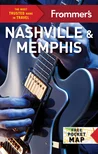
Frommer's Nashville & Memphis, 8th Edition Frommer's Nashville & Memphis, 8th Edition

Author: Linda Romine
Pub Date: April 21, 2008
Price: $16.99

Buy Now!
Related Titles:
Frommer's Atlanta, 10th Edition
Frommer's Maryland & Delaware, 8th Edition
Frommer's New Orleans 2008
Add Frommers.com RSS Feed  Add Frommers.com RSS Feed (What's This?)
Add Frommers.com Deals & News to Your Web Site
Add to My Yahoo!     Add to My MSN     More RSS Readers
Add Frommers.com Podcast Add Frommers.com Podcast (What's This?)
Home > Destinations > North America > USA > Tennessee > Memphis > For International Travelers > Fast Facts