Catarina Belova / Shutterstock
Rouen Travel Guide
135km (84 miles) NW of Paris; 89km (55 miles) E of Le Havre
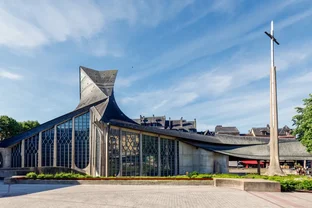
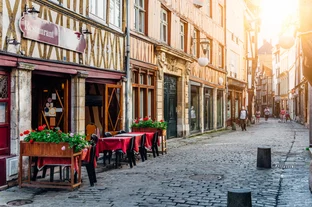
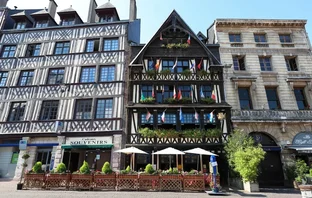
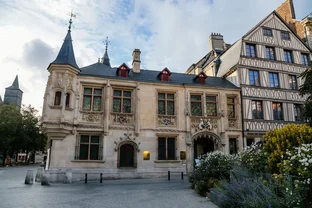
Normandy’s capital buzzes from dawn ‘til dusk, thanks to its busy port and lively university. Its agreeable atmosphere invites leisurely strolls along medieval lanes, where some of Normandy’s most delicious produce sits temptingly in shop windows. Former celebrated residents of Rouen include writer Gustave Flaubert (who grew up along the city’s enchanting cobbled streets), Claude Monet (who endlessly painted Rouen’s Cathédrale de Notre-Dame), and Joan of Arc, who met her tragic end in the place du Vieux Marché, the Old Marketplace, in 1431.
Rouen suffered greatly during World War II when half of it was destroyed, mostly by Allied bombers. During the reconstruction of the old quarters, some of the almost-forgotten crafts of the Middle Ages were revived. Today its metropolitan area is home to half a million people, with about 100,000 clustered in the large center.
On Normandy’s Cider & Calvados Route
Normandy might not have the vineyards of other parts of France, but it does have endless apple orchards that produce the acclaimed Calvados brandy, refreshing alcoholic cider, and pommeau, a mixture of Calvados and apple juice. In the lush rolling hills of the Pays d’Auge east of Caen, producers open their half-timbered farms (mostly by appointment) to thirsty tourists eager to try the different varieties of apple nectar. Some of the region’s most delightful villages lie on this 40km (25-mile) Route du Cidre (routeducidre.com), notably Cambremer and Beuvron-en-Auge, the latter being one of the designated Most Beautiful Villages of France (normandie-cabourg-paysdauge-tourisme.fr/destinations/beuvron-en-auge). In Pont-l’Evêque, Calvados Père Magloire L’Experience is an entertaining museum that uses multisensory displays to show how apple brandy is made, and also offers tastings (www.calvados-experience.com; tel. 02-31-64-30-31; 14.50€ adults, 6€ children 12–17, free for children 11 and under; Mar-Dec daily 10am–7pm, Jan–Mar daily 10am–6pm).