Frommers.com Frommers.com
Most Recent Upper and Middle Keys Forum Posts
Most Recommended Articles
Most Commented Articles
  Print This Article Print Get Frommer's RSS Feed RSS

Attractions

Anne's Beach (MM 73.5, on Lower Matecumbe Key, at the southwest end of Islamorada) is really more picnic spot than full-fledged beach, but die-hard tanners still congregate on this lovely but tiny strip of coarse sand that was damaged beyond recognition during the series of storms in 1998. The place has been spruced up a bit, but the public bathrooms there are rancid and need some attention.

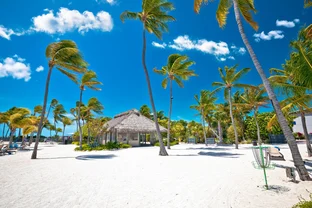
A better choice for real beaching is Sombrero Beach, in Marathon at the end of Sombrero Beach Road (near MM 50). This wide swath of uncluttered beachfront actually benefited from Hurricane George in 1998, with generous deposits of extra sand and a face-lift courtesy of the Monroe County Tourist Development Council. More than 90 feet of sand is dotted with palms, Australian pines, and royal poincianas, as well as with grills, clean restrooms, and Tiki huts for relaxing in the shade. It's also a popular nesting spot for turtles that lay their eggs at night.

If you're interested in seeing the Keys in their natural, premodern development state, you must venture off the highway and take to the water. Two backcountry islands that offer a glimpse of the "real" Keys are Indian Key and Lignumvitae Key. Visitors come here to relax and enjoy the islands' colorful birds and lush hammocks (elevated pieces of land above a marsh).

Named for the lignum vitae ("wood of life") trees found there, Lignumvitae Key supports a virgin tropical forest, the kind that once thrived on most of the Upper Keys. Over the years, human settlers imported "exotic" plants and animals to the Keys, irrevocably changing the botanical makeup of many backcountry islands and threatening much of the indigenous wildlife. Over the past 25 years, however, the Florida Department of Natural Resources has successfully removed most of the exotic vegetation from this key, leaving the 280-acre site much as it existed in the 18th century. The island also holds the Matheson House, a historic structure built in 1919 that has survived numerous hurricanes. You can go inside, but it's interesting only if you appreciate the coral rock of which the house is made. It's now a museum dedicated to the history, nature, and topography of the area. More interesting are the Botanical Gardens, which surround the house and are a state preserve. Lignumvitae Key has a visitor center at MM 88.5 (tel. 305/664-2540).

Indian Key, a much smaller island on the Atlantic side of Islamorada, was occupied by Native Americans for thousands of years before European settlers arrived. The 10-acre historic site was also the original seat of Dade County before the Civil War. Interestingly, from an archaeological standpoint, you can see the ruins of the previous settlement and tour the lush grounds on well-marked trails (off Indian Key Fill, Overseas Hwy., MM 79). For more information on Indian Key, call the Florida Park Service (tel. 305/664-4815) or check out www.abfla.com/parks/indiankey/indiankey.html.

If you want to see both islands, plan to spend at least half a day. You can rent your own powerboat from Robbie's Rent-A-Boat, U.S. 1 at MM 77.5 (on the bay side), on Islamorada. It's then a $1 admission fee to each island, which includes an informative hour-long guided tour by park rangers. This is a good option if you're a confident boater. I also recommend Robbie's ferry service. A visit to Lignumvitae Key costs $20 for adults and $12 for kids 12 and under, which includes the $1 park admission. The ferry used to go to Indian Key, too (a trip to both islands cost $25), but it is closed for renovations until late 2008 or early 2009. The ferry is a more economical, easier way to enjoy the beauty of the islands when you aren't negotiating the shallow reefs along the way. The runabouts, which carry up to six people, depart from Robbie's Pier Thursday through Monday at 10am and 2pm for Lignumvitae Key. In high season, you may need to book 2 days before departure. Robbie's also does eco-tours, 2-hour trips through passages among the sea grass beds that rim the many protected shallow bays. You'll get to cruise among the hundreds of small, uninhabited mangrove and hardwood hammock islands, which host an amazing variety of wildlife and create the island network of the Florida Bay. Call tel. 305/664-4815 for information from the park service; or call tel. 305/664-9814 or visit www.robbies.com for Robbie's.

The 10 "Keymandments"

The Keys have always attracted independent spirits, from Ernest Hemingway and Tennessee Williams to Jimmy Buffett, Zane Grey, and local hero Mel Fisher. Writers, artists, and freethinkers have long drifted down here to escape.

Although you'll generally find a very laid-back and tolerant code of behavior in the Keys, some rules do exist. Be sure to respect the 10 "Keymandments" while you're here, or suffer the consequences.

  • Don't anchor on a reef. (Reefs are alive.)
  • Don't feed the animals. (They'll want to follow you home.)
  • Don't trash our place (or we'll send Bubba to trash yours).
  • Don't touch the coral. (After all, you don't even know them. Some pose a mild risk of injury to you as well.)
  • Don't speed (especially on Big Pine Key, where deer reside and tar-and-feathering is still practiced).
  • Don't catch more fish than you can eat. (Better yet, let them go. Some of them support schools.)
  • Don't collect conch. (This species is protected by Bubba.)
  • Don't disturb the birds' nests. (They find it very annoying.)
  • Don't damage the sea grass (and don't even think about making a skirt out of it).
  • Don't drink and drive on land or sea. (There's nothing funny about it.)

Acquaint Yourself

Fans of stone crabs can get further acquainted with the seasonal crustaceans on 3-hour tours offered by Keys Fisheries, aboard 40- to 50-foot vessels that leave from Marathon. The tour includes views of fishermen as they collect crabs from traps and process their claws. The $450 cost includes up to six passengers and up to 6 pounds of fresh claws iced for travel or prepared at a dockside restaurant. Stone-crab season is October 15 to May 15. Call tel. 305/743-4353 or check www.keysfisheries.com for more information.


Back to Top


Click the names below for more detailed information.

List All Attractions

Note: This information was accurate when it was published, but can change without notice. Please be sure to confirm all rates and details directly with the companies in question before planning your trip.


  Print This Article Print Get Frommer's RSS Feed RSS
Destination Guide
Destination Guide Destination Guide Destination Guide
Destination Guide Destination Guide Frommer's South Florida including Miami and Keys, 6th Edition Destination Guide Frommer's South Florida including Miami and Keys, 6th Edition

Author: Lesley Abravanel
Pub Date: October 06, 2008
Price: $17.99

Add to Cart
Destination Guide Destination Guide Destination Guide Related Titles:
Beyond Disney: The Unofficial Guide to Universal Orlando,SeaWorld and the Best of Central Florida, 6th Edition
Destination Guide
Frommer's Florida 2010
Destination Guide
Frommer's Miami & the Keys Day by Day
Destination Guide
Destination Guide Destination Guide
Destination Guide Destination Guide Destination Guide
Destination Guide
Destinations
Destinations