Bookstore

Available as paperback
and as e-book.
Arles Attractions
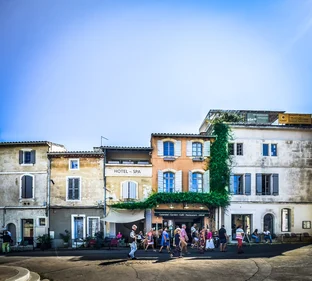
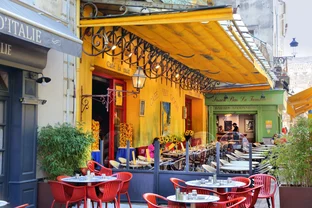
The Place du Forum, shaded by plane trees, stands around the old Roman forum. The Terrasse du Café le Soir, immortalized by Van Gogh, is now the square’s Café Van Gogh. Visitors keen to follow in the footsteps of the great artist may pick up a Van Gogh walking map (1€; available at the tourist office), which takes in 10 important sites around the city, from the tourist office. (Alternatively, you can download it for free from the tourist board’s website—however this version is only available in French.) On a corner of place du Forum sits the legendary Grand Hôtel Nord-Pinus (www.nord-pinus.com): Bullfighters, artists, and A-listers have all stayed here. Three blocks south, the Place de la République is dominated by a 15m-tall (49-ft.) red granite obelisk.
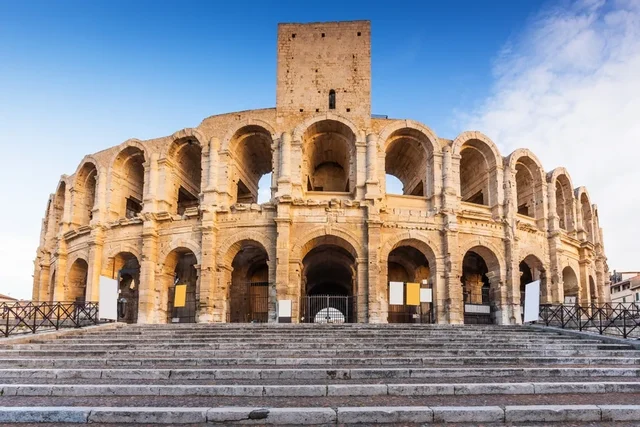
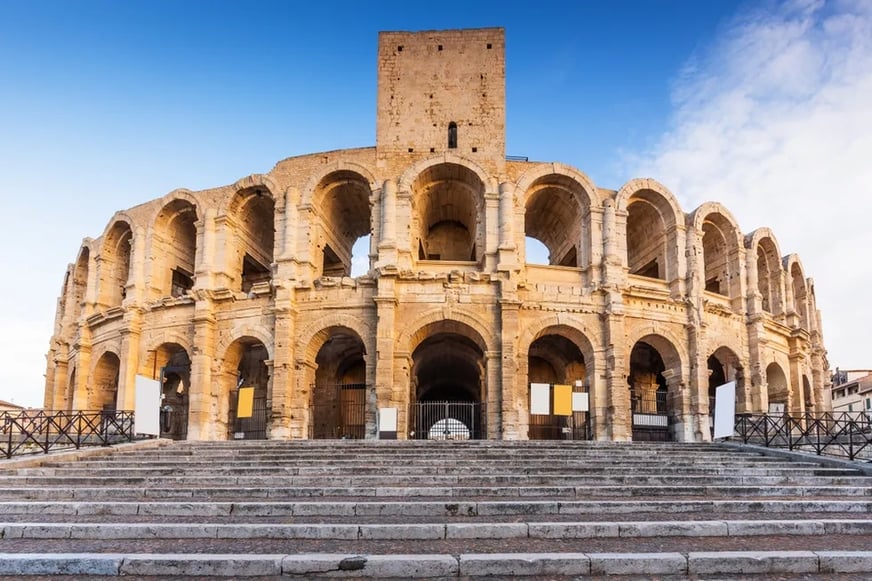
One of the city’s great classical monuments is the Roman Théâtre Antique, rue du Cloître ( tel. 04-90-49-59-05). Augustus began the theater in the 1st century; only two Corinthian columns remain. The Venus of Arles (now in the Louvre in Paris) was discovered here in 1651. The theater is open May through September daily 9am to 7pm; March, April, and October until 6pm; and November through February daily 10am to 5pm. Admission is 9€ adults, 7€ students, and free children 17 and under. The same ticket admits you to the nearby Amphitheater (Les Arènes), rond-pont des Arènes (pictured above, tel. 04-90-49-59-05; same opening hours), also built in the 1st century. Sometimes called Le Cirque Romain, it seats almost 25,000. For a good view, climb the three towers that remain from medieval times, when the amphitheater was turned into a fortress.
One of Arles's zaniest family-friendly attractions is to ride a velorail along a disused railway track. These "bike-train" contraptions must be pedaled along one of two 8km routes through virgin countryside. The tracks themselves once hauled olive oil and minerals and were used by Vincent van Gogh. One route starts from Arles city center (www.veloraildesalpilles.fr; book online for 14€ adults; 7€ for children aged 5-17; free for children 4 and under).
Two potential side trips from Arles include the old Roman city of Nîmes and the marshy delta of the Camargue.
Les Taureaux
Bulls are a big part of Arlesien culture. It’s not unusual to see bull steak on local menus, and saucisson de taureau (bull sausage) is a local specialty. The first bullfight, or corrida, took place in the amphitheater in 1853. Appropriately, Arles is home to a bullfighting school (the Ecole Taurine d’Arles). Like it or loathe it, corridas are still held during the Easter Ferias and in September, during the Ferias du Riz.
Mistral, Two Ways
Born just north of Arles, Frédéric Mistral (1830–1914) dedicated his life to defending and preserving the original Provençal language known as Occitan. The poet won the Nobel Prize for his epic work “Mirèio” and his overall contributions to French literature. Mistral joined six other Provençal writers in 1854 to found Félibrige, an association for the promotion of Occitan language and literature. He is the author of “Lo Tremor dóu Félibrige,” the most comprehensive dictionary of the Occitan language to this day. Many think Mistral lent his name to the notorious glacial wind that roars through Provence every year. However, in this case, mistral is the Occitan word for “master”—and those who experience the phenomenon regularly say it’s a cruel one. Tearing through the Rhône River Valley toward the Mediterranean, the mistral reaches speeds of 100km (62 miles) per hour and can blow up to 100 days per year. Most of these occur in winter, but it is also common in the spring and, in unlucky years, can persist until early summer.

11 Results
- Religious Site
Abbaye de Montmajour
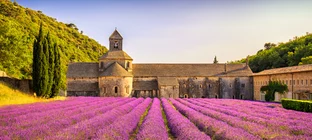
This medieval monastery, founded in the leafy countryside 6km (3.5 miles) northeast of Arles during the 10th century, is now an innovative exhibition venue. Temporary shows, ranging from a Christian Lacroix installation to annual photographic displays as part of Les Recontres… - Landmark
Amphithéâtre d'Arles
Near the Roman theater and also built in the 1st century, the amphitheater seats almost 12,000 and hosts bullfights and other major events. For a good view, you can climb the three towers that remain from medieval times when the amphitheater was turned into a fortress. The stone… - Exhibition Space
Fondation Vincent Van Gogh Arles
This permanent home for the Van Gogh Foundation (founded more than 3 decades ago) is housed in the 15th-century private mansion Hôtel Léautaud de Donines. Highlighting the connection between Arles and Van Gogh, it stages a variety of temporary exhibitions, seminars, and interactive…Around Town
- Art museum
LUMA Arles
The 15,000 square meter tower that shimmers above LUMA, Arles's newest art complex, took inspiration from the Vincent van Gogh canvas "Starry Night", which was painted in the city. Inside there is a café, library, auditorium, and exhibition spaces. The latter featured, during 2023,… - Religious Site
Le Cloître et l’Eglise St-Trophime
This church is noted for its 12th-century portal, one of the finest achievements of the southern Romanesque style. Frederick Barbarossa was crowned king of Arles here in 1178. In the pediment, Christ is surrounded by the symbols of the Evangelists. The pretty cloister, in Gothic and…Around Town - Historic Site
Les Alyscamps
Perhaps the most memorable sight in Arles, this once–Roman necropolis became a Christian burial ground in the 4th century. Mentioned in Dante’s “Inferno,” it has been painted by both Van Gogh and Gauguin. Today it is lined with poplars and studded with ancient sarcophagi. Arlesiens…Around Town - Museum
Musée Départemental Arles Antiques
Set within a sleek compound around 1km (.5 mile) south of Arles’ town center, this archaeological museum has finds uncovered throughout the region’s rich territories. Airy rooms present Roman sarcophagi, sculptures, mosaics, and inscriptions from ancient times through the 6th…Around Town - Museum
Musée Réattu
Exhibited over the labyrinthine rooms of the 15th-century Grand Priory of the Order of Malta, this museum opened in 1868 to showcase artworks previously owned by local painter Jacques Réattu. Over the past 150 years, the collection has swollen with donations and annual…Around Town - Bridge
Pont Van Gogh
Officially known as the “Pont de Réginel”, for years this 19th-century drawbridge was referred to locally as “Pont de Langlois”, taking its name from the operator rose and lowered it daily. The bridge achieved eventual international fame—and its current moniker—when it was depicted… - Historic Site
Thermes de Constantin
Near the banks of the Rhône is the entrance to 4th-century Roman baths, which have been partially restored with characteristic bands of brickwork. The baths or thermae are all that remain of a once grand imperial palace that stood here, Palais Constantin. Dating from Constantine's… - Landmark
Théâtre Antique
The Roman theater, begun by Augustus in the 1st century, was mostly destroyed and only two Corinthian columns remain. Here the Venus of Arles was discovered in 1651. A copy of a masterpiece of Hellenistic statuary, it was broken into three pieces and armless when discovered. Arles…
Arles Nightlife
Because of its relatively small population, Arles doesn’t offer as many nightlife options as Aix-en-Provence, Avignon, or Marseille. The town’s most buzzing nightclub is L' Esquisse, 12 avenue Victor Hugo (tel. 04-90-97-77-98), which spins house, lounge, and hip-hop tunes until midnight.