Temple d’August

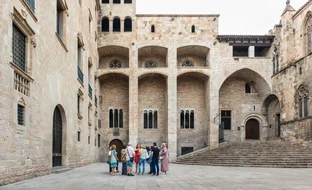
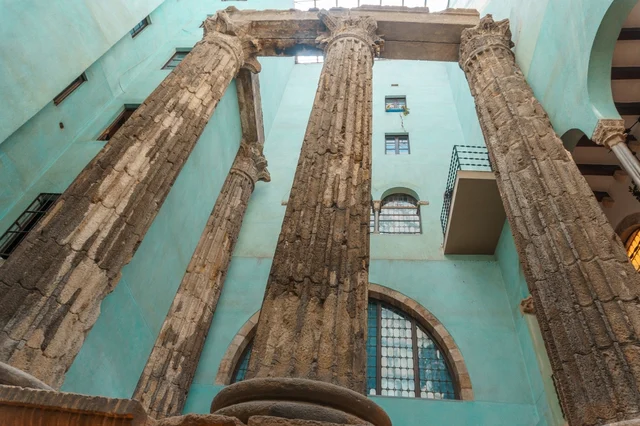
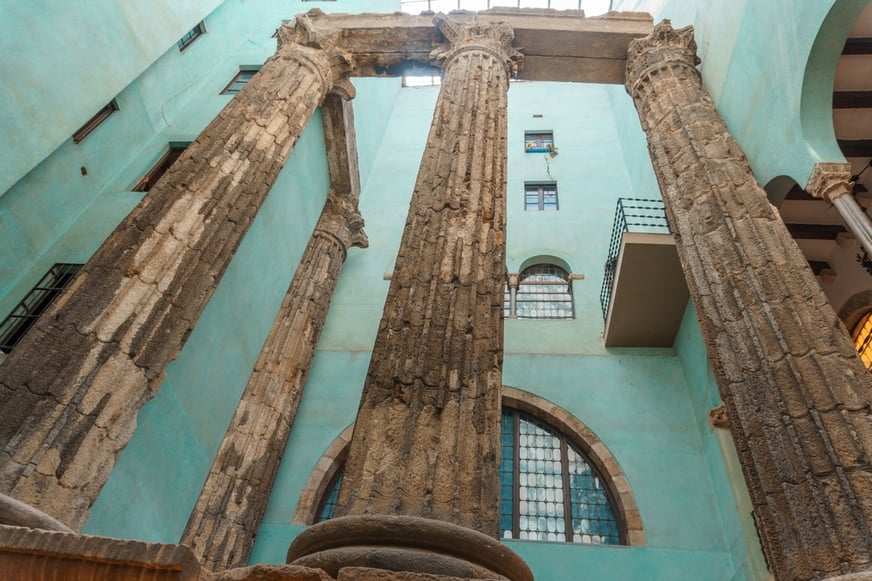
Hidden away in a Barri Gòtic alleyway, these Roman columns are one of Barcelona’s best-kept secrets. They’re easy to miss as they are ingeniously (if a little awkwardly) incorporated into the courtyard of a 19th century townhouse. They date from the 1st century b.c. and once formed part of the forum of Barcino, the Roman settlement that laid the foundations of modern Barcelona. Although traditionally known as the Temple of Augustus, it was more likely dedicated to the worship of the Roman Empire rather than a single emperor. The ruins are part of the citywide collection of the Museu d’Història de Barcelona (MUHBA) and can be visited free of charge.
Hidden away in a Barri Gòtic alleyway, these Roman columns are one of Barcelona’s best-kept secrets. They’re easy to miss as they are ingeniously (if a little awkwardly) incorporated into the courtyard of a 19th century townhouse. They date from the 1st century b.c. and once formed part of the forum of Barcino, the Roman settlement that laid the foundations of modern Barcelona. Although traditionally known as the Temple of Augustus, it was more likely dedicated to the worship of the Roman Empire rather than a single emperor. The ruins are part of the citywide collection of the Museu d’Història de Barcelona (MUHBA) and can be visited free of charge.
Details
Bookstore

Available as paperback
and as e-book.