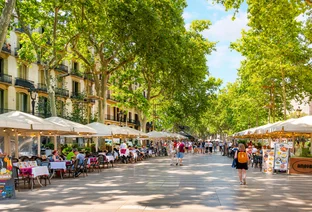
Jana Asenbrennerova / Shutterstock
Restaurants in Barcelona
You only need to see the gorgeous fresh produce piled high at La Boqueria market to understand how seriously Barcelona takes its food.
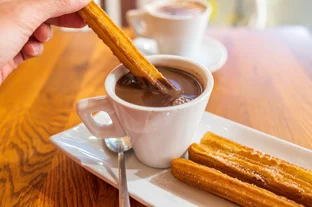
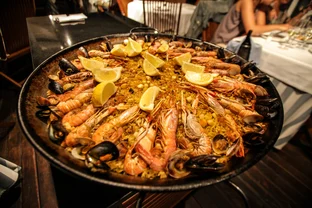
Catalunya has its own distinctive cuisine, shaped by centuries of Mediterranean influence. You’ll find Catalan canelons (cannelloni filled with slow roasted meat) on many a menu. Cap i pota (meaning head and leg) is a rustic beef stew that recalls a tougher past, while the butifarra pork sausage dates from the Romans. Fish plays a big role in this port city, from a single oily anchovy with a lunchtime vermouth to seafood paella with rice or vermicelli pasta (fideuà) on the waterfront. With everything, and for breakfast, you’ll be offered the beloved pa amb tomàquet (see below for its history). Tip: In Catalunya, a truita de patates is a potato omelet not a trout, and red wine is vi negre, literally “black wine”.
You can eat fabulously at the city’s many traditional taverns, often run by families who pass their passion down the generations. But Barcelona is also a gastronomic pioneer. It’s well worth splashing out to experience the creativity of its many Michelin-starred chefs—be sure to book ahead.
And you don’t need to sit down for every meal. Hopping from place to place for small plates of bar-top tapas is an excellent, and economical, way to sample what this great eating city has to offer. Whatever you choose, avoid the eye of the waiters who tout for business at the touristy pavement restaurants on La Rambla. You can do so much better than that.
Lunch in Barcelona is usually served between 1:30 and 3pm when the menú del dia (set lunch with drink included) offers great value. Dinner service usually starts around 8.30pm, though locals rarely dine before 9pm—later in summer.
What Makes Catalan Cuisine?
Much of what Barcelona's feted new chefs do is put an avant-garde twist on traditional Catalan cuisine. But what is that exactly? Like its language, what Catalans eat is different from the rest of Spain and varies within the region, from the Mediterranean coastline and islands to the inland villages and Pyrénées mountains. Like Catalan culture, the cuisine looks out toward the rest of Europe (especially France) and the Mediterranean arc, rather than inward toward Castile. Many of the techniques and basic recipes can be traced back to medieval times, and as any Catalan is only too willing to point out, the quality of the produce proceeding from the Països Catalans (Catalan Countries) is some of the best available. The same goes for the locally produced wine. The D.O.s (domaines ordinaires) of the Penedès and Priorat regions are now as internationally renowned as La Rioja, and the local cava (sparkling, champagne-type wine) is consumed at celebratory tables from Melbourne to Manchester.
If there is one food dish that symbolizes Catalan cuisine, it is pa amb tomàquet. Invented as a way of softening stale bread during the lean years of the Civil War, there is barely a restaurant in Catalonia, from the most humble workman's canteen to the Michelin-starred palace, that does not have this on their menu. In its simplest form, pa amb tomàquet is a slice of rustic white bread rubbed with the pulp of a cut tomato and drizzled with olive oil. Top the bread with cheese, pâté, chorizo, or Iberian ham -- this is then called a torrada. The idea is ingeniously simple, and like most ingeniously simple ideas, it works wonderfully. Catalans wax lyrical about it, and you will soon be hooked.
Catalan cuisine is marked by taste combinations that seem at odds with each other; red meat and fish are cooked in the same dish, nuts are pulped for sauces, poultry is cooked with fruit, pulse (bean) dishes are never vegetarian, there is not one part of a pig that is not consumed, and imported, salted cod is the favorite Catalan fish. Concoctions popping up on menus time and time again include zarzuela (a rich fish stew), botifarra amb mongetes (pork sausage with white beans), faves a la catalana (broad beans with Iberian ham), samfaina (a sauce of eggplant/aubergine, peppers, and zucchini/courgette), esqueixada (a salted cod salad), fideuà (similar to a paella, but with noodles replacing the rice), and mel i mato (a soft cheese with honey). It's hearty and more elaborate than other food of southern Spain.
Vegetarian restaurants are on the increase. Apart from tortillas, few traditional tavernas serve veggie food, and always double-check: The Catalan word carn (carne in Spanish) only refers to red meat. Asking for a dish "without" (sens in Catalan, sin in Spanish) does not guarantee that it will arrive fish-or chicken-free.
In its most traditional form, Catalan cuisine doesn't suit light appetites, which is why many locals have only one main meal a day, normally at lunchtime, with perhaps a supper of a torrada in the evening. Breakfast is also a light affair: A milky coffee (café con leche in Spanish, café amb llet in Catalan) with a croissant or doughnut.
Tipping in Barcelona
Tipping always confuses visitors as some restaurants list the IVA (sales tax) separately on the bill. This is not a service charge; in fact, it is illegal for restaurants in Barcelona to charge for service. As a general rule, tips (in cash) of about 5% should be left in cheap to moderate places and 10% in expensive ones. In bars, leave a few coins or round your bill up to the nearest euro.
Bookstore
Available as paperback
and as e-book.

67 Results
- Mediterranean
“a” Restaurante
In summer, the restaurant at Hotel Neri spills out onto the hauntingly beautiful Plaça Sant Felip Neri. Its lunchtime and evening set menus make it one of Barcelona’s best bargains. Chef Alain Guiard’s cooking is sophisticated but unpretentious, and dishes like roast leaks with…$$Barri Gòtic, La Ribera & El Born - Catalan/Seafood
7 Portes
Located under the arches on elegant Isabel II, 7 Portes has the quintessential look of a grand Old World restaurant. Its waitstaff wears either long black aprons or short white jackets and hustles from table to table with solicitous service. Many tourists take exception to the…$$$Waterfront and La Barceloneta - Mediterranean
Agua
This ultramodern seafood restaurant at the Port Olímpic really is about the sparkling water of the harbor, and it's named accordingly. It's also about sitting out on the terrace with wraparound sunglasses and an Audrey Hepburn scarf (for the women) and looking like you're Someone…$$Waterfront and la Barceloneta Alkimia
As the name suggests, chef Jordi Vila fashions himself an alchemist, transmuting base materials of Catalan cuisine into a kind of gastronomic gold. Since the restaurant moved across town from Eixample Dreita to the current space in Raval, its lush environment now complements the…$$$Les Rambles and El Raval- Tapas
Bar Cañete
Set on a rather scruffy street off La Rambla, the interior at Bar Cañete resembles the bar on a smart ocean liner. Epauletted waiters glide around behind a long wooden counter pre-set with plates. Although there’s a dining room to the aft, it’s best to grab a stool here and watch the…$$Les Rambles & El Raval - Spanish
Bar del Pi
Just because it’s a popular spot doesn’t mean you should skip this bar that sprawls across two of the three plazas surrounding Santa María del Pi. The location is prime and the limited food choices tend to be well-executed. Mainly a drinking establishment—coffee as well as wine and…$Barri Gotic, La Ribera and Born - Tapas
Bar Electricitat
The lunchtime atmosphere matches the name at this Barceloneta favorite (although the name actually refers to the fact that the building once housed the generator that powered the fishermen’s quarter). Founded in 1908, the no-frills bodega has made few concessions to progress since…$Waterfront - Tapas
Bar La Plata
Do a few things, and do them well. There is no simpler food emporium in Barcelona than Bar La Plata, named for the short Gothic Quarter alley where it is located. There is no menu and most patrons stand. Since 1945, its customers have ordered from just a handful of options at its…$Barri Gotic, La Ribera and Born - Spanish
Bar Lobo
Literally around the corner from Les Rambles in El Raval, this casual dining spot attracts a largely local clientele. They come for the fresh-market dinner dishes (duck breast with glazed onions, steak tartare) and the extensive list of salads, soups, and tapas. In keeping with…$Les Rambles and El Raval - Mediterranean Fusion
Berbena
This snug Gràcia gastro-bar bursts with innovation courtesy of chef Carles Pérez de Rozas. Having cooked in kitchens in Japan and Peru, he brings Asian and South American influences to his Mediterranean cuisine, prepared in the open kitchen. Nearly every ingredient is seasonal and…$$L’Eixample & Gràcia - Catalan/Tapas
Bodega La Palma
Dating from 1935, this high-ceilinged bar lined with old wine barrels and vintage photos rebranded itself in the 21st century as a gastro-bodega. Its Catalan dishes are a cut above standard bar fare and include some vegetarian options. There’s a great value menú del dia that changes…$Barri Gòtic, La Ribera & El Born - Seafood
Botafumeiro
Owner Moncho Neira hails from Galicia and holds the opinion (shared by much of Spain) that Galicians know more about fish than anyone. Neira sources his fish from auctions on the Catalan and Galician coasts and presents them in an old-world fine-dining setting, where waiters wear…$$$L'Eixample - Catalan
Ca l’lsidre
Nuria Gironés’ parents Isidre and Montserrat founded this classic establishment in 1970. Gastronomes have long sought it out on a hidden-away El Raval street for its low-key refinement and traditional dishes like bacallà a la llauna (salt cod with white beans). Nuria has added a…$$Les Rambles & El Raval Caelis
French chef Romain Fornell’s flagship at the Ohla hotel is rightly receiving plaudits for its bold takes on Meditarranean cuisine. Reserve, if you can, a spot at the U-shaped chef’s table seating just 14 diners, and watch the performance unfold. Three tasting menus are offered,…$$$Cafe Viena
The cafes of the Viena baking company are ubiquitous in Catalunya—there are six alone in Barcelona. But this is the one where everyone stops for a draft beer and one of the best ham sandwiches you will ever eat, the “flauta d’ibéric jabugo.” It's a crisp, slender baguette sliced in…$Les Rambles and El Raval- Catalan
Cal Pep
From the outside, Cal Pep looks nothing special, but the queues for a spot at its counter say otherwise. There’s no menu, just a display of fish and seafood fresh from the market that the waitstaff will talk you through. There are non-fish specialties too, including a truita potato…$$Barri Gotic, La Ribera and Born Can Culleretes
Tucked onto a tiny side street near the Plaça Reial, Culleretes has been serving traditional Catalan fare since 1786—dishes like spinach cannoli with salt cod brandade, stewed wild boar, or partridge casserole. The priciest meal (32€ for two) is the assorted fish and shellfish, a…$$Barri Gotic, La Ribera and BornCan Majó
Literally steps from the beach, this family restaurant dates from 1968 and is now run by two generations of the Majó family. The dining room resembles a country tavern, but as long as the weather is good, everyone wants to eat outdoors at the white-linen-clad tables beneath…$$Waterfront and La BarcelonetaCan Solé
Originally a shop run by a Sr. Solé, this Barceloneta institution has been serving classic seafood since 1903, and proprietor Josep Maria García isn’t about to change the formula now. The courteous, white-jacketed, waitstaff might suggest kicking off with artichoke hearts laced with…$$Waterfront and La Barceloneta- Spanish
Casa Alfonso
Hams hang from the ceiling as you enter this delightfully traditional deli-cum-taberna in Dreta de Eixample. You could order one of their famous flauta sandwiches, with a dizzying selection of fillings, from the counter to take away but why not linger for an aperitif and watch the…$L’Eixample & Gràcia - Mediterranean
Cinc Sentits
The name of the restaurant is Catalan for “Five Senses,” and a sense of restraint is not one of them. Only tasting menus are served here, although you can limit yourself to just four courses by going for lunch on a weekday. Otherwise the choices are 5, 7, or 10 courses. Chef Jordi…$$$L'Eixample - Catalan Fusion
Direkte
Having relocated from a cramped space behind La Boqueria market to a smart Japanese-style bar in Eixample, Direkte remains one of Barcelona’s hot tickets. Chef Arnau Muñío ingeniously fuses classic Catalan cuisine with Asian flavors. Two trust-the-chef menus are offered, with either…$$$L’Eixample & Gràcia Dos Palillos Barcelona
Attached to the Casa Camper hotel, Dos Palillos (Two Sticks) pays homage to the chopsticks of Asian cuisine and toothpicks of Spanish bar food. Albert Raurich spent six years as head chef at elBulli, and after visiting Japan with his mentor Ferran Adrià, came up with the idea of…$$$Les Rambles and El RavalEl Salon
Americans will be relieved to find a place they can dine at an hour they’re used to in this atmospheric restaurant on a small Gothic Quarter street. The high-ceilinged stone room creates just the right environment for an early romantic dinner with service that’s friendly but…$Barri Gotic, La Ribera and Born- Catalan
El Set
This casual spot in trendy Born specializes in good value sharing platters. It attracts a young traveler crowd and you may have to wait for a table, but the can-do manager will offer you a drink while he finds one. The menu is easily navigated—almost everyone chooses the beautifully…$Barri Gòtic, La Ribera & El Born - Tapas
El Xampanyet
Before the champagne makers of France forced a name change in 1970, Catalan’s sparking cava was known as xampany. Founded in 1929, El Xampanyet, just around the corner from the Museu Picasso, is one of the city’s best-loved cava bars. From the moment its shutters roll up it is…$Barri Gotic, La Ribera and Born Els Quatre Gats
Few visitors come to Els Quatre Gats for fine dining. It’s the architecture and history of Barcelona’s famous bohemian hangout that attracts the crowds. The building, by Josep Puig i Cadafalch, resembles a Gothic castle and the atmosphere inside recalls the city’s Belle Époque.…$$$Barri Gotic, La Ribera and Born- Catalan Fusion
Enoteca
Paco Pérez’s acclaimed restaurant, in an airy space with harbor views within the Hotel Arts, is a model of calm refinement. The multi-course tasting menu offers a masterful contemporary take on Barcelona’s sea and mountain (mar i muntanya) culinary tradition. Pérez trained at…$$$Waterfront Flax & Kale Passage
This branch of Teresa Carles’ “flexitarian” eatery chain is the perfect neighbor for the hipster paradise of the Yurbban Passage hotel. Set on the 19th century industrial passage that leads from Eixample to Born, it serves a fresh and healthy selection of poké bowls, crunchy tacos,…$$Barri Gòtic, La Ribera & El Born- Basque
Fonda España
Set within El Raval’s Hotel España, this dining room is a jewel of Modernista craftsmanship, designed by Lluis Domènech i Montaner at the beginning of the 20th century and beautifully restored. The tables are dappled under a coffered skylight and flanked by sumptuous floral tiles and…$$Les Rambles and El Raval - Italian
Galileo
Inspired by Galileo, who believed art and science should work together in pursuit of perfection, this elegant Eixample address styles itself a cocktail bistro. You can choose from a selection of tapas or go for the four-course tasting menu with expertly paired cocktails and wine.…$$L’Eixample & Gràcia - Basque
Golfo de Bizkaia
Named for the Bay of Biscay, this smart little pintxos bar and restaurant specializes in Basque cooking in small format dishes. More than 80 pintxos are laid out on the bar at mealtime—everything from Getaria white anchovies to montaditos (toasts) of spicy green peppers or perfect…$Barri Gotic, La Ribera and Born - Basque/Navarrese
Gorría
Javier Gorría continues where his father, the famous Basque chef Fermin Gorría, left off: presenting the best cooking from the mountains of Navarre and the Basque coast. In the grand Basque tradition, many of the raw materials are presented on display tables that look like altars,…$$$L'Eixample Granja M. Viader
One of Barcelona’s original “milk bars,” M. Viader invented the drink you see next to the sodas in every cooler: Cacaolat. It’s exactly what you might think from the name—chocolate milk—and Catalans of a certain age gush with nostalgia over it. The founder was instrumental in getting…$Les Rambles and El Raval- Vegetarian
Green Spot
This is the kind of place that gives vegetarian cuisine a good name. Green Spot is one of the creations of Tomás Tarruella, and the brand Grupo Tragaluz whose unique restaurants have helped to revolutionize eating in Barcelona. The space itself is an elegant wooden environment by…$$Waterfront and La Barceloneta - Catalan
Gresca
Rafa Penya may have trained at elBulli, but he prefers well-priced innovative cooking over gastronomic theater. (Okay, you may be moved to applaud when you break through the shell of his soufflé and find a whole, just-cooked yolk inside.) Diners with more taste than money come here…$$L'Eixample Hisop
Oriol Ivern Bondia and Guillem Pla wowed their fellow chefs when they opened Hisop in 2001 to serve radically reinvented Catalan cuisine. Pla has moved on, but Ivern keeps Hisop percolating in a more streamlined style, constantly reimagining the flavors of the region in pure,…$$$L'EixampleL’Electricitat
Possibly the favorite neighborhood bar of all of Barceloneta, this restaurant’s midday atmosphere matches the name—it’s positively electric. It’s a great place to have steamed mussels or clams, maybe a bite of fried fish, some anchovies, a finger sandwich with smoked trout, and then…$Waterfront and La Barceloneta- Catalan
L’Olive
Chef Josep Olive celebrated his 30th anniversary at this eponymous restaurant in 2014, and he continues with his winning formula of serving traditional home cooking dressed up for a night out. You can start with batter-fried baby onions, cod fritters, or grilled cockles, or a cold…$$$L'Eixample - Catalan
La Cova Fumada
This tiny, unchanging bar next to Barceloneta market is a reminder of how the fisherman’s district once was. It’s still busy with locals enjoying a plate of sardines grilled in the smoky corner kitchen, but visitors are welcomed and there’s a fascinating list of dishes chalked in…$Waterfront & Barceloneta - Spanish
La Dama
In an elegant 1918 building designed by Manuel Sayrach, this stylish restaurant serves a clientele of local residents and civic dignitaries. Take the Art Nouveau elevator up one flight to reach the dining room. Here chef Josep Bullich's specialties include salmon steak served with…$$$L'Eixample - Mediterranean
La Dentellière
This charming little bar-restaurant is a reminder of how close Barcelona is to southern France, as this atmospherically dark Barri Gòtic watering hole is really a provincial boîte—a bar with good if unchallenging food. The menu hopscotches around the Mediterranean with a side trip to…$Barri Gotic, La Ribera and Born La Mar Salada
One of the more prominent members of Barceloneta Cuina, a restaurant organization that aims to promote the seafood gastronomic traditions of the fishermen’s neighborhood, La Mar Salada serves old-fashioned dishes like bombas (potato balls with a bit of blood sausage in the middle) or…$$$Waterfront and La Barceloneta- Spanish
La Torna
Holding down one corner of the Santa Caterina market, La Torna is a bakery (great breads, by the way) with a dining counter circling a bar/kitchen. The two dozen people who score seats get a certain amount of theater (two waitresses and two cooks operating in an area the size of a…$Barri Gotic, La Ribera and Born La Vinya del Senyor
It doesn’t get much better than spending an afternoon on the terrace of La Vinya del Senyor taking in the glorious Gothic facade of the church of Santa María del Mar—especially if there’s a wedding taking place. This vinoteca offers a bi-weekly selection of more than 20 wines by the…$Barri Gotic, La Ribera and Born- Tapas
La Violeta Vinos Naturales
Next door to la Cova Fumada, La Violeta represents the new Barceloneta with a focus on natural wines and tapas inspired by the slow food movement. Grilled octopus with hummus and chorizo, ceviche, and burrata with ripe tomatoes are just a few of the healthy dishes on offer, along… Lasarte
If you have plans for just one unforgettable splurge in Barcelona, Lasarte might be the one. In the sophisticated setting of the Monument hotel, it’s the Barcelona outpost of the great Basque chef Martín Berasategui, and since 2017 has held three Michelin stars. Berasategui is…$$$L'EixampleLes Quinze Nits
The proprietors of this large restaurant with lots of outdoor tables on Plaça Reial know how to whip up a crowd: Offer the least expensive meals on the scenic plaza. The food is pretty good, especially if you stick to simple preparations like grilled tuna with squash and olives or…$Barri Gotic, La Ribera and BornLos Caracoles
The Bofarull family has been welcoming visitors to this classic establishment since 1835. The menu has barely changed since Los Caracoles featured in the inaugural edition of Frommer’s Spain on $5 a Day—though the prices have. To enter its sprawling dining rooms you must walk through…$$Barri Gotic, La Ribera and Born- Modern Catalan
Moments
Carme Ruscalleda, one of the world’s most decorated female chefs, runs this exquisite restaurant at the Mandarin Oriental with her son, head chef Raül Balam. Together, they dream up highly creative themed tasting menus. Past menus have paid homage to the movies (suckling lamb…$$$L’Eixample & Gràcia Òleum
Montjuïc is known for its views of the city, and there’s no place more serene to lord it over the metropolis than from the dining room of this restaurant at the Museu Nacional d’Art de Catalunya. Usually there’s a reverse correlation between the quality of the food and the quality of…$$Montjuic- Cafe
Pasteleria Escriba
The 1902 Art Nouveau exterior, created by Modernista stage designer Ros i Güell, makes an appropriately ornate box for the chocolates crafted here. The shop is decorated with mosaics, wrought iron, and stained-glass lattice windows. The bakery is equally revered for its orange cake…$Les Rambles and El Raval - Pastry
Patisseries Mauri
This marvelously old-fashioned pastry shop and tea salon has been around since 1929, and while it's not exactly Modernista in style, it fits right into L'Eixample's aristocratic style. Ladies of the neighborhood line up here for the Viennese style pastries by the box, but it also…$L'Eixample Petra
Even if the interior is a hippy-era retro version of a Modernista original, the ambience of this little restaurant, which is literally in the shadow of the church of Santa Maria del Mar, feels authentic and warm. We like the gimmick of printing the menu on wine labels (the short wine…$Barri Gotic, La Ribera and Born- Spanish
Quimet i Quimet
There are no chairs at this little wineshop-cum-deli in Poble Sec, but every evening it is packed with customers jostling for some of Barcelona’s most tempting tapas. The shelves are stacked with wines and conserves—cans of tuna and sardines; interesting cheeses stored under oil;…$Sants, Paral.lel & Montjuïc Restaurant Arrosseria Rosalert
Just a few blocks from La Sagrada Familia, Jordi Alert has been serving great grilled seafood and baked rice dishes since the late 1970s. What you order depends on how much of a hurry you’re in. The “menu express” offers a choice of shellfish grilled or steamed, a choice of grilled…$$$L'EixampleRestaurant Embat
A stalwart of Barcelona’s reasonably priced “bistronomic” restaurants, Embat has just 10 tables in this minimalist blonde-wood space a short walk from La Pedrera. It bustles at lunchtime, with a great-value three-course menu based on seasonal produce. Expect menu offerings like…$$L'EixampleRestaurant Vinitus Madrid-Barcelona
Locals mourned the closing of the classic Madrid-Barcelona restaurant that occupied this location for decades, named for a former train stop on Carrer Aragó where the inter-city railroad arrived for a century until 1960. The new owners kept the famous sign when it reopened as Vinitus…$L’Eixample- Catalan
Senyor Parellada
This elegant set of dining rooms in the Banys Orientals hotel looks ready for a close-up with its glittering chandeliers and vaguely Art Nouveau decor. But it's a lot more than just a pretty face. The kitchen of this stylish restaurant produces authentic Catalan fare—roasted lamb…$$Barri Gotic, La Ribera and Born - Tapas
Sol Soler
Sunny Plaça del Sol is one of the Gràcia neighborhood’s liveliest squares, where locals gather for drinks and tapas at its many terrace tables. One of the busiest is Sol Soler, an old-school classic known for its chicken wings (alitas de pollo) and home-made meatballs (albóndigas).…$L’Eixample & Gràcia - Modern Catalan
Suculent
Behind an unassuming shopfront near Fernando Botero’s famous cat, chef Toni Romero produces some of Barcelona’s most adventurous cooking. Two great value tasting menus are offered, featuring boundary-pushing creations like steak tartare nestled on grilled bone marrow, and sea urchin…$$Les Rambles & El Raval - Spanish
Taller de Tapas
Taller de Tapas offers more than four dozen small plates from all over Spain—everything from grilled razor clams with lemon and olive oil to scrambled eggs with prawns and asparagus. The wine list looks pricey (most around 15€) until you realize that those prices are for the bottle,…$Barri Gotic, La Ribera and Born - Tapas
Teatro Kitchen & Bar
Occupying the space of Albert Adrià’s now defunct Tickets, Teatro has retained much of the décor and theatricality of that legendary restaurant, and most importantly, many of its kitchen staff. You can choose between a three-act à la carte menu or a “Surprise Show” in which you leave…$$L’Eixample & Gràcia Ten’s Tapas Restaurant
When culinary magician Jordi Cruz decided to move his two-star Michelin restaurant aBaC out to Tibidabo, he repaid the foodies of El Born by establishing this refreshingly unpretentious tapas restaurant in its space. The tapas menu has a great version of fried potatoes with aioli…$Barri Gotic, La Ribera and Born- Vegetarian
The Green Spot
This is the kind of place that gives vegetarian cuisine a good name. The Green Spot, set back from the waterfront at Port Vell, is a member of the family-run Tragaluz group whose restaurants have helped revolutionize eating in Barcelona. The elegant wooden environment and soft…$$Waterfront - Mediterranean
Torre d'Alta Mar
Alta Mar is sort of a mile-high gastro club. Its setting is the 75-m (250-feet)-high Torre de Sant Sebastián, one of the three towers that serves the port-crossing, tourist-carrying cable car. Don't worry about rubbing shoulders with backpackers when you enter this exclusive eatery;…$$$Barceloneta - Spanish
Via Veneto
Given its consistently well-prepared cuisine and overall class, this uptown restaurant mysteriously tends to fall under the radar. Not that this worries the management, who cater to regulars and visiting sports stars. The restaurant has a reputation for serving the finest caza (game)…$$Barrio Alto & Gràcia