Things To Do in Bayonne
Bookstore

Available as paperback
and as e-book.
Bayonne Attractions
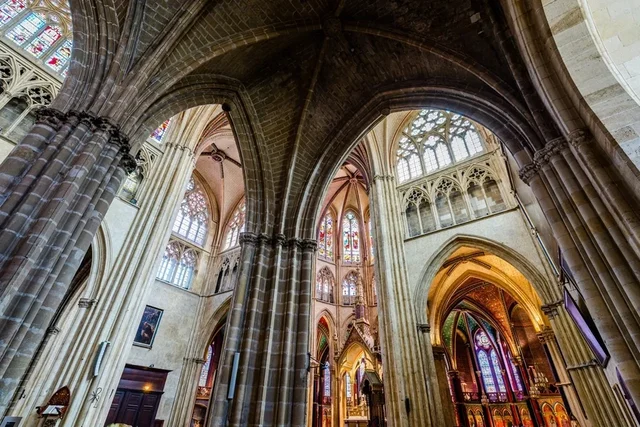
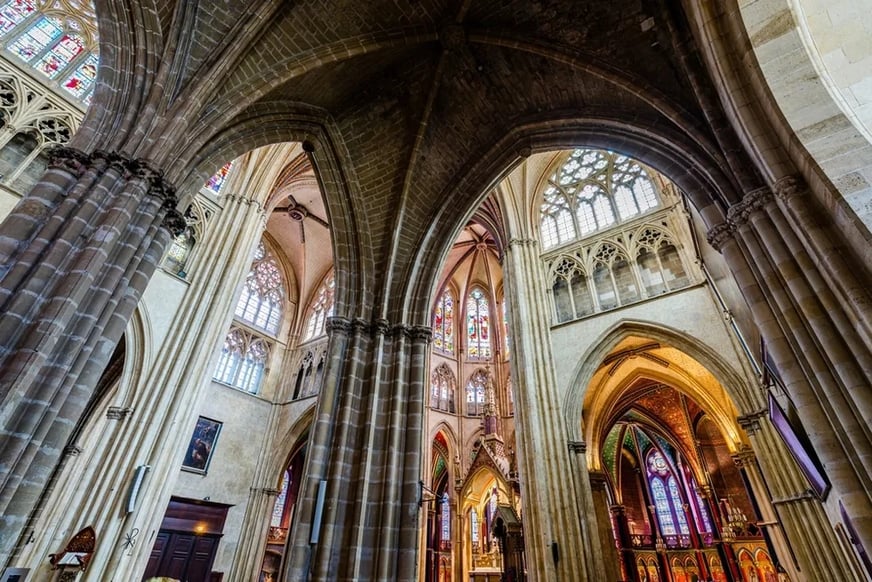
Vieux Bayonne, the old town, is inside the ramparts, on the left bank of the Nive. The early-13th-century Cathédrale Ste-Marie (www.cathedrale-de-bayonne.fr; tel. 05-59-59-17-82) dominates this part of town on rue d’Espagne and rue des Gouverneurs. The spiny 19th-century steeples are the best-known landmarks in Bayonne. The cathedral is worth 30 min. of your time and is a good retreat on a hot day. It was begun in 1258 when Bayonne was under English rule; it fell to the French in 1451. Don’t miss the gorgeous 14th-century cloisters. They’re like a secret garden from the Middle Ages. The cathedral is open Monday to Saturday 8am to 7pm (Sunday until 8pm); admission is free.
- Tour
Atelier de Chocolat
Bayonne’s chocolate tradition began with the Jewish community that fled here from the Spanish Inquisition. Come to this always-popular place for an insight into history and ingredients for one of the world’s most sought-after confections, followed, of course, by a tasting. Expect to…Around Town
- Park
Jardin Botanique
After stocking up on information and maps at the tourist office, wander through these lovely Japanese-style gardens next door.Around Town - Museum
Musée Basque
You don’t have to spend long in the Basque region to realize how proud the locals are of their culture— and quite rightly so. This is the place to find out more about the origins of the region’s distinctive architecture, music, textiles, and local crafts. It’s also had major internal…Around Town - Museum
Musée Bonnat-Helleu
The city’s modern art museum has been closed for renovations since 2011 and is due to open in 2025 with more than double the current floor space—and poised to transform the art scene in the city.Around Town - Museum
Plaine d’Ansot et Musée d’Histoire Naturelle
Set in a conservation area just outside of the city, this is a rare example of a museum that is located in the heart of a protected area. You can head off along the walking and bike paths, all laid out around lakes, open spaces and rivers over 89 hectares (220 acres) of parkland. The…Around Town
Bayonne Shopping
Most of Bayonne’s specialty shops and boutiques lie inside the ramparts of the old town, Grand Bayonne. The pedestrian streets of rue Port Neuf (aptly nicknamed the “street of chocolate shops”), rue Victor-Hugo, and rue de la Salié are major shopping destinations. For antiques, walk along the rue des Faures and the edges of place Montaut, behind the cathedral. Most of the modern shops and French chain stores are on rue Thiers and quai de la Nive, outside the old town. Visit the Maison Jean Vier shop, carrefour Cinq Cantons (www.jean-vier.com; tel. 05-59-51-33-24), to get your Basque bathroom, kitchen, and bed linens. Do not miss a visit to Cazenave, 19 rue Port Neuf (www.chocolats-bayonne-cazenave.fr; tel. 05-59-59-03-16), pretty much the only place left that still works directly with cacao in its raw form and specializes in turning it into chocolats de Bayonne. Stop in the tearoom here for a warm chocolate mousse.
The accessories of one Basque tradition have become something of a fine art. In olden days, the makhila was used as a walking stick, a cudgel, or—when equipped with a hidden blade—a knife. Today carved makhilas are sold as collectors’ items and souvenirs. For safety’s sake, they almost never come with a blade. One of the best outlets in town is Makilas-Leoncini, 37 rue Vieille Boucherie (tel. 05-59-59-18-20). Another famous product of the Basque country is jambon de Bayonne, cured hams, which taste best shaved into paper-thin slices and consumed with one of the region’s heady red wines. An establishment that prepares and sells these hams is Saloir et Séchoire à Jambon Pierre Ibaïalde, 41 rue des Cordeliers (www.pierre-ibaialde.com; tel. 05-59-25-65-30), where they are sold either whole or in thin slices. Also available is an impressive roster of sausages, pâtés, and terrines.
Finally, you'll want to stroll through Les Halles, quai Dominque Roquebert (pictured above, tel.05-59-46-60-60), Bayonne’s covered market overlooking the Nive River. Here you can get a flavor of Basque produce from its 21 traders and indoor and outdoor cafes. Unlike many French markets, this one is open daily.
Bayonne Nightlife
Nightlife centers on the neighborhood known as Petit Bayonne, the town’s historic core. Rue des Tonneliers, rue Pannecau, and rue des Cordeliers are the liveliest areas after dark. Le Caveau des Augustin, 7 rue des Augustins, is a good choice for live music and jam sessions, and its vaulted stone cellars allow excellent acoustics (www.lecaveaudesaugustins.com; tel. 05-59-25-69-76). Good choice of tapas and wine is also on offer. For an equally interesting taste of local color, with slightly more traditional music, head to Le Cabaret La Luna Negra, also on rue des Augustins (www.lunanegra.fr; tel. 05-59-25-78-05). The 6€-to-10€ cover charge includes cabaret, jazz, or blues performances and popular French songs.