
Strolling Along Unter den Linden and the Kurfürstendamm. You can't know Berlin until you've strolled the Ku'Damm, that glossy, store-lined showcase of Western capitalism, or Unter den Linden, the Prussian centerpiece of the Berlin-Mitte district.Kneipen Crawling. This is the…
CanadaStock / Shutterstock
Things To Do in Berlin
Jump to:
Bookstore
Available as paperback
and as e-book.
Berlin Attractions
It's now been over 35 years since the fall of the Berlin Wall. While Berliners won’t forget this monstrous concrete symbol of political division and paranoia, the majority of it was torn down in the early 1990s. But there are still a few places to see remnants of the Wall.
The East Side Gallery (U-Bahn: Warschauerstrasse Strasse), a 2km ( 3/4-mile) section of the Wall along the Spree River southeast of Alexanderplatz, is the longest and best preserved section left standing. It was painted by an international group of artists in the 1990s and is considered an outdoor art gallery. The Wall is still a political flashpoint for many Berliners. Controversy recently erupted when the city tried to restore some of the sections of the East Side Gallery that that had been damaged by weather and graffiti, and again when a real-estate developer removed two sections and began constructing an incongruous luxury apartment building behind the old Wall. The Berlin Wall Memorial/Berliner Mauer Dokumentationszentrum (Bernauer Strasse 111; www.berliner-mauer-dokumentationszentrum.de; Tues–Sat 10am–6pm, Nov–Mar to 5pm; free admission; U-Bahn: Bernauer Strasse), created by the government as a memorial center, is a 230-ft.-long (70m) reconstructed stretch of the Wall at Bernauer Strasse and Ackerstrasse. The memorial consists of two mirrorlike stainless-steel walls that include fragments of the original wall, and a memorial building with photos of the area pre-1989 and eyewitness testimonies of what it was like when the wall stood. Part of the memorial is the Chapel of Reconciliation (Kapelle der Versöhnung), a contemporary building set on the site of a church that was blown up in 1985 in order to widen the border strip at this spot.
Architecture Beyond the Berlin's Main Sights
Just north of the Tiergarten is the Hansaviertel, or Hansa Quarter (U-Bahn: Hansaplatz). The architecture of this area was an outgrowth of the great INTERBAU 1957 (International Builder's Exhibition), when architects from 22 nations designed buildings for the totally destroyed quarter. The diversity here is exhilarating: Fifty architects took part, including Gropius, Niemeyer, and Duttman.
Le Corbusier also submitted a design for an apartment house for INTERBAU 1957, but the structure was so gigantic that it had to be built near the Olympic Stadium (U-Bahn: Olympia-Stadion). The Corbusier House, called Strahlende Stadt (radiant city), is one of Europe's largest housing complexes -- its 530 apartments can house up to 1,400 people. Typical of the architect's style, this tremendous building rests on stilts.
The architects of rebuilt Berlin were also encouraged to design centers for the performing arts. One of the most controversial projects was the Kongresshalle (Congress Hall), on John-Foster-Dulles-Allee, in the Tiergarten, just west of Brandenburg Gate (S-Bahn: Unter den Linden). This building was conceived as the American contribution to INTERBAU 1957. The reinforced concrete structure has an 18m-high (60-ft.) vaulted ceiling that reminds some viewers of an oversize flying saucer. Berliners immediately christened it the "Pregnant Oyster." The building today is used mainly for conventions. More successful was the Philharmonie, new home of the Berlin Philharmonic, at Matthäikirchstrasse, and its adjacent chamber music hall, next to the Tiergarten. The tentlike roof arches up in a bold curve, and the gold-colored facade glitters.
One of the city's tallest buildings sits in the midst of the city's busiest area. The 22-story Europa Center, just across the plaza from the Kaiser Wilhelm Memorial Church at Breitscheidplatz (U-Bahn: Kurfürstendamm), is the largest self-contained shopping center and entertainment complex in Europe. This town-within-a-town opened in 1965 on the site of the legendary Romanisches Café, once a gathering place for actors, writers, and artists in the flamboyant 1920s. Berliners dubbed it "Pepper's Manhattan," after its owner, K. H. Pepper. In addition to three levels of shops, restaurants, nightclubs, bars, and cinemas, it contains dozens of offices, a parking garage, and an observation roof. At the Tauentzienstrasse entrance, you can find two pieces of the former Berlin Wall.
About Berlin's Sightseeing Pass
The CityTourCard gives you free entry to more than 50 museums in Berlin, a free trip up the Fernsehturm (Television Tower), and reduced fare on BVG tours. The card is sold at all BVG and S-Bahn (urban rail) ticket counters and at some 200 hotels, and it's also available from automatic vending machines run by the BVG. Ticket holders may take children ages 5 and younger free. The cost is 22.10€ for 48 hours (shorter and longer cards are available, along with those that include Potsdam) For more information, visit www.citytourcard.com.
The Marker That Identifies Hitler's Bunker
The notorious bunker of the Third Reich was marked publicly in 2006. The Führer Bunker, as it is called, was where Hitler staged his last stand, committing suicide on April 30, 1945, as Soviet troops encircled the bunker. Stalin had issued orders to bring Hitler to Moscow alive. "History can be good or bad, but even if it's about a devil, people must be informed of history," said former SS Staff Sgt. Rochus Misch, a Hitler bodyguard who lived in the bunker with him and attended the unveiling of the marker in June 2006.
For decades, Berlin officials refused to mark the site, fearing it would become a place of pilgrimage for neo-Nazis. Misch dispelled the widely circulated myth that the bunker had 12 floors and an underground highway that Hitler used to cruise beneath the city. The bunker was constructed in 1935 and was fortified by walls 4.2m (14 ft.) thick. The bunker is not intact under the parking lot that covers it. Soviet soldiers blew up most of the bunker in the 1980s, and the foundation and walls were filled with rubble. The marker bears graphics, photographs, and a chronology of events in both German and English. The location of the bunker is at the corner of In den Ministergarten and Gertrude Kolmar Strasse near the Potsdamer Platz.

41 Results
- Museum
Alte Nationalgalerie
Perched high on its base and looking like an ancient Greek temple, this museum is known for its collection of 19th-century German and French and European Impressionists, including Pissarro, Cezanne, Delacroix, Degas and Van Gogh. The museum also has a large collection of the works of… - Museum
Altes Museum
Karl Friedrich Schinkel, the city's greatest architect, designed this structure, which resembles a Greek Corinthian temple, in 1822. On its main floor is the Antikensammlung (Museum of Antiquities), a collection of Greek and Roman antique decorative art. Some of the finest Greek… - Zoo/Aquarium
AquaDom & Sea Life Berlin
AquaDom & Sea Life Berlin is hardly the greatest aquarium in Europe, but it has some unique features. The tanks begin on the River Spree and then flow into the Wannsee, a Berlin lake, before heading to the ocean. Thus, you go from freshwater to saltwater. Along the way you meet… - Historic Site
Bebelplatz
Best visited at night, as it is more evocative then, Bebelplatz is a square along Unter den Linden. Located here is an eloquent memorial to the notorious Nazi book burning that took place on the night of May 10, 1933. Through a window set in the pavement, you can look below to a…In Berlin-Mitte
- Historic Site
Berlin Wall Memorial
The government created a memorial center and reconstructed a partial stretch of the Wall at Bernauer Strasse and Ackerstrasse, at a cost of over a million euros. The 70m-long (230-ft.) memorial consists of two walls that include some of the fragments of the original wall (those… - Religious Site
Berliner Dom
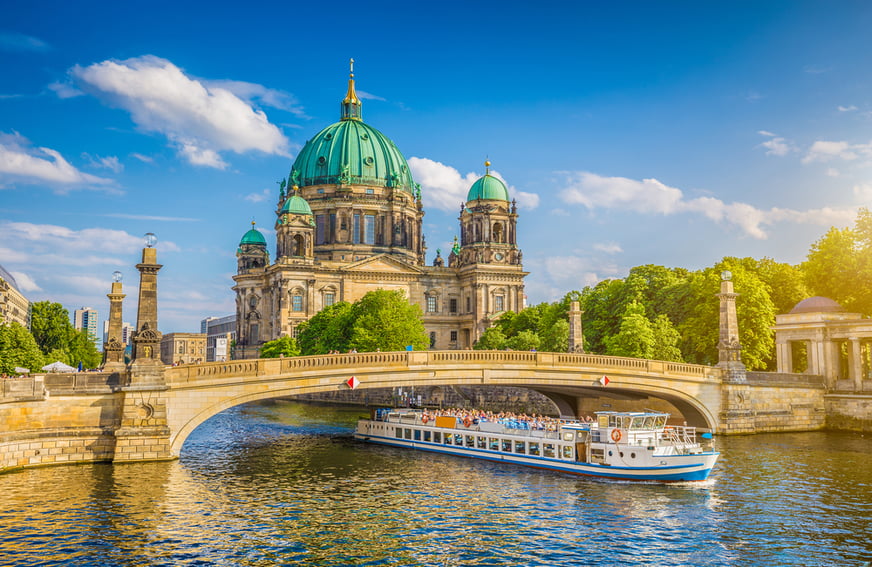
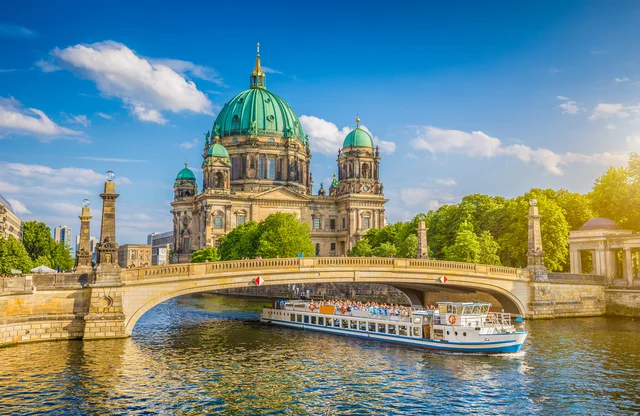
The cathedral of Berlin took some devastating hits in the British bombardments of 1940, but it was restored to some of its former glory in the postwar decades, reopening in 1993. Unlike many European capitals where the cathedral is among the top two or three attractions, here you can…In Berlin-Mitte - The Performing Arts
Berliner Ensemble
Perhaps the most famous theater in Berlin, the Berliner Ensemble was founded by the late playwright Bertolt Brecht. His wife, Helene Weigel, played an important role in the theater’s founding and was the ensemble’s longtime director. Works by Brecht and other playwrights are… - Museum
Bode-Museum
The Bode-Museum, anchoring the north end of Museum Island, reopened its doors in 2006 after undergoing a massive renovation that turned a rather dark and dull building into a museum showplace. Here you’ll find a rich collection of German, French, Dutch, and Italian sculpture (marble,… - Park/Garden
Botanical Garden
The huge Botanischer Garten has vast collections of European and exotic plants. The big palm house is one of the largest in the world. A large arboretum is here, as well as several special collections such as a garden for blind visitors and another with water plants. - Landmark
Brandenburger Tor (Brandenburg Gate)
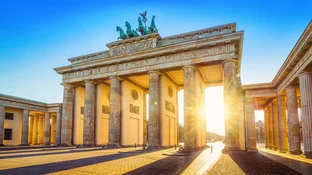
Berlin’s most famous and potent symbol is this neoclassical triumphal arch topped by the famous Quadriga, a four-horse copper chariot drawn by the goddess Victoria. Since its completion in 1791 it’s seen many of the major turning points of German history, from the revolutions of 1848… - Museum
DDR Museum
For a hands-on experience of daily life in the Deutsche Demokratische Republik (DDR, usually called GDR—German Democratic Republic—in English), nothing beats this museum by the River Spree. Laid out like a prefab housing estate, 17 themed rooms transport you back to the former East… - Museum
Deutsche Kinemathek Museum für Film und Fernsehen (German Film and Television Museum)
Anyone who has an interest in German film or film in general will find lots of fascinating exhibits in this museum. The entire history of German cinema is documented in rare film clips from the silent era up to the present. One wing is devoted to the legendary Marlene Dietrich, a… - The Performing Arts
Deutsche Staatsoper (German State Opera)
The German State Opera performs in the Staatsoper Unter den Linden. This was for years the showcase of the opera scene of East Germany. Originally constructed in 1743 and destroyed in World War II, the house was rebuilt in the 1950s, reproducing as closely as possible the original… - Museum
Deutsches Historisches Museum (German History Museum)
From the Neanderthals to the Nazis and beyond, the entire saga of German history is presented in this museum housed in the old Zeughaus (Armory). Like many German museums, this one is exhaustive and can be exhausting because it attempts to cover 2,000 years of German history in… East Side Gallery
The East Side Gallery, a 1.2km ( 3/4-mile) section of the wall along the Spree River southeast of Alexanderplatz, is the longest and best preserved section left standing. It was painted by artists in the 1990s and the feel is more like an outdoor art gallery.- Landmark
Fernsehturm (Television Tower)
You can’t miss this weird-looking television tower built by the Communists back in 1968 because it’s the tallest structure in Europe (368m/1,208 ft.) and visible from almost everywhere in Berlin. Berliners call it “the speared onion” because of its shape, or the “Pope’s Revenge”… - Museum
Gemäldegalerie (Painting Gallery)
The first thing you need to know about the Gemäldegalerie is that it’s huge. Seriously: don’t come here unless you’re ready to spend at least two hours wandering through a breathtaking collection of medieval and Renaissance art spanning six centuries and nearly 2 kilometers. You’ll… - Landmark
Gendarmenmarkt
Twin churches inspired by Rome’s Piazza del Popolo flank this monumentally graceful baroque square—the most beautiful architectural ensemble in Berlin. Looking at the square today, it’s hard to imagine that at the end of World War II, the Gendarmenmarkt had been reduced to a pile of… - Historic Site
Haus der Wannsee-Konferenz
This was the site of one of the most notorious conferences in history: a meeting of Nazi bureaucrats and SS officials to plan the annihilation of European Jewry. The minutes of the Wannsee Conference were kept by Adolf Eichmann, the sallow-faced SS functionary who later mapped out… - Historic Site
Jewish War Memorial
At the corner of Lewetzov and Jagow streets is a Jewish War Memorial to the many Berliners who were deported -- ??mostly to their deaths -- ??from 1941 until the end of the war in 1945. The memorial is a life-size sculpture of a freight car with victims being dragged into it. Behind… - Cemetery
Jüdischer Friedhof
This famous Jewish cemetery was opened in 1880. It contains 110,000 graves of Jewish residents of Berlin. Many distinguished artists, musicians, scientists, and religious leaders are buried here. Some tombs are of Jewish soldiers who fought for Germany in World War I. A memorial… - Museum
Jüdisches Museum (Jewish Museum)
Opened in 2001, Berlin’s Jewish Museum is as renowned for its striking contemporary architecture as it is for its content. The building's zigzagging shape, the brainchild of American architect Daniel Liebeskind, resembles a lightning bolt or stretched-out Star of David. Inside, it’s… - Landmark
Kaiser-Wilhelm Gedächtniskirche (Kaiser Wilhelm Memorial Church)
One of Berlin’s most famous landmarks, the Gedächtniskirche (Memorial Church) is a ponderous neo-Romanesque structure from the late 19th century. Built to commemorate the 1871 establishment of the German Empire, the church was blasted by a bomb in World War II, and its ruined shell… - Museum
Mauermuseum Haus am Checkpoint Charlie (Berlin Wall Museum at Checkpoint Charlie)
Once Berlin’s most famous Wall crossing, Checkpoint Charlie has devolved into a beyond-tacky tourist draw where (often inaccurately) costumed guards pose for photos and stamp fake GDR passports. Next to it, this museum documents the Wall’s history from its construction in 1961 to its… - Landmark
Memorial to the Murdered Jews of Europe
Although it’s colloquially referred to as the Holocaust Memorial, you might call it “concrete memory.” A few hundred yards from Checkpoint Charlie, the Memorial to the Murdered Jews of Europe (Stiftung Denkmal für die ermordeten Juden Europas) now occupies a vast site in the center… - Museum
Neue Nationalgalerie (New National Gallery)
A monumentally modern building in the Kulturforum complex, the New National Gallery was designed in 1968 by famed German architect Ludwig Mies van der Rohe. The museum, an enormous expanse of glass windows and simple symmetry, contains a small but impressive collection of… - Religious Site
Neue Synagoge Berlin-Centrum Judaicum
Originally consecrated on Rosh Hashana in 1866 and capped with what's remembered as one of the most spectacular domes in Berlin, this synagogue was vandalized in 1938 during Kristallnacht, torched by Berliners in 1944, blasted by Allied bombs in 1945, and finally, after about a… - Museum
Neues Museum
There’s nothing new about the “New Museum,” a Neoclassical building built between 1843 and 1855, except that it’s undergone a complete renovation/rebuilding by English architect David Chipperfield and reopened to great acclaim in 2009 after being closed for over 60 years. The new New… - Sports Venue
Olympiastadion
Built in 1936 by Werner March for the XI Summer Olympic Games, the Olympiastadion, which seats 100,000 people, was the first in Europe to supply all the facilities necessary for modern sports. Hitler expected to see his "master race" run off with all the medals in the 1936 Olympics,… - Museum
Pergamon Museum
The Pergamon is one of the world's greatest museums, so do try to allot several hours for a visit. If that's not possible, go directly to the Department of Greek and Roman Antiquities, housed in the north and east wings of the museum, and enter the central hall to see the Pergamon… - Landmark
Reichstag (Parliament)
The Reichstag is the seat of the German Parliament. Built in a pompous High-Renaissance style between 1884 and 1894, the building was partially destroyed by a fire in 1933 that probably was set by the Nazis, who, blaming the fire on the Communists, used the incident as an opportunity… - The Performing Arts
Schaubühne am Lehniner Platz
This is the most important German-language theater in the country, with a flexible performance space that allows for up to three stages to function at any one time. The building was constructed in 1981 to a design originally created by the Modernist Berlin architect Erich Mendelsohn. - Historic Site
Schloss Charlottenburg (Charlottenburg Palace)
One of the grandest reminders of Berlin’s Prussian past, Schloss Charlottenburg was inaugurated as a summer retreat for Sophie Charlotte, wife of King Friedrich I, in 1699 and expanded to its present form in 1790. As with so many other Berlin historical sites, what you’ll visit is… - Historic Site
Schloss Schönhausen
One of Germany's most historic palaces showcases years of Prussian history. In the Berlin-Pankow district, the Schloss dates from the 1660s, when it was the residence of Sophie Dorothea zu Dohna. Queen Elisabeth Christine, wife of Frederick the Great, used the palace as a summer… - Landmark
Schöneberg Rathaus
This former political and administrative center of West Berlin is of special interest to Americans. It was the scene of John F. Kennedy's memorable (if grammatically shaky) "Ich bin ein Berliner" speech on June 26, 1963. Berliners have renamed the square around the building the… - Historic Site
Spandau Zitadelle
This citadel stands at the confluence of the Spree and Havel rivers in northwestern Berlin. The Hohenzollern electors of Brandenburg used it as a summer residence, and, in time, it became the chief military center of Prussia. The citadel has been besieged by everybody from the French… - Religious Site
St. Mary’s Church
At the foot of the Fernsehturm stands Berlin's second--oldest church, the brick Gothic Marienkirche, dating from the 15th century. Inside you can see the painting Der Totentanz (The Dance of Death), painted in 1475 and then discovered in 1860 beneath a layer of whitewash in the…In Berlin-Mitte - The Performing Arts
Theater des Westens
Joesphine Baker and Marlene Dietrich both performed at this glorious Art Nouveau building, which was designed by German architect Bernhard Sehring and constructed in 1986. The theater now specializes in plays, musical comedies, and the German equivalent of Broadway extravaganzas. - Park/Garden
Tiergarten
Berlin’s largest urban park, the popular Tiergarten (literally, “animal garden”) is a favorite spot for Berliners to stroll and enjoy a number of attractions. (Tiergarten also is the name of Berlin’s smallest neighborhood.) With lawns, canals, trees, and miles of meandering paths,… - Museum
Topography of Terror
Located on the grounds of Hitler’s SS and the Gestapo Headquarters, this modern concrete and glass building provides historical information on National Socialism and its crimes against humanity. From this site between 1933 and 1945, the Nazi regime orchestrated the genocide of… - Zoo/Aquarium
Zoologischer Garten Berlin
Zoologischer Garten Berlin, founded in 1844, is Germany'??s oldest zoo. It occupies almost the entire southwest corner of the Tiergarten. Until World War II, the zoo boasted thousands of animals -- ??many were familiar to Berliners by nickname. By the end of 1945, however, only 91…
More About Berlin Attractions
Berlin Shopping
Berlin is a great shopping city and you can find anything you want. But keep in mind that you’ll pay less for goods made in Germany and the European Union than for goods imported to Germany from the United States. German porcelain, china, crystal, and cutlery, for example, are prized for their quality, and their prices are lower here than in the United States.
The main shopping boulevard in the western part of Berlin is the famous Ku’Damm (short for Kurfürstendamm). Quality stores, in addition to stores carrying souvenirs and T-shirts, line the street. The specialty stores on the side streets around the Ku’Damm, especially between Breitscheidplatz and Olivaer Platz, are good shopping grounds.
Another good shopping street in western Berlin, close to Ku’Damm, is Tauentzienstrasse and its intersecting streets: Marburger Strasse, Ranke Strasse, and Nürnberger Strasse. Europa Center (Tauentzienstrasse), Berlin’s first shopping mall, dating back to the 1960s, contains dozens of shops joined by restaurants and cafes. Neues Kranzler Eck, an upscale, outdoor retail “passage” created right on the Ku’Damm at Joachimstaler Strasse, is newer and trendier.
The Uhland-Passage, at Uhlandstrasse 170, has some of the best boutiques and big-name stores in Berlin. Shoppers interested in quality at any price head to Kempinski Plaza (Uhlandstrasse 181-183), home to some of the most exclusive boutiques in the city, including haute-couture women’s clothing. You find trendier boutiques along Bleibtreustrasse.
The Potsdamer Platz Arkaden (U-/S-Bahn: Potsdamer Platz), one of the most comprehensive shopping malls in Berlin, contains over 100 shops scattered over three levels. Unter den Linden is emphatically not a shopping street, but Friedrichstrasse is. This was the main shopping street in eastern Berlin (now Mitte) before World War II and before the Wall. It has regained its former prominence and is decidedly upscale.
Berlin Flea Markets
A flea market in Germany is called a Trödelmarkt or a Flohmarkt. There are over 50 of them scattered around the city, some dedicated to antiques and books, others to clothes, kitsch, and whatnots. The Flohmarkt Boxhagen Platz (Boxhagen Platz; S-Bahn: Frankfurter Tor), is a favorite Sundayshop-and-stroll spot for Berliners, who come to find pieces of kitsch, nostalgia, sort-of antiques, and used clothing. The market is open every Sunday from 10am to 6pm. In Mitte, behind the Bode Museum on Museum Island, the Antik- und Buchmarkt am Bode Museum (Kupfergraben 1; S-Bahn: Friedrichstrasse), is open Saturday and Sunday from 10am to 5pm and sells a mishmash of books, antiques and collectibles. Another market to check out if you’re in Mitte on Sunday between 10am and 4pm is Flohmarkt am Arkonaplatz (Arkonaplatz; U-Bahn: Bernauer Strasse), where you can browse for clothing and bric-a-brac. If nothing catches your fancy, just take a seat at one of the many cafes around Arkonaplatz and enjoy the scene in one of Berlin’s hippest neighborhoods. For the locations of other Berlin flea markets, visit www.visitberlin.de.
19 Results
- Souvenirs
Ach Berlin
Berlin rules—in a cheeky way—at this Gendarmenmarkt shop. Magnets, T-shirts printed with city landmarks, USB sticks shaped like the Fernsehturm, retro bags, and skyline keyrings, edibles—you’ll find plenty of gift inspiration in this fun souvenir store. - Souvenirs
Ampelmann
When the traffic lights in the old DDR turned green, Ampelmann was the “walk” figure you saw—a little man in a hurry (perhaps to escape from the Stasi). This Hackesche Höfe store pays tribute to this much-loved symbol of East Germany by turning him into a design logo. He’s emblazoned… Bauhaus Archive
The shop at the landmark Bauhaus Archive Museum of Design offers an intriguing variety of well-designed items in contemporary styles, some designed by artists of the Bauhaus movement. More than 250 items, which incorporate not only design, but also utility, are available for the home…- Food
Bonbonmacherei
You can’t help but love an old-fashioned candy store like this one in Mitte, where the sweets (bonbons, in German) are still made by hand in small btches. Sweet treats, from sour limes to the famous leaf-shaped Maiblätter (candies shaped by tiny leaves and flavored with woodruff)… - Fashion
Buckles & Belts
It’s a cinch to cinch your waist—just visit this glam store in Mitte where buckles and Italian leather belts have been turned into an art form. The range of buckles is staggering, and stretches from one-of-a-kind artists’ creations to those inspired by nature motifs. - Fashion
Claudia Skoda
You’ll find the latest collection of Berlin designer Claudia Skoda at this chic boutique in Mitte. From chunky sweaters to snug-fitting dresses, her colorful knitwear is elegant, feminine, and modern. - Fashion
EASTBERLIN
Durable yet eye-catching urban basics for men and women, from hand-printed hoodies to T-shirts and bags in bold colors and street-cool designs, are what this store in Mitte is all about. Erzgebirgshaus
For those who never want Christman to end, this traditional store offers a year-round selection of hand-carved wooden decorations from the Erzgebirge, a region in Saxony. Pick up nutcrackers, incense-smoking carved figures, and candelabras.- Department store
Galeries Lafayette
Paris in Berlin is found at this modern department store, right off Friedrichstrasse. You’ll find women’s fashion, beauty products, children’s clothes, and a gourmet food department. - Fashion
Glanzstücke
This glittery boutique in Mitte’s Hackesche Höfe carries vintage costume jewelry, evening bags, feather boas and more. - Fashion
Hut Up
Felt lovers unite! Or at least check out the selection of distinctive hats, bags, dresses, and baby booties made from raw wool using felting and blocking techniques. Everything’s one-of-a-kind; great German-made gifts. - China & Glassware
KPM (Königliche Porzellan-Manufaktur)
For 250 years, KPM has been producing fine porcelain (called “white gold”), including pieces that are hand-painted and hand-decorated with patterns based on traditional 18th- and 19th-century KPM designs. There are sales outlets throughout Berlin, including at KaDeWe department store… - Department store
Kaufhaus des Westens (KaDeWe)
This huge department store was established nearly a century ago and contains six floors of upscale merchandise, including men’s and women’s fashion, accessories, linens, housewares and a sixth-floor food department with sit-down counters and the tastiest herring sandwiches in Berlin. - Fashion
Koko von Knebel
This fashion boutique in Charlottenburg is not for you—unless you happen to walk on all fours, bark, and eat from a dish on the floor. No, it’s for your pampered pooch, the one you insist on dressing up in clothes s/he hates but you find adorable. Designer Udo Waltz has created a… - Gifts
Kwik Shop
The sharp-eyed owners of this quirky kiosk in Prenzlauer Berg have searched the world for the oddities you just can’t live without and the unusual gift that you want to give to a loved one. Breton mussel baskets, brightly colored Wellington boots, dachshund-shaped doorstops—you get… - Food
Königsberger Marzipan
At this family-run store in Charlottenbrg marzipan is made the old-fashioned way and then lovingly hand-wrapped. - Fashion
Made in Berlin
Trawl through the racks at this fun and fashionable vintage shop in Mitte for high-quality secondhand clothes, shoes, and accessories (like oversize 1960s sunglasses the size of computer screens). Shop during Wednesday’s Happy Hour from 10am to 3pm and you’ll get a 20 percent… Stilwerk
This temple of design in Charlottenburg is spread out over four floors and carries high-end brands like Bang & Olufsen, Mösch, and Niessing. Whether you’re looking for understated jewelry or ultra-sleek home furnishings, this is the place.- Fashion
Waahnsinn
What would you expect to find in a store whose name means “crazy” or “nonsense”? A bit of everything with an emphasis on fun, right? Come here to search out vintage and new fashion, and kitschy gifts like miniature Fernsehturms, beaded ball gowns, retro lamps, and authentic…
Berlin Nightlife
In Berlin, “nightlife” runs round-the-clock, and there’s plenty to do at any hour. No matter what your tastes and interests, you will find something to do when the sun goes down. The caliber and variety of of Berlin’s performing arts scene is extraordinary, and the club scene is—and has been since the 1920s—legendary.
The monthly English-language newspaper, “The ExBerliner” (www.exberliner.com), provides a witty, informative guide to the city’s culture and entertainment. This magazine is available at newsstands and tourist offices. Tourist offices also distribute a free magazine called “New Berlin” providing tips and recommendations to visitors. The German-language “Berlin Programm” (www.berlin-programm.de) is available at newsstands. The most detailed listings are found in “zitty” (www.zitty.de), a biweekly publication in German.
You can buy tickets at the venue’s box office (Kasse). Tickets can usually be purchased right up to curtain time. Tickets for more than 100 venues, including opera, classical concerts, musicals, and cabarets are available at Hekticket (www.hekticket.de), with outlets in the Deutsche Bank foyer at Hardenbergstrasse 29 tel. 030/230-9930; U-Bahn: Zoologischer Garter) and Karl-Liebknecht-Strasse 12, on the S-Bahn bridge at Alexanderplatz (tel. 030/230-9930; U-/S-Bahn: Alexanderplatz); both are open Monday through Saturday from 10am to 6pm.; the Zoo location is also open Sundays from 2 to 6pm. For some of the larger opera, ballet, and classical-music venues, you can buy tickets online.
Discounted Tickets for Berlin Shows
Unsold, day-of-performance tickets for music, dance, and theater venues throughout Berlin are sold for up to 50 percent off at the BERLIN infostores. A Berlin Welcome Card allows you to buy reduced-price tickets (usually 25 percent off) at several major performing-arts venues, including the opera houses.
Cabaret in Berlin
Very popular among visitors to Berlin is the kind of nightspot depicted in the musical Cabaret, with floor-show patter and acts that make fun of the political and social scene. Cabaret life in between-the-wars Berlin inspired writers such as Christopher Isherwood, among many others. These emporiums of schmaltz have been reborn in the former East Berlin -- though the satire may be a bit less biting than it was during the Weimar Republic. Today's cabaret shows may remind you of Broadway blockbusters, without much of the intimacy of the smoky and trenchant cellar revues of the 1930s.
Cafe Life
At its mid-19th-century zenith, Berlin was famous for its cafes. Max Krell, an editor, once wrote: "Cafes were our homeland. They were the stock exchange of ideas, site of intellectual transactions, futures' market of poetic and artistic glory and defeat." They've changed with the times, but cafes are still going strong in Berlin -- particularly, these days, in what used to be East Berlin. In the heart of the old East German capital is a complex of about 100 bars, shops, and restaurants, called Die Hackenschen Höfe (S-Bahn: Hackescher Markt). This stylish minimall attracts hip counterculture denizens who wander between galleries, boutiques, and fashionable cafes. It has become one of the most prominent places in the city to go drinking.
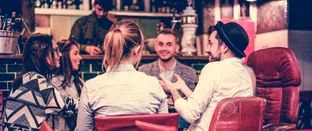
Hanging out at a Kneipe -- A Kneipe is a cozy rendezvous place, a sort of lowbrow pub. Many Berliners have a favorite Kneipe for relaxing after work and visiting with friends, and there are hundreds in Berlin. The following is a more upscale version of a Kneipe known for its history and food.
Gay & Lesbian Berlin
Traditionally, lesbian and gay life centered on the Nollendorfplatz (U-Bahn: Nollendorfplatz), the so-called "Pink Village." There is a history of homosexuality here at the Schwules Museum, Mehringdamm 61 (tel. 030/69599050; www.schwulesmuseum.de). The state-supported Spinnboden Lesbenarchiv & Bibliothek, Anklamerstrasse 38 (tel. 030/4485848; www.spinnboden.de), caters to all sorts of lesbian cultural events. Mann-o-Meter, Bülowstrasse 106 (tel. 030/2168008; www.mann-o-meter.de), is a gay information center.
Today, Motzstrasse is the location of many gay and lesbian bars, including Tom's and Prinzknecht.
In the latter half of June, the Lesbisch-Schwules Stadtfest (Lesbian and Gay Men's Street Fair) takes place at Nollendorfplatz. This is topped in size, though not in exuberance, the last week in June by the Christopher Street Day parade, when 200,000 people congregate to have fun and drop inhibitions.
22 Results
- Jazz
A Trane
This small and smoky jazz house is an excellent choice for beginning or ending an evening of barhopping in Charlottenburg. It features topname and top-talent musicians from all over the world. It’s open daily at 9pm; music begins around 10pm. - The Performing Arts
Berliner Philharmoniker (Berlin Philharmonic)
The Berlin Philharmonic is one of the world’s premier orchestras and performs under the baton of Sir Simon Rattle in the acoustically superb Philharmonie in the Kulturforum. - Coffee Houses
Café Aedes
Trendy, convivial, and very hip, Café Sedes is a place to relax with a cup of coffee and a dessert, or enjoy a simple meal that’s not too expensive. - Coffee Houses
Café Einstein
This legendary Viennese-style cafe in an old townhouse serves mellow house-roasted Kaffee and freshly made Kuchen (cakes) as well as breakfast, lunch and dinner. There is another branch at Unter den Linden 42. - Coffee Houses
Café Silberstein
This one of the best places to see the “new” eastern Berlin in all its up-to-the-nanosecond trendiness. The cafe is housed in a long, tall, narrow room with original 1920s wall paintings and modern furniture. On the menu, you find sushi, salads, miso soup with noodles, and an all-day… - Bars & Pubs
Club der Visionäre
Relaxed and effortlessly cool, this canal-side shack in Kreuzberg is the place to be on balmy summer evenings. When the weather’s warm, young hipsters laze on the deck area, gulp cold beer, and drift away to chill-out music. - Dance Clubs
Clärchens Ballhaus
A landmark in old East Berlin, Clärchens Dance Hall opened in 1913 and has reemerged as a fun and fabulous place for all-age ballroom dancing in an atmosphere complete with bow-tied waiters and silver tinsel. There’s salsa, swing, waltz, and tango every night and you can brush up… - Dance Clubs
Delicious Doughnuts
Acid jazz and other delights are available here, but the doughtnuts are long gone. A scarlet-red decor with black-leather booths and a pocket-size dance floor is just part of the allure, along with hot DJs. - The Performing Arts
Deutsche Oper Berlin
This opera company performs in Charlottenburg in one of Germany’s great post-war opera houses, presenting a full repertoire of classic and contemporary operas, recitals, and ballet. - The Performing Arts
Friedrichstadt Palast
For access to talent that includes multilingual comedians and singers, jugglers, acrobats, musicians, plenty of coyly expressed sexuality, and lots of costume changes, consider an evening here. Although showtimes may vary with whatever revue is featured at the time of your visit,… - Beer Gardens
Golgatha
In the heart of Kreuzberg’s Viktoriapark, this leafy beer garden becomes an open-air club after 10pm, with DJs spinning electro, rock, and pop. You can come to dance or just for relaxed drinks on the terrace. Top-notch German brews including the local Kreuzberg Monastery dark beer go… - The Performing Arts
Komische Oper Berlin
The Komische Opera has become one of the most highly regarded theater ensembles in Europe, presenting many contemporary productions of operas, operettas, ballets and musical theater. - The Performing Arts
Konzerthaus Berlin
This splendid neoclassical building on Gendarmenmarkt offers two venues for classical concerts. The Berlin Symphony Orchestra and Deutsches Sinfonie Orchestra both perform in this glittering, pitch-perfect hall. - Gay & Lesbian Bars
Kumpelnest 3000
Gay or straight, you’re welcome here. All that’s asked is that you enjoy a good time in what used to be a brothel. This crowded and chaotic place is really a bar now, but there’s also dancing to disco classics. - Beer Gardens
Prater Garten
This 600-seat beer garden in Prenzlauer Berg is the city’s oldest, dating from 1837, and attracts a wonderfully diverse Berlin crowd. A selection of local beers and hearty meals is available. - Gay & Lesbian Bars
Prinzknecht
It’s large, brick-lined, and mobbed with ordinary guys who just happen to be gay. If you want a place that manages to be both classy and down-to-earth, within walking distance of lots of other gay bars, this is a good choice. - Dance Clubs
SO36
The lines begin to form here about 30 minutes before this witty and unconventional club opens its doors. Its name derives from the postal code for this district in Kreuzberg before World War II. Inside, you’ll find two very large rooms, a stage, an ongoing rush of danceable music,… - Gay & Lesbian Bars
SchwuZ
Hidden behind the conventional-looking facade of the Café Sundström is this basement club where the mostly gay, mostly male, and mostly under 35-year-old crowd comes to dance the night away. - Bars & Pubs
Solar
Arguably the best view of Berlin by night is to be had from this sleek, glass-walled lounge on the 17th floor of a nondescript high-rise in Mitte. Kick back with a drink as the city’s landmarks twinkle below. There’s a fancy fusion restaurant as well, if you want a meal with a view.… - The Performing Arts
Staatsoper Unter den Linden
Berlin’s oldest opera house provides a stage for opera, chamber concerts, recitals, and ballet of remarkable quality. While the house is currently closed for restoration and not set to reopen until 2015, the company performs at the Schiller Theater on Bismarkplatz. - Bars & Pubs
The Liberate
With its glittering chandeliers, tufted banquettes and black-and-gold wallpaper, this over-the-top cocktail bar in the hot new Monbijou Park area evokes Hollywood glamor in the 1950s, and coincidentally serves great cocktails. - The Performing Arts
Wintergarten Varieté
The largest and most nostalgic Berlin cabaret, the Wintergarten offers a variety show every night, with magicians, clowns, jugglers, acrobats, and live music.