Catedral de Santa María

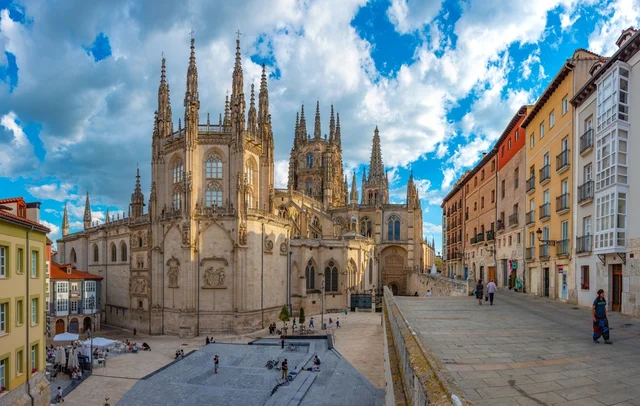
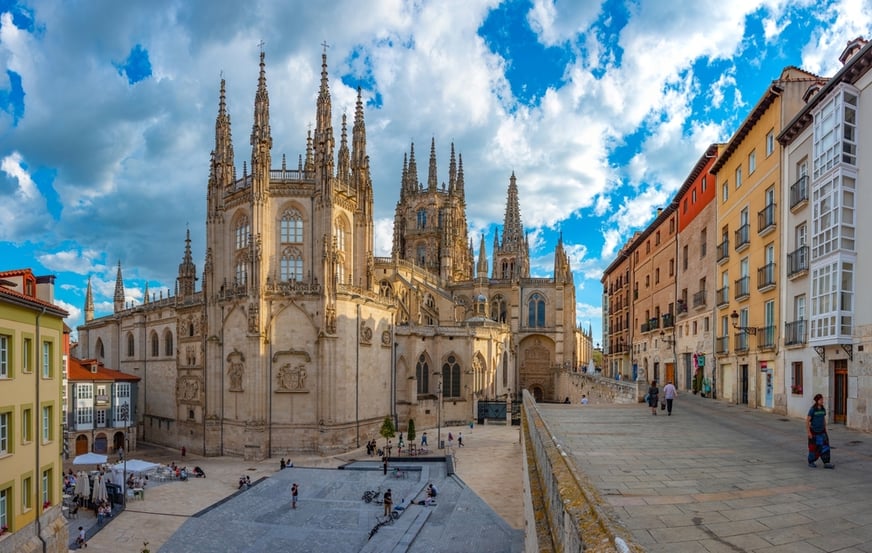
Begun in 1221, this cathedral was one of the most celebrated in Europe and certainly one of the best examples of French Gothic on the Iberian Peninsula. Ornamented 15th-century bell towers flank the three main doorways by Juan de Colonia. The 16th-century Chapel of Condestable, behind the main altar, embodies Flamboyant Gothic architecture and is richly decorated with heraldic emblems, a sculptured filigree doorway, figures of apostles and saints, balconies, and a stained-glass window of an eight-sided star.
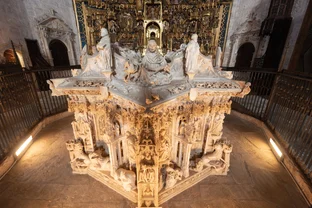
Equally elegant are the two-story 14th-century cloisters, filled with haunting Spanish Gothic sculptures. The cathedral’s tapestries, including a well-known Gobelin, are rich in detail. In one of the chapels you’ll see an old chest linked to the legend of El Cid; it was filled with gravel and used as collateral by the warrior to trick moneylenders. The remains of El Cid himself, together with those of his wife, Doña Ximena, were moved in 1919 to beautifully carved sepulchers in front of the altar and beneath the cathedral’s lantern-like dome. At midday, bright colored lights from the stained glass play down on them.
Begun in 1221, this cathedral was one of the most celebrated in Europe and certainly one of the best examples of French Gothic on the Iberian Peninsula. Ornamented 15th-century bell towers flank the three main doorways by Juan de Colonia. The 16th-century Chapel of Condestable, behind the main altar, embodies Flamboyant Gothic architecture and is richly decorated with heraldic emblems, a sculptured filigree doorway, figures of apostles and saints, balconies, and a stained-glass window of an eight-sided star.
Equally elegant are the two-story 14th-century cloisters, filled with haunting Spanish Gothic sculptures. The cathedral’s tapestries, including a well-known Gobelin, are rich in detail. In one of the chapels you’ll see an old chest linked to the legend of El Cid; it was filled with gravel and used as collateral by the warrior to trick moneylenders. The remains of El Cid himself, together with those of his wife, Doña Ximena, were moved in 1919 to beautifully carved sepulchers in front of the altar and beneath the cathedral’s lantern-like dome. At midday, bright colored lights from the stained glass play down on them.
Details
Bookstore

Available as paperback
and as e-book.