Museo de la Evolución Humana

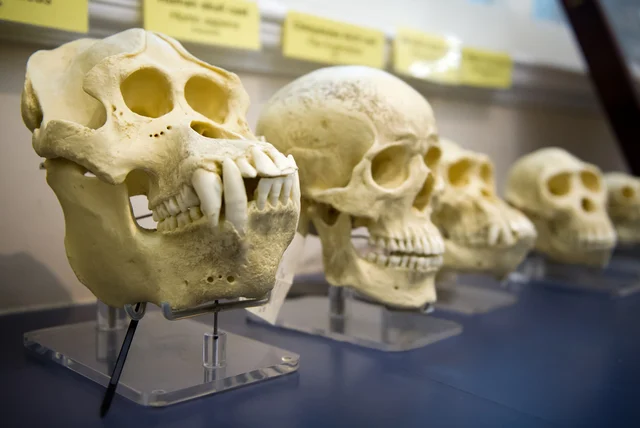
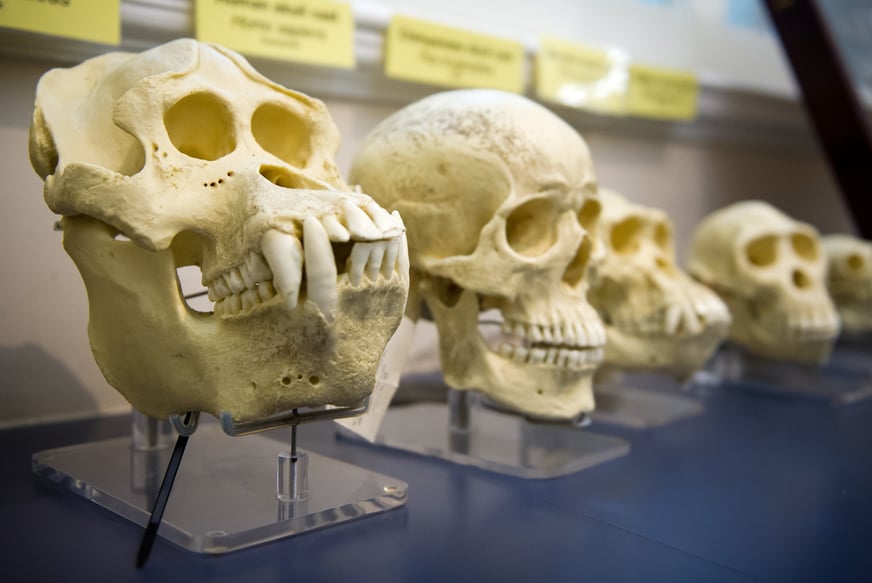
Archaeologists have been excited about the finds in the caves in the nearby Sierra Atapuerca since the early 20th century, but only recently did science prove conclusively that some of the human fossil remains date back 800,000 years. That makes Atapuerca the earliest site of human inhabitation in Europe by a long shot—literally hundreds of thousands of years before the emergence of Homo sapiens or even Homo neanderthalis. What is all the more remarkable is that these limestone caves have been in more or less continuous use ever since. This extraordinary museum chronicles the story of successive waves of hominids in Spain, even explaining what appears to be the oldest use of fire by humans. The subterranean galleries deal with the Atapuerca excavations, while the Evolution gallery dominates the ground floor. The next level up deals with cultural evolution, and the top floor is a platform for admiring the museum’s dramatic and quite beautiful architecture by Juan Navarro Baldeweg.
Archaeologists have been excited about the finds in the caves in the nearby Sierra Atapuerca since the early 20th century, but only recently did science prove conclusively that some of the human fossil remains date back 800,000 years. That makes Atapuerca the earliest site of human inhabitation in Europe by a long shot—literally hundreds of thousands of years before the emergence of Homo sapiens or even Homo neanderthalis. What is all the more remarkable is that these limestone caves have been in more or less continuous use ever since. This extraordinary museum chronicles the story of successive waves of hominids in Spain, even explaining what appears to be the oldest use of fire by humans. The subterranean galleries deal with the Atapuerca excavations, while the Evolution gallery dominates the ground floor. The next level up deals with cultural evolution, and the top floor is a platform for admiring the museum’s dramatic and quite beautiful architecture by Juan Navarro Baldeweg.
Details
Bookstore

Available as paperback
and as e-book.