Els Banys Àrabs

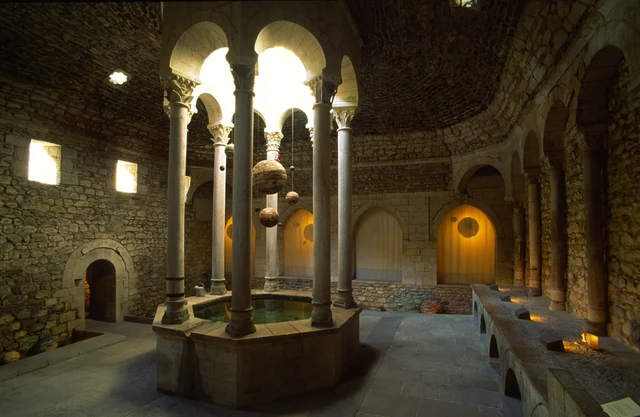
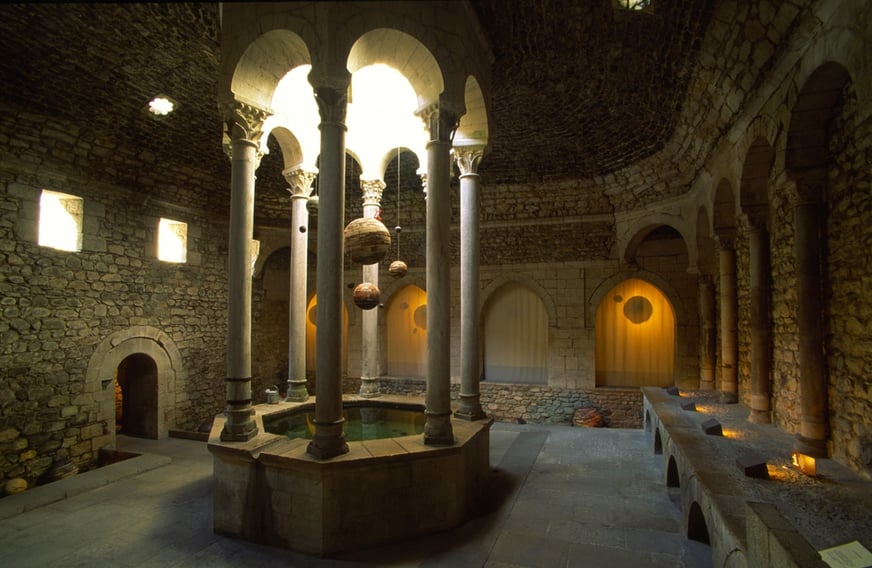
Despite the Arab reference in the name, these baths were built around 1194, almost two centuries after the Muslims were driven from Girona. They are a rare and remarkably well-preserved example of medieval civic architecture following Roman and Arab bathing traditions. The site is not large—in less than 20 minutes you can explore what was the cold bath of the frigidarium, the sauna-like caldarium, and the not-too-hot, not-too-cold tepidarium. A short film shows how it would have looked to medieval bathers. The most impressive area is the apodyterium, or changing room, which features a small octagonal pool surrounded by arches and pillars with delicately carved capitals rising to a heavenly skylight (see above). This room was heavily restored in the 1930s.
Despite the Arab reference in the name, these baths were built around 1194, almost two centuries after the Muslims were driven from Girona. They are a rare and remarkably well-preserved example of medieval civic architecture following Roman and Arab bathing traditions. The site is not large—in less than 20 minutes you can explore what was the cold bath of the frigidarium, the sauna-like caldarium, and the not-too-hot, not-too-cold tepidarium. A short film shows how it would have looked to medieval bathers. The most impressive area is the apodyterium, or changing room, which features a small octagonal pool surrounded by arches and pillars with delicately carved capitals rising to a heavenly skylight (see above). This room was heavily restored in the 1930s.
Details
Bookstore

Available as paperback
and as e-book.