Museu dels Jueus

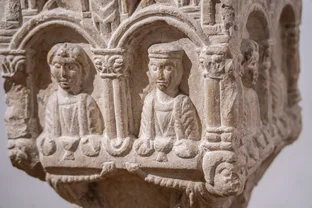
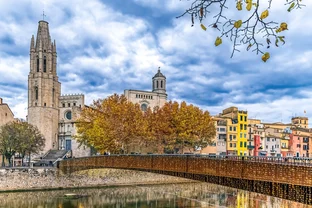
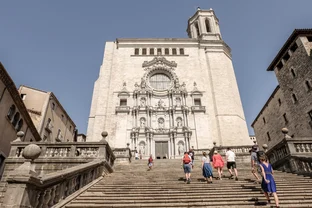
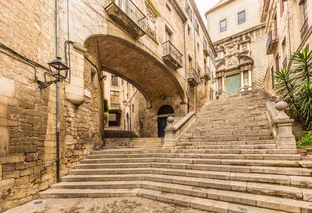
The Jewish population of Girona flourished in the 12th century, when scholars, including the great rabbi Nahmanides, established one of Europe’s most important philosophical centers of Kabbalistic mysticism. In keeping with European tradition, the Jewish Quarter, or “Call,” grew up in the protective shadow of the cathedral—until Isabel and Fernando expelled all the Jews from Spain in 1492. As part of the 1992 nationwide reassessment of Spain’s gains and losses from the events of 1492, the Girona government established a nonprofit organization to recover the Jewish history and culture of the city. One part of that effort was to establish this museum. In the decades since it opened, it has grown to an extensive warren of 11 galleries that examine community life, festivals and traditions, synagogues and forms of worship, and even the disapora and the tricky matter of conversions during the Spanish Inquisition. Some of the most striking exhibitions deal with Jewish artistic and cultural traditions specific to Catalunya, while some of the most poignant include carved sepulchers unearthed during excavations at the old Jewish cemetery on Montjuïc.
The Jewish population of Girona flourished in the 12th century, when scholars, including the great rabbi Nahmanides, established one of Europe’s most important philosophical centers of Kabbalistic mysticism. In keeping with European tradition, the Jewish Quarter, or “Call,” grew up in the protective shadow of the cathedral—until Isabel and Fernando expelled all the Jews from Spain in 1492. As part of the 1992 nationwide reassessment of Spain’s gains and losses from the events of 1492, the Girona government established a nonprofit organization to recover the Jewish history and culture of the city. One part of that effort was to establish this museum. In the decades since it opened, it has grown to an extensive warren of 11 galleries that examine community life, festivals and traditions, synagogues and forms of worship, and even the disapora and the tricky matter of conversions during the Spanish Inquisition. Some of the most striking exhibitions deal with Jewish artistic and cultural traditions specific to Catalunya, while some of the most poignant include carved sepulchers unearthed during excavations at the old Jewish cemetery on Montjuïc.
Details
Bookstore
Available as paperback
and as e-book.