Museo Arqueológico de Granada

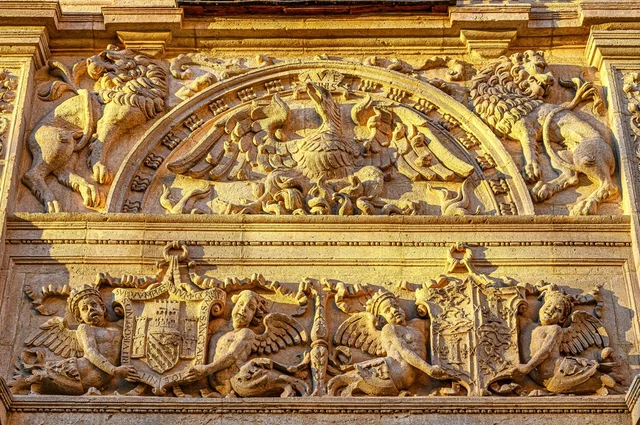
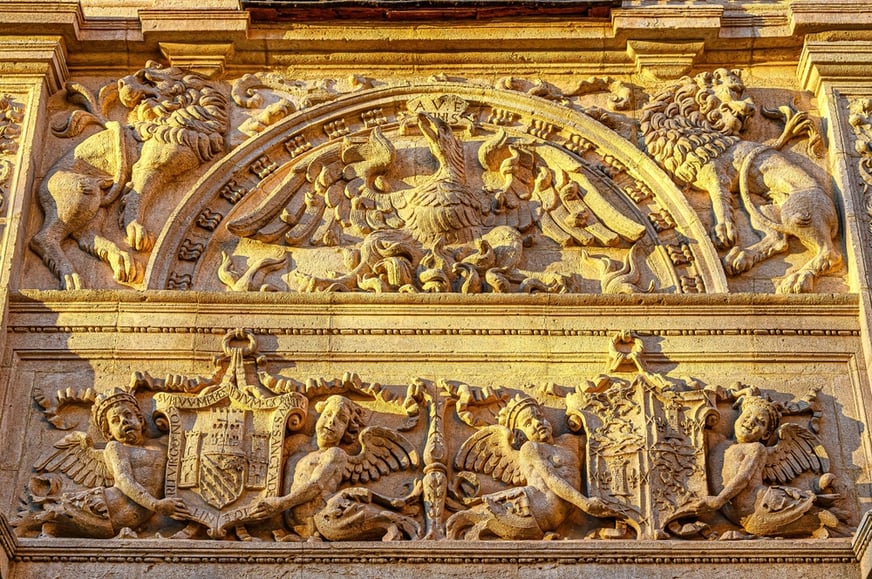
One of Spain’s oldest archaeological museums, this well-presented gallery on the banks of the Darro inhabits the 16th century Casa de Castril, a Renaissance palace with a fine façade (pictured) and patio. Its collection of artifacts ranges from a prehistoric skull fragment belonging to the Hombre de Orce through the Nasrid period, a span of some 1.5 million years. Its most remarkable exhibit is the Astrolabe of Ibn Zawal from 1481, a circular bronze instrument used to calculate the beginning of Ramadan and the times and direction of prayer, based on the position of the stars. It is the only known astrolabe created for the latitude of Granada. Explanations are in Spanish and English.
One of Spain’s oldest archaeological museums, this well-presented gallery on the banks of the Darro inhabits the 16th century Casa de Castril, a Renaissance palace with a fine façade (pictured) and patio. Its collection of artifacts ranges from a prehistoric skull fragment belonging to the Hombre de Orce through the Nasrid period, a span of some 1.5 million years. Its most remarkable exhibit is the Astrolabe of Ibn Zawal from 1481, a circular bronze instrument used to calculate the beginning of Ramadan and the times and direction of prayer, based on the position of the stars. It is the only known astrolabe created for the latitude of Granada. Explanations are in Spanish and English.
Details
Bookstore

Available as paperback
and as e-book.