The Beaumont

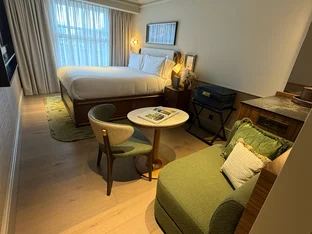
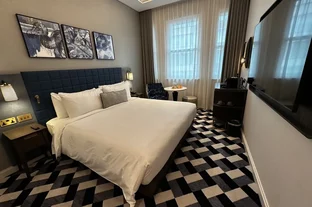
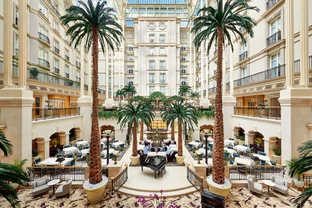
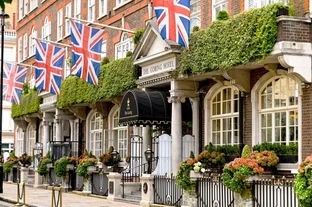
Despite polished traditional appearances, this Art Deco beauty opened in modern times, which accounts for why its style keeps up with its luxurious substance. Its 1926 facade was once the garage of Selfridges department store nearby, the modern-built halls and lifts are full of glossy shots of bygone stars, and its bar and restaurant—known for duck egg hash at breakfast—strongly evoke a 1930s Los Angeles grill. That evocation of bygone American elan makes it friendly, not stuffy, and a logical neighbor for Selfridge’s, which was itself built in the model of vintage American high taste. Rooms were customized to be cutting-edge (free streaming movies, free minibar, heated bathroom floors), but the Beaumont is noted for Antony Gormley’s geometric sculpture of a brooding man perched on one of its outcroppings—inside is an arty wooden suite that’s favored by society spenders. You’re more likely to love a “Classic” room facing the courtyard or a “Superior” facing the quiet street and a pocket park.
Despite polished traditional appearances, this Art Deco beauty opened in modern times, which accounts for why its style keeps up with its luxurious substance. Its 1926 facade was once the garage of Selfridges department store nearby, the modern-built halls and lifts are full of glossy shots of bygone stars, and its bar and restaurant—known for duck egg hash at breakfast—strongly evoke a 1930s Los Angeles grill. That evocation of bygone American elan makes it friendly, not stuffy, and a logical neighbor for Selfridge’s, which was itself built in the model of vintage American high taste. Rooms were customized to be cutting-edge (free streaming movies, free minibar, heated bathroom floors), but the Beaumont is noted for Antony Gormley’s geometric sculpture of a brooding man perched on one of its outcroppings—inside is an arty wooden suite that’s favored by society spenders. You’re more likely to love a “Classic” room facing the courtyard or a “Superior” facing the quiet street and a pocket park.
Details
Bookstore

Available as paperback
and as e-book.