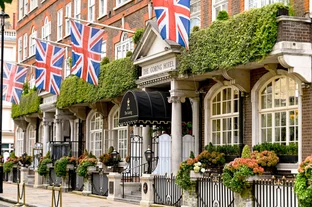
The Ritz London

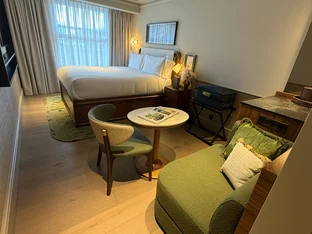
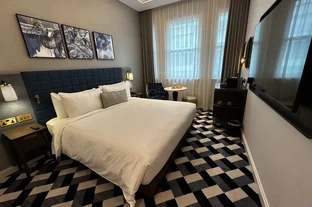
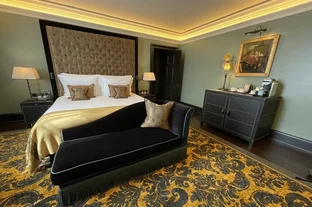
The rooms, while fine and embarrassingly spacious, are reassuringly dowdy in the way that a wealthy philanthropist aunt might prefer—lots of lemons, greens, and fussy furniture. Beds are enormous, furnishings and paintings are well-maintained throwbacks to the turn of the last century, flowers are fresh. You feel like you're somewhere special because you are, but there are no gimmicky bells and whistles that hotels usually rely upon to impress the hoi polloi. Even the hotel's fitness center would be better described as a mere fitness closet, lightly stocked and tucked apologetically in a smelly and unadorned room on an upper floor.
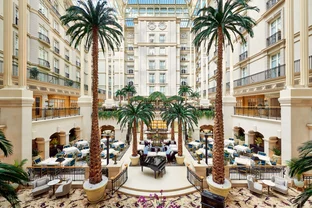
No, the Ritz's real magic is the scene. Each afternoon the aforementioned lobby, which runs the Piccadilly length of this palatial building, becomes a de facto runway for visitors who have dressed up for its famous High Tea at the Palm Court, its lush Lalique-encrusted Rivoli Bar, or its showplace restaurant (the fare is accomplished but exceedingly conservative). The Ritz has perfected the fickle art of hostile hospitality. No one can linger for more than a few seconds in one spot, admiring the scene that was intentionally constructed to be admired, before a suited staff member materializes to ask what you need, implying you look out of place. By the same token, one gets the distinct impression that should a staff member fail to meet your own demands or place a fork at an improper angle, they would be whisked through backstage doors for flagellation, possibly by their own remorseful hand.
The rooms, while fine and embarrassingly spacious, are reassuringly dowdy in the way that a wealthy philanthropist aunt might prefer—lots of lemons, greens, and fussy furniture. Beds are enormous, furnishings and paintings are well-maintained throwbacks to the turn of the last century, flowers are fresh. You feel like you're somewhere special because you are, but there are no gimmicky bells and whistles that hotels usually rely upon to impress the hoi polloi. Even the hotel's fitness center would be better described as a mere fitness closet, lightly stocked and tucked apologetically in a smelly and unadorned room on an upper floor.
No, the Ritz's real magic is the scene. Each afternoon the aforementioned lobby, which runs the Piccadilly length of this palatial building, becomes a de facto runway for visitors who have dressed up for its famous High Tea at the Palm Court, its lush Lalique-encrusted Rivoli Bar, or its showplace restaurant (the fare is accomplished but exceedingly conservative). The Ritz has perfected the fickle art of hostile hospitality. No one can linger for more than a few seconds in one spot, admiring the scene that was intentionally constructed to be admired, before a suited staff member materializes to ask what you need, implying you look out of place. By the same token, one gets the distinct impression that should a staff member fail to meet your own demands or place a fork at an improper angle, they would be whisked through backstage doors for flagellation, possibly by their own remorseful hand.
Details
Bookstore

Available as paperback
and as e-book.