The George Inn

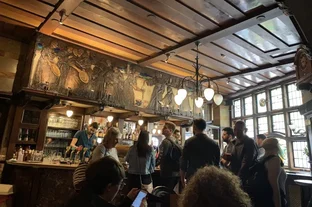
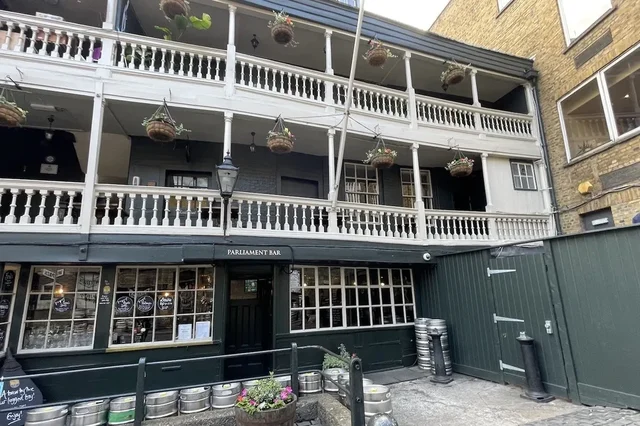
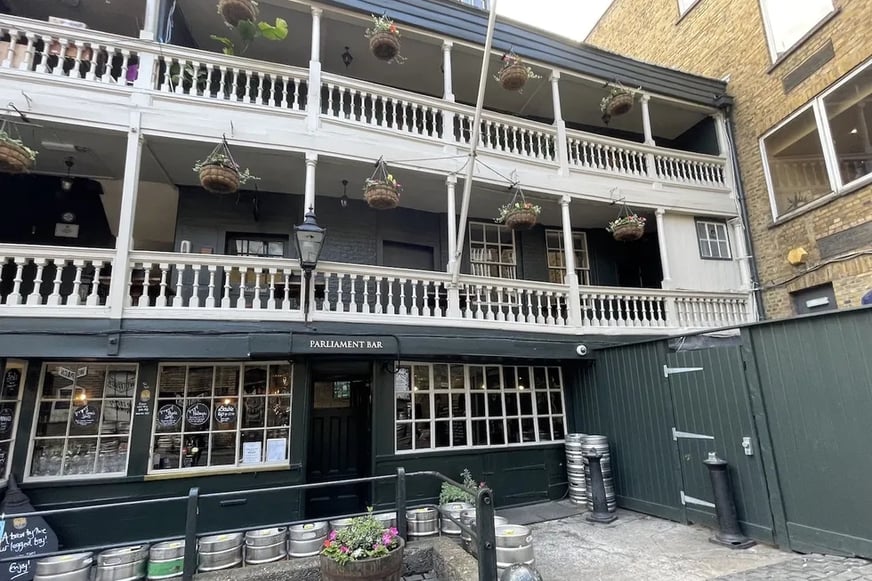
Unquestionably one of the most important ancient pubs still standing, the George traces its lineage to at least 1542, when a map of Southwark first depicted it; the Tabard Inn, where Chaucer’s pilgrims gathered in Canterbury Tales, was then a few doors south (it’s gone now). Shakespeare knew it (check out Pete Brown’s 2012 book Shakespeare’s Local), and Dickens memorialized it in Little Dorrit. The oldest section, a galleried wood-and-brick longhouse, dates to 1677, built after a horrific fire swept the district. It later functioned as an 18th-century transit hub, its courtyard encircled with a tavern, a hotel, stables, wagon repair bays, and warehouses; the rise of a railway nearly destroyed it, and only one side of the complex survives. (The National Trust now protects it.) Sip ale in the low-ceilinged timber-and-plaster chambers, or sit in the cobbled courtyard, in the Shard’s shadow, and soak up the fading echoes of history.
Unquestionably one of the most important ancient pubs still standing, the George traces its lineage to at least 1542, when a map of Southwark first depicted it; the Tabard Inn, where Chaucer’s pilgrims gathered in Canterbury Tales, was then a few doors south (it’s gone now). Shakespeare knew it (check out Pete Brown’s 2012 book Shakespeare’s Local), and Dickens memorialized it in Little Dorrit. The oldest section, a galleried wood-and-brick longhouse, dates to 1677, built after a horrific fire swept the district. It later functioned as an 18th-century transit hub, its courtyard encircled with a tavern, a hotel, stables, wagon repair bays, and warehouses; the rise of a railway nearly destroyed it, and only one side of the complex survives. (The National Trust now protects it.) Sip ale in the low-ceilinged timber-and-plaster chambers, or sit in the cobbled courtyard, in the Shard’s shadow, and soak up the fading echoes of history.
Details
Bookstore
Available as paperback
and as e-book.