Campo del Moro

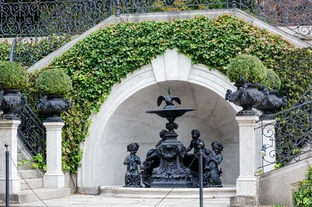
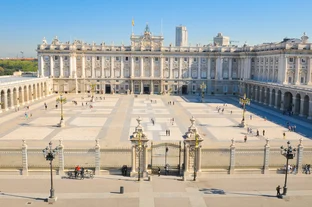
These extremely beautiful gardens slope westward from the Royal Palace toward the River Manzanares. Named after a medieval Arab chieftain who attempted a vain siege of the fortress that occupied the spot where the palace now stands, the park boasts a well-tended profusion of lawns, trees, and flowers. The park also has two magnificent fountains: the 17th-century Triton, originally located in the Aranjuez Palace gardens, and the Las Conchas, built by Ventura Rodríguez a century later. (Incidentally, the still signposted Museo de Carruajes, or Carriage Museum, tucked away in a corner of the grounds, has been closed for many years.) You can only enter the park from the lower side beside the Paseo de la Virgen del Puerto (which involves a longish roundabout walk via Cuesta de la Vega, if you are visiting the Royal Palace first).
These extremely beautiful gardens slope westward from the Royal Palace toward the River Manzanares. Named after a medieval Arab chieftain who attempted a vain siege of the fortress that occupied the spot where the palace now stands, the park boasts a well-tended profusion of lawns, trees, and flowers. The park also has two magnificent fountains: the 17th-century Triton, originally located in the Aranjuez Palace gardens, and the Las Conchas, built by Ventura Rodríguez a century later. (Incidentally, the still signposted Museo de Carruajes, or Carriage Museum, tucked away in a corner of the grounds, has been closed for many years.) You can only enter the park from the lower side beside the Paseo de la Virgen del Puerto (which involves a longish roundabout walk via Cuesta de la Vega, if you are visiting the Royal Palace first).
Details
Bookstore

Available as paperback
and as e-book.