Ermita de San Antonio de la Florida–Panteón de Goya

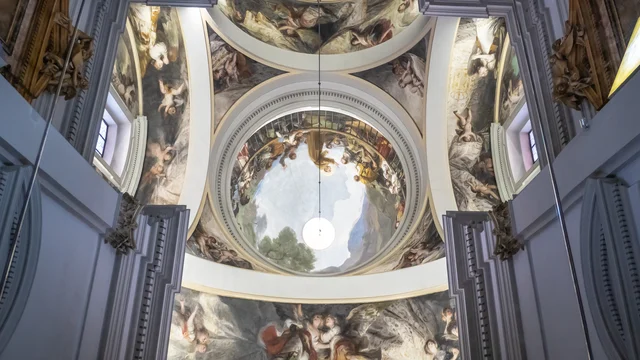
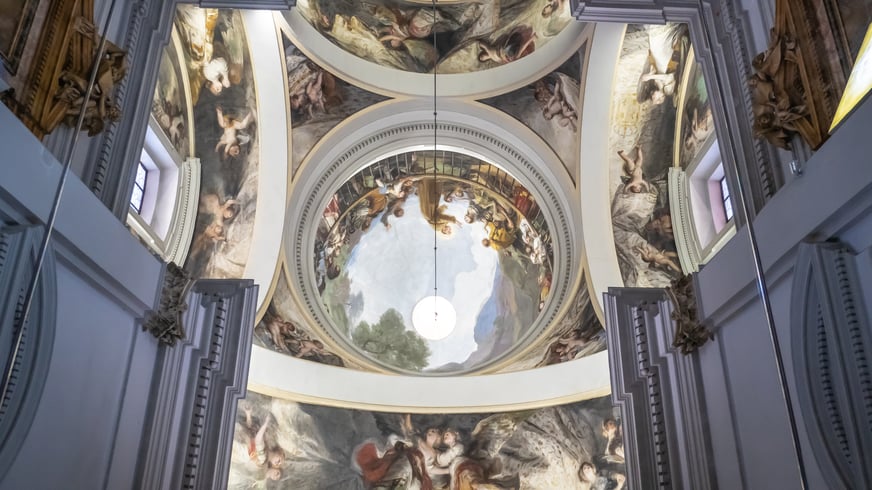
Goya’s tomb lies in this little hermitage on the banks of the Manzanares north of the Palacio Real. But the real draw is the wonderful, frescoed ceiling depicting the miracles of St. Anthony. Nicknamed Goya’s Sistine Chapel, it took the artist six months to complete in 1798 when he was already in his fifties. The masterful painting of the cupola shows the saint raising a man from the dead, to exonerate his father who had been accused of murder. A ragtag crowd has gathered around an ingenious trompe l’oeil balustrade—a street urchin’s leg hangs over it. Early audiences were shocked that Goya had painted prostitutes and beggars surrounding the saint, but his patron Carlos IV approved.
Goya’s tomb lies in this little hermitage on the banks of the Manzanares north of the Palacio Real. But the real draw is the wonderful, frescoed ceiling depicting the miracles of St. Anthony. Nicknamed Goya’s Sistine Chapel, it took the artist six months to complete in 1798 when he was already in his fifties. The masterful painting of the cupola shows the saint raising a man from the dead, to exonerate his father who had been accused of murder. A ragtag crowd has gathered around an ingenious trompe l’oeil balustrade—a street urchin’s leg hangs over it. Early audiences were shocked that Goya had painted prostitutes and beggars surrounding the saint, but his patron Carlos IV approved.
Details
Bookstore

Available as paperback
and as e-book.