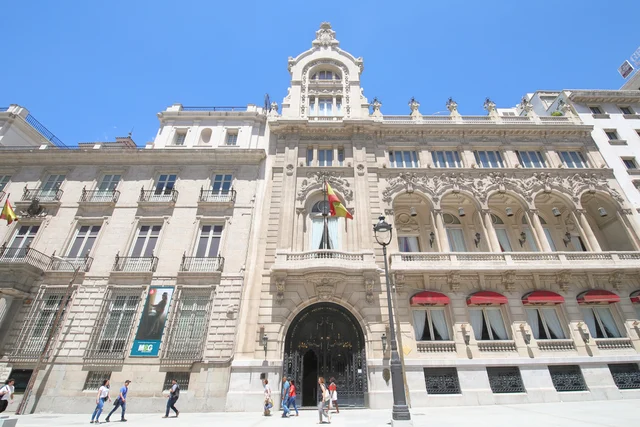
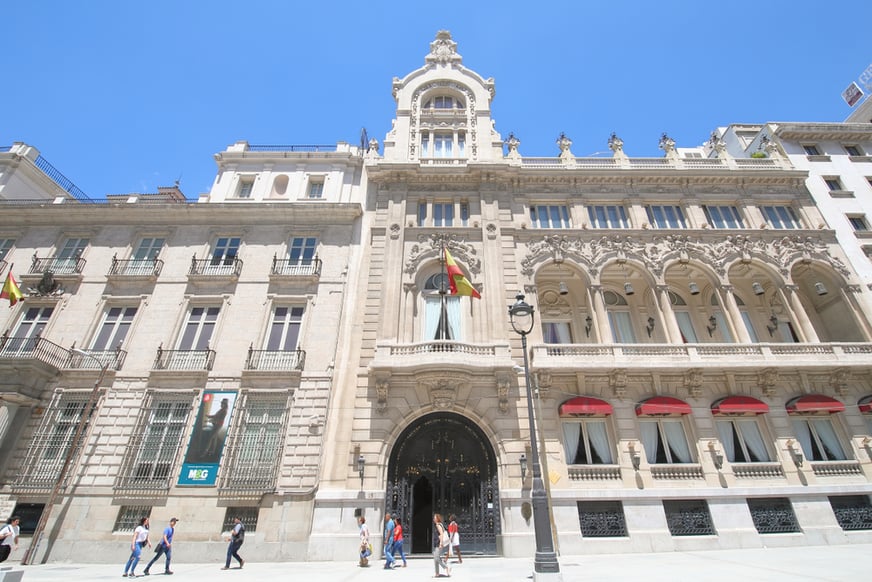
Museo de la Real Academia de Bellas Artes de San Fernando

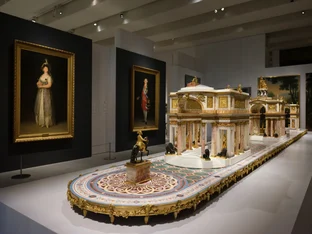
The new Goya rooms, opened in 2024 at the Royal Academy of Fine Arts, are a revelation. They include an entire set of prints from his Desastres de la Guerra (Disasters of War) series, displayed alongside the original copper plates. He etched these gruesome scenes between 1810 and 1820, highlighting the horrors of the War of Independence with Napoleon’s France. The rest of the museum is more sedate and remarkably uncrowded compared with Madrid’s blockbuster galleries. Founded in 1752, the academy nurtured many of the famous names of Spanish art, amassing a fine collection of paintings and sculpture from the Renaissance to the present day. Goya became director in 1795, and the collection features a dozen of his paintings, including a slapdash equestrian portrait of the hapless Fernando VII and a self-satisfied one of the king’s powerful enemy Godoy. Equally revealing are two of Goya’s self-portraits, one as a dandyish 30-something, the other a world-weary figure in old age. Upstairs galleries house 19th- and 20th-century art, including pieces by Picasso (who briefly studied here), Juan Gris, and Sorolla. Dalí, who was expelled in the 1920s for questioning a professor’s competence, doesn’t feature.
The new Goya rooms, opened in 2024 at the Royal Academy of Fine Arts, are a revelation. They include an entire set of prints from his Desastres de la Guerra (Disasters of War) series, displayed alongside the original copper plates. He etched these gruesome scenes between 1810 and 1820, highlighting the horrors of the War of Independence with Napoleon’s France. The rest of the museum is more sedate and remarkably uncrowded compared with Madrid’s blockbuster galleries. Founded in 1752, the academy nurtured many of the famous names of Spanish art, amassing a fine collection of paintings and sculpture from the Renaissance to the present day. Goya became director in 1795, and the collection features a dozen of his paintings, including a slapdash equestrian portrait of the hapless Fernando VII and a self-satisfied one of the king’s powerful enemy Godoy. Equally revealing are two of Goya’s self-portraits, one as a dandyish 30-something, the other a world-weary figure in old age. Upstairs galleries house 19th- and 20th-century art, including pieces by Picasso (who briefly studied here), Juan Gris, and Sorolla. Dalí, who was expelled in the 1920s for questioning a professor’s competence, doesn’t feature.
Details
Bookstore
Available as paperback
and as e-book.