Museo Nacional Centro de Arte Reina Sofía

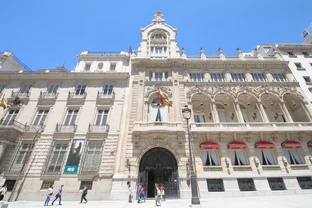
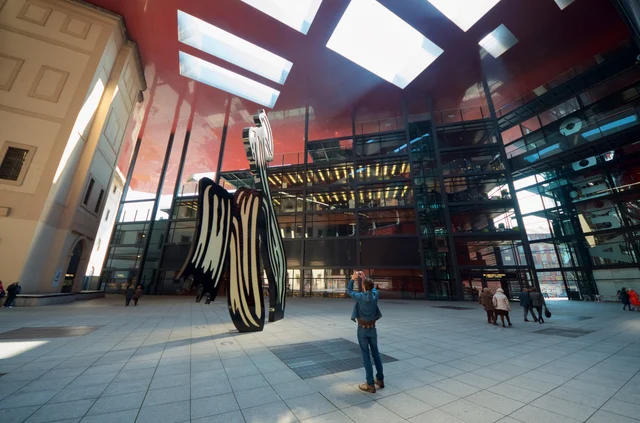
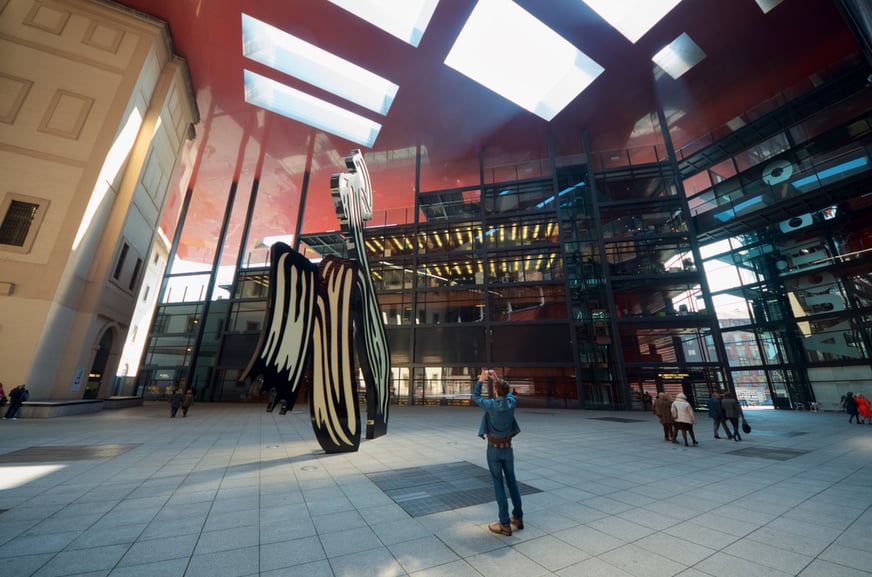
It’s a short walk—and a large aesthetic leap—from the Prado to the Reina Sofía, which holds Spain’s most significant collection of 20th- and 21st-century art, including Picasso’s Guernica. Opened in 1990, the museum consists of an 18th-century former hospital designed by Francisco Sabatini and a postmodern addition by Jean Nouvel that opened in 2005. They house a vast collection of mainly Spanish works, as well as an ambitious program of temporary exhibitions and educational events.
The museum regularly rehangs its permanent collection to tell thematic stories, so pieces by the best-known artists are not necessarily grouped together. Paintings by Pablo Picasso, Juan Gris, Joan Miró, and Salvador Dalí are complemented by photographs, posters, commercial art, and short films describing the world in which they were created. This approach is particularly effective in the galleries that deal with the Spanish Civil War and Franco’s dictatorship.
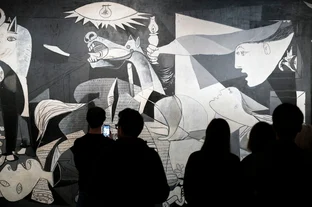
It is worth the admission fee alone to see Guernica, which hangs permanently in room 206 on the 2nd floor. Painted in June 1937, it was Picasso’s response to the unprovoked bombing in April of that year of the Basque village of Gernika by German and Italian planes at the behest of Franco. Picasso had a commission to produce a large-scale painting for the world’s fair to be held in Paris that summer—Guernica became his submission. It is hard to overstate the impact it must have had when first unveiled at the Spanish Pavilion. Seeing its huge, violent, black-and-white images up close is a visceral experience even today. There are also insightful exhibits about the making of the painting, and regular talks reassessing it.
Nearby, Luis Buñuel’s surreal documentary Tierra sin pan (Land Without Bread) is a portrait of Las Hurdes, in the region of Extremadura, where in the 1930s people were so poor that they lived in animal-like squalor. You’ll also find some of the surrealist Salvador Dalí’s most famous paintings, including The Face of the Great Masturbator, painted in 1929. The museum’s collection is now so large that it also uses a couple of pavilions in El Retiro park (for exhibitions, such as installations, that require more space. Admission to those is free.
It’s a short walk—and a large aesthetic leap—from the Prado to the Reina Sofía, which holds Spain’s most significant collection of 20th- and 21st-century art, including Picasso’s Guernica. Opened in 1990, the museum consists of an 18th-century former hospital designed by Francisco Sabatini and a postmodern addition by Jean Nouvel that opened in 2005. They house a vast collection of mainly Spanish works, as well as an ambitious program of temporary exhibitions and educational events.
The museum regularly rehangs its permanent collection to tell thematic stories, so pieces by the best-known artists are not necessarily grouped together. Paintings by Pablo Picasso, Juan Gris, Joan Miró, and Salvador Dalí are complemented by photographs, posters, commercial art, and short films describing the world in which they were created. This approach is particularly effective in the galleries that deal with the Spanish Civil War and Franco’s dictatorship.
It is worth the admission fee alone to see Guernica, which hangs permanently in room 206 on the 2nd floor. Painted in June 1937, it was Picasso’s response to the unprovoked bombing in April of that year of the Basque village of Gernika by German and Italian planes at the behest of Franco. Picasso had a commission to produce a large-scale painting for the world’s fair to be held in Paris that summer—Guernica became his submission. It is hard to overstate the impact it must have had when first unveiled at the Spanish Pavilion. Seeing its huge, violent, black-and-white images up close is a visceral experience even today. There are also insightful exhibits about the making of the painting, and regular talks reassessing it.
Nearby, Luis Buñuel’s surreal documentary Tierra sin pan (Land Without Bread) is a portrait of Las Hurdes, in the region of Extremadura, where in the 1930s people were so poor that they lived in animal-like squalor. You’ll also find some of the surrealist Salvador Dalí’s most famous paintings, including The Face of the Great Masturbator, painted in 1929. The museum’s collection is now so large that it also uses a couple of pavilions in El Retiro park (for exhibitions, such as installations, that require more space. Admission to those is free.
Details
Bookstore
Available as paperback
and as e-book.