Plaza de la Villa

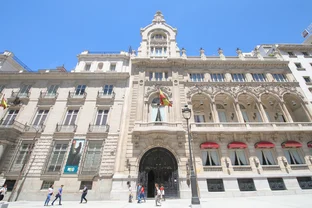
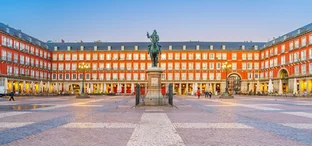
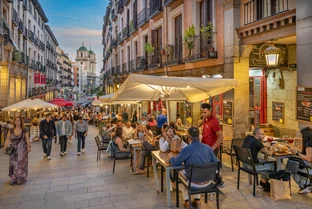
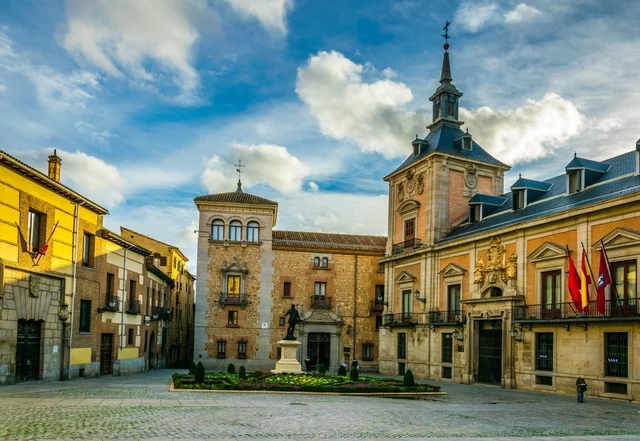
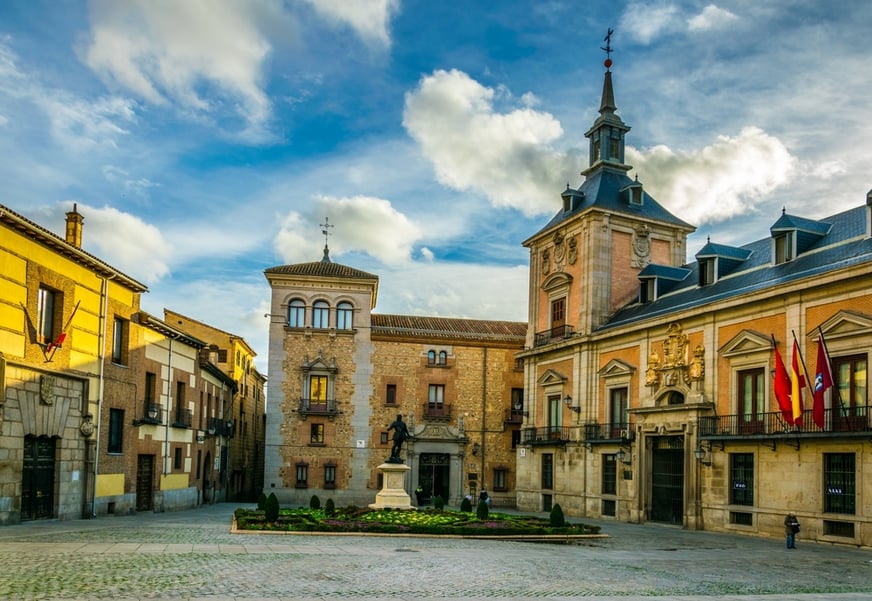
This beautiful square contains some of the city’s oldest buildings, whose walls have served at different times as high-class prisons. It has been the site of the city’s administration since the medieval period and Casa de la Villa, rebuilt in Renaissance style in the 17th century, served as Madrid’s city hall until 2007. Next door, Casa Cisneros was built in 1537 for the nephew of the powerful cleric and statesman Cardinal Cisneros. Felipe II’s secretary Antonio Pérez was imprisoned here after being accused of murder in a palace intrigue. Opposite stands Casa de los Lujanes, a 15th-century Mudéjar manor house, where Francis I of France was reputedly held after his capture at the battle of Pavia in 1525. When he declined to bow his head to Spain’s Carlos V, the door of the tower was lowered, forcing him to bend. Sadly, it is only possible to admire these fascinating buildings from the outside.
This beautiful square contains some of the city’s oldest buildings, whose walls have served at different times as high-class prisons. It has been the site of the city’s administration since the medieval period and Casa de la Villa, rebuilt in Renaissance style in the 17th century, served as Madrid’s city hall until 2007. Next door, Casa Cisneros was built in 1537 for the nephew of the powerful cleric and statesman Cardinal Cisneros. Felipe II’s secretary Antonio Pérez was imprisoned here after being accused of murder in a palace intrigue. Opposite stands Casa de los Lujanes, a 15th-century Mudéjar manor house, where Francis I of France was reputedly held after his capture at the battle of Pavia in 1525. When he declined to bow his head to Spain’s Carlos V, the door of the tower was lowered, forcing him to bend. Sadly, it is only possible to admire these fascinating buildings from the outside.
Details
Bookstore

Available as paperback
and as e-book.