Templo de Diana

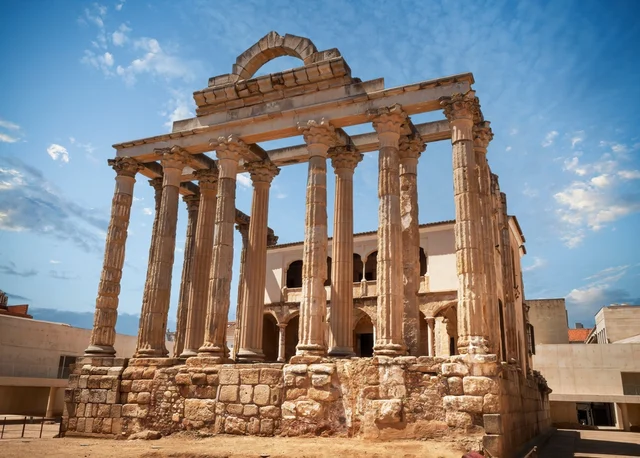
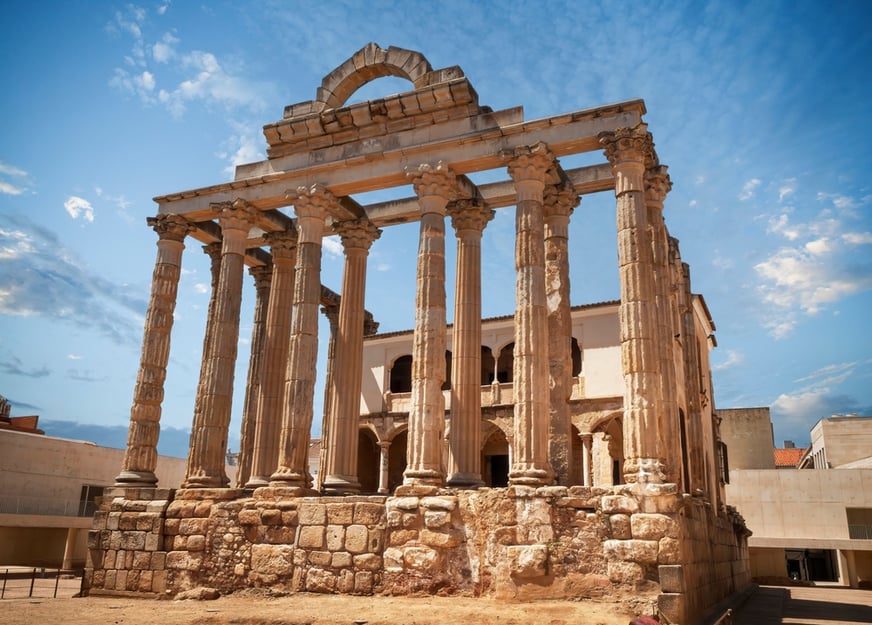
The Temple of Diana was the last of Mérida’s Roman monuments to get a major makeover, completing its restoration in 2011. Its towering Corinthian columns dominate a downtown square surrounded by contemporary concrete. The name is misleading—it was a temple dedicated to the Roman imperial cult, not the hunter goddess Diana. In the 16th century, in a move that would horrify today’s planning officials, the wealthy Count of Corbos incorporated the temple’s columns into the walls of his new Renaissance palace, and it remained a private home until the 1970s. Ironically, the temple’s excellent state of repair today is probably down to that act of architectural vandalism. Inside, a small interpretation center tells the story (in Spanish only) of the temple’s origins, subsequent repurposing, and eventual restoration. But the best way to enjoy it is to grab a drink or dinner at one of the bar terraces on the square and admire its near-perfect Roman form illuminated at night.
The Temple of Diana was the last of Mérida’s Roman monuments to get a major makeover, completing its restoration in 2011. Its towering Corinthian columns dominate a downtown square surrounded by contemporary concrete. The name is misleading—it was a temple dedicated to the Roman imperial cult, not the hunter goddess Diana. In the 16th century, in a move that would horrify today’s planning officials, the wealthy Count of Corbos incorporated the temple’s columns into the walls of his new Renaissance palace, and it remained a private home until the 1970s. Ironically, the temple’s excellent state of repair today is probably down to that act of architectural vandalism. Inside, a small interpretation center tells the story (in Spanish only) of the temple’s origins, subsequent repurposing, and eventual restoration. But the best way to enjoy it is to grab a drink or dinner at one of the bar terraces on the square and admire its near-perfect Roman form illuminated at night.
Details
Bookstore

Available as paperback
and as e-book.