Ellis Island

Updated January 4, 2026 -- The epicenter of the largest migration in human history, Ellis Island was in near-continuous use from 1892 to 1954 as the point-of-entry processing center for the majority of immigrants (including my grandmother) who settled in the U.S. during those years. Over 12 million people passed through its halls, sometimes as many as 12,000 in a single day. The stories of these immigrants—what they were escaping, what they found once here, and what they experienced in their short time in the purgatory that was Ellis Island—are the core of the Ellis Island experience. Several years ago, Ellis Island widened its focus to embrace the entire history of immigration to America; it well deserves a repeat visit from those who toured it before then (more on that below). First-time visitors, however, will want to concentrate on the original exhibits, which remain the most emotionally resonant—for the simple reason that they’re about Ellis Island itself. Learning about this endlessly fascinating place while walking through its hallowed halls is a powerful experience.
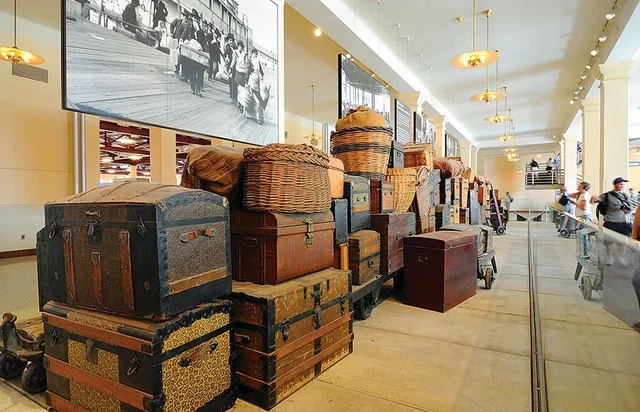
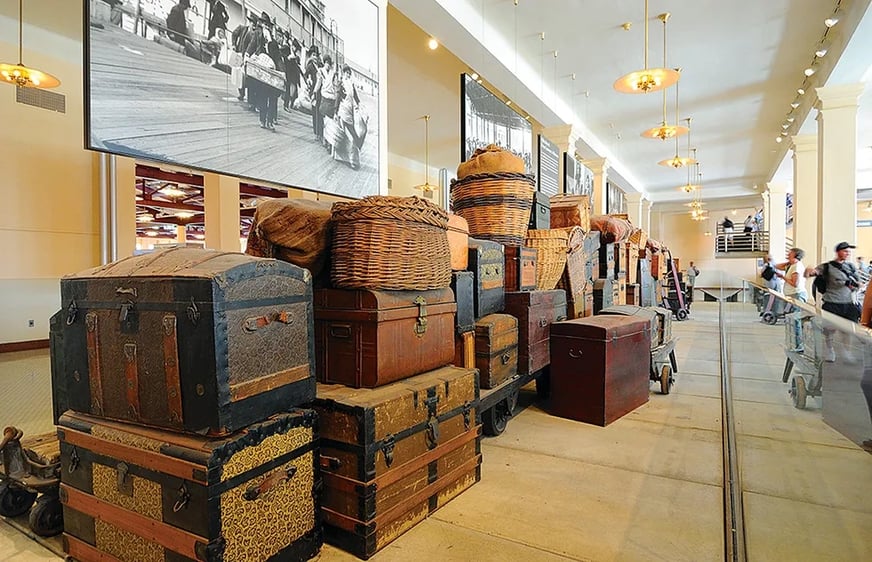
Start in the awe-inspiring second-floor Grand Hall (officially the Registry Hall), with its massive white-tile vaulted ceiling (created by the same firm that did the ceiling in Grand Central Station’s Oyster Bar), most likely larger than any church or temple these immigrants would have attended in their home villages. Behind the Grand Hall lies a warren of small rooms where immigrants were tested for mental competency, literacy, and communicable diseases. How these tests were done—and the fear they inspired—is chronicled in historical photos, wall text, and most poignantly at listening stations (or over the free audio-tour headphones) on which you hear actual immigrants share their memories of their time on the island. The top floor chronicles the history of the processing facility itself. These exhibits can be skipped if you’re short on time, but don’t miss the Treasures from Home exhibit, also on this floor, which features 2,000 of the possessions that were brought through Ellis. Somehow seeing the china dolls, the precious wedding photos, the native costumes, and the letters home brings the immigrant experience more vividly to life than any other part of the museum.
For those coming on a repeat visit, on the ground floor there are four new exhibitions of note. Two of them expand the story of immigration to America, to the era before Ellis Island opened (Journeys: The Peopling of America) and to the period after World War II through today (The Journey: New Eras of Immigration). Both are quite wall-text heavy, which may frustrate some visitors. If you have to choose between them, I’d pick “New Eras of Immigration,” as it features affecting videos profiling recent immigrants, both legal and illegal. It also tells a story that’s rarely discussed in a balanced fashion: the myriad surprising ways in which immigration is reshaping today’s America. The highlight of the American Stories exhibit is a set of interactive monitors that allow visitors to take an actual, current citizenship test (I’m proud to say I got a perfect score). Another experience recommended for repeat visitors is the Hard Hat Tour ♥♥, which takes visitors through the unrenovated—and haunting—Ellis Island hospital. Some 10% of Ellis Island immigrants spent some time here, often only to be shipped back to Europe, their only crime being ill. The facility was closed for 60 years and it’s falling apart—hence the need for hard hats. The only new items added are oversize archival photos of hospital residents that French artist JR mounted onto the crumbling walls, broken windows, and metal lockers—a moving tribute.
There’s also an on-site cafeteria, along with the American Family History Center, which holds millions of records. Trained genealogists are on-site to help visitors navigate the computer search; a session costs $7.
As one of the 40% of all Americans who had a relative come through Ellis Island, I find it difficult to tour this museum without tearing up at some point. I have no doubt that even visitors without such a direct connection will find the journey through Ellis one of the most moving experiences of their New York visit.
Note: A $100 million renovation project began in 2025, with the goals of renovating the main structure, making the visiting experience more immersive, and expanding the Records Discovery Center. Ellis Island is expected to remain open during the work, though visitors may see signs of the construction, and there may be some interior closures. The work is expected to conclude sometime in 2026.
Updated January 4, 2026 -- The epicenter of the largest migration in human history, Ellis Island was in near-continuous use from 1892 to 1954 as the point-of-entry processing center for the majority of immigrants (including my grandmother) who settled in the U.S. during those years. Over 12 million people passed through its halls, sometimes as many as 12,000 in a single day. The stories of these immigrants—what they were escaping, what they found once here, and what they experienced in their short time in the purgatory that was Ellis Island—are the core of the Ellis Island experience. Several years ago, Ellis Island widened its focus to embrace the entire history of immigration to America; it well deserves a repeat visit from those who toured it before then (more on that below). First-time visitors, however, will want to concentrate on the original exhibits, which remain the most emotionally resonant—for the simple reason that they’re about Ellis Island itself. Learning about this endlessly fascinating place while walking through its hallowed halls is a powerful experience.
Start in the awe-inspiring second-floor Grand Hall (officially the Registry Hall), with its massive white-tile vaulted ceiling (created by the same firm that did the ceiling in Grand Central Station’s Oyster Bar), most likely larger than any church or temple these immigrants would have attended in their home villages. Behind the Grand Hall lies a warren of small rooms where immigrants were tested for mental competency, literacy, and communicable diseases. How these tests were done—and the fear they inspired—is chronicled in historical photos, wall text, and most poignantly at listening stations (or over the free audio-tour headphones) on which you hear actual immigrants share their memories of their time on the island. The top floor chronicles the history of the processing facility itself. These exhibits can be skipped if you’re short on time, but don’t miss the Treasures from Home exhibit, also on this floor, which features 2,000 of the possessions that were brought through Ellis. Somehow seeing the china dolls, the precious wedding photos, the native costumes, and the letters home brings the immigrant experience more vividly to life than any other part of the museum.
For those coming on a repeat visit, on the ground floor there are four new exhibitions of note. Two of them expand the story of immigration to America, to the era before Ellis Island opened (Journeys: The Peopling of America) and to the period after World War II through today (The Journey: New Eras of Immigration). Both are quite wall-text heavy, which may frustrate some visitors. If you have to choose between them, I’d pick “New Eras of Immigration,” as it features affecting videos profiling recent immigrants, both legal and illegal. It also tells a story that’s rarely discussed in a balanced fashion: the myriad surprising ways in which immigration is reshaping today’s America. The highlight of the American Stories exhibit is a set of interactive monitors that allow visitors to take an actual, current citizenship test (I’m proud to say I got a perfect score). Another experience recommended for repeat visitors is the Hard Hat Tour ♥♥, which takes visitors through the unrenovated—and haunting—Ellis Island hospital. Some 10% of Ellis Island immigrants spent some time here, often only to be shipped back to Europe, their only crime being ill. The facility was closed for 60 years and it’s falling apart—hence the need for hard hats. The only new items added are oversize archival photos of hospital residents that French artist JR mounted onto the crumbling walls, broken windows, and metal lockers—a moving tribute.
There’s also an on-site cafeteria, along with the American Family History Center, which holds millions of records. Trained genealogists are on-site to help visitors navigate the computer search; a session costs $7.
As one of the 40% of all Americans who had a relative come through Ellis Island, I find it difficult to tour this museum without tearing up at some point. I have no doubt that even visitors without such a direct connection will find the journey through Ellis one of the most moving experiences of their New York visit.
Note: A $100 million renovation project began in 2025, with the goals of renovating the main structure, making the visiting experience more immersive, and expanding the Records Discovery Center. Ellis Island is expected to remain open during the work, though visitors may see signs of the construction, and there may be some interior closures. The work is expected to conclude sometime in 2026.
Details
Bookstore

Available as paperback
and as e-book.