Catedral de Santa María

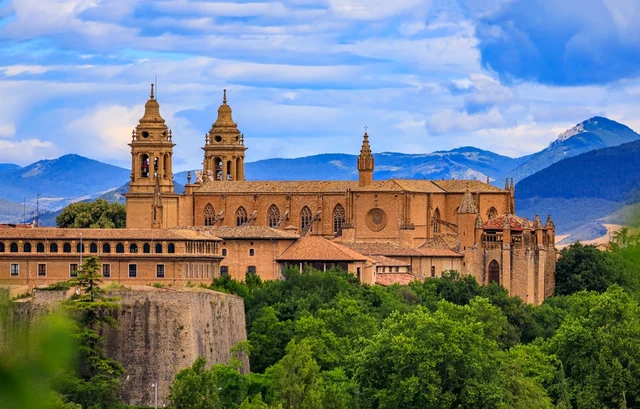
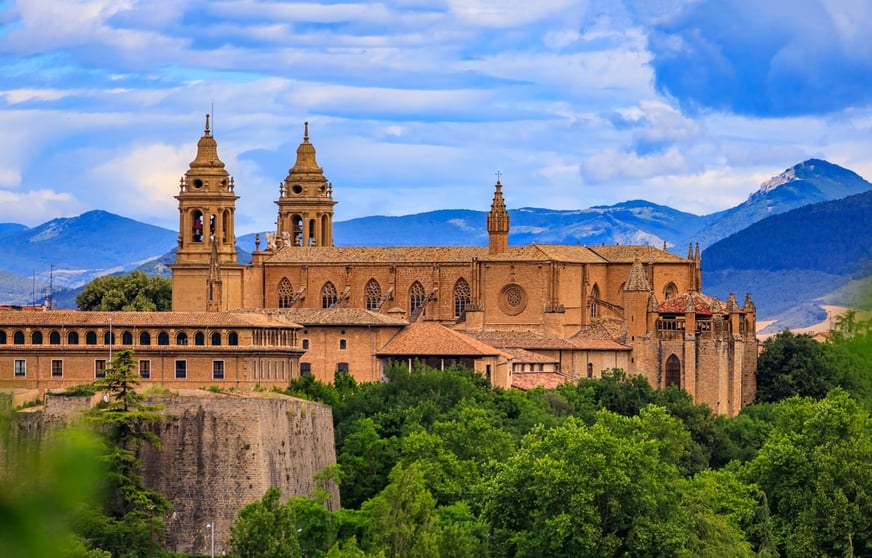
An easy walk from the city center, this is the most significant historic landmark in Pamplona. Dating from the late 14th century, it was built on the site of an earlier Romanesque basilica. The interior is Gothic with lots of fan vaulting (check out especially the Barbazán Chapel, off the east gallery). At the center is the tomb of Carlos III of Navarra and his Castilian wife, Leonor de Trastámara, created in 1416 by Flemish sculptor Janin de Lomme. The alabaster death masks are haunting. (Alas, other early sculptures in the cathedral were vigorously over-cleaned in a misguided restoration that stripped their patina and made them look like modern copies.)
The present facade, a mix of neoclassical and baroque, was the work of Ventura Rodríguez, the favorite architect of the other Carlos III, the 18th-century Bourbon king in Madrid. Victor Hugo called the cathedral facade “an elegant lady with donkey ears”—cruel, perhaps, but once you start staring at the exterior and its two towers, you may conclude that he had a point! Later, he said more complementary things, especially about the 14th- and 15th-century Gothic cloisters, a highlight of the cathedral. These underwent a 4-year renovation, completed in 2019.
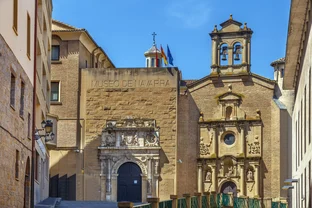
The Occidens museum, in the cathedral’s refectory and kitchen, is a thought-provoking voyage through history, starting in pre-Roman times, spanning the era from the Middle Ages to the Renaissance, and continuing right up to the present day.
An easy walk from the city center, this is the most significant historic landmark in Pamplona. Dating from the late 14th century, it was built on the site of an earlier Romanesque basilica. The interior is Gothic with lots of fan vaulting (check out especially the Barbazán Chapel, off the east gallery). At the center is the tomb of Carlos III of Navarra and his Castilian wife, Leonor de Trastámara, created in 1416 by Flemish sculptor Janin de Lomme. The alabaster death masks are haunting. (Alas, other early sculptures in the cathedral were vigorously over-cleaned in a misguided restoration that stripped their patina and made them look like modern copies.)
The present facade, a mix of neoclassical and baroque, was the work of Ventura Rodríguez, the favorite architect of the other Carlos III, the 18th-century Bourbon king in Madrid. Victor Hugo called the cathedral facade “an elegant lady with donkey ears”—cruel, perhaps, but once you start staring at the exterior and its two towers, you may conclude that he had a point! Later, he said more complementary things, especially about the 14th- and 15th-century Gothic cloisters, a highlight of the cathedral. These underwent a 4-year renovation, completed in 2019.
The Occidens museum, in the cathedral’s refectory and kitchen, is a thought-provoking voyage through history, starting in pre-Roman times, spanning the era from the Middle Ages to the Renaissance, and continuing right up to the present day.
Details
Bookstore
Available as paperback
and as e-book.